The 1987 saliva sample that sat unmatched for 14 years — then broke the Green River case
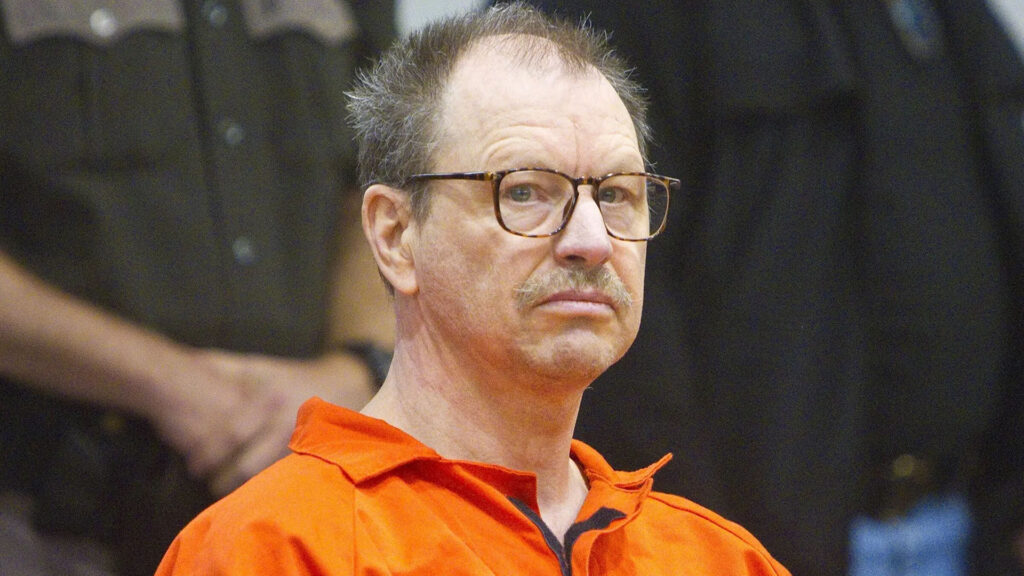
A warrant in 1987 gave investigators a saliva sample from Gary Ridgway, a truck painter at a Kenworth plant in Renton.
The sample was not initially matched to any evidence in the Green River case.
Why did it sit unmatched for 14 years?
What held it back?
What finally changed?
That would require evidence.
The exact reason the 1987 sample was not matched initially is not stated in the source.
The Green River Task Force had been hunting a killer since the first victims were found in July 1982.
Ridgway lived an outwardly ordinary life.
He worked at the Kenworth plant.
He was married multiple times.
Investigators had a warrant, and they had his saliva.
They had no match.
The case went cold for decades.
Then, in 2001, DNA evidence linked Ridgway to several victims.
A key break came when his DNA matched samples from the crimes.
He was arrested on November 30, 2001, outside the Kenworth plant.
The saliva sample from 1987 had sat unmatched for 14 years.
It was a near-miss.
It is a fact of the record.
It is also a question the record leaves open.
THE GREEN RIVER TASK FORCE
The first bodies were found in July 1982, along the Green River south of Seattle.
They were women. They were girls. They were sex workers, runaways, the vulnerable.
The river gave the case its name.
Between 1982 and 1998, Gary Ridgway murdered dozens of women and girls in Washington state, mostly in the Seattle–Tacoma area.
The exact number of victims is not known. The true number remains unknown.
In 1984, the Green River Task Force was formed to coordinate the search.
Dave Reichert was the lead detective. He led the task force for years.
The task force used geographic profiling. It used witness interviews.
It collected tips. It chased leads. It watched the body count grow.
Each new discovery along the river meant another family waiting. Another name to add to a list that kept lengthening.
The pressure mounted as the remains accumulated.
The task force mapped where the bodies were found, looking for a pattern in the scatter.
They interviewed witnesses who had seen the women last. They logged the trucks, the streets, the places where the missing had been seen.
It was a slow, grinding investigation.
The case went cold for decades. The river kept its secrets.
The task force kept working. The list kept growing.
Not because they had stopped. But because the killer had not.
He was a truck painter at a Kenworth plant in Renton. He lived an outwardly ordinary life.
The task force did not know that yet.
They only knew the river kept giving up its dead.
THE 1987 WARRANT
The warrant arrived in 1987.
Investigators had been watching Ridgway for years by then.
They obtained a court order to take a saliva sample from him.
He gave it.
The sample went into the file.
It did not match anything from the crime scenes.
The task force compared it against the evidence they had.
Nothing connected.
Why the 1987 sample did not match is not established in the source.
It simply sat there.
The river kept giving up its dead.
The task force kept searching.
Ridgway kept living his outwardly ordinary life.
His ex-wife would later testify about his behavior during their marriage.
She described a man who seemed normal to those around him.
The killings continued.
One victim after another was found along the Green River.
The sample stayed unmatched.
The case went cold.
It stayed cold for decades.
Investigators had a name.
They had a sample.

They did not have the link.
That would require evidence the science could not yet provide.
The task force did not know that the answer was already in their files.
Not because they failed.
But because the technology had not caught up.
The saliva sample was there.
The DNA evidence was there.
The connection was not.
Not yet.
THE DNA BREAK AND ARREST
The DNA match did not come from the 1987 saliva sample alone.
The source does not detail which specific DNA samples matched.
That is not established in the record.
The match came in 2001, linking Ridgway to several victims.
He was arrested on November 30, 2001, outside the Kenworth plant.
The truck painter left work and was taken into custody.
He cooperated after his arrest.
He led investigators to additional remains.
The remains were those of women the task force had searched for.
He was charged with 48 counts of aggravated first-degree murder.
The charge listed each victim by name.
The evidence included DNA from saliva and semen samples.
The same biological markers that had sat in files for years.
The same markers that had not been compared.
The same markers that finally closed the gap.
Why did the match take so long?
Why was the 1987 sample not tested against the evidence sooner?
Why did fourteen years pass between the warrant and the arrest?
That would require evidence.
The record does not say.
The arrest came first.
The cooperation came second.
The remains came third.
Each one led to another.
Each one closed a file.
Each one gave a family an answer.
He was charged, not convicted, at that point.
The conviction would come later.
AND THE STORY STILL ISN'T OVER
In 2003, Gary Ridgway pleaded guilty to 48 counts of aggravated first-degree murder.
The plea agreement spared him the death penalty.
In exchange, he promised full cooperation in locating victims' remains and providing details about the murders.
Judge Richard Jones sentenced Ridgway to 48 consecutive life sentences without the possibility of parole.
Not because the court was lenient.
But because the families wanted answers more than they wanted an execution.
Ridgway later admitted to additional murders, bringing his claimed total to 71.
He said the number.
He described the places.
He led investigators to remains that only he could have found.
The true number of victims remains unknown.
That is not established.
Not by his admissions, not by the search, not by the decades of digging along the Green River.
Ridgway remains incarcerated at the Washington State Penitentiary in Walla Walla.
He is still there.
He will die there.
The case remains open.
Cold case detectives continue to work on unidentified victims.
They search for remains in places Ridgway described but could not precisely locate.
They compare dental records.
They compare DNA.
They match names to bones.
Each identification gives a family an answer.
But not all families have their answer.
The conviction did not end the search for truth.
It only proved how much truth was still missing.
Advertisement
You may also like
The $50,000 ransom note left on a nursery windowsill — and the 11-hour jury deliberation that followed
On the evening of March 1, 1932, a ransom note demanding $50,000 was found on a nursery windowsill in the Lindbergh home near Hopewell,…

A mother's shopping trip, a Sears toy aisle, and the six-year-old who never came home
The Sears store at the Hollywood Mall had an air-conditioned hum and a toy aisle that ran long and bright. On July 27, 1981,…
The traffic stop that caught a bombing suspect before the FBI did
The trooper saw the plate first, or rather, he didn't see it. The 1977 Mercury Marquis had no license plate, and that was enough.…
The 14-year-old boy Milwaukee police returned to Dahmer hours before his death
A boy was wandering the street in Milwaukee, drugged and naked. Neighbors reported him in May 1991. Police officers responded to the call. They…

The 1934 torso washing ashore that set off a four-year hunt
The water gave her back on September 5, 1934. A woman's torso, washed up on the shore of Lake Erie near Euclid Beach. She…
Two gas-station murders, one .22 pistol: the timeline the jury followed
The evening of July 19, 1976, in Orem, Utah, was warm and ordinary. A young man walked up to two college students at a…