The 1987 witness sighting that didn't stop the Green River Killer
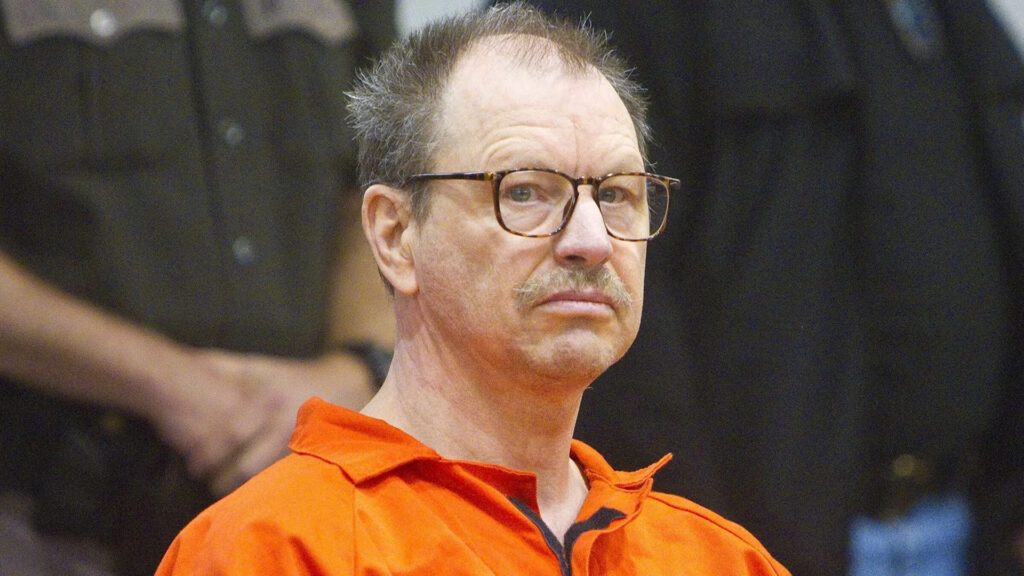
A witness reported seeing Gary Ridgway with a victim.
The year was 1987.
The report was made to police working the Green River Killer investigation, the case that spanned 1982 to 1998 across the Seattle–Tacoma area.
Police interviewed Ridgway after the report.
He was not arrested.
That is what the record shows, and it is frustratingly thin.
The source does not name the witness.
The source does not name the victim.
The source does not specify what the witness saw, or where the sighting occurred.
The witness's identity is not in the record.
The victim's identity is not in the record.
The exact nature of the sighting is not in the record.
What remains is a moment: a report, an interview, a release.
A missed chance?
That would require evidence.
The documented facts are narrower.
In 1987, Ridgway was first interviewed by police after a witness reported seeing him with a victim.
He was not arrested.
The investigation continued.
Dozens of women were dead, dumped in wooded areas, rivers, and ditches across King County.
The task force processed over 20,000 tips.
One of them led to Ridgway's door.
And then the door closed.
It would not open again for another fourteen years.
By then, DNA technology had changed everything.
In 2001, DNA evidence linked Ridgway to the murders of four victims.
He was arrested on November 30, 2001.
But in 1987, there was only a witness, a statement, and a man who walked away.
THE RIVER
Between 1982 and 1998, a series of women were murdered in the Seattle–Tacoma area.
Most of them were sex workers, runaways, or drug users.
The first victims were discovered in July and August 1982.
Two bodies were found in the Green River.
Two more were found nearby.
Dozens more victims were found in wooded areas, rivers, and ditches across King County.
The bodies were dumped in remote places.
Many were left along the Green River itself.
The case became known as the Green River Killer investigation.
It became one of the largest and longest-running serial murder investigations in American history.
The exact number of victims is not specified in the source.
The scale was enormous.
The chaos was early.
Detectives processed over 20,000 tips.
They struggled to identify victims, many of whom were transient.
They struggled with limited resources.
They had suspects, but no DNA testing to link them.
In 1982 and 1983, police focused on a patrolman named Melvin Foster.
He was cleared.
Another suspect, Charles R. "Chuck" Campbell, was investigated and cleared.
The task force at times numbered dozens of detectives.
Still, the killer moved through the region.
Each body was a new scene, a new county, a new search.
The river kept giving them back.
THE MISTAKES
In 1982 and 1983, police focused heavily on Melvin Foster, a patrolman with the King County Police.
He was cleared after an investigation.
So was another early suspect, Charles R. "Chuck" Campbell.
The source does not say why either man was cleared.
It does not say what the investigation found, or failed to find.
The task force, at times numbering dozens of detectives, struggled with limited resources.
It struggled with the difficulty of identifying victims, many of whom were transient.
Names went unknown for months.
Bodies went unclaimed.
In 1984, FBI profilers suggested the killer likely had a job that allowed him to be away from home at odd hours.
They suggested he might have a history of domestic violence.
That profile fit thousands of men in the Seattle–Tacoma area.
Did it fit Gary Ridgway?
The source does not say.
More than 20,000 tips were processed.
Each tip was a lead.
Each lead was a person to check, a story to verify, a dead end to file.
The case remained unsolved for nearly two decades before DNA testing was available.
Without DNA, the investigators had confessions that never came and witnesses who never saw enough.
The river kept giving them back.
The mistakes were not one moment.
They were the grinding scale of the search itself.
THE TURNING POINT
1987 was not an arrest.
A witness reported seeing Gary Ridgway with a victim, and police interviewed him. He was not arrested.
The record does not say which victim, or what the witness described. It says only that the interview happened, and that Ridgway walked away.
That would be the missed chance, if it was one. The source does not establish that.
What the source does establish is the wait. The river kept giving them back for nearly two decades.
Then DNA became the decisive tool. In 2001, DNA evidence linked Ridgway to the murders of four victims.
The source does not specify which four.
On November 30, 2001, Ridgway was arrested. In 2003, he pleaded guilty to 48 counts of aggravated first-degree murder.
The plea agreement spared him the death penalty. In exchange, he agreed to cooperate in locating victims' remains and providing details of his crimes.
Judge Richard Jones sentenced him to 48 consecutive life sentences without parole.
What the cooperation entailed beyond locating remains is not established. The record does not say.
So the question stands: what if 1987 had gone differently? What if the interview had been an arrest? What if the witness had been believed, or the evidence had been enough?
That would require evidence. The record does not have it.
It has the interview. It has the DNA. It has the plea. It has the sentences, stacked one after another.
It does not have the other path.
AND THE STORY STILL ISN'T OVER
He is still there.
Gary Ridgway remains incarcerated at the Washington State Penitentiary in Walla Walla, serving his life sentences.
The sentences are stacked: 48 consecutive life terms, without the possibility of parole.
He has continued to cooperate with investigators.
In later years, additional victims were identified through his assistance.
The source does not specify how many additional victims were identified.
It does not specify the current status of any ongoing investigations.
That part of the record is not established.
The plea agreement was controversial.
Some victims' families objected to the removal of the death penalty.
Prosecutors argued that closure and recovery of remains justified the deal.
It was a trade: certainty for information.
It was a trade: a life for the lives of the missing.
The case remains a landmark example of early investigation failures.
It remains a landmark example of the transformative power of DNA evidence.
The mistakes are documented.
The turning point is documented.
The interview in 1987 is documented.
The arrest in 2001 is documented.
The plea is documented.
What is not documented is the other path.
The path where the witness report led to an arrest.
The path where the river gave up its dead sooner.
That would require evidence.
The record does not have it.
The story continues, but the record is fixed.
Ridgway is in Walla Walla.
The families wait.
The case is closed.
The story is not over.
Advertisement
You may also like
The 1996 Tupac shooting: one hotel tape police never fully reviewed
The MGM Grand altercation was captured on hotel surveillance video. About thirty minutes before the shooting, the tape was rolling. Las Vegas Metropolitan Police…
A tarot card left at a D.C. sniper crime scene read 'Call me God' — what it led to
The card was a tarot card. On its back, in handwriting, was the message: "Call me God." It was left at one of the…
The DNA match that ended 20 years of silence in a Seattle serial killer case
A truck painter from Auburn, Washington, gave a saliva sample in 1987. He was not arrested that day. He was not charged that day.…
The bloody gloves that never matched — and the verdict that split a nation
It began with a glove on Bundy Drive. On June 12, 1994, Nicole Brown Simpson and Ronald Goldman were found stabbed to death outside…
The fishing trip Scott Peterson said he took — and the boat bought weeks before
On December 24, 2002, Scott Peterson told police he had been fishing alone at the Berkeley Marina that morning. It was a small claim,…

The 7:09 PM call that placed Adnan Syed near Leakin Park — and what the defense said about it
The call came in at 7:09 PM on January 13, 1999. It was placed to Jay Wilds's home. That was the night Hae Min…