A tarot card left at a D.C. sniper crime scene read 'Call me God' — what it led to
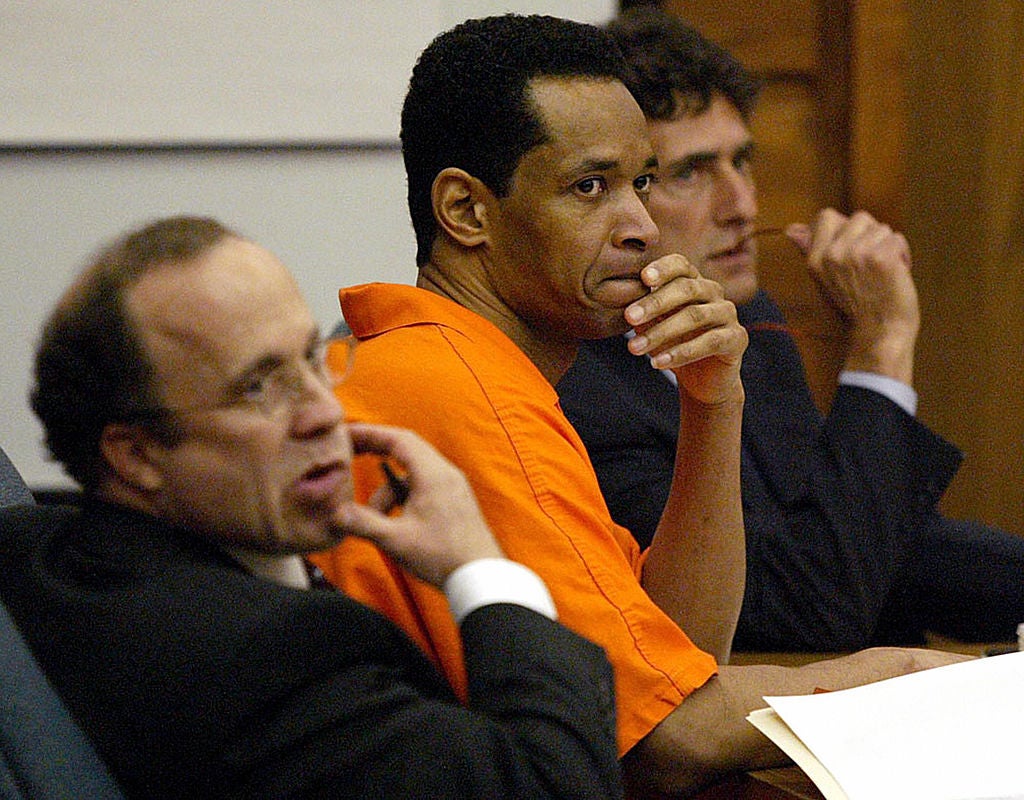
The card was a tarot card.
On its back, in handwriting, was the message: "Call me God."
It was left at one of the D.C. sniper crime scenes, according to the investigation summary.
Investigators treated the card as a taunt from the shooters.
It was one of the few physical items left behind at a crime scene, alongside the shell casings.
That is what the record shows: a card, a message, and an interpretation.
The exact crime scene where the card was found is not specified in the source.
Whether the card was a deliberate clue or a random object is not established.
What does a taunt like that mean?
Who writes "Call me God" on a tarot card?
And how does a piece of cardboard help catch anyone?
That would require evidence.
The card itself did not name anyone.
It did not point to a vehicle or a rifle.
It did not lead to an arrest.
It was a message left behind, nothing more.
The shell casings did the work.
The casings were matched to a rifle, and the rifle was traced to a man.
The card was treated as a taunt.
It remains a question mark in the case file.
THE RANDOM ATTACKS
Between October 2 and October 24, 2002, a series of shootings terrorized the Washington, D.C. metropolitan area, spanning Maryland, Virginia, and the District of Columbia.
Ten people were killed and three others critically wounded in seemingly random attacks at gas stations, shopping centers, and school grounds.
The attacks began with a shooting outside a liquor store in Montgomery County, Maryland, and continued across the region.
Victims were struck while going about ordinary activities—loading groceries, mowing a lawn, pumping gas.
Schools were locked down, and residents altered their daily routines out of fear.
The case summary does not detail the specific order of the shootings beyond the first.
What pattern was there to find?
A man at a gas station. A woman at a bus stop. A boy at school.
Nothing connected them except the place and the moment.
The randomness was the terror.
How do you catch a killer who seems to have no pattern?
The case summary reports that investigators struggled early on to identify any pattern at all.
It was the evidence left behind that would eventually give them a thread.
Shell casings. A tarot card. A rifle.
The rifle was traced to a man.
But that came later.
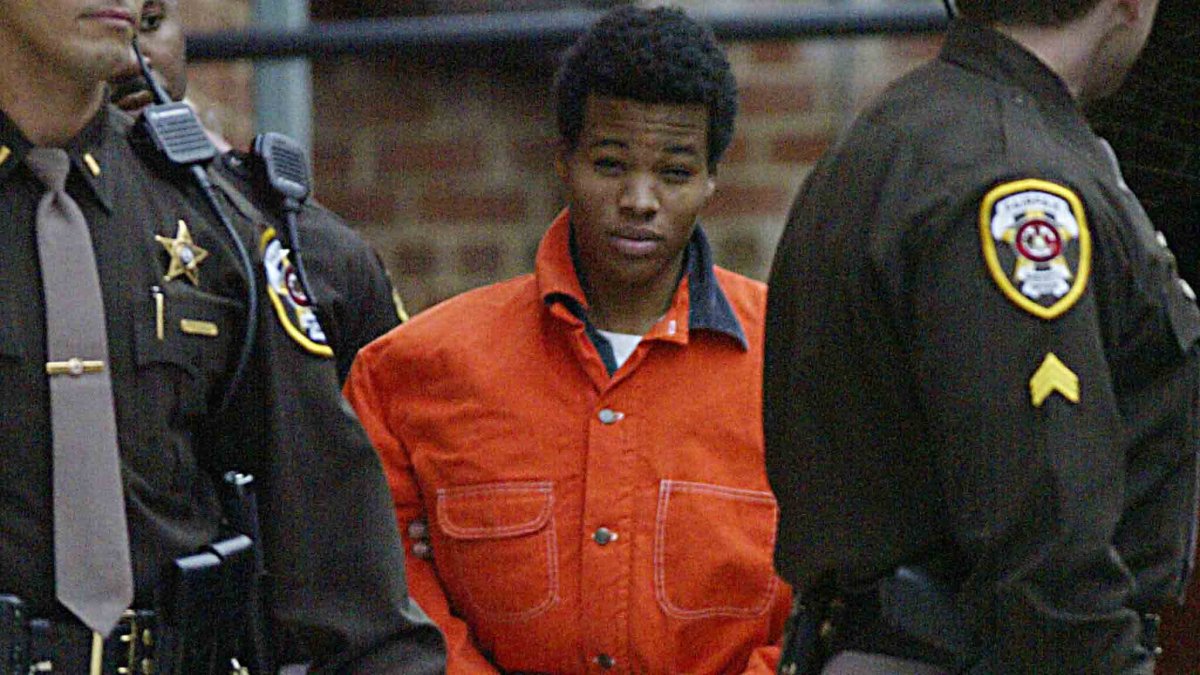
For now, there were only the shootings, and the fear that spread with each one.
THE WHITE VAN AND THE BLUE CAPRICE
A witness reported seeing a white van near one of the shootings.
That sighting sent police scanning the highways for white vans, for box trucks, for anything that matched.
The investigation summary does not name the witness, and it does not say when the sighting occurred.
What the record shows is the lead: a white van near a shooting, and a region on edge.
But the actual vehicle was a blue Chevrolet Caprice.
The Caprice had been modified with a hole cut into the trunk.
A shooter could fire from inside the trunk without being seen.
That modification changed the geometry of the hunt.
Police had been looking for the wrong color, the wrong shape, the wrong profile.
It was a false lead, and it cost time.
Ballistics brought them back.
Shell casings recovered from several crime scenes were matched to a Bushmaster .223-caliber rifle.
The same rifle was later found in the Caprice when the suspects were arrested.
That match linked the scattered shootings to a single weapon.
The rifle was traced to Muhammad, who had purchased it.
Fingerprints and DNA evidence also linked Malvo to the rifle.
Two men, one rifle, one car with a hole cut in the trunk.
The white van lead was never confirmed.
It was a theory, and the record does not establish that it was ever more than a witness's report.
The Caprice was real.
The rifle was real.
The ballistics match was the fact that held the case together.
THE PHONE CALL AND THE ARREST
A caller reached police using a phone number traced to a pay phone near a shooting in Virginia.
That caller, according to the investigation summary, was later identified as Muhammad.
It was a small thread, but investigators pulled it.
The number tied the D.C. shootings to a robbery and murder in Alabama.
It tied them, too, to a shooting in Washington state.
Both links pointed to Muhammad and Malvo.
The exact content of that phone call is not detailed in the source.
What the caller said, how long the call lasted, what was demanded — the record does not say.
And the identity of the motorist who ended the chase is also not established.
The source names no one at that rest stop.
But the break came on October 24, 2002.
A motorist alerted police to a blue Caprice parked at a rest stop off Interstate 70 in Maryland.

The car was the one.
The two men were found sleeping inside.
The rifle was discovered in the trunk.
The Bushmaster .223-caliber rifle, the weapon ballistics had already matched to the shootings, was there.
It was over.
No more calls.
No more random attacks.
The phone call was the thread.
The motorist was the knot.
The trunk held the proof.
AND THE STORY STILL ISN'T OVER
The rifle was destroyed after the trials.
The Chevrolet Caprice was disposed of too.
The evidence that decided the case no longer exists in a form anyone can touch.
John Allen Muhammad was tried first, in Virginia.
He was charged with capital murder in connection with the killing of a victim at a gas station in Manassas, according to the trial summary.
The prosecution argued that Muhammad was the mastermind.
His defense argued he was not the shooter and that Malvo had acted alone, but the jury rejected this.
Muhammad was convicted and sentenced to death.
He was executed by lethal injection on November 10, 2009, in Virginia.
Lee Boyd Malvo was tried separately, also in Virginia.
He was convicted of murder and sentenced to life without parole.
His defense argued he was manipulated and brainwashed by Muhammad, who acted as a father figure.
The jury rejected this.
Was the tarot card ever definitively linked to either man?
Was it a deliberate taunt, or just something left behind?
Was its message meant for the investigators at all?
That would require evidence.
The record does not establish that the card was ever tied to Muhammad or Malvo.
The exact number of victims in other jurisdictions is not specified.
What remains is the case itself.
The case led to changes in how law enforcement agencies coordinate across jurisdictions during multi-state investigations.
The shootings ended with two men sleeping in a car at a rest stop.
The trunk held the rifle.
The card held a message.
The message read "Call me God."
It is a documented piece of evidence.
It is also an open question.
Advertisement
You may also like
The bloody glove found on O.J. Simpson's estate that didn't fit in court
The glove lay on the ground of the estate on Rockingham Avenue. It was a bloody glove, discovered by a detective who had come…
The dentist who was a person of interest in the Black Dahlia case, then quietly cleared
She thought it was a mannequin. A local resident, walking in Leimert Park on the morning of January 15, 1947, saw what looked like…
The Glock Keffe D says he handed over — and the white Cadillac that changed rap history
The white Cadillac moved down the Las Vegas Strip on the night of September 7, 1996. A black BMW 750iL rolled ahead of it,…
The 14-foot aluminum fishing boat Scott Peterson bought weeks before Laci vanished
A 14-foot aluminum fishing boat. That is what Scott Peterson bought weeks before Laci vanished, a documented purchase, not a rumor. On December 24,…
Why a Colorado jury heard a confession that changed everything about the Watts family case
The friend called police on the morning of August 13, 2018. Shanann Watts, 15 weeks pregnant, was missing with her daughters, Bella, 4, and…
The blood on his pajama sleeve that contradicted Jeffrey MacDonald's intruder story
The pajama sleeve was examined under a microscope, and the blood on it held a pattern. The pattern was a transfer, a smear of…