The DNA match that ended 20 years of silence in a Seattle serial killer case
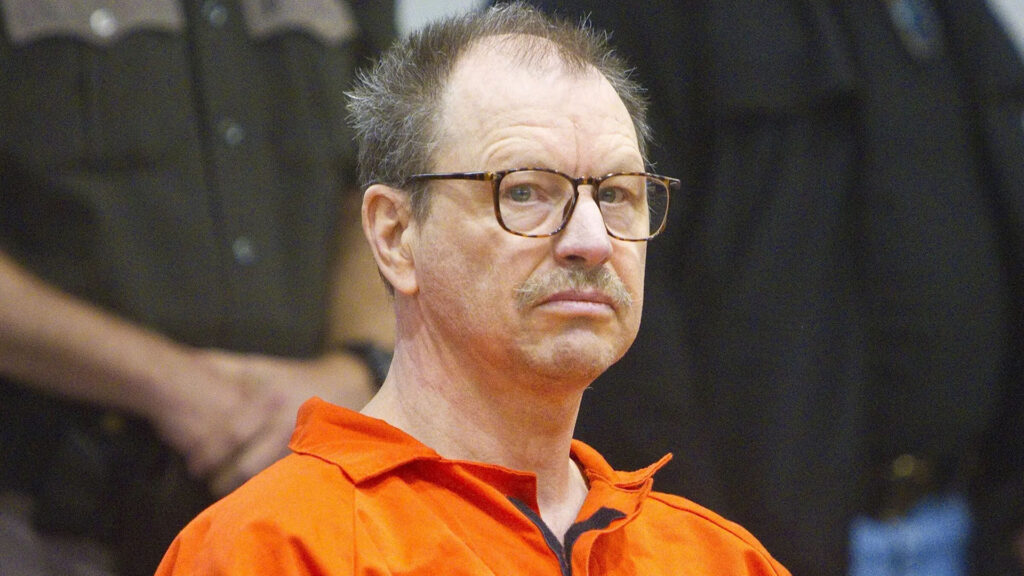
A truck painter from Auburn, Washington, gave a saliva sample in 1987.
He was not arrested that day. He was not charged that day.
The DNA technology in 1987 could not link him to anything, and the investigators who took the sample did not have the means to use it.
So the sample sat.
It sat in storage while the Green River Murders case went cold, with dozens of bodies recovered from the river and the surrounding woods, roadsides, and ravines.
It sat while the killer remained unidentified, and the task force interviewed thousands of people who did not lead anywhere.
It sat for years, a biological fact waiting for a method.
In 2001, advances in DNA testing changed what the sample could say.
Forensic scientists matched that same saliva to DNA found on several of the victims, and on November 30, 2001, Gary Ridgway was arrested.
The match was the decisive evidence.
A single sample, collected years before it could be read, held the answer all along.
What did Ridgway believe the sample was for when he gave it?
That is not what the record shows.
It is not established what he thought at the time he provided it, and the record does not say.
The sample does not speak to that.
The sample speaks to the DNA, and the DNA spoke in 2001, and the case that had gone quiet was not quiet anymore.
1982–1984: THE BODIES IN THE RIVER
In 1982, two boys fishing in the Green River found the body of a young woman.
She was the first identified victim of the Green River Murders, and the investigation began there.
Over the next several years, dozens of bodies were recovered from the Green River and surrounding wooded areas, roadsides, and ravines in the Seattle–Tacoma area.
Between 1982 and 1998, at least 49 women were murdered.
Most of them were sex workers, runaways, and vulnerable young women.
A task force was formed.
Detectives interviewed thousands of people, but the killer remained unidentified.
In 1984, Ridgway was stopped by police for soliciting a prostitute.
He became a suspect after a witness reported seeing him with one of the victims.
He was questioned, and he took a polygraph test.
He passed the test, and he was released.
The case kept growing without a name attached to it.
It is not definitively established how many victims there were in total.
The record says at least 49, and it says some victims remain unidentified or unrecovered.
The bodies kept coming, and the task force kept working.
The frustration was not a theory.
It was the plain shape of the case: dozens of women gone, and no one charged.
1987–2001: THE SAMPLE AND THE MATCH
In 1987, Ridgway provided a saliva sample.
The DNA technology at the time was not advanced enough to link him to the murders.

He was questioned. He was released. The sample went into storage.
The case went cold for years after that.
The task force kept working, but the trail went quiet.
The saliva sample sat in the record, waiting for the science to catch up.
In 2001, advances in DNA testing changed what the old sample could say.
Forensic scientists matched Ridgway's saliva to DNA found on several victims.
The match was direct. It tied him to the murders.
He was arrested on November 30, 2001.
The DNA evidence was the decisive factor.
Not a confession. Not a witness. A laboratory result.
The record says the match covered "several" victims.
It does not state the specific number beyond that.
That number is not established by the record.
What is established is the sequence: a sample given in 1987, a match read in 2001.
Fourteen years between the giving and the reading.
The technology had to catch up to the evidence that was already there.
It did.
Then the arrest came, and the case moved toward its end.
THE PLEA AND THE SENTENCE
The charge came first: seven counts of aggravated first-degree murder.
Then the plea in 2003: guilty to 48 counts, in exchange for life without parole.
Not a trial. A trade.
The agreement promised a sentence of life without parole and his cooperation in locating the remains of victims who had not been found.
The trial judge accepted the plea.
Ridgway was sentenced to 48 consecutive life terms without the possibility of parole.
He was also ordered to pay restitution to the victims' families.
As part of the plea agreement, he led investigators to the remains of several additional victims.
The specific locations or number of those additional remains are not detailed in the record.
That is not established.
What is established is the weight of the deal: certainty, not closure.
The families got a conviction.
They got a man who would never leave prison.
What they did not get, in every case, was a body to bury.
The promise to cooperate was the currency of the plea.
It bought a life sentence instead of the death penalty.
It bought the possibility of bringing daughters home.
It bought an end to the search, if not an end to the silence.
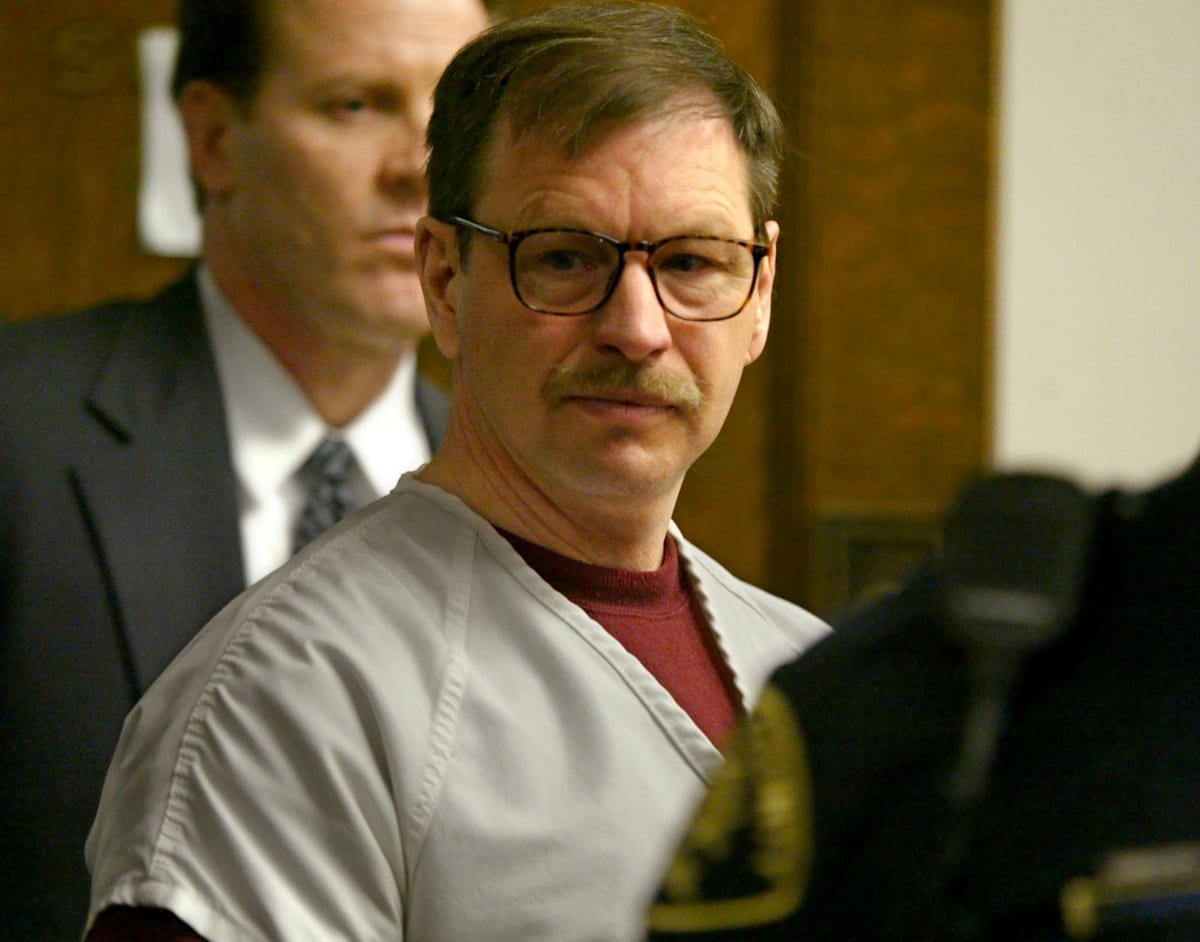
The judge accepted the plea, and the case moved toward its end.
Forty-eight counts. Forty-eight life terms.
One sentence, stacked on itself, until the number stopped mattering.
The families were left to seek what the record cannot supply.
That would require evidence.
AND THE STORY STILL ISN'T OVER
Gary Ridgway is serving his life sentence at the Washington State Penitentiary in Walla Walla.
He has remained in prison since his sentencing in 2003.
In 2020, he was moved to a different facility for medical reasons.
He remains incarcerated.
The case is considered closed.
Some victims remain unidentified or unrecovered.
It is not established how many.
It is not established what the families' current legal or personal efforts are beyond seeking closure.
The families have continued to seek closure.
The case has been the subject of numerous books and documentaries.
The books tell the story of the saliva sample.
The documentaries replay the 2001 match.
They replay the plea.
They replay the sentence.
They do not replay the unidentified.
They do not replay the unrecovered.
The record does not supply those names.
It does not supply their number.
It does not supply their families' next steps.
That would require evidence.
Gary Ridgway is serving his life sentence at the Washington State Penitentiary in Walla Walla.
He has remained in prison since his sentencing in 2003.
In 2020, he was moved to a different facility for medical reasons, but he remains incarcerated.
The case is considered closed, though some victims remain unidentified or unrecovered.
The families of the victims have continued to seek closure, and the case has been the subject of numerous books and documentaries.
It is not established how many victims remain unidentified or unrecovered.
It is also not established what the families' current legal or personal efforts are beyond seeking closure.
The books and documentaries tell the story as it was recorded.
The story ends with a match.
The story does not end with every name.
That would require evidence.
Advertisement
You may also like
The bloody glove found on O.J. Simpson's estate that didn't fit in court
The glove lay on the ground of the estate on Rockingham Avenue. It was a bloody glove, discovered by a detective who had come…
The dentist who was a person of interest in the Black Dahlia case, then quietly cleared
She thought it was a mannequin. A local resident, walking in Leimert Park on the morning of January 15, 1947, saw what looked like…
The Glock Keffe D says he handed over — and the white Cadillac that changed rap history
The white Cadillac moved down the Las Vegas Strip on the night of September 7, 1996. A black BMW 750iL rolled ahead of it,…
The 14-foot aluminum fishing boat Scott Peterson bought weeks before Laci vanished
A 14-foot aluminum fishing boat. That is what Scott Peterson bought weeks before Laci vanished, a documented purchase, not a rumor. On December 24,…
Why a Colorado jury heard a confession that changed everything about the Watts family case
The friend called police on the morning of August 13, 2018. Shanann Watts, 15 weeks pregnant, was missing with her daughters, Bella, 4, and…
The blood on his pajama sleeve that contradicted Jeffrey MacDonald's intruder story
The pajama sleeve was examined under a microscope, and the blood on it held a pattern. The pattern was a transfer, a smear of…