The 1989 trial that pitted a lone defense against 14 murders — and one shocking courtroom statement
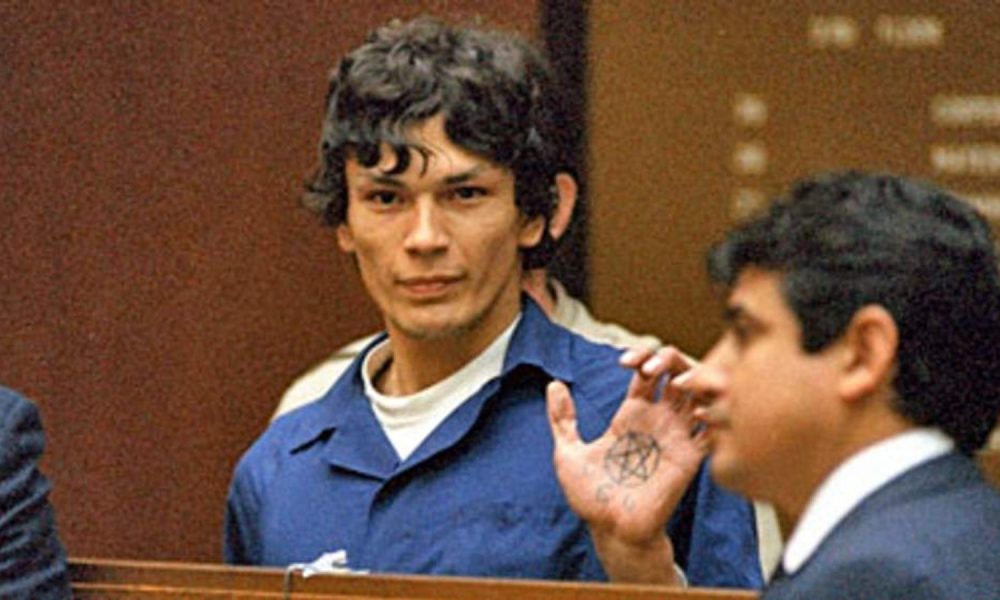
The sentencing phase of the 1989 trial had reached its close when Richard Ramirez stood and spoke.
He was convicted. The jury had returned 13 counts of first-degree murder, five counts of attempted murder, 11 sexual assault counts, and 14 burglary counts.
The charges had linked him to 14 murders overall.
A lone defense attorney had faced the prosecution across the Los Angeles Superior Courtroom of Judge Michael Tynan.
The defense had argued the evidence was circumstantial, that Ramirez had been misidentified.
The prosecution had presented the Avia shoe print, the fingerprints, the palm print, the ballistics from a .22-caliber handgun.
Then Ramirez spoke.
The phrase that emerged from that moment, reported widely in coverage, was "I will be avenged."
It was a statement reported by media.
It was not a verbatim transcript of the court record in the source.
Many interpreted the remark as taunting the court and the families of the victims.
Was it a threat? A prophecy? A man's last word before the sentence of death was read?
The record does not establish the exact wording, tone, or full context of the statement beyond that reported phrase.
No full text of the speech appears in the source.
No exact context of the moment is given.
What remains is the chill of a defendant's defiance, a line that outlived the trial itself.
THE CRIMES AND THE HUNT
Between June 1984 and August 1985, a series of home-invasion attacks, rapes, and murders terrorized Los Angeles and the San Francisco Bay Area.
The perpetrator entered homes at night, often through unlocked doors or windows, and attacked sleeping residents.
The media dubbed the unknown assailant the "Night Stalker."
The weapons included a .22-caliber handgun, a machete, and a claw hammer.
A distinctive Avia athletic shoe print was left at several crime scenes.
It was later matched to a pair of shoes.
Fingerprints and a palm print were recovered.
Ballistics linked the .22-caliber handgun to multiple shootings.
The case broke in August 1985.
A witness in the Mission District recognized Ramirez from a widely circulated composite sketch and alerted police.
He was chased by a crowd and subdued.
The specific number of attacks and the exact sequence of events leading to the arrest are not fully detailed in the source.
What is clear is the escalation: nights of doors left unlocked, windows left open, and the dread that followed.
Then the capture.
The relief was real, but the questions were just beginning.
THE TRIAL
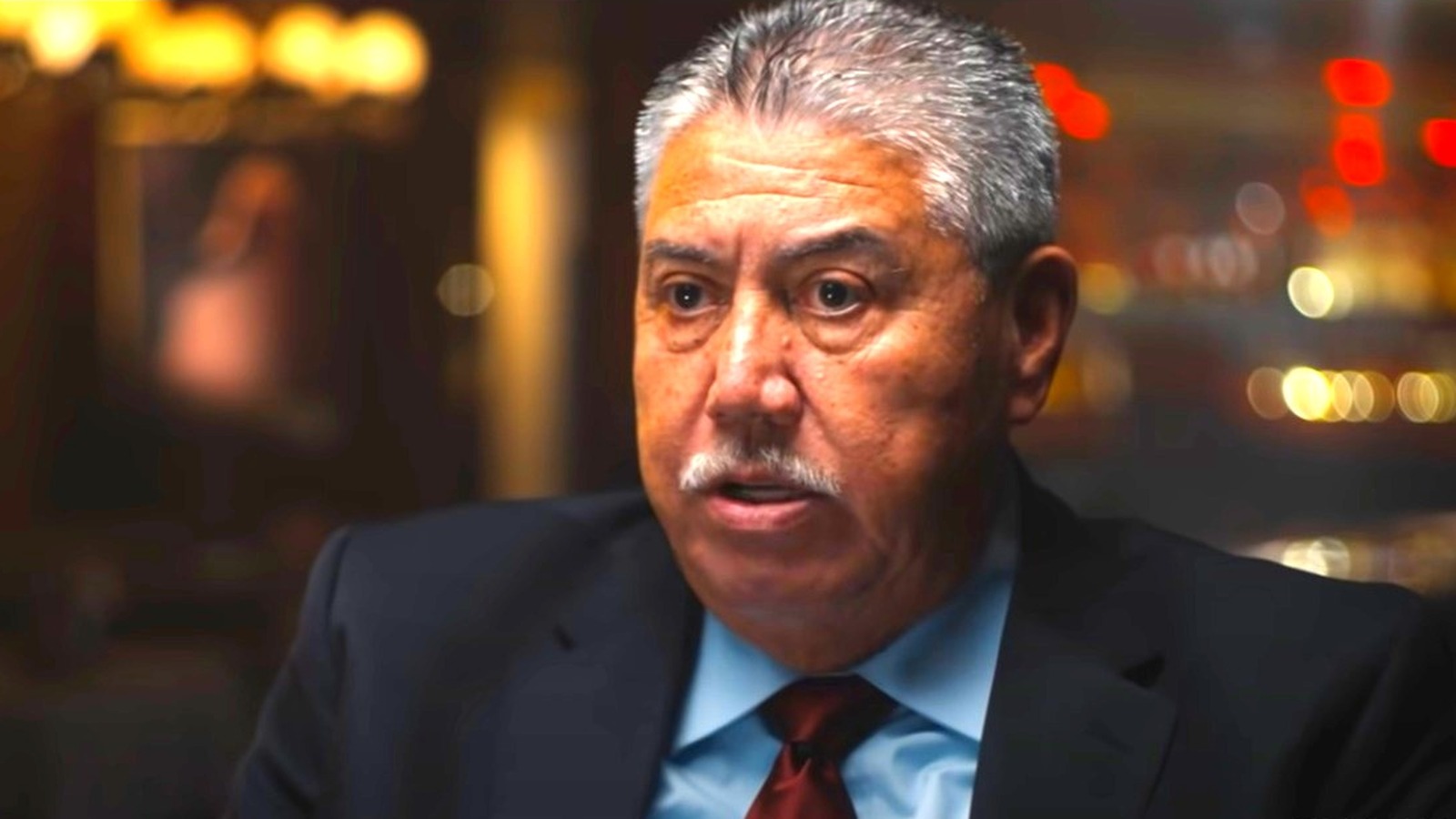
The trial opened in Los Angeles Superior Court before Judge Michael Tynan.
The prosecution, led by a deputy district attorney, presented evidence linking Richard Ramirez to 14 murders.
Also to numerous sexual assaults, burglaries, and attempted murders.
The case against him was built on physical traces: an Avia shoe print, fingerprints, a palm print, ballistics from a .22-caliber handgun.
Forensic analysis of blood and hair samples helped connect him to the crimes.
The defense, led by a single attorney, argued the evidence was circumstantial.
He argued Ramirez had been misidentified.
It was one lawyer against the full weight of the state.
Several victims survived the attacks and took the stand.
One of them was a young boy who had been present during an attack.
He testified.
The trial was lengthy and highly publicized.
It was a spectacle of dread, with the accused seated in the courtroom day after day.
In September 1989, the jury returned its verdict.
Ramirez was convicted of 13 counts of first-degree murder.
Also of 5 counts of attempted murder, 11 sexual assault counts, and 14 burglary counts.
Not 14 murders, as the prosecution had alleged — 13 convictions.
The distinction mattered.
The specific testimony given by each witness is not detailed in the source.
Nor are the exact arguments made by the defense attorney.
What remains is the record of the verdict and the weight it carried.
The relief was real, but the questions were just beginning.
TWO READINGS OF THE SAME FACTS
The prosecution read the same record as a closed circle.
The Avia shoe print matched the tread left at multiple scenes.
Fingerprints and a palm print were recovered and identified.
Ballistics tied the .22-caliber handgun to several shootings.
Forensic analysis of blood and hair samples helped connect Ramirez to the crimes, the source notes.
DNA testing was not yet in common use in 1989.
The defense read the same record as a chain of inferences.
The evidence was circumstantial, the defense argued.

Ramirez had been misidentified, the defense argued.
Both readings rested on the same exhibits, the same witnesses, the same testimony.
The jury heard the prosecution's version and convicted Ramirez of 13 counts of first-degree murder, along with attempted murder, sexual assault, and burglary counts.
The conviction and the death sentence were upheld on appeal.
Then came the sentencing phase, and the statement.
Ramirez said "I will be avenged," according to media reports.
Many heard it as taunting the court and the victims' families.
The source does not confirm his intent.
It is not established that he meant to taunt.
It is not established that he meant anything else.
What the statement meant is a matter of interpretation, not a matter of record.
The defense's full misidentification argument also remains incomplete in the record.
The exact arguments made by the defense attorney were not fully preserved.
So the question stands: how could the same facts support two such different stories?
And what did the words actually mean?
That would require evidence the record does not provide.
AND THE STORY STILL ISN'T OVER
He was sentenced to death and held on death row at San Quentin State Prison.
He died on June 7, 2013, of complications related to B-cell lymphoma.
He was still awaiting execution.
The death sentence was never carried out.
It is a finality. It is also an open end.
The case remains one of the most studied serial murder investigations in California history.
Detectives, prosecutors, and defense attorneys have revisited it in interviews and retrospectives.
Several survivors and victims' families have spoken publicly over the years about the lasting impact of the crimes.
They have described fear, grief, and the slow work of rebuilding ordinary nights.
The specific public statements made by survivors and families are not detailed in the source.
That part of the record is not established here.
So the story does not close with the verdict, nor with the death.
It continues in what the survivors carried.
It continues in the study of how the investigation unfolded.
It continues in the question of what the courtroom statement meant.
A sentence was pronounced. A sentence was never served.
The man died. The case did not.
Advertisement
You may also like
The 12:55 a.m. takeoff that ended with three rock legends in an Iowa cornfield
It is 12:55 a.m. on February 3, 1959, and a Beechcraft Bonanza lifts off from Mason City Municipal Airport. The plane, tail number N3794N,…
A pair of eyeglasses found by a body that would force two teens to confess
The glasses were horn-rimmed, found near the body of 14-year-old Robert "Bobby" Franks in a culvert close to the Indiana border. They were traced…
The 31-day gap between Caylee Anthony's last sighting and the 911 call that started it all
June 16, 2008, was the last day anyone saw Caylee Anthony alive. She was two years old. Her grandmother, Cindy Anthony, called 911 on…
The 90-second cell phone video that shattered Alex Murdaugh's alibi
Paul Murdaugh’s phone recorded for ninety seconds at the dog kennels on June 7, 2021. The video was played at trial in Colleton County.…
The tie left on the plane that never yielded a fingerprint
The tie sat on the seat of a Northwest Orient Airlines Boeing 727 on November 24, 1971. A man calling himself Dan Cooper had…
The confession that shifted — and the voices a jury refused to hear
He walked into a local bar on November 13, 1974, and told the patrons his family had been shot. Police found six bodies in…