The confession that shifted — and the voices a jury refused to hear
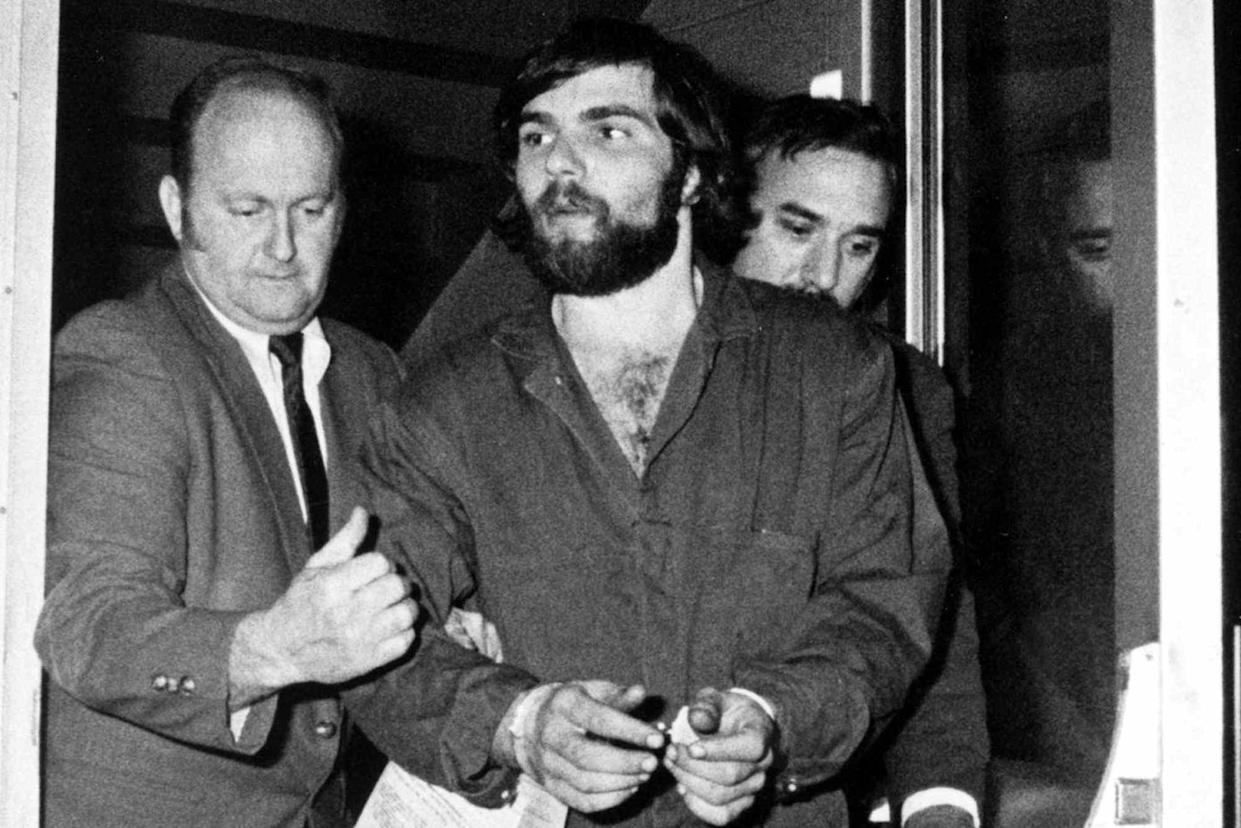
He walked into a local bar on November 13, 1974, and told the patrons his family had been shot.
Police found six bodies in the house at 112 Ocean Avenue.
Each victim had been shot in the head with a .35-caliber Marlin rifle.
The victims were his father, his mother, his two brothers, and his two sisters.
He was 23 years old.
At first, he claimed an unknown gunman had done it.
Under questioning, he confessed.
He said he had killed his family.
Then the confession shifted.
He gave conflicting accounts.
He claimed he had heard voices.
The voices are a claim in the record.
No witness testified to them.
No evidence established them.
Whether DeFeo actually heard voices is not established by the record.
What is established is the confession he gave to detectives.
What is established is the rifle.
What is established is the morning of November 13, 1974, when six bodies were found inside the house.
He told the bar patrons first.
Then he told the police.
Then he told a different story.
Which version was true?
Which version would a jury believe?
That would require the trial.
THE BAR AND THE BODIES
He walked into a local bar and told the patrons his family had been shot.
The exact time he entered the bar is not in the record.
Police were called to the home at 112 Ocean Avenue that morning.
Officers found six bodies, each shot in the head with a .35-caliber Marlin rifle.
The victims were his father, his mother, his two brothers, and his two sisters.
They were found in their beds, shot while sleeping, according to the medical examiner who later testified.
DeFeo initially claimed an unknown gunman had committed the murders.
Under questioning, he confessed, stating he had killed his family.
The confession came after he waived his rights.
He said he had done it.
That was the weight of the moment, the shift from victim to accused.
The confession was the cornerstone of the prosecution's case.
It was also the beginning of a story that would not stay simple.
DeFeo later gave conflicting accounts, including claims of hearing voices.
Those voices would not be heard by the jury.

Not then.
The record holds the confession and the bodies.
The voices remain claims, not facts.
THE TRIAL: TWO STORIES, ONE JURY
The trial began in October 1975 before Judge Thomas Stark.
DeFeo was charged with six counts of second-degree murder.
The prosecution argued that DeFeo had planned the murders and was legally responsible.
The defence argued that DeFeo was insane and did not understand the nature of his actions.
Two stories, one jury.
The defence presented a psychiatrist who claimed DeFeo suffered from a personality disorder.
The prosecution countered with its own psychiatric expert who found him legally sane.
Two experts, two verdicts waiting in their words.
The jury heard the confession first, the one DeFeo gave to detectives after waiving his rights.
Then they heard the voices.
DeFeo had given conflicting accounts, including claims of hearing voices.
The defence built its case on those voices and on a history of drug abuse and mental instability.
The prosecution built its case on the rifle, the sleeping victims, and the confession.
The medical examiner testified that the victims were shot while sleeping.
The time of death matched the confession.
The names of the two psychiatrists are not in the record.

What they said is in the record.
What the jury believed is in the verdict.
Not because one expert was more persuasive.
Not because one story was more complete.
But because the law asked a single question: did he know what he was doing?
The defence said no.
The prosecution said yes.
The jury would have to choose which voice to trust.
THE VERDICT AND THE VOICES
The jury deliberated, and the jury decided.
They rejected the insanity defense and found DeFeo guilty on all six counts of second-degree murder.
The voices he claimed to hear were not accepted as a legal defence.
Not because the jurors were cruel.
Because the law asked for something else: evidence that he did not understand his actions.
The defence had argued insanity, citing his history of drug abuse and mental instability.
The prosecution countered with its own psychiatric expert, who found him legally sane.
The record holds both stories.
The jury chose the prosecution's.
Judge Thomas Stark imposed the sentence: six concurrent terms of 25 years to life in prison.
DeFeo appealed.

The conviction was upheld.
That is what the record establishes: a confession, a trial, a verdict, an appeal denied.
The voices remain a claim.
They are a claim the jury refused to hear, and a claim the record does not verify.
Years later, the defence attorney acknowledged the paranormal story as a fabrication.
He said he and the family had made it up to create a legal defense.
Whether that admission is entirely true is disputed by the DeFeo family.
The record does not settle that dispute.
It settles only what happened in the courtroom.
The supernatural claims were not part of the trial.
They were not evidence.
They were a story told afterward, around the house at 112 Ocean Avenue.
The jury heard testimony from psychiatrists on both sides.
They heard about drug use and erratic behavior.
They heard the confession.
They did not hear the voices.
That would require evidence.
The evidence was a man who said he heard them.
That was not enough.
The conviction stood.

The sentence stood.
The voices stayed outside the record, where they remain.
AND THE STORY STILL ISN'T OVER
DeFeo remained in prison for the rest of his life.
He died on March 12, 2021, at the age of 69, while serving his sentence.
The house at 112 Ocean Avenue was later sold and renovated.
The address was changed to 108 Ocean Avenue to deter tourists.
The paranormal claims were later acknowledged by the defence attorney as a fabrication.
The DeFeo family disputed the details of that admission.
The legal proceedings concluded with the conviction.
The public fascination continues.
It is a closed case. It is also an open story.
The voices were not evidence. The voices were not heard by the jury. The voices were a claim, and the record does not establish them.
What remains is the confession.
What remains is the trial.
What remains is the sentence, served in full.
Any pending legal action or hearing is not in the record.
The next concrete step is not in the record, either.
The case is closed legally.
The story is not.
Advertisement
You may also like
The truck painter who led detectives to 49 Green River victims — and the DNA that closed in on him
He painted trucks for a living. Gary Leon Ridgway lived in Auburn, Washington, a suburb south of Seattle. He was married multiple times. He…
The 1939 tip that put a suspect behind bars — but the murder charge never came
1939. A tip. A tip put a former bartender and carnival worker behind bars in Cleveland, Ohio. He was the most prominent suspect in…
The Zodiac cipher that cracked open a killer's boast — but not his name
In August 1969, a cipher arrived at the offices of the *San Francisco Chronicle*. It was not the first taunting letter, and it would…
The smiley-face letter that made a sister call police on her own brother
The letter arrived at the Oregonian with a claim of responsibility for a murder and a mocking of police. It was signed with a…
The 2005 massage-table complaint that opened Epstein's case, and the detective who kept digging
A mother called Palm Beach police in 2005. She said her 14-year-old stepdaughter had been recruited by an older girl to give a man…
The 13-day trial that hinged on a dress burned in a stove — and a timeline no one could explain
The dress was burned in a stove on the third day after the bodies were found at 92 Second Street. The prosecution called it…