The Zodiac cipher that cracked open a killer's boast — but not his name
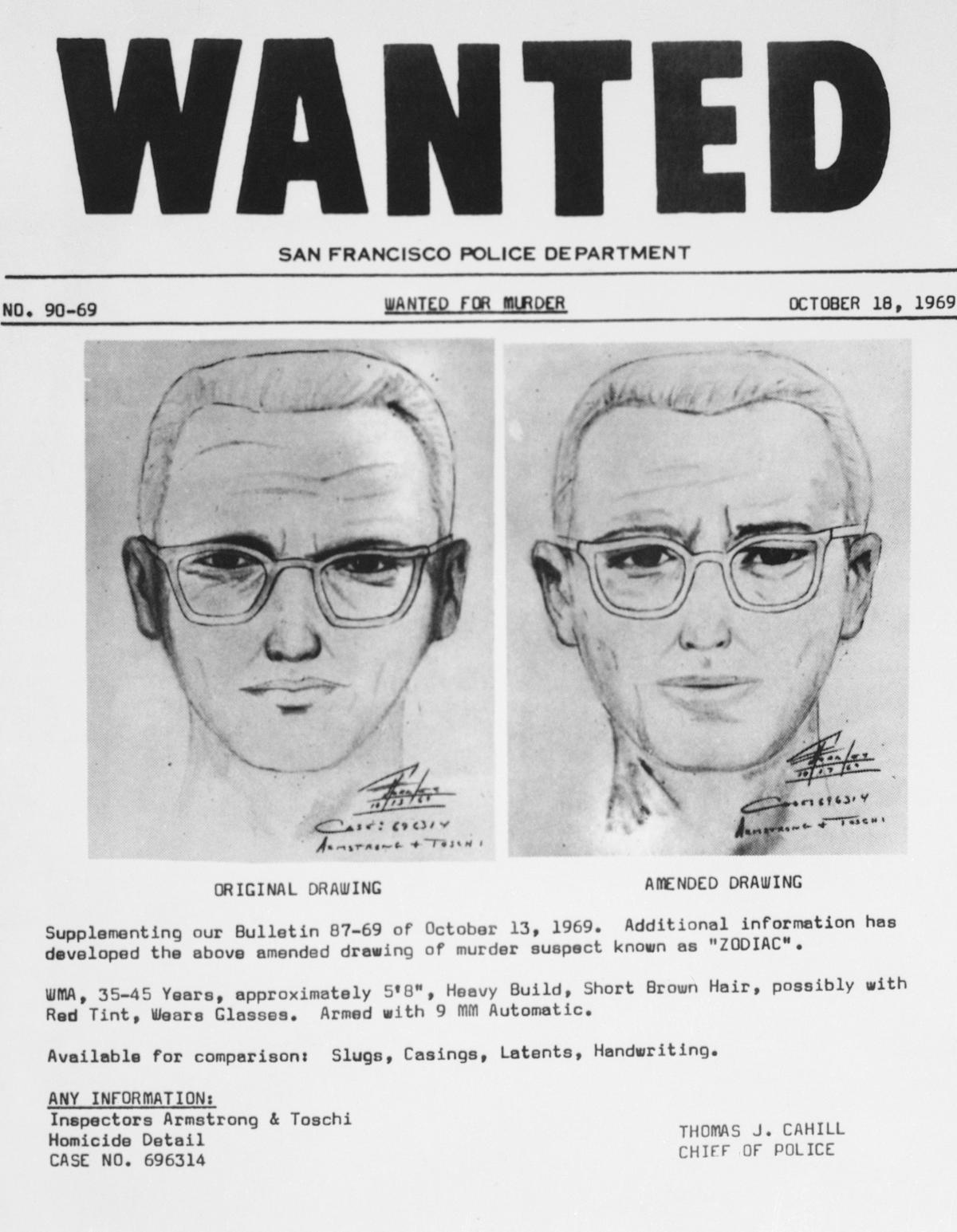
In August 1969, a cipher arrived at the offices of the *San Francisco Chronicle*.
It was not the first taunting letter, and it would not be the last.
The cryptograms and letters went to the *Chronicle*, the *San Francisco Examiner*, and the *Vallejo Times-Herald*.
They taunted police. They threatened further violence.
Then a schoolteacher from Salinas, California, and his wife, Donald and Bettye Harden, sat down with the first cipher.
They cracked it.
The decoded message contained a boast: the writer claimed responsibility for the murders and threatened more.
The letters included details of the crimes that were not public.
That detail confirmed the writer's authenticity.
A second cipher was sent later.
It was never definitively solved.
Who wrote the boast?
Who sent the letters?
Who knew the details that were not public?
That would require evidence, and the record does not establish the cipher's author.
The case was never solved.
The killer was never identified.
The boast remains. The name behind it does not.
THE FIRST CRIMES
The first confirmed attack came on December 20, 1968.
Two teenagers were shot dead at a lovers' lane near Vallejo.
The killer later known as the Zodiac Killer had begun.
On July 4, 1969, a man was shot dead at a golf course in Vallejo.
A woman at the same scene was seriously wounded.
She survived.
On September 27, 1969, a man was stabbed to death at Lake Berryessa.
A woman there was wounded.
She survived too.
On October 11, 1969, a taxi driver was shot dead in San Francisco.
That made at least five dead between December 1968 and October 1969.
The attacks escalated in frequency.
They escalated in method.
A gun at the lovers' lane.
A gun at the golf course.
A knife at the lake.
A gun in the city.
Survivors from the July 4 and September 27 attacks gave descriptions of the attacker.
A heavyset man, they said.
In his late 20s to 30s.
The descriptions matched.
What did he want?
What drove him from one county to the next?
That would require evidence.
The killer's motive is not in the record.
His personal background is not in the record.
The record holds the dead, the wounded, and the dates.
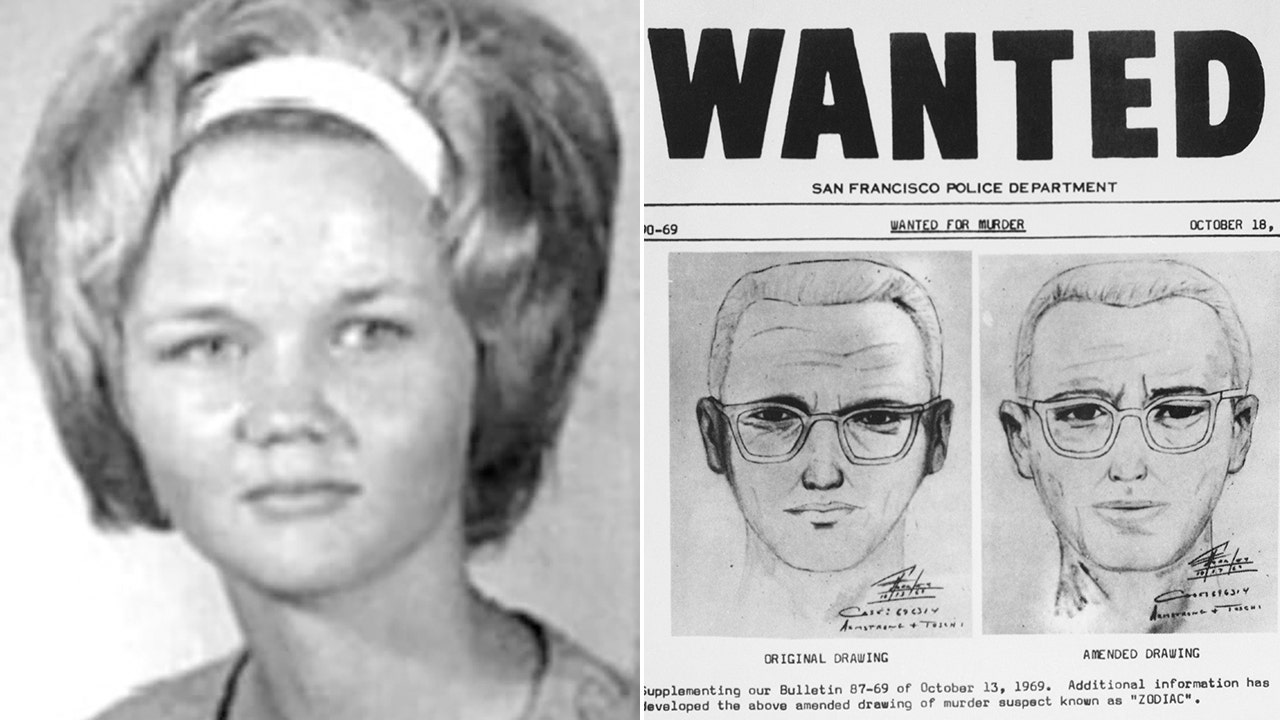
It holds the descriptions.
It does not hold the why.
THE LETTERS AND THE CODE
The letters began arriving in the summer of 1969.
They went to the *San Francisco Chronicle*, the *San Francisco Examiner*, and the *Vallejo Times-Herald*.
Each envelope carried a taunt, a threat, or a puzzle.
The first cipher reached the *Chronicle* in August 1969.
A schoolteacher named Donald Harden and his wife Bettye solved it.
The decoded message claimed responsibility for the murders.
It threatened further violence.
The boast was specific, and it was verified.
The letters included details of the crimes that were not public.
Those details confirmed the writer's authenticity.
The killer controlled the narrative.
A second cipher was sent later.
It was never definitively solved.
The exact content of that second cipher is not established.
The source record offers no decoded text, no confirmed reading, no agreed meaning.
It remains a broken code.
The letters created a media sensation.
Reporters covered each new message as a front-page event.
Police departments competed for information, and the public flooded the papers with tips.
The investigation was hampered by the very messages meant to solve it.
Every letter was a performance.
Every cipher was a demand for attention.
The killer wrote, and the city read.
The killer promised more, and the city waited.
That would require the record to say so.
It does not.
The story was shaped by the writer, not the investigators.
The code proved the boast.
It did not prove the name.
THE SUSPECT AND THE MISSED ENCOUNTER
It came from an acquaintance.
That acquaintance told police that Arthur Leigh Allen had spoken of committing such crimes and had made threats.
Allen was interviewed multiple times.
He was searched.
He was surveilled.
No physical evidence linked him to the crimes.
No physical evidence ever would.
The case against Allen was built on words, on suspicion, on a man who talked too much and fit the description.
It was not built on proof.
In 2002, DNA testing of material from the envelopes and stamps was compared to Allen's DNA.
The testing excluded him.
It cleared him posthumously.
Allen had died in 1992, never charged, never tried.
Before the DNA, there was a missed encounter.
Two San Francisco police officers, Donald Fouke and Eric Zelms, saw a man matching the suspect description near the scene of the Stine murder.
They did not stop him.
That missed opportunity became a focus of later scrutiny.
Whether the man they encountered was the killer is not established.
It was a near-miss.
It was the shape of the whole case: a man seen, a man not stopped, a man who fit.
The officers kept driving.
The man kept walking.
Allen was a person of interest, not a certainty.
He was the closest the investigation came to a name.
The closest, and still not close enough.
No one was ever charged with the Zodiac killings.
No one was ever tried.
The case produced no convictions, no plea deals, no acquittals.
Just a cleared suspect and a question that would require evidence.
The code proved the boast.
It did not prove the name.
AND THE STORY STILL ISN'T OVER
The Zodiac Killer was never identified.
Arthur Leigh Allen died in 1992.
In 2002, DNA testing of material from the envelopes and stamps was compared to Allen's DNA and excluded him, clearing him posthumously.
In 2021, a team of independent investigators claimed to have identified the killer as Gary Francis Poste.
That claim was not accepted by law enforcement.
It has been widely disputed.
The San Francisco Police Department and other agencies continue to list the case as open and unsolved.
No new charges have been filed.
The case has been the subject of numerous books, documentaries, and films.
It remains a story told and retold, each version ending the same way.
The statute of limitations has not run on murder.
The case remains open in multiple jurisdictions.
It is considered inactive by most agencies.
The boast still echoes.
It was a claim of ownership, a claim of power, a claim of a name.
The code proved the writer was real.
It proved he knew details that were not public.
It did not prove who he was.
Who was he?
What did he do before the first shots?
What led him to that lovers' lane, that golf course, that lake, that taxi?
That would require evidence.
The record does not establish it.
The identity of the killer remains unknown.
The 2021 claim is not accepted by law enforcement.
That is where the story sits.
Open.
Unanswered.
Inactive, but not closed.
Advertisement
You may also like
The bite mark on Lisa Levy that tied Ted Bundy to the Chi Omega murders
She was on the ground below. On the body of the second victim, investigators found something the blunt instrument had not made: a bite…
The ransom money that led detectives to a carpenter's door — but what did the jury hear?
The gold certificate was a twenty-dollar bill. In September 1934, it surfaced at a gas station in New York City. The attendant, Walter Lyle,…
Manson jury deliberated nine days — one witness told all from the driver's seat
She drove to Cielo Drive. She drove away from it. Linda Kasabian drove the car to both crime scenes on the nights of August…
The alibi that hung on a 14-foot boat and one cold morning
The 14-foot aluminum boat sat low in the water at the Berkeley Marina. It was December 24, 2002, and the morning was cold. Scott…
The $10 million note and the call that cracked the D.C. sniper case
The phone rang, and the priest answered. Father Michael Smargiassi was a priest in Montgomery County. Police had asked him to relay a message.…
The math professor in a Montana cabin who mailed bombs for 17 years — what made him do it?
The cabin sat on a half-acre of scrub and pine outside Lincoln, Montana, population roughly one thousand. Inside, a former mathematics professor lived alone,…