The alibi that hung on a 14-foot boat and one cold morning
The 14-foot aluminum boat sat low in the water at the Berkeley Marina.
It was December 24, 2002, and the morning was cold.
Scott Peterson told police he had launched that small, open boat alone, heading out onto San Francisco Bay to fish.
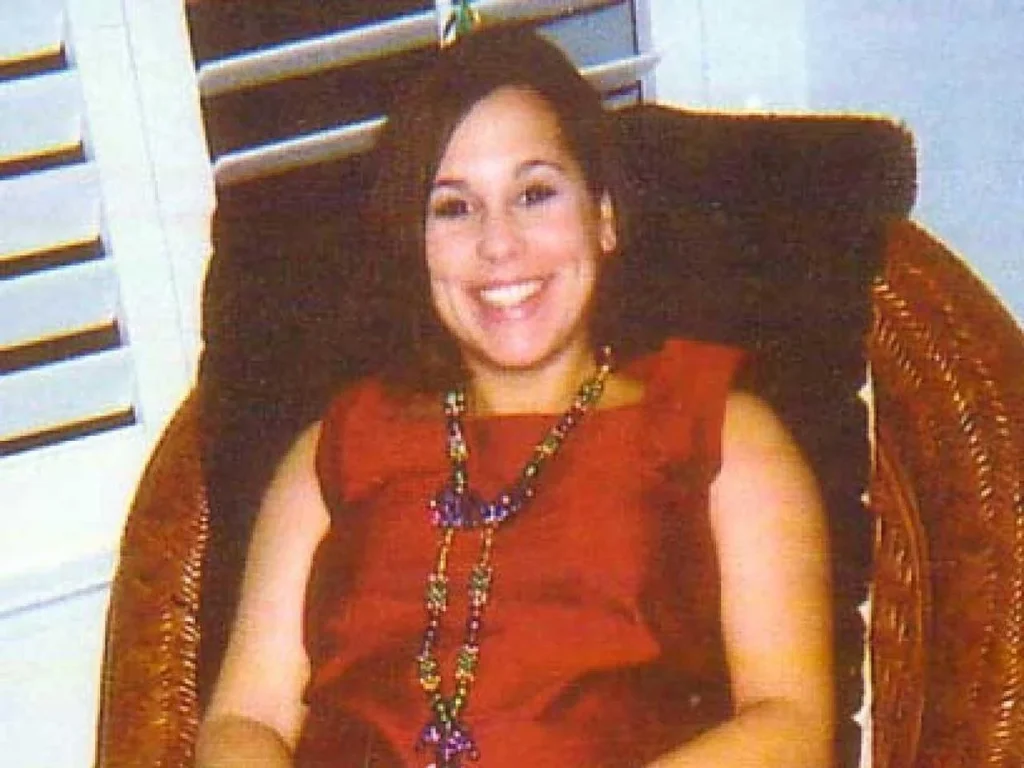
Laci Peterson, eight months pregnant, had been reported missing from the couple’s Modesto home that same day.
Her husband’s account was the only account.
Detectives noted the inconsistencies.
They noted the cold.
They noted the boat—so small, so exposed, so hard to imagine on a December morning.
Why launch it at all?
Why fish that day, of all days?
Why return without a single fish to show for it?
That would require evidence.
What exactly happened that morning is not established.
Only Scott’s story exists.
The lead detective, Al Brocchini of the Modesto Police Department, would later testify about those early inconsistencies.
The prosecution would build its case around them—the boat, the cold, the timing.
The defense would offer another story entirely.
But on that morning, there was only the boat, the cold water, and a man who said he had been fishing.
THE SEARCH AND THE AFFAIR
Police initially treated Laci's disappearance as a possible abduction.
Suspicion quickly fell on Scott.
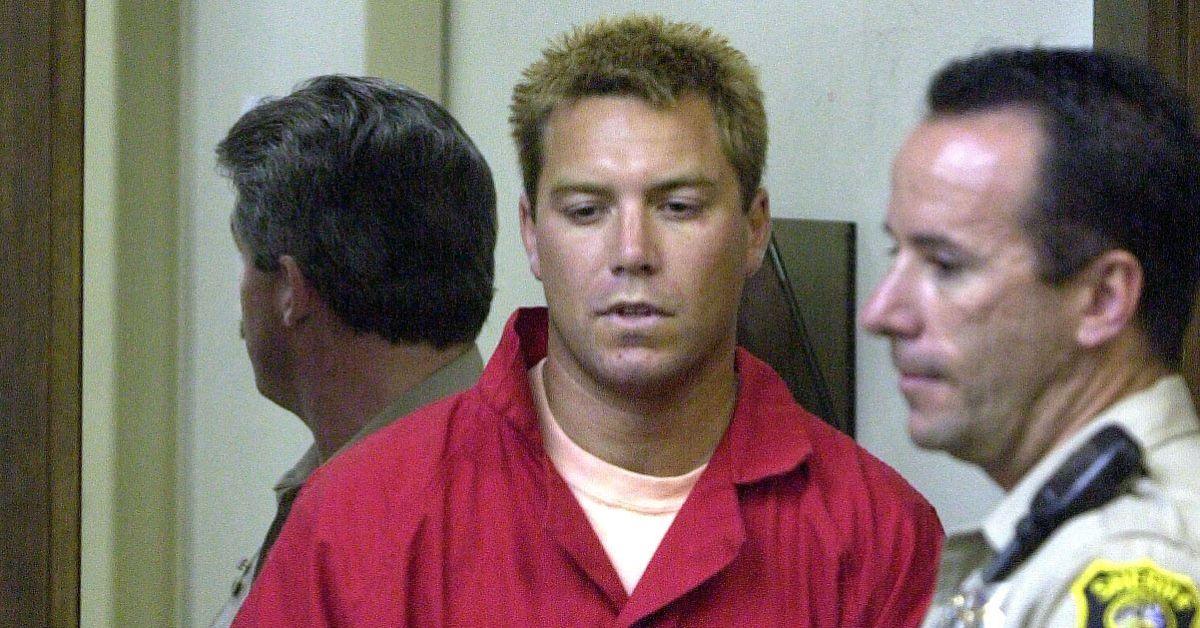
Detectives noted inconsistencies in his account of the fishing trip, including his claim that he launched his boat at the marina despite the cold.
Then, in January 2003, a key break came.
Amber Frey came forward.
Frey revealed that she had been in a romantic relationship with Scott while Laci was missing.
Frey cooperated with police.
She recorded phone calls with Scott, and those calls were played at trial.
The exact nature of the relationship beyond her testimony is not fully documented.
What is documented is the scrutiny.
Scott sold Laci's car.
He bought a new truck.
Detectives watched.
The prosecution would later argue these were the acts of a man freeing himself from family obligations.
The defense would offer another story entirely.
But in those early weeks, the search went on.
The record shows the affair, the recorded calls, the sold car.
It does not show what happened on the cold morning.
That would require evidence.
That would require a trial.
THE BODIES AND THE TRIAL
The first bodies surfaced in April 2003 on the shores of San Francisco Bay.
A woman's body, and then the body of an unborn boy the couple had named Conner.
They came ashore near the spot where Scott Peterson said he had been fishing that cold December morning.
He was arrested on April 18, 2003, and charged with two counts of murder.
The trial began in June 2004 in Redwood City, after a change of venue from Modesto.
The prosecution built its case on circumstance.
It was a detailed case, and it was a circumstantial case.
Amber Frey testified about the romance she had with Scott while Laci was missing.
She testified about the recorded phone calls, which were played for the jury.
The prosecution argued he killed Laci to be free of family obligations.
The location of the bodies, the boat, the affair, the behavior afterward—they laid it all out.
The weapon was never recovered.
The prosecution argued an unspecified blunt object, or his hands.
That was not established at trial.
The defense argued the prosecution had failed to prove Scott killed Laci.
They suggested she was abducted by strangers while walking the dog.
They pointed to a suspicious van near the home around the time she vanished.
The jury heard both stories.
The jury weighed the boat and the cold morning and the affair.
The jury weighed the van and the strangers and the absence of a weapon.
The gravity was in the details.
The tension was in what the record does not show.
TWO STORIES, ONE VERDICT
The prosecution argued that Scott Peterson killed Laci to be free of his family obligations.
The boat was the anchor of that story.
The 14-foot aluminum boat, the cold morning, the claimed fishing spot—and the bodies that washed ashore near that same place in April 2003.
The affair with Amber Frey was the motive the prosecution pointed to, and her recorded phone calls were played for the jury.
The defense told a different story.
Laci was abducted by strangers while walking her dog, they argued, and her body was dumped in the bay.
A suspicious van had been seen near the Peterson home around the time she disappeared.
That van was never tied to the crime.
The abduction theory was never proven.
The prosecution's case was circumstantial, built on behavior and timing and location.
Scott sold Laci's car and bought a new truck after her disappearance, the prosecution noted.
The jury heard both stories.
On November 12, 2004, they returned a verdict: guilty of first-degree murder for Laci's death, guilty of second-degree murder for Conner's death.
The judge accepted the verdict.
The defense's alternative scenario hung in the air, unproven.
The van remained a sighting, not evidence.
The strangers remained a theory, not a fact.
What the record shows is the verdict.
What the record does not show is the abduction.
The jury weighed the boat and the affair and the cold morning.
They weighed the van and the strangers and the absence of a weapon.
:max_bytes(150000):strip_icc():focal(749x0:751x2)/Jackie-Peterson-and-Lee-Peterson-arrive-at-the-San-Mateo-Superior-Courthouse-121625-828970ab6a8b483a862ed03beef4c2be.jpg)
They chose one story over the other.
AND THE STORY STILL ISN'T OVER
The jury recommended the death penalty on December 13, 2004.
The judge sentenced Peterson to death on March 16, 2005.
In 2020, the California Supreme Court overturned the death sentence.
The court ruled that the trial judge had improperly dismissed a juror who opposed the death penalty.
The court upheld the murder convictions.
It ordered a new penalty phase.
When that penalty phase will be held is not established.
Peterson remains on death row at San Quentin State Prison.
The new penalty phase has not yet been held.
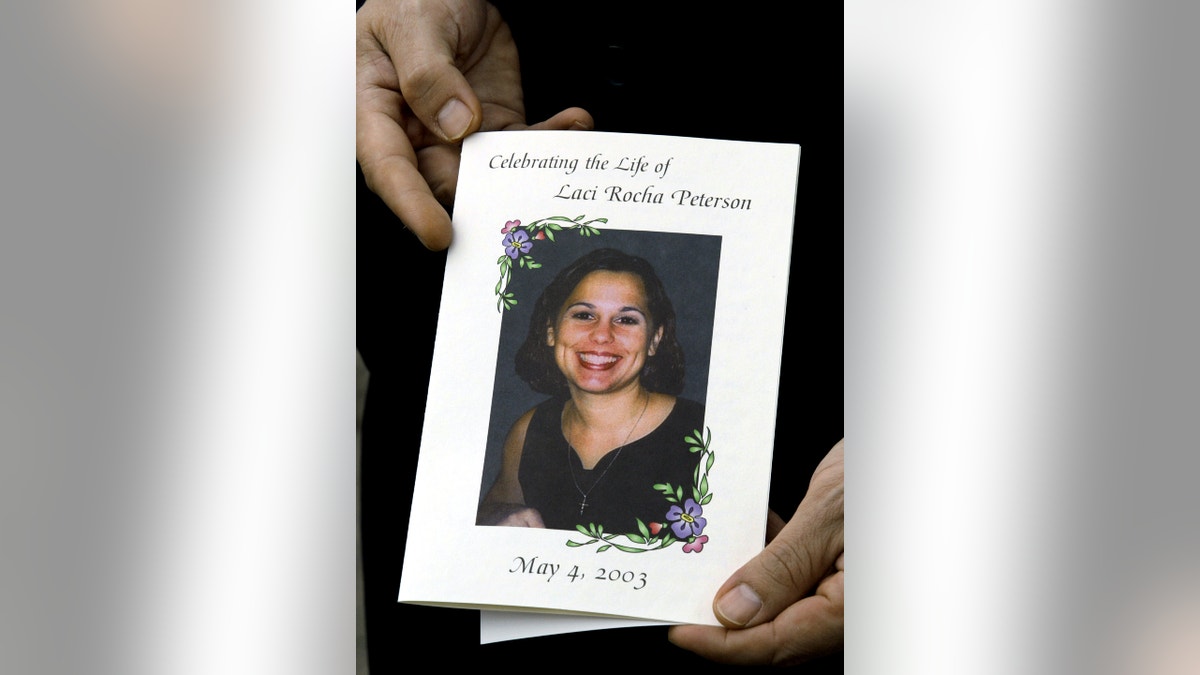
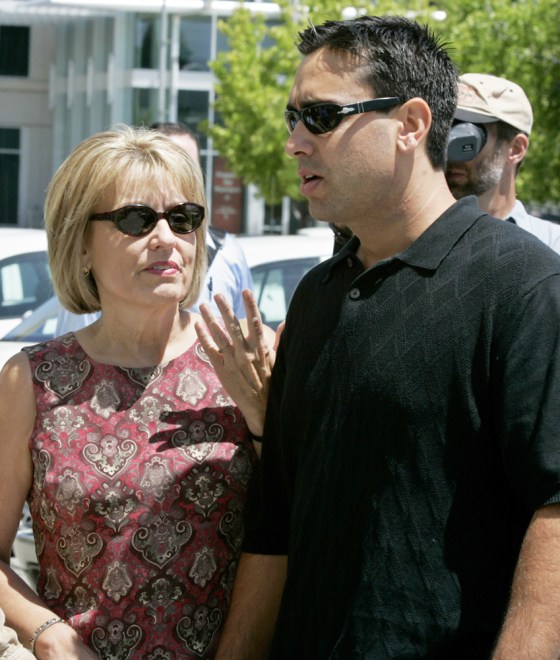
Laci's family has continued to speak publicly about their loss.
Sharon Rocha, Laci's mother, has advocated for the case through the years of appeals.
The boat, the cold morning, the affair — those were the prosecution's pillars.
The van, the strangers, the absence of a weapon — those were the defense's shadows.
One story won the verdict.
The other story won the appeal.
The convictions stand.
The sentence does not.
It is a case that produced a verdict.
It is also a case that never produced a weapon.

The jury chose the circumstantial story.
The higher court found a procedural error in that choice.
Not a factual one.
A legal one.
The juror who opposed the death penalty should not have been dismissed, the court said.
So the punishment was set aside.
The guilt was not.
The record shows a conviction upheld.
The record shows a death sentence overturned.
What the record does not show is a date for the new penalty phase.
That remains open.
So does the question of what a new jury will decide.
Sharon Rocha has said she waits.
She has spoken of her daughter and her grandson.
She has spoken of the loss that does not end with a verdict.
The story, for her, is not over.
For Peterson, it continues on death row.
For the court system, it waits for a hearing that has not been scheduled.
The boat is in evidence.
The cold morning is in testimony.
The affair is in the recorded calls.
The end is not in the record.
Advertisement
You may also like
A freelance photographer's fibers that tied him to 28 Atlanta child murders
The photographer was 23 years old. He worked freelance, taking pictures and promoting music in Atlanta. The city around him was in panic. Between…

The 1:00 a.m. knock that emptied a museum of $500 million in art
It was a knock that sounded routine. Shortly after 1:00 a.m. on March 18, 1990, two men in fake Boston police uniforms knocked on…
The left-handed clue in a 1954 murder that pointed at one man — and no one else
She was on the ground below the bedroom window, and the house was quiet. On July 4, 1954, Marilyn Sheppard was found bludgeoned to…
The road near Gibsland where Barrow stopped and 100 rounds followed
The road was dirt and gravel, a rural stretch near Gibsland, Louisiana. On May 23, 1934, a stolen Ford V-8 sedan stopped on it.…
The tape recording a 10-year-old victim made that a jury heard in a Manchester courtroom
The trunk sat in a house that police searched on 6 October 1965. Inside it were photographs and a tape recording. The recording captured…

The Gulf War veteran and the teen who terrorized D.C. — what drove them?
The truck driver pulled into the rest stop near Myersville, Maryland, and saw the white Chevrolet Caprice. He called it in. On October 24,…