The road near Gibsland where Barrow stopped and 100 rounds followed
The road was dirt and gravel, a rural stretch near Gibsland, Louisiana.
On May 23, 1934, a stolen Ford V-8 sedan stopped on it.
The two people inside were Bonnie Parker and Clyde Barrow.
Then the officers opened fire with automatic weapons.
More than a hundred rounds went into the car.
Both Parker and Barrow died at the scene.
The ambush was the culmination of a months-long manhunt led by Texas authorities, with assistance from Louisiana lawmen.
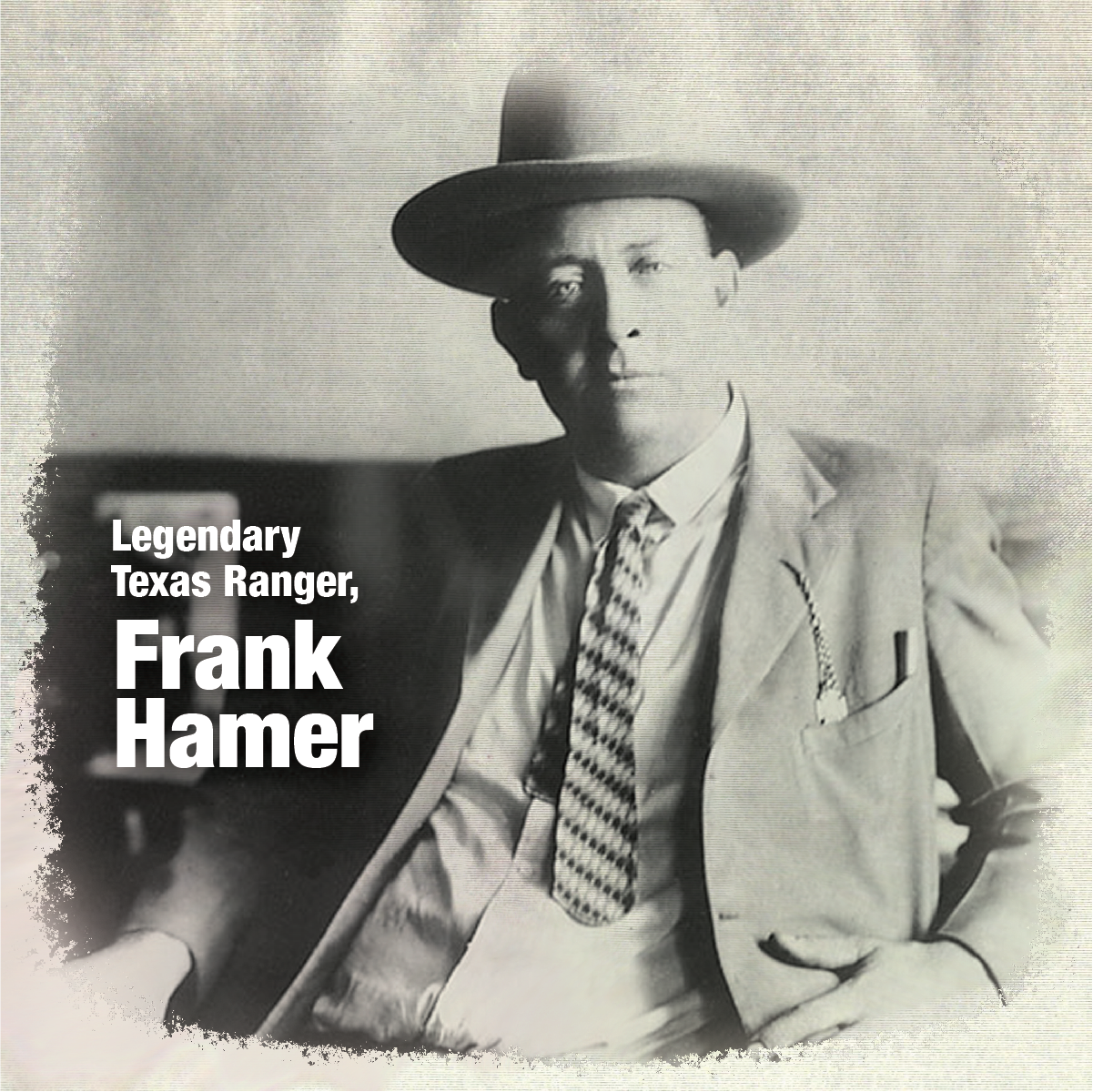
Frank Hamer, a former Texas Ranger hired by the Texas prison system, led the party.
The officers were not charged with any crime.
No formal legal review followed.
Whether the officers attempted to take the couple alive is not established in the record.
The record shows a planned ambush and over one hundred rounds fired.
What it does not show is an order to hold fire, or a call to surrender, or a warning.
It shows a car stopped on a rural road.
Then it shows the firing.
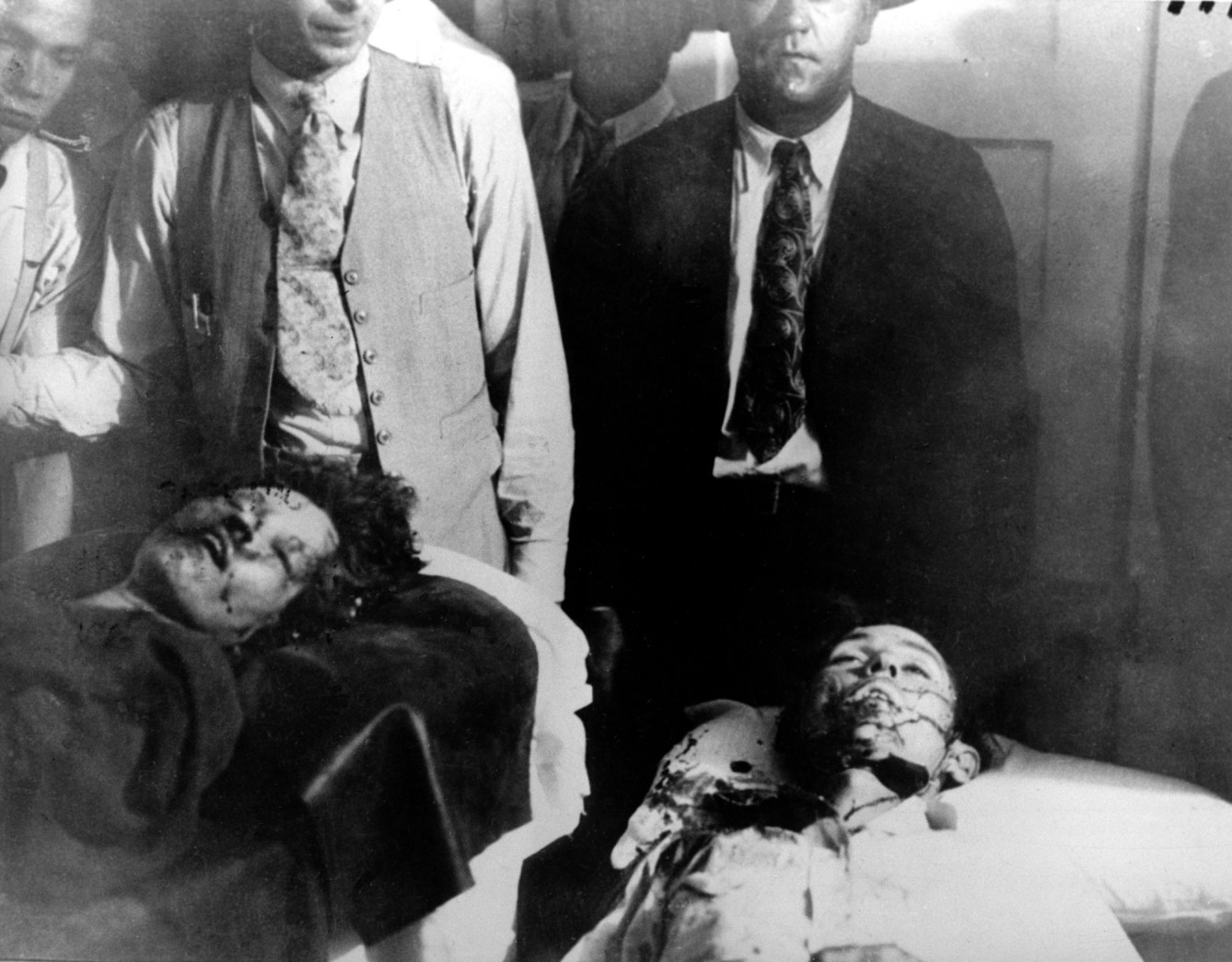
The bodies were taken to Arcadia, Louisiana, where crowds gathered to view them.
That is the documented aftermath.
The question of what led to that exact moment — the months of tracking, the informants, the hidden positions — remains the story.
But the moment itself is plain.
A stolen car.
A stopped engine.
One hundred rounds.
THE MANHUNT BEGINS
The pair, along with associates, had committed a series of bank robberies, burglaries, and killings across the central United States during the early 1930s.
The manhunt intensified after a prison break in January 1934, during which Barrow was believed to have helped several inmates escape from the Texas prison at Eastham.
Frank Hamer, a former Texas Ranger, was hired as a special investigator by the Texas prison system to track the couple.
Hamer and his party tracked the pair across several states.
They relied on informants.
They watched the couple's known contacts.
Week followed week.
Month followed month.
The road ahead was long, and the end was not in sight.
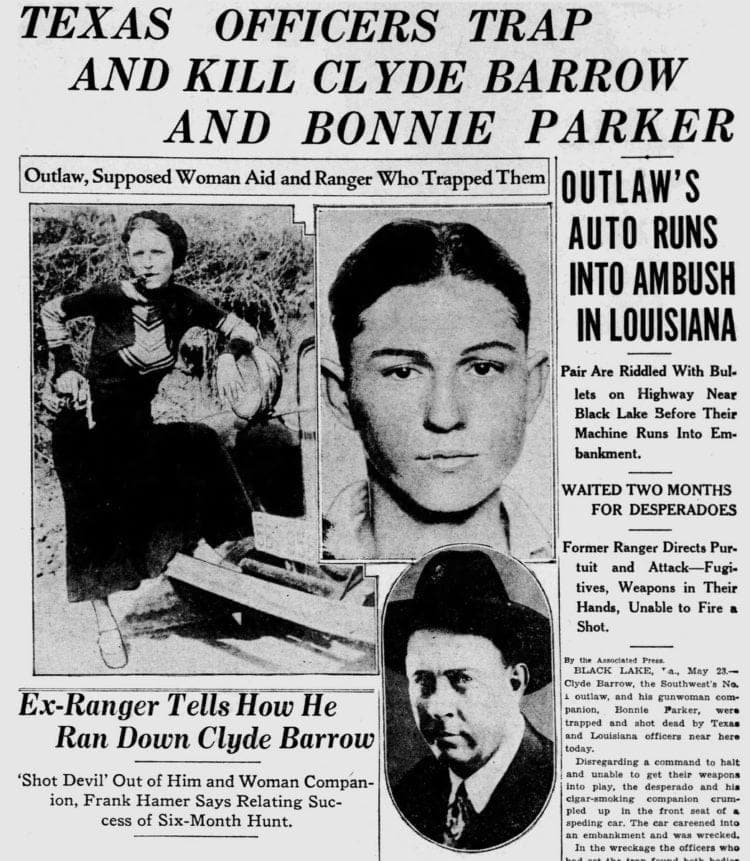
Hamer was not new to this work.
He had spent years hunting men across Texas.
He knew the country, and he knew the patience it demanded.
The exact routes and dates of the tracking are not in the record.
That is not established.
What is established is the grind: the slow, deliberate pursuit of two people who kept moving.
The manhunt was not a single chase.
It was a series of leads, each one checked, each one fading.
A tip here.
A sighting there.
A car that matched, a face that did not.
The couple's contacts were watched, their habits mapped.
But the couple remained ahead.
The prison break had made the stakes clear.
Barrow was not just a robber anymore.
He was believed to have freed men from Eastham, and that made him a target of the prison system itself.
Hamer was hired to end it.
He did not rush.
He tracked.
He waited.
The pursuit was months long, and it was not over.
THE FATHER'S INFORMATION
The break came from a father.
The father's son was a member of the Barrow gang, and the son had been captured.
The father agreed to cooperate with the authorities.
He provided information about the couple's routes and habits.
Hamer and his party had tracked the pair across several states, relying on informants and surveillance of known contacts.
The father's information changed the shape of the pursuit.
It gave the officers a place to wait and a pattern to predict.
The ambush was planned using this information.
Not because the father hated the couple.
But because his son was in custody, and cooperation was the price.
What the father told the officers, in specific detail, is not in the record.
The record shows the agreement; it does not show the conversation.
It shows a father's choice and a road near Gibsland.
It shows a stolen Ford V-8 stopping where the officers were hidden.
The officers opened fire with automatic weapons, firing more than a hundred rounds.
The couple died at the scene.
There was no trial.
There were no charges against the officers.
The case was closed with the deaths of the two fugitives.
The father's betrayal is the hinge of the plan.
It is the reason the car stopped.
It is the reason the road was the right road.
What he said, word for word, would require evidence.
The record does not contain it.
THE AMBUSH AND THE AFTERMATH
The officers waited in hiding on the road near Gibsland, Louisiana.
They had automatic rifles and shotguns, and they had the information they needed.
When Barrow stopped the car, they opened fire.
More than a hundred rounds went into the stolen Ford V-8.
The couple died instantly.
The exact number of rounds is not specified in the record, only that it was more than a hundred.
The officers recovered a cache of weapons from the car.
Automatic rifles and pistols, taken from the dead.
The bodies were taken to Arcadia, Louisiana.
Crowds gathered to view them.
That is the strange part.
Not the shooting itself, which was planned. But the spectacle that followed, which was not.
Emma Parker, Bonnie's mother, spoke publicly after the shooting.
A funeral for Bonnie Parker was held in Dallas, Texas.
There was no trial.
No charges were brought against the officers involved.
The case was closed with the deaths of the two fugitives.

Some criticism emerged over the lack of an attempt to take the couple alive.
The record does not establish such an attempt.
It establishes the ambush, the weapons, the rounds fired.
It establishes the crowds in Arcadia.
It does not establish a call to surrender.
That would require evidence.
The record does not contain it.
AND THE STORY STILL ISN'T OVER
There was no trial.
No charges were brought against the officers involved.
The case closed with the deaths of the two fugitives.
The officers were widely celebrated in the press.
Some criticism emerged over the lack of an attempt to take the couple alive.
Whether that criticism ever led to a formal inquiry is not in the record.
That would require evidence.
The record does not contain it.
Both Bonnie Parker and Clyde Barrow are buried in Dallas, Texas.
Their deaths ended the Barrow gang's criminal activity.
Frank Hamer returned to private life and died in 1955.
The road near Gibsland, Louisiana, is now a tourist attraction.
Visitors stand where the sedan stopped.
They count the rounds in the retelling.
The story endures in books.
It endures in films.
It endures in documentaries.
The most famous retelling is the 1967 film *Bonnie and Clyde*.
That film softened the record.
It dramatized a couple the press had already turned into legend.
The ambush site remains.
The graves remain.
The questions remain.
No verdict was ever delivered.
Only a roadside, a hundred rounds, and a story that keeps being told.
Advertisement
You may also like
Two shotguns bought days before the Menendez parents were killed — what the brothers' psychologist heard next
Days before August 20, 1989, Lyle and Erik Menendez bought two 12-gauge shotguns. The same weapons were used to kill their parents, Jose and…
The Milwaukee apartment where a skull sat beside Polaroids of the dead
The handcuff was loose. That is what the man told the officers, anyway, when he flagged them down on the night of July 22,…
The $1 million extortion letter that named a killer — and the man who wrote it
Seven people in the Chicago area died in late September and early October 1982. They had taken Extra-Strength Tylenol capsules laced with potassium cyanide.…
The cult leader who sent his followers to a house on Cielo Drive — and the word left in blood
The door at 10050 Cielo Drive held a word written in blood. Five people were dead inside the Benedict Canyon house on the morning…
Hae Min Lee's brother still waits as her convicted killer walks free
He has waited twenty-five years. The wait did not end in September 2022, when Adnan Syed walked out of prison. Young Lee, Hae Min…
Why a Green Beret's pajama fibers under his wife's body could not be explained
The pajama fibers were found under Colette MacDonald's body. They matched the pajama top Jeffrey MacDonald was wearing that night. MacDonald said he had…