The Milwaukee apartment where a skull sat beside Polaroids of the dead
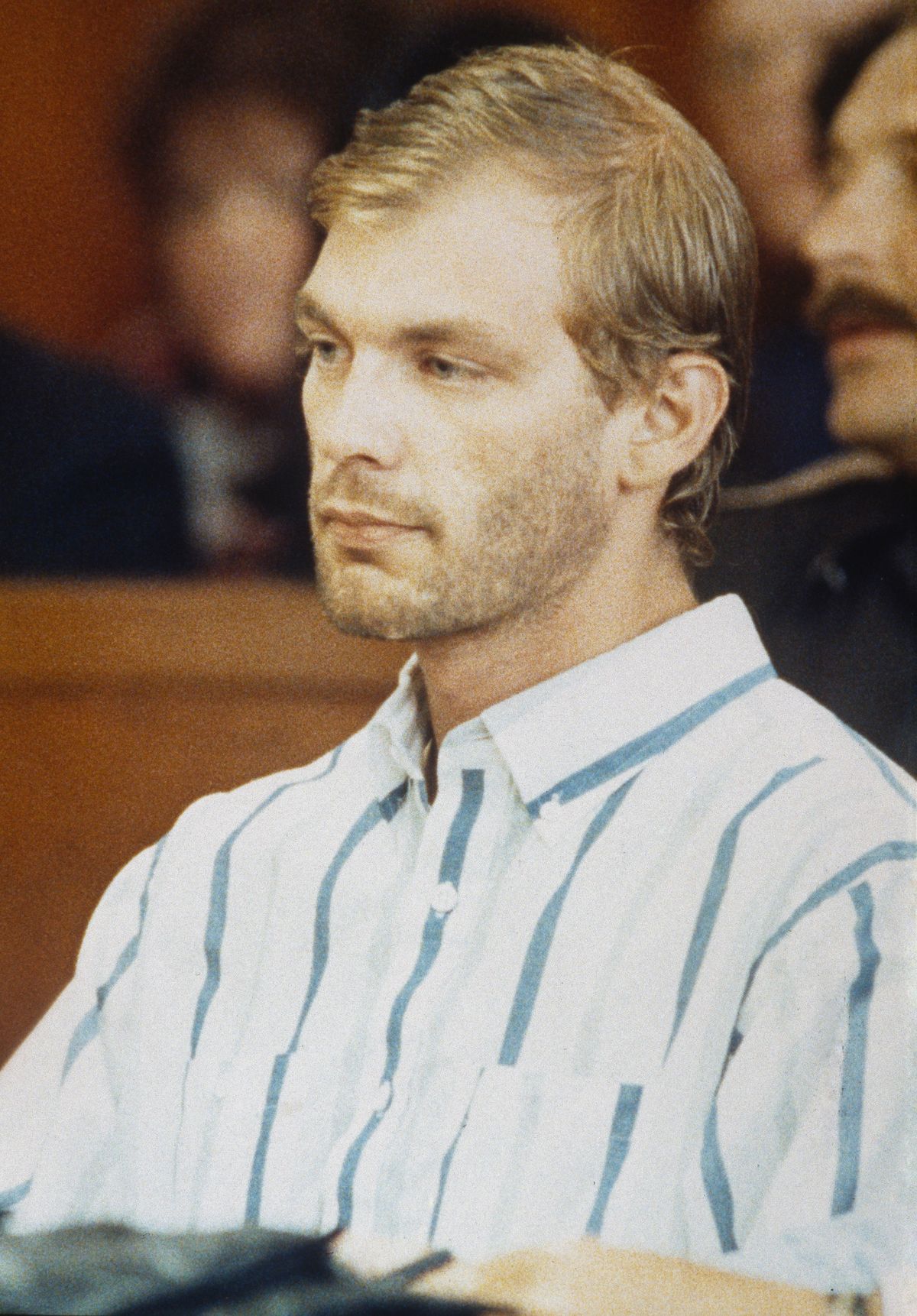
The handcuff was loose.
That is what the man told the officers, anyway, when he flagged them down on the night of July 22, 1991.
Tracy Edwards had escaped an apartment, and one of his wrists was still shackled.
He led two Milwaukee police officers back to the building.
Inside, the officers found a bedroom.
On a table, or near it, were Polaroid photographs.
The photographs showed dismembered bodies.
They showed human remains in various states.
And in the same room, among the items police would catalogue, was a human skull.
The exact number of Polaroids is not detailed in the source.
The specific condition of the skull is not detailed either.
What is documented is the placement: the photographs and the skull were found in the same apartment.
That detail would become central to the case.
It was the evidence that turned a report of a man with a handcuff into an arrest.
The man in the apartment was Jeffrey Dahmer.
The officers took him into custody.
What else was in that apartment?
That is the question the photographs and the skull leave open.
The record does not say how many images were scattered there.
The record does not say how the skull came to rest where it was found.
The record says only that they were there, together, on the night Tracy Edwards flagged down the police.
The discovery led to Dahmer's arrest.
Everything else — the years before, the other remains, the confession — came after.
THE EARLY YEARS AND FIRST KILLING
The first killing was in Ohio in 1978.
Between that year and 1991, the record says, Jeffrey Dahmer murdered 17 young men and boys.
The crimes involved sexual assault, dismemberment, and necrophilia.
His victims were predominantly young men, many of them African American or Asian American.
He often met them at gay bars, bus stops, or shopping malls.
The escalation spanned more than a decade.
It is a span of time measured in years, not in a single burst of violence.
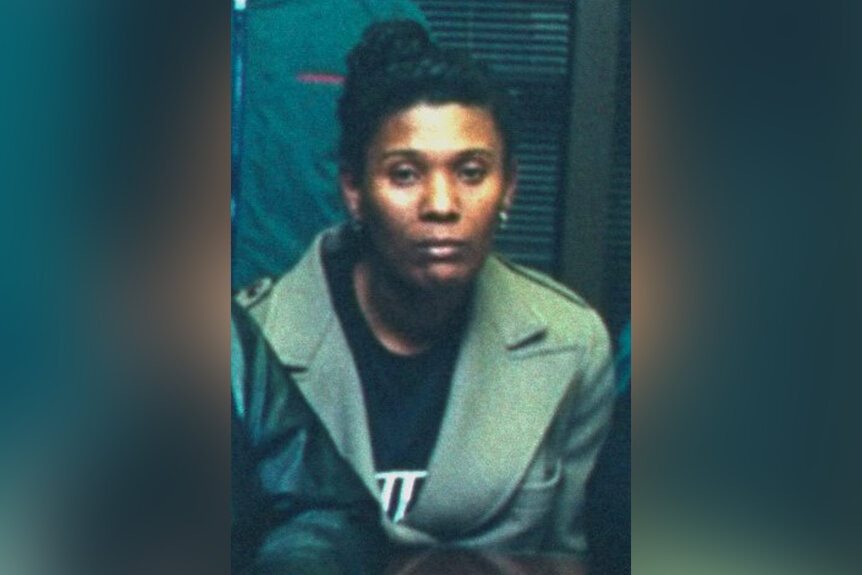
His father, Lionel Dahmer, and stepmother, Shari Dahmer, later testified about their attempts to understand his behavior.
They also wrote about those attempts.
The specific details of Dahmer's childhood and any early warning signs are not in the source.
What the record establishes is the pattern: the meetings, the places, the ages.
What the record does not establish is how a seemingly ordinary person reached that first killing.
Was there a moment of decision?
Was there a slow drift?
Was there a single trigger?
That would require evidence the source does not provide.
The first killing came in Ohio.
The others followed, primarily in Milwaukee, Wisconsin.
No accomplices were charged.
The record names Jeffrey Dahmer as the sole perpetrator.
It is a chronology of seventeen deaths.
It is also a question the testimony leaves open.
THE MAY 1991 INCIDENT
In May 1991, Dahmer was arrested for drugging and fondling a 14-year-old boy.
The boy was disoriented, bleeding, and in the street.
Police spoke with him.
Police spoke with Dahmer, who presented himself as a concerned companion.
Police returned the boy to Dahmer's custody.
The boy was later killed.
That is the documented sequence: arrest, return, death.
The officers' names are not in the source.
The record does not establish who they were or what they were told.
It establishes only that a child was handed back to the man who had drugged him.
That failure became a major focus of public outrage.
It became the question the trial could not answer.
How does a 14-year-old end up back in the apartment he just escaped?
Not because the law was missing.
Because the law was there, and then it left.
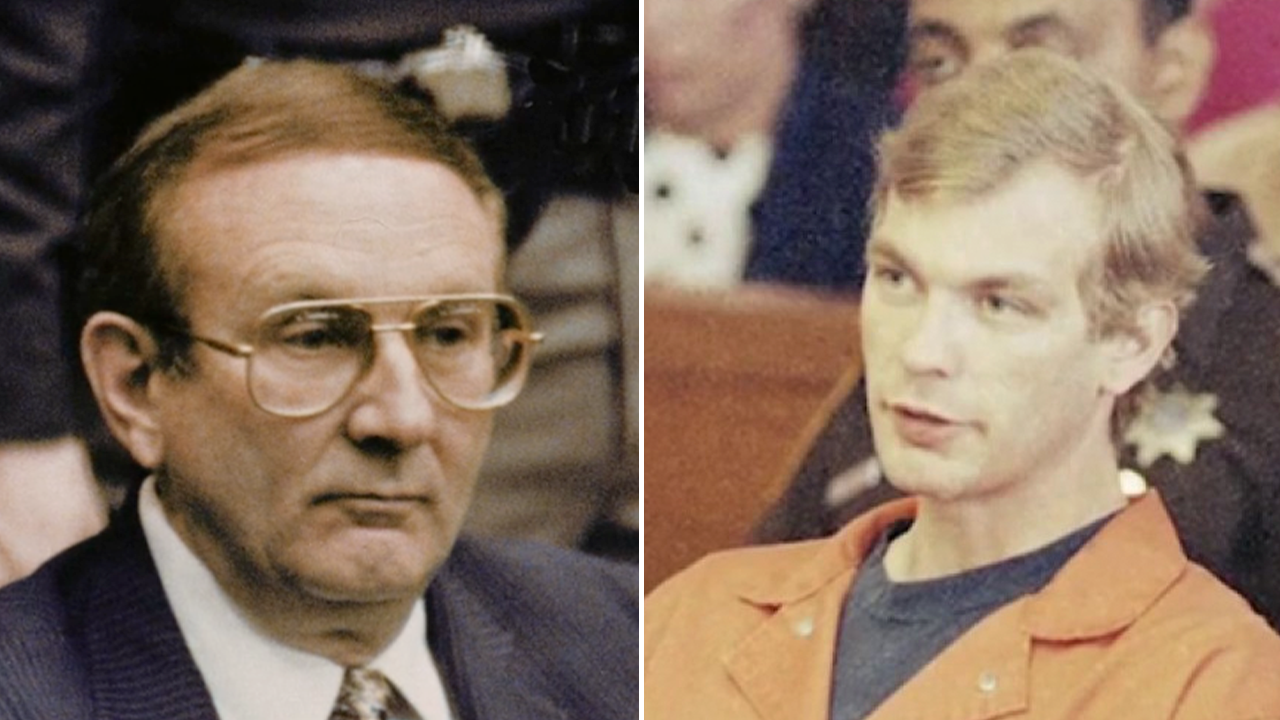
The boy's family later advocated for police reform.
They spoke at the trial, in the courthouse, to reporters.
The family said the system failed.
The record shows the arrest.
The record shows the return.
The record shows the death.
What the record does not show is why.
That would require evidence.
The officers' names are not in the source.
The decision to return the boy is documented.
The reasoning behind it is not.
THE CONFESSION AND THE TRIAL
After his arrest, Dahmer confessed to the murders in detail, providing names and descriptions of victims.
Detectives conducted extensive interviews with Dahmer, corroborating his confession with physical evidence and missing persons reports.
He was charged with 15 counts of first-degree murder in Wisconsin.
He pleaded guilty.
But he argued he was insane.
The trial began in January 1992.
It focused on psychiatric testimony.
The specific psychiatric diagnoses presented at trial are not detailed in the source.
The jury heard from doctors on both sides.
They heard from Dahmer's father and stepmother, who testified about their attempts to understand his behavior.
They heard from the survivor who escaped the apartment and flagged down police.
The question was not whether he had done it.
He had confessed.
The question was whether a man who did this could be called sane.
The jury rejected the insanity defense and found him guilty on all counts.
He was sentenced to 15 consecutive life terms.
That totaled 957 years in prison.
Fifteen lives.
Fifteen consecutive terms.

The sentence was a number so large it stopped meaning time.
It was a number that meant the rest of his life.
Relief, that justice was served.
Horror, at the scale of what the verdict made official.
AND THE STORY STILL ISN'T OVER
The sentence was 957 years.
It was a number that meant the rest of his life.
Dahmer was sent to the Columbia Correctional Institution in Portage, Wisconsin.
On November 28, 1994, he was beaten to death by a fellow inmate, Christopher Scarver.
Scarver was convicted of the killing.
The case was closed.
The pain was not.
The victims' families have continued to advocate for police reform and awareness of missing persons cases.
Lionel Dahmer published a book about his son.
The case has been the subject of numerous documentaries and films.
What the specific advocacy efforts achieved is not in the record.
What Lionel Dahmer's book argued is not in the record.
What remains is documented: the Polaroids, the skull, the verdict.
What remains is not: the full scope of a mind that the jury found sane.
It is a story that keeps being told.
It is a story that keeps being retold.
Each telling asks the same question.
Why were the warnings ignored?
Why were the victims forgotten?
Why did it take so long?
That would require evidence.
The evidence is what it is.
A man confessed.
A jury convicted.
A fellow inmate killed him.
The families keep speaking.
The cameras keep rolling.
The skull sits in an evidence room.
The story still isn't over.
Advertisement
You may also like
The tarot card left near a DC Sniper victim that police could not explain
The tarot card was found near a crime scene, bearing the message "Dear Policeman, I am God." It was part of the documented evidence.…
The Cub Scout leader who sent a floppy disk that cracked a 31-year murder case
A floppy disk arrived at a Wichita television station in 2005. It was part of a series of communications from someone calling himself BTK…

Why a convicted killer's courtroom outburst sealed his fate in Polly Klaas case
The courtroom was quiet enough to hear the verdict read. Richard Allen Davis had been convicted of first-degree murder with special circumstances. Then came…

The blood spatter on MacDonald's pajama top that contradicted his story of fighting intruders
The pajama top was folded on the evidence table in Raleigh, North Carolina, in the summer of 1979. It belonged to Captain Jeffrey MacDonald,…

The parolee with a violent history who was freed months before Polly Klaas vanished
June 1993. Richard Allen Davis walked out of prison. He had a long record. Kidnapping. Assault. Violent abductions, according to the investigation summary. Just…
The inmate tip that sent two ex-cons to the Clutter farmhouse
Floyd Wells was in a Kansas prison cell when he told authorities what his former cellmate had said. Richard Hickock, he said, had spoken…