The Cub Scout leader who sent a floppy disk that cracked a 31-year murder case
A floppy disk arrived at a Wichita television station in 2005.
It was part of a series of communications from someone calling himself BTK — Bind, Torture, Kill.
The case had gone cold for decades; the last known killing was in 1991.
Police examined the disk's metadata, the hidden digital records of where a file was created and edited.
That metadata pointed to a computer at Christ Lutheran Church.
The man who would become the suspect was president of that church's council.
He was a married father of two.
He was a Cub Scout leader.
He was a public face of ordinary life, a man who worked as a compliance officer for Park City, Kansas, and had once installed security systems for ADT.
Not because the disk alone solved anything.
Because the disk was one step in a chain.
A subpoena for church records identified him.
DNA evidence from crime scenes later matched him.
The record does not establish that the metadata alone cracked the case.
The record shows the metadata led to a church computer, then a subpoena, then DNA confirmation.
How does a church council president become BTK?
How does a Cub Scout leader spend decades as a killer?
How does a man with a wife and two children hide ten murders?
That would require evidence, and the evidence came one piece at a time.
The disk was a piece.
The subpoena was a piece.
The DNA was a piece.
The man was arrested on February 25, 2005.
He was charged with ten counts of first-degree murder.
THE PROJECTS — 1974 TO 1991
Between 1974 and 1991, Dennis Rader murdered ten people in and around Wichita, Kansas, in killings he later called his "projects."
His first known victims were a family of four — a father, mother, and two children — killed in their home on January 15, 1974.
He continued with six more victims: one in 1974, two in 1977, one in 1985, and one in 1991.
The specific details of each killing are not in the record beyond the dates and the family of four; the source does not describe the crime scenes.
Rader taunted police and media with letters and cryptic clues, adopting the self-given nickname "BTK" for Bind, Torture, Kill.
Early leads went nowhere; Rader was questioned in 1974 but was not considered a suspect.
He had previously worked at ADT Security Services, which gave him access to homes.
The letters were a taunt. The clues were a game. The nickname was a boast.
That would require evidence.

The case went cold for decades. The projects stopped in 1991.
Then, in 2004, the letters resumed.
THE CHURCH COUNCIL PRESIDENT
He was a married father of two.
He was a Cub Scout leader.
He was president of his Lutheran church congregation, Christ Lutheran Church in Wichita.
By day, he worked as a compliance officer for Park City, Kansas.
Before that, he had worked at ADT Security Services, a job that gave him access to homes.
His wife, Paula Rader, and their two children were unaware of his crimes.
In 2004, Rader resumed sending letters to Wichita media.
It was a break in a silence that had lasted since the early 1990s.
In 2005, he sent a floppy disk.
Police traced metadata on that disk to a computer at Christ Lutheran Church.
The record does not state what Rader's church duties were.
The record does not state how often he used the church computer.
Those details are simply not in the source material.
A subpoena for church records identified Rader.
DNA evidence from crime scenes later matched him.
The killer was not a stranger in the shadows.
He was the man in the pews, the man at the scout meeting, the man coming home to dinner.
It is a proximity that makes the betrayal feel larger.
The church trusted him.
The scouts trusted him.
His family trusted him.
The record shows what he did with that trust, but it does not explain how he held it together.
That would require evidence.
THE ARREST AND THE GUILTY PLEA
The arrest came on February 25, 2005.
The Cub Scout leader, the church council president, the compliance officer—he was taken into custody without incident.
He waived his right to a jury trial.
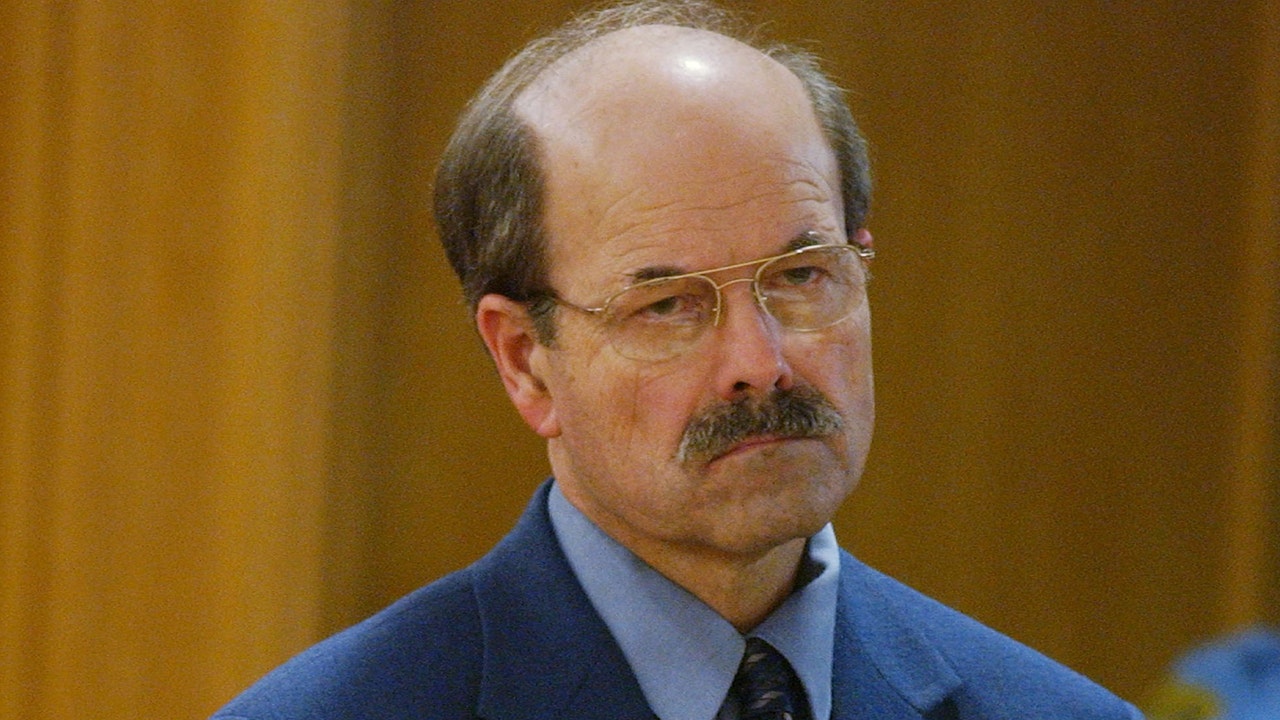
On June 27, 2005, Dennis Rader pleaded guilty to all ten counts of first-degree murder.
There would be no trial, no jury deliberation, no verdict.
He stood before the court and admitted to each killing.
At sentencing, he gave a rambling statement describing each killing in detail.
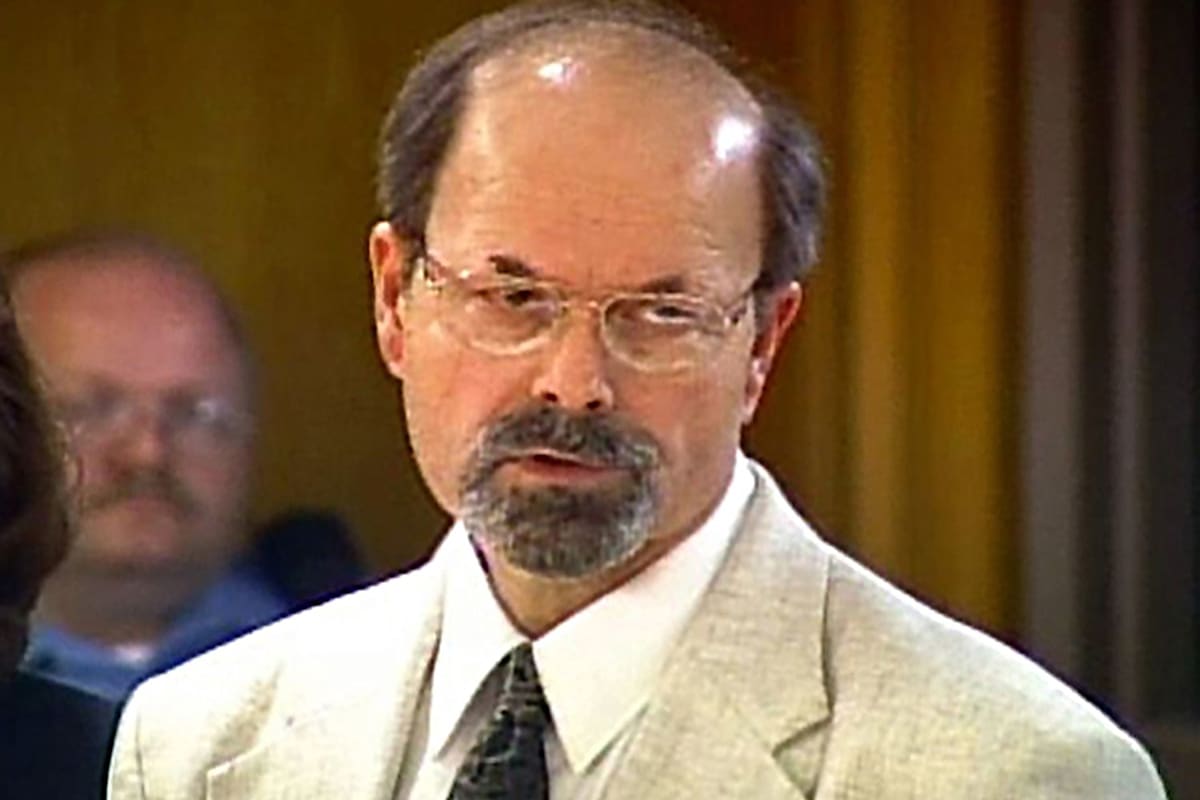
The record notes the detail, but it does not specify what he said.
He spoke of his "projects," the word he used for the murders.
He was sentenced to ten consecutive life terms.
The minimum was 175 years before parole eligibility.
He was not eligible for the death penalty.
Kansas had not reinstated capital punishment at the time of the earlier murders.
The sentence was life, and life, and life again.
Investigators recovered a trove of items from his home.
Photographs and personal effects belonging to victims.
The man who led a Cub Scout pack had kept the evidence of what he had done.
The confession was his own.
Not a conviction by jury, but a plea.
A man describing his own work, in detail, in open court.
The weight of it settled in the room.
Ten lives, ten counts, one statement.
The record does not explain how he held it together.
That would require evidence.
AND THE STORY STILL ISN'T OVER
Rader is serving ten consecutive life terms at El Dorado Correctional Facility in Kansas.
Parole is not a possibility.
His wife Paula divorced him after the arrest.
The family members of the victims have spoken publicly about the crimes.
Charlie Otero testified at sentencing.
Beverly Plummer testified at sentencing.
The case has become the subject of books and documentaries.
Rader has given limited interviews from prison.
In 2023, he was questioned about unsolved killings in other states.
He has not been charged in any additional cases.
The record does not establish that he committed any other killings.
The 2023 questioning ended without charges.
The lead detective in the later phase was a Wichita police lieutenant who headed the BTK task force.
His name is Ken Landwehr.
The case is closed.
It is also not finished.
Ten lives, ten counts, one statement, and now a man serving 175 years who still draws questions from other states.
That would require evidence.
Advertisement
You may also like
The tarot card left near a DC Sniper victim that police could not explain
The tarot card was found near a crime scene, bearing the message "Dear Policeman, I am God." It was part of the documented evidence.…
Why a convicted killer's courtroom outburst sealed his fate in Polly Klaas case
The courtroom was quiet enough to hear the verdict read. Richard Allen Davis had been convicted of first-degree murder with special circumstances. Then came…
The blood spatter on MacDonald's pajama top that contradicted his story of fighting intruders
The pajama top was folded on the evidence table in Raleigh, North Carolina, in the summer of 1979. It belonged to Captain Jeffrey MacDonald,…
The parolee with a violent history who was freed months before Polly Klaas vanished
June 1993. Richard Allen Davis walked out of prison. He had a long record. Kidnapping. Assault. Violent abductions, according to the investigation summary. Just…
The inmate tip that sent two ex-cons to the Clutter farmhouse
Floyd Wells was in a Kansas prison cell when he told authorities what his former cellmate had said. Richard Hickock, he said, had spoken…
The 2015 missing-person call that led to a stabbing, a hidden illness, and two murder charges
The call came in on June 14, 2015. Deputies from the Greene County Sheriff's Office in Missouri were sent to a residence in Springfield…