The tarot card left near a DC Sniper victim that police could not explain
The tarot card was found near a crime scene, bearing the message "Dear Policeman, I am God."
It was part of the documented evidence.
Police could not explain its meaning.
They could not explain why it was left.
The card's sender is not established by the record.
Its purpose is not established by the record.
Any connection to the shooters is not established by the record.
That would require evidence.
The attacks appeared random.
Victims were struck while pumping gas.
Victims were struck while walking in parking lots.
Victims were struck while sitting on benches.
The first killing occurred on October 2, 2002.
It happened outside a grocery store in Wheaton, Maryland.
A man was shot in the parking lot.
He died there.
The card was found near that scene, according to the investigation.
The randomness made the card harder to read.
A message addressed to a policeman.
A claim of divinity.
A taunt, or a warning, or something else entirely.
No one in the record says.
The witness reports came later.
The arrests came later.
But on October 2, there was only a body, a parking lot, and a card.
The card said "Dear Policeman, I am God."
It is a documented fact.
It is also a mystery.
THE RANDOMNESS
Between October 2 and October 24, 2002, a series of shootings occurred in Maryland, Virginia, and Washington, D.C., killing 10 people and wounding three others.
Victims were struck while pumping gas.
Victims were struck while walking in parking lots.
Victims were struck while sitting on benches.
The first killing occurred on October 2 outside a grocery store in Wheaton, Maryland.
The final shooting took place on October 22 when a bus driver was killed in Aspen Hill, Maryland.
The randomness was the weapon.
The investigation was hampered by the randomness of the attacks and the lack of eyewitnesses.
Police had no pattern to trace, no motive to weigh, no face to match.
A man filling his tank. A woman loading groceries. A person on a bench.
Who was next?
Where was next?
When was next?
That would require evidence, and the evidence was not there yet.
The specific victims' names are not all in the record; only the roles and locations are documented.
What is documented is the ordinary errand interrupted.
What is documented is the public place turned fatal.
What is documented is the absence of a reason.

Chief Charles Moose led the public communication effort, reading statements from the suspects at press conferences.
But the statements offered no explanation for the choosing.
The card said "Dear Policeman, I am God."
It was found near one crime scene.
It was part of the documented evidence.
Police could not explain its meaning or its sender.
The shootings continued.
THE WITNESS AND THE VAN
The shootings continued.
Then a witness came forward.
At a shooting in Falls Church, Virginia, a witness told police they had seen a white van.
It was a promising lead.
Officers searched for a white van.
They found nothing.
The killers were actually in a blue Chevrolet Caprice.
The witness's identity and the exact location of the Falls Church shooting are not in the record.
That is what the record establishes, and no more.
The car had been modified to allow a shooter to fire from the trunk.
A shooter could lie in the trunk, unseen, and fire through a hole.
The van was a theory.
The Caprice was the fact.
Chief Charles Moose led the public communication effort.
He stood at press conferences and read statements from the suspects.
He read their words aloud.
He asked the public for help.
He asked for tips.
He asked for patience.
The witnesses came forward with what they had seen.
A white van.
A white van that was never there.
The real vehicle sat in plain sight.
It was a sedan.
It was blue.
It was ordinary.
The Caprice blended into traffic, into parking lots, into rest stops.
The shootings continued.
THE ARREST
A motorist at a rest stop near Myersville, Maryland, saw the parked Caprice on October 24.
That motorist alerted police.
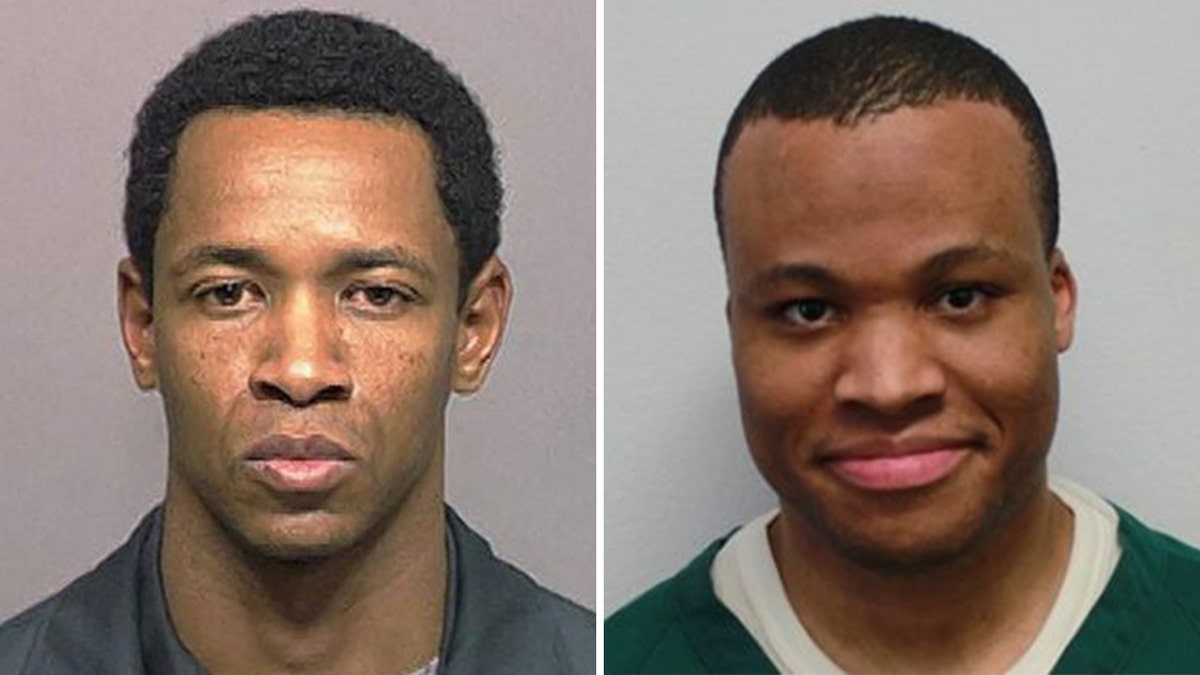
Officers found John Allen Muhammad and Lee Boyd Malvo sleeping inside the car.
A rifle was later found in the vehicle, hidden behind a compartment in the trunk.
Ballistics matched the weapon to several of the shootings.
The exact details of the arrest are not in the record.
The motorist's identity is not in the record either.
What is documented is the car, the sleep, the rifle, the match.
Muhammad was convicted of capital murder in connection with the killing of Dean Meyers.
He was sentenced to death.

Malvo was tried separately and convicted of murder.
He received life in prison without parole.
The Caprice had been ordinary for weeks.
It blended into traffic, into parking lots, into rest stops.
At the rest stop, it was just a car with two men asleep.
Then it was the car with the rifle in the trunk.
Then it was the car with the ballistics match.
The shootings stopped.
That is the relief the record allows: the weapon was found, the suspects were caught, the match was made.
It is also the limit of the record.
What the motorist saw, what the officers said, what the men said when woken — none of that is in the record.
The break came on October 24.
It came because someone saw a parked car and called it in.
That is the fact.
Everything else around that moment remains unestablished.
AND THE STORY STILL ISN'T OVER
Muhammad was executed by lethal injection on November 10, 2009, in Virginia.
Malvo’s life sentence was later reaffirmed after appeals.
In 2017, the U.S. Supreme Court declined to hear Malvo’s appeal challenging that sentence, which had been imposed when he was 17.
The families of the victims have continued to speak about the case.
Some expressed relief at Muhammad’s execution.
Others focused on the lasting trauma.
The wife of one victim spoke publicly after the verdict, describing the weight of the wait.
The brother of another victim told reporters what the loss had taken from his family.
The mother of a third victim spoke of a daughter who never came home.
The case led to changes in how law enforcement coordinates across jurisdictions during multi-state investigations.
The Chevrolet Caprice used in the attacks was destroyed after the trials.
The rifle is gone, too, in the sense that it no longer matters to the public record.
What remains is the card.
The tarot card bearing the message "Dear Policeman, I am God" was found near one crime scene.
It was documented as evidence.
Its meaning was never explained by police.
Its sender was never identified.
That remains unestablished.
Not because the investigation was careless.
But because the record offers no answer.
Was it a taunt from the shooters?
Was it a copycat’s gesture?
Was it a coincidence left by a stranger?
The record does not say.
That would require evidence.
The attacks ended with an arrest.
The story did not end with the verdict.
It continues in the rooms where the families still speak.
It continues in the procedures that changed how police talk across state lines.
It continues in the unanswered question of a single card.
She was on the ground below.
That is the fact.
Everything else around that moment remains unestablished.
Advertisement
You may also like
The Cub Scout leader who sent a floppy disk that cracked a 31-year murder case
A floppy disk arrived at a Wichita television station in 2005. It was part of a series of communications from someone calling himself BTK…
Why a convicted killer's courtroom outburst sealed his fate in Polly Klaas case
The courtroom was quiet enough to hear the verdict read. Richard Allen Davis had been convicted of first-degree murder with special circumstances. Then came…
The blood spatter on MacDonald's pajama top that contradicted his story of fighting intruders
The pajama top was folded on the evidence table in Raleigh, North Carolina, in the summer of 1979. It belonged to Captain Jeffrey MacDonald,…
The parolee with a violent history who was freed months before Polly Klaas vanished
June 1993. Richard Allen Davis walked out of prison. He had a long record. Kidnapping. Assault. Violent abductions, according to the investigation summary. Just…
The inmate tip that sent two ex-cons to the Clutter farmhouse
Floyd Wells was in a Kansas prison cell when he told authorities what his former cellmate had said. Richard Hickock, he said, had spoken…
The 2015 missing-person call that led to a stabbing, a hidden illness, and two murder charges
The call came in on June 14, 2015. Deputies from the Greene County Sheriff's Office in Missouri were sent to a residence in Springfield…