The 2015 missing-person call that led to a stabbing, a hidden illness, and two murder charges
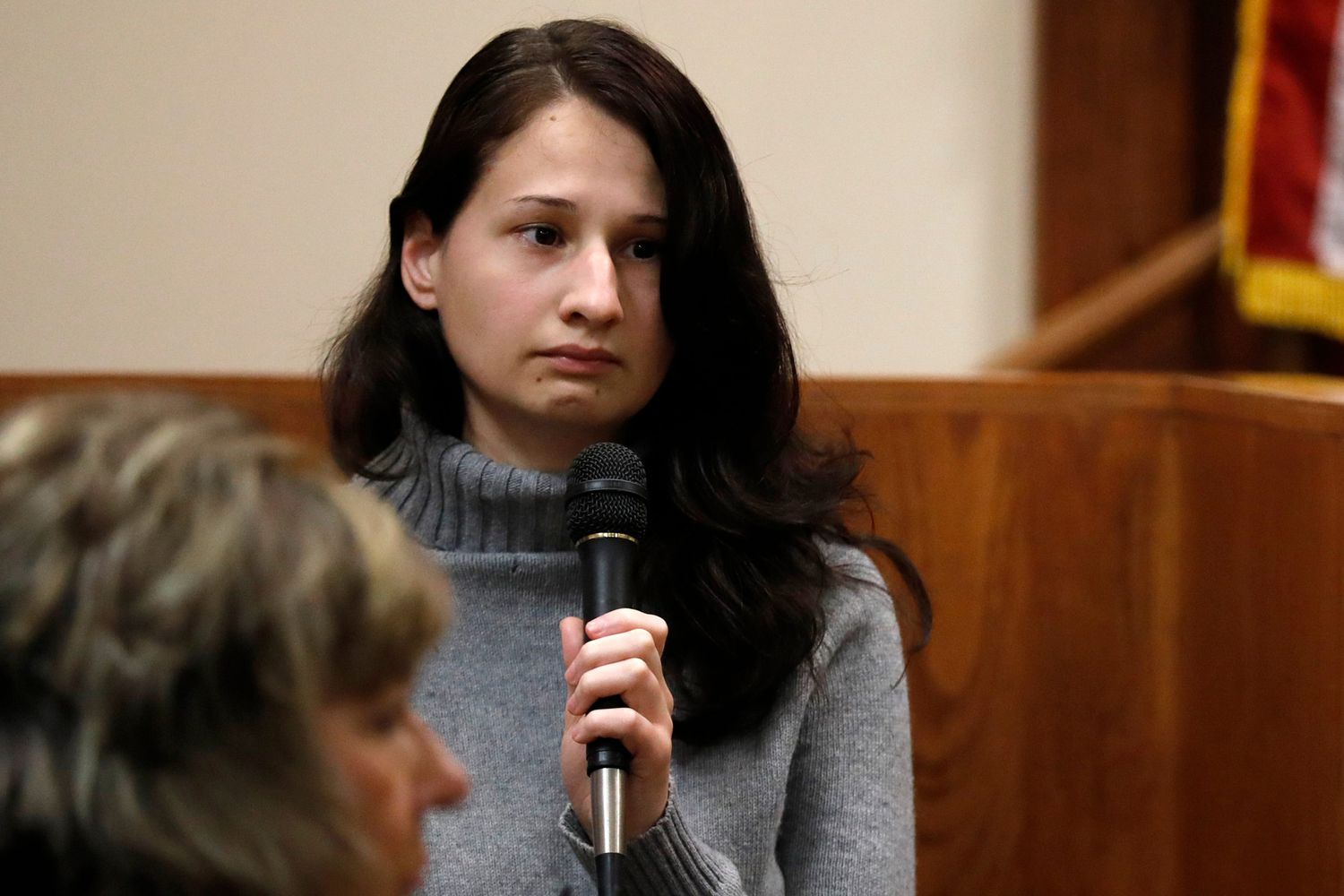
The call came in on June 14, 2015.
Deputies from the Greene County Sheriff's Office in Missouri were sent to a residence in Springfield for a report of a missing person.
They found the body of 48-year-old Clauddine "Dee Dee" Blanchard.
She had been stabbed to death.
Her daughter, Gypsy Rose Blanchard, was gone.
To the community, Gypsy Rose was a severely ill child.
She was known to suffer from leukemia, muscular dystrophy, and other conditions.
She used a wheelchair.
She had a feeding tube.
The case looked like a kidnapping.
It looked like the murder of a vulnerable girl.
Neighbors spoke of a devoted mother and a sick daughter.
The house was a picture of care: medical supplies, a hospital bed, a child who seemed to need constant attention.
What they did not know was that the illness was not real.
What they did not know was that the mother had spent years fabricating it.
The motive for the stabbing is not yet established.
Not at this point in the timeline.
The record shows a body, a missing daughter, and a community’s shock.
It does not yet show why.
Gypsy Rose was out there somewhere.
The search would take days.
The answers would take longer.
THE SEARCH AND THE WISCONSIN DISCOVERY
The search for Gypsy Rose Blanchard lasted days.
Her mother's body was found on June 14, 2015, in Springfield, Missouri.

Gypsy Rose was missing, and the community believed she was a gravely ill child who had been taken.
Then the search ended in Wisconsin.
She was found with a man she had met online, Nicholas Godejohn.
She was arrested and charged with first-degree murder.
Godejohn was also charged.
The missing girl was now a suspect.
Gypsy Rose quickly admitted her involvement.
She told investigators that she had planned the murder with Godejohn.
He had traveled to Missouri, she said, and carried out the stabbing.
The evidence included text messages between Gypsy Rose and Godejohn.
The messages discussed the killing.
What those messages said exactly is not detailed in the record.
Only that they discussed it.
Godejohn also made statements to police.
The record does not establish the full content of those statements.
Two people, one killing, two versions of who was responsible.
Gypsy Rose said she planned it.
Godejohn later argued he was manipulated.
The search had ended.
The questions had only begun.
THE HIDDEN ILLNESS
The wheelchair was real.
The feeding tube was real.
The surgeries were real — or so the record says they happened.
What the record does not establish is what was done, when, and by whom.

The investigation confirmed that Dee Dee Blanchard had no documented medical basis for her daughter's claimed illnesses.
No doctor's note.
No test result.
No diagnosis that held up under review.
What the record shows instead is a pattern: years of unnecessary treatments, surgeries, and medications, all for conditions that did not exist.
Gypsy Rose was not actually ill.
Her mother had for years fabricated or induced her daughter's illnesses — a condition later described as Munchausen syndrome by proxy, also known as factitious disorder imposed on another.
The community had believed the story.
Doctors had believed the story.
Family had believed the story.
The public had believed the story.
The wheelchair was for a girl who could walk.
The feeding tube was for a girl who could eat.
The illness was for a mother who needed a sick daughter.
It is a documented fact that Gypsy Rose was subjected to medical abuse.
It is a documented fact that her mother controlled every part of her life.
It is not documented that she was forced to kill.
That would require evidence.
What the record establishes is the abuse.
What the record establishes is the control.
What the record does not establish is the precise timeline of procedures — only that they were unnecessary.
The horror grows in the gaps.
The questions multiply in the silence.
TWO CHARGES, TWO FATES
Gypsy Rose Blanchard pleaded guilty to second-degree murder in 2016.
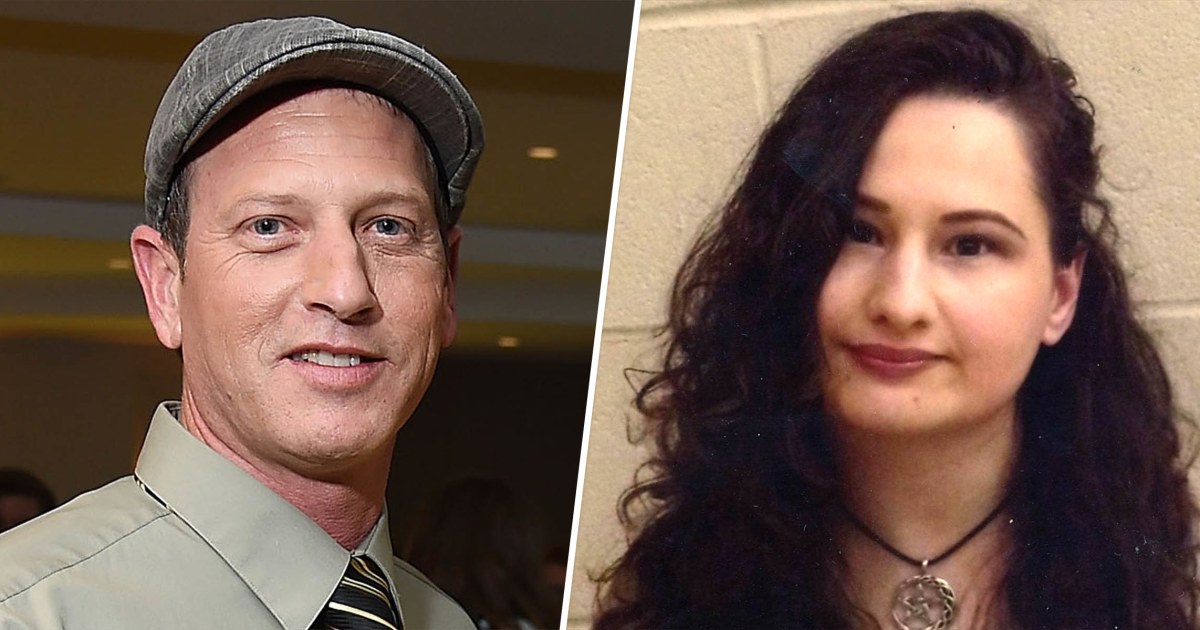
She was sentenced to 10 years in prison, with the possibility of parole after serving 85% of her sentence.
Her plea agreement reflected the widespread sympathy for her situation as a victim of long-term abuse.
Nicholas Godejohn was tried separately.
He was charged with first-degree murder and armed criminal action.
His defense argued that he was manipulated by Gypsy Rose and that he had diminished mental capacity.
The jury rejected that defense and convicted him in 2018.
He was sentenced to life in prison without the possibility of parole.
Two defendants, one killing, two fates.
Gypsy Rose's sentence carried a path back to the world.
Godejohn's carried a lock.
The jury's reasoning is not detailed in the record.
Only that they rejected the defense.
Was it the manipulation they rejected, or the diminished capacity?
Was it the act itself, or the man who carried it out?
That would require evidence.
The same crime sits in two courtrooms with two different weights.
One plea acknowledged the years of abuse that came before.
One verdict acknowledged the knife that ended it.
The legal system drew a line between them.
The record does not explain exactly where that line fell.
It only shows where it landed.
AND THE STORY STILL ISN'T OVER
On December 28, 2023, Gypsy Rose Blanchard walked out of prison on parole.
She had served approximately seven years of a ten-year sentence for second-degree murder.
She has since married.

She has spoken publicly about her experience.
The record does not include the specific details of her current life or marriage.
It only shows that she has married.
Nicholas Godejohn remains incarcerated.
He is serving a life sentence without parole.
The legal system drew a line between them.
The record does not explain exactly where that line fell.
It only shows where it landed.
The case has been the subject of multiple documentaries.
A Hulu series retold it.
Extensive media coverage followed it.
It has prompted broader discussions about Munchausen syndrome by proxy.
It has prompted discussions about the failures of the medical and social systems to protect Gypsy Rose.
Those discussions are still ongoing.
The record does not resolve them.
It does not say whether the systems failed.
It does not say how they failed.
It does not say who should have acted.
That would require evidence.
Gypsy Rose is free.
Godejohn is not.
The case is not closed.
It is not a verdict on a single night in 2015.
It is an ongoing chapter.
The story still isn't over.
Advertisement
You may also like
The tarot card left near a DC Sniper victim that police could not explain
The tarot card was found near a crime scene, bearing the message "Dear Policeman, I am God." It was part of the documented evidence.…
The Cub Scout leader who sent a floppy disk that cracked a 31-year murder case
A floppy disk arrived at a Wichita television station in 2005. It was part of a series of communications from someone calling himself BTK…
Why a convicted killer's courtroom outburst sealed his fate in Polly Klaas case
The courtroom was quiet enough to hear the verdict read. Richard Allen Davis had been convicted of first-degree murder with special circumstances. Then came…
The blood spatter on MacDonald's pajama top that contradicted his story of fighting intruders
The pajama top was folded on the evidence table in Raleigh, North Carolina, in the summer of 1979. It belonged to Captain Jeffrey MacDonald,…
The parolee with a violent history who was freed months before Polly Klaas vanished
June 1993. Richard Allen Davis walked out of prison. He had a long record. Kidnapping. Assault. Violent abductions, according to the investigation summary. Just…
The inmate tip that sent two ex-cons to the Clutter farmhouse
Floyd Wells was in a Kansas prison cell when he told authorities what his former cellmate had said. Richard Hickock, he said, had spoken…