Why a Green Beret's pajama fibers under his wife's body could not be explained
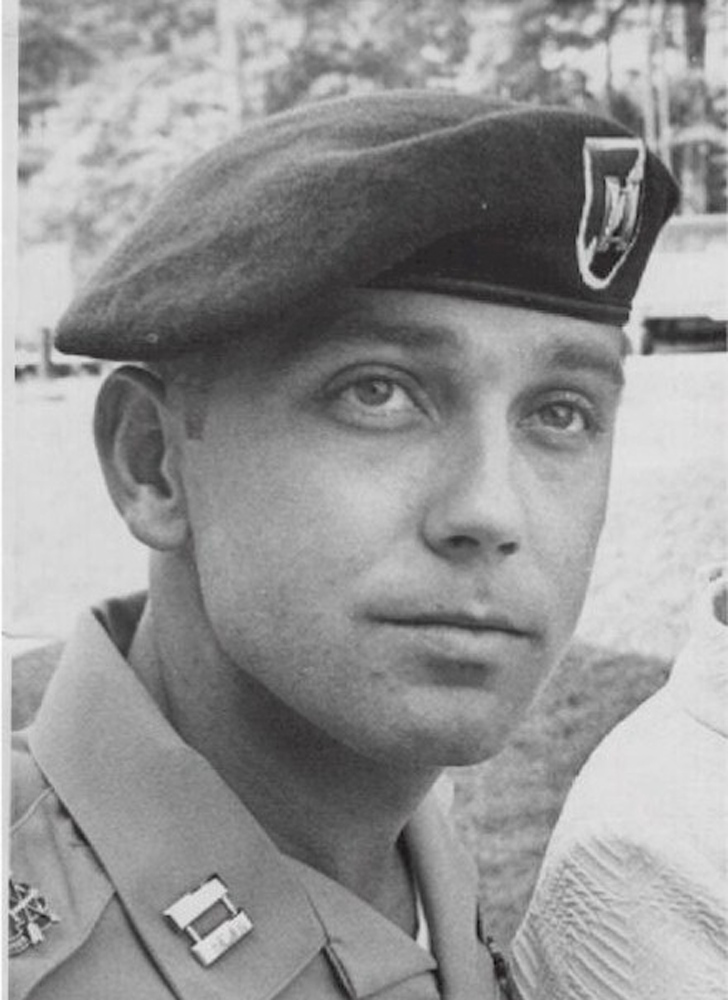
The pajama fibers were found under Colette MacDonald's body.
They matched the pajama top Jeffrey MacDonald was wearing that night.
MacDonald said he had fought the intruders and been knocked unconscious.
He said four hippies—chanting "acid is groovy"—had attacked his family in their home on base.
Military police found his wife and their two daughters, Kimberley and Kristen, dead.
MacDonald himself had minor injuries.
The fibers were a key piece of physical evidence.
They suggested the attacks were not random.
They contradicted his story of intruders.
How could fibers from his own pajamas end up under his wife's body if he was unconscious?
That would require evidence.
The record does not establish the exact mechanism of how the fibers got there.
Only that they matched.
The Army's initial investigation found inconsistencies in MacDonald's account.
Blood spatter suggested he had moved around the scene.
Fibers, blood, and a story that did not hold.
Not because the intruders were impossible.
But because the physical evidence pointed another way.
The case would be charged, dropped, and reopened.
But on that February morning in 1970, the fibers were already there.
Under her body.
Matched to his pajamas.
The question hung in the air, unanswered.
THE 1970 INVESTIGATION
The Army's initial investigation found inconsistencies in MacDonald's account.
He said he had fought intruders and been knocked unconscious.
The physical evidence told a different story.
Fibers from his pajama top were matched to those found under his wife's body.
Blood spatter suggested the attacks were not random.
The lead Army investigator, a CID agent, examined the scene and the story.
He found the two did not line up.
The Army charged MacDonald in 1970.
The charges were dropped after an Article 32 hearing.
The specific reasons for that hearing's outcome are not detailed in the record.
What remains is the gap between what MacDonald claimed and what the evidence showed.
The case stalled.
It was reopened years later by federal prosecutors.
Not because new witnesses came forward.
Not because new evidence emerged from the house.
But because the physical record, the fibers, the blood, the pajamas, had never been explained.
The pajama fibers were under her body.
They were matched to his top.
That match was documented.
The intruders he described left no trace of themselves.
No fingerprints, no footprints, no fibers of their own.
The investigation pointed one way, then stopped.
It is a case that began with a charge.
It is a case that ended without one, for now.
THE 1979 TRIAL
The trial opened in federal court in Raleigh, North Carolina, in 1979.
MacDonald sat accused of three counts of first-degree murder.
The prosecution told the jury a simple story: MacDonald killed his family in a rage after Colette threatened to leave him.
The defense told another: four hippies had done it, chanting "acid is groovy" as they fled.
Each side called its witnesses.
The prosecution put its forensic expert on the stand.
He testified that the bloodstain patterns showed MacDonald had moved around the scene.
He testified that the fibers from MacDonald's pajama top matched those found under Colette's body.
He testified that the physical evidence contradicted the story of intruders.
The defense had its own witness, and she was meant to carry their case.
Helena Stoeckley, the woman who had claimed involvement in the murders, took the stand.
She had a history of drug use.
She testified she had no memory of the night.
Not because she recanted. Because she said she could not remember.
The courtroom waited for her to describe the intruders.
She offered nothing.
The exact content of her testimony beyond her lack of memory is not specified in the record.
What remains is what the record holds: a witness who undermined the defense's central claim, and a forensic expert whose testimony tightened the physical evidence around the accused.
The jury heard both stories.
The physical evidence pointed one way.
TWO STORIES, ONE BODY
The prosecution told a story of rage.
A wife threatening to leave, a husband losing control, a family destroyed in a single night.
The defense told a different story.
Four intruders, chanting "acid is groovy," had come through the door and done the killing.
Two stories, one body.
The physical evidence was central to the prosecution's case.
Bloodstain patterns suggested MacDonald had moved around the scene after the attacks.
The exact nature of those patterns, and how each side interpreted them, is not detailed in the record.
That would require evidence.
The defense pointed to Helena Stoeckley, a woman who had claimed involvement in the murders.
She took the stand.
She testified she had no memory of the night.
Her testimony undermined the defense's central claim.
The jury heard both stories.
The prosecution's forensic experts testified that the physical evidence contradicted the story of intruders.
The fibers matched.
The bloodstains told a sequence.
The defense could not explain them away.
The jury was forced to choose between two irreconcilable narratives.
They chose.
The jury convicted MacDonald on all three counts.
It is a verdict against the intruder story.
It is also a verdict for the prosecution's version of events.
The frustration is the choosing.
The record holds what the record holds.
AND THE STORY STILL ISN'T OVER
The jury convicted on all three counts.
MacDonald was sentenced to three consecutive life terms.
The conviction was upheld on appeal.
He kept fighting anyway, for decades, filing appeal after appeal.
All of them unsuccessful.
He remains in federal prison, still insisting he is innocent.
The case did not end in the courtroom.
It moved into print.
Joe McGinniss’s “Fatal Vision” told the story, and then it became part of the story itself.
MacDonald sued McGinniss for fraud over how the book portrayed him.
The outcome of that suit is not specified in the record.
What the record does show is the conviction and the long string of denials.
MacDonald filed numerous appeals.
Each one was denied.
He remains incarcerated.
It is a closed case on paper.
It is not closed to the man inside it.
He has maintained his innocence for more than fifty years.
The record holds the verdict.
The record holds the sentence.
The record holds the denials.
What the record does not hold is an ending he accepts.
That would require something the testimony never produced.
A confession.
A witness who placed the intruders inside the home.
A piece of evidence that broke the prosecution’s theory.
None of that appears in the record.
So the story stays where the trial left it.
Three counts.
Three life terms.
One man still saying it did not happen that way.
The appeals are over.
The case is not, for him.
Advertisement
You may also like
Why a convicted killer's courtroom outburst sealed his fate in Polly Klaas case
The courtroom was quiet enough to hear the verdict read. Richard Allen Davis had been convicted of first-degree murder with special circumstances. Then came…

The blood spatter on MacDonald's pajama top that contradicted his story of fighting intruders
The pajama top was folded on the evidence table in Raleigh, North Carolina, in the summer of 1979. It belonged to Captain Jeffrey MacDonald,…
The parolee with a violent history who was freed months before Polly Klaas vanished
June 1993. Richard Allen Davis walked out of prison. He had a long record. Kidnapping. Assault. Violent abductions, according to the investigation summary. Just…
The inmate tip that sent two ex-cons to the Clutter farmhouse
Floyd Wells was in a Kansas prison cell when he told authorities what his former cellmate had said. Richard Hickock, he said, had spoken…
The 2015 missing-person call that led to a stabbing, a hidden illness, and two murder charges
The call came in on June 14, 2015. Deputies from the Greene County Sheriff's Office in Missouri were sent to a residence in Springfield…
Two shotguns bought days before the Menendez parents were killed — what the brothers' psychologist heard next
Days before August 20, 1989, Lyle and Erik Menendez bought two 12-gauge shotguns. The same weapons were used to kill their parents, Jose and…