The left-handed clue in a 1954 murder that pointed at one man — and no one else
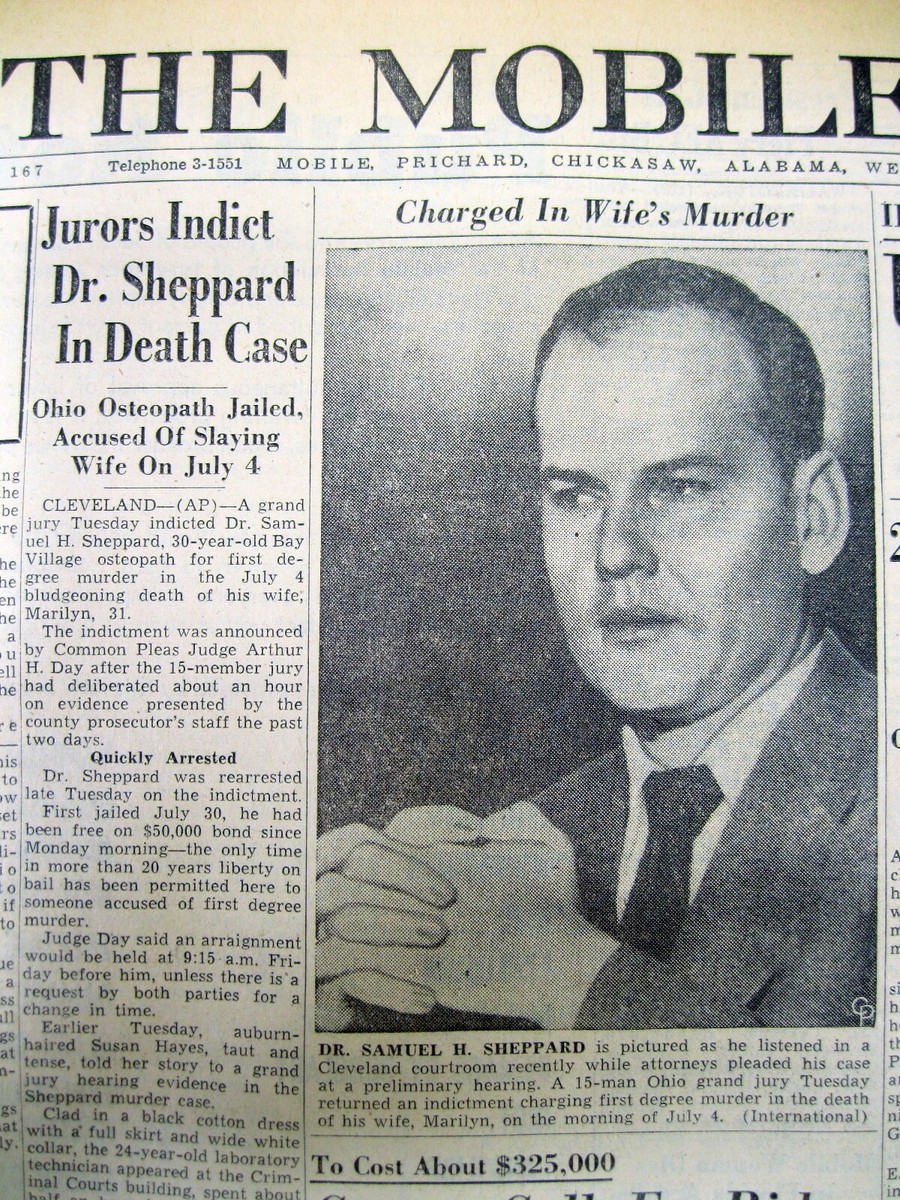
She was on the ground below the bedroom window, and the house was quiet.
On July 4, 1954, Marilyn Sheppard was found bludgeoned to death in her upstairs bedroom in Bay Village, Ohio.
The source records this, and the source records something else.
Coroner Samuel R. Gerber concluded the killer was left-handed.
A detail that pointed at Sam, who was left-handed.
Not because of a confession. Not because of a witness.
Because of a hand.
The murder weapon was never found, and the source states this explicitly.
No flashlight, no blunt instrument, nothing that could be weighed or measured or matched.
Sam claimed a "bushy-haired" intruder knocked him unconscious.
He said he woke to his wife's cry, struggled with the man, chased him to the lakefront.
The record records his claim, not as fact.
How could a single physical trait narrow the hunt to one man?
How could a coroner's opinion become the shape of a case?
How could a left hand do all of that?
That would require evidence.
The identity of the killer is not established by the record.
The left-handed conclusion is a coroner's opinion, not a proven fact.
It is a documented claim.
It is also the only direction the investigation seemed to look.
THE NIGHT OF JULY 4
Sam Sheppard said he was asleep on a downstairs couch.
He said he heard his wife cry out.
He said he struggled with an intruder, a man with bushy hair, and was knocked unconscious.
He said that when he came to, he found his wife dead.
He said he chased the intruder to the lakefront, where he was knocked out again.
Whether an intruder existed is not established.
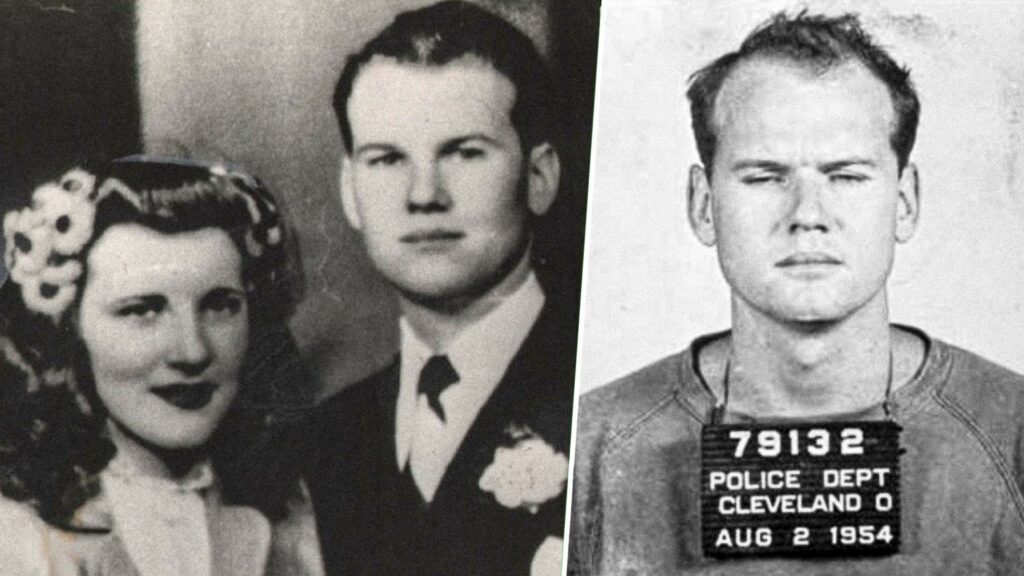
Sam's account is a claim, not verified fact.
The couple's 7-year-old son, asleep in another upstairs bedroom, was not harmed.
The murder weapon was never found.
Bay Village police did not secure the scene properly.
The house was not photographed or fingerprinted thoroughly.
The source records this criticism.
He was a physician in the house on the lake.
His wife was upstairs.
He said he was downstairs.
He said he woke to her cry.
He said he fought a stranger.
He said he lost consciousness.
He said he lost consciousness a second time.
The scene was chaotic.
The official response was sloppy.
That is what the record shows.
THE CORONER'S CONCLUSION
Coroner Samuel R. Gerber concluded that Marilyn Sheppard had been killed with a blunt instrument, likely a flashlight.
He also concluded the killer was left-handed.
Sam Sheppard was left-handed.
That single physical trait seemed to seal his fate.
Gerber's conclusion was an inference, not a proven fact.
The murder weapon was never found.
Blood evidence was found on Sam's clothing and in the bedroom.
The source records this.
The defense argued the blood was consistent with his account of trying to help his wife.
That argument was made.

It was a claim, not a certainty.
The scene was chaotic.
The official response was sloppy.
And the coroner's conclusion pointed at one man — and no one else.
Not because the evidence proved it.
But because the investigation left so little else.
The left-handed detail was a documented claim.
It remains a documented claim.
No other suspect was ever charged.
No intruder was identified.
The bushy-haired man was never located.
That is what the record shows.
What the record does not show is a weapon.
What it does not show is proof of the killer's hand.
Gerber's conclusion stood as a cornerstone of the prosecution's case.
It was circumstantial.
It was an inference.
It was enough to point.
It was not enough to prove.
THE TRIAL AND THE VERDICT
The indictment came in August 1954.
First-degree murder.
The trial began in October and ran for nearly two months.
The prosecution's case was circumstantial, built on the coroner's left-handed theory and the blood evidence.
The jury deliberated for three days.
On December 21, 1954, they returned a guilty verdict.
Sam Sheppard was sentenced to life in prison.

The conviction was upheld on appeal in 1956.
It held for eight years.
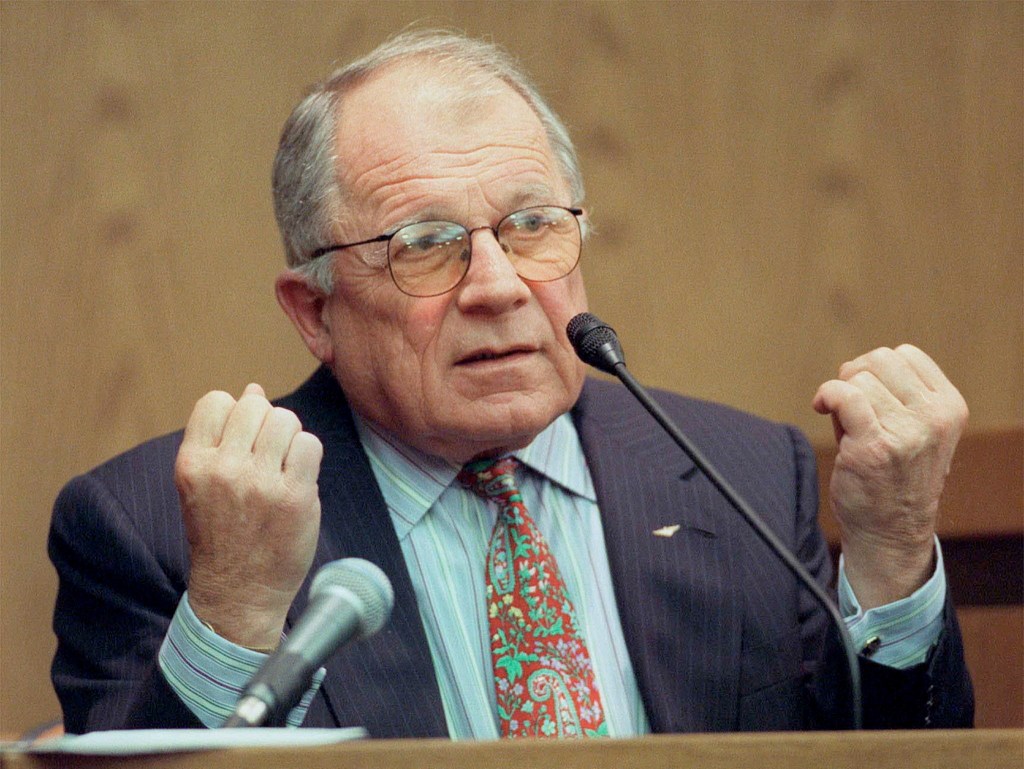
In 1964, F. Lee Bailey took over the case.
Bailey filed a habeas corpus petition, arguing the trial had been poisoned by prejudicial publicity.
He argued the judge had failed to control the courtroom.
The U.S. Supreme Court agreed.
In 1966, in *Sheppard v. Maxwell*, the Court ruled the trial had been a "carnival atmosphere."
It ordered a new trial.
The second trial came in 1966.
The prosecution's case was weaker.
The defense presented new forensic evidence.
On November 16, 1966, the jury acquitted Sam Sheppard.
Deliberation took less than a day.
The verdict was relief.
It was also not proof.
Whether Sam Sheppard was guilty or innocent is not established by the record.
The acquittal does not prove innocence.
It proves the first trial was unfair.
It proves the system had failed once and corrected itself.
The left-handed clue still pointed at one man.
It still proved nothing.
AND THE STORY STILL ISN'T OVER
The acquittal did not give Sam Sheppard his life back.
He returned to osteopathic medicine, the source records, but struggled with alcoholism and personal problems.
He died on April 6, 1970, of liver failure, at age 46.
The murder of Marilyn Sheppard has never been officially solved, the source states.
No other suspect was ever charged.
In 1999, the Sheppard family filed a wrongful-conviction lawsuit against the state of Ohio.
In 2002, a jury found that Sam Sheppard had been wrongfully imprisoned, the source records.
That finding does not identify who killed Marilyn Sheppard.
Who killed her is not established.
The case is closed legally.
It is not closed factually.
The left-handed clue still points at one man.
It still proves nothing.
The case remains a landmark on pretrial publicity and fair trial rights in American law, the source notes.
Law schools still teach it.
The carnival atmosphere of the first trial became the standard for what a fair trial must not look like.
The system failed once, corrected itself, and then left the central question unanswered.
Sam Sheppard was convicted, then acquitted, then declared wrongfully imprisoned.
He was never exonerated of the act itself.
He was found to have been denied a fair trial.
Those are different things.
The distinction matters more than the verdict.
Marilyn Sheppard's killer was never named by any court.
The coroner's conclusion about left-handedness remains a documented claim.
It was a claim that pointed at one man.
It was never a proof.
His son slept through the night in the room next door.
The murder weapon was never found.
The bushy-haired intruder was never located.
The record ends where it began: with a body, a blunt instrument that never surfaced, and a question that outlived every person who stood in that courtroom.
Sam Sheppard died at 46.
The case did not die with him.
It became a lesson in procedure, a footnote in jurisprudence, and a cold file that no one ever closed.
Advertisement
You may also like
Two shotguns bought days before the Menendez parents were killed — what the brothers' psychologist heard next
Days before August 20, 1989, Lyle and Erik Menendez bought two 12-gauge shotguns. The same weapons were used to kill their parents, Jose and…
The Milwaukee apartment where a skull sat beside Polaroids of the dead
The handcuff was loose. That is what the man told the officers, anyway, when he flagged them down on the night of July 22,…
The $1 million extortion letter that named a killer — and the man who wrote it
Seven people in the Chicago area died in late September and early October 1982. They had taken Extra-Strength Tylenol capsules laced with potassium cyanide.…
The cult leader who sent his followers to a house on Cielo Drive — and the word left in blood
The door at 10050 Cielo Drive held a word written in blood. Five people were dead inside the Benedict Canyon house on the morning…
Hae Min Lee's brother still waits as her convicted killer walks free
He has waited twenty-five years. The wait did not end in September 2022, when Adnan Syed walked out of prison. Young Lee, Hae Min…
Why a Green Beret's pajama fibers under his wife's body could not be explained
The pajama fibers were found under Colette MacDonald's body. They matched the pajama top Jeffrey MacDonald was wearing that night. MacDonald said he had…