The Gulf War veteran and the teen who terrorized D.C. — what drove them?
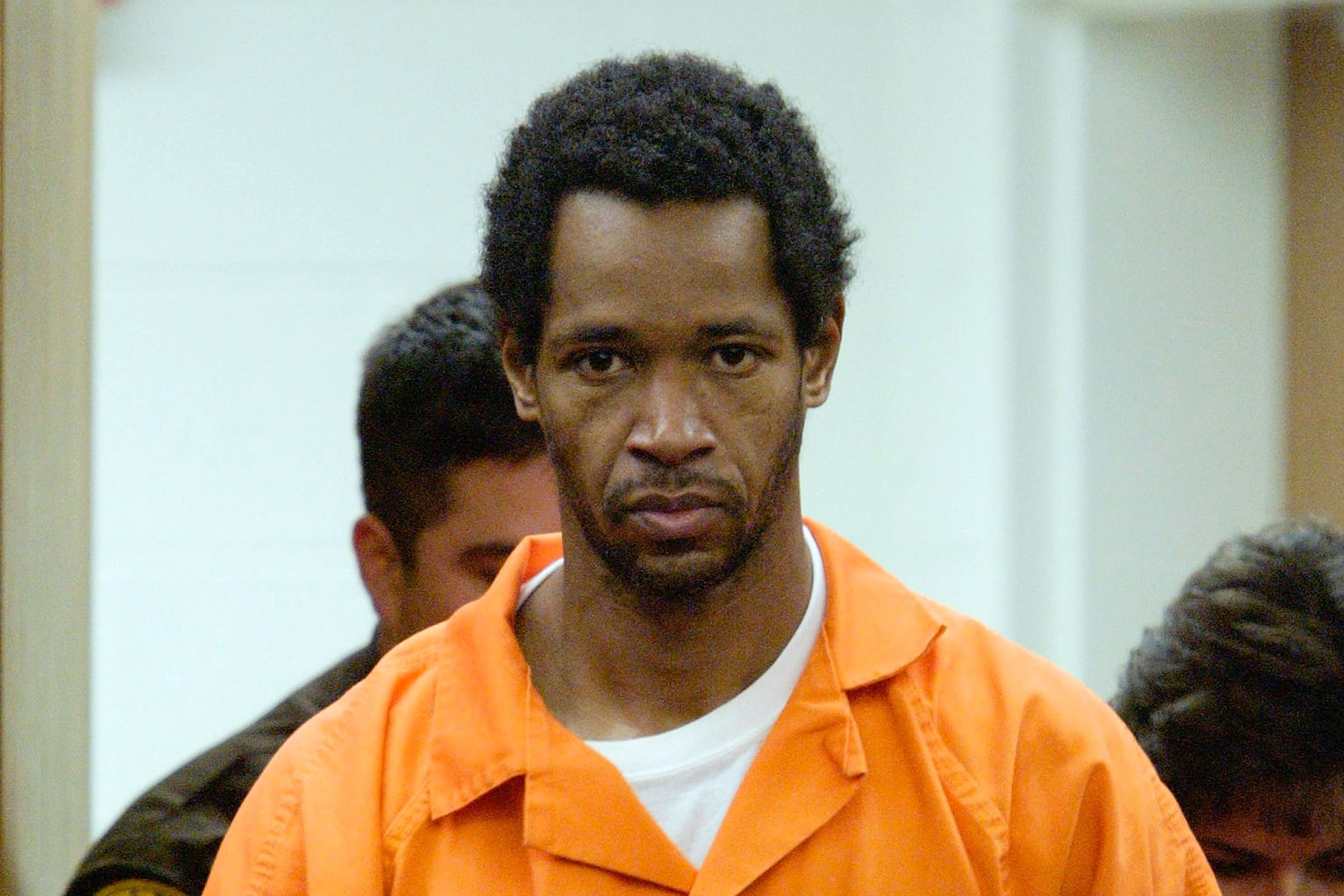
The truck driver pulled into the rest stop near Myersville, Maryland, and saw the white Chevrolet Caprice.
He called it in.
On October 24, 2002, police found two men sleeping inside the car.
Inside the Caprice, officers found a Bushmaster .223-caliber rifle, a scope, and a tripod.
The men were John Allen Muhammad, a 41-year-old Gulf War veteran, and Lee Boyd Malvo, a 17-year-old from Jamaica.
For three weeks, the region had been terrorized by shootings at gas stations, bus stops, and parking lots.
Ten people were dead. Three more were wounded.
Schools had closed. Residents were afraid to pump gas.
Then, a tip from a truck driver, and the car was just there.
Two men, asleep.
The rifle was in the trunk, according to the record.
What exactly the two men were doing in the car at that moment is not in the record beyond "sleeping."
Was this the end of the hunt, or the beginning of a different question?
Who were these two?
How did a Gulf War veteran and a teenager end up here, in a parked car, with a rifle on a tripod?
The region exhaled.
The mystery, for now, was over.
The record would say they were found sleeping.
That is all it says.
THE GULF WAR VETERAN AND THE TEEN
John Allen Muhammad was a 41-year-old Gulf War veteran.
Lee Boyd Malvo was a 17-year-old from Jamaica.
Muhammad was the older figure.
Malvo was his accomplice.
The record says that much, and no more.
What the record does not establish is the exact nature of their relationship.
It does not detail the timeline of their meeting.
That would require evidence the source does not provide.
Muhammad's ex-wife had previously reported his threats against her.
She testified about them.
Malvo's mother had expressed concern about her son's relationship with Muhammad.
She spoke publicly about her son.
Two people who knew them best had warned of something.
The first killing occurred on October 2.
It happened outside a Shoppers Food Warehouse in Wheaton, Montgomery County, Maryland.
A man was shot there.
He died.
The details of his life are ordinary: a trip to the grocery store.
The violence that followed was not.
Between that day and October 24, the shootings spread across Maryland, Virginia, and Washington, D.C.
Ten people were killed.
Three others were wounded.
A 13-year-old boy was shot outside his middle school in Bowie, Maryland.
He survived.
The two men were found sleeping in a white Chevrolet Caprice at a rest stop near Myersville, Maryland.
Inside the car, police found a Bushmaster .223-caliber rifle, a scope, and a tripod.
The older man was the veteran.
The younger man was the teenager.
What was the nature of their bond?
Was it manipulation?
Was it willingness?
The record does not say.
THE SHOOTINGS AND THE HUNT
The first killing came on October 2, outside a grocery store in Wheaton, Maryland.
Between October 2 and October 24, 2002, shootings occurred in Maryland, Virginia, and Washington, D.C., killing ten people and wounding three others.
Victims were shot at gas stations, bus stops, and parking lots, often while going about ordinary activities.
A 13-year-old boy was shot outside his middle school in Bowie, Maryland; he survived.
Schools closed.
Residents were afraid to pump gas.
The final shooting came on October 22 in Silver Spring, Maryland, when a bus driver was killed.
Police initially struggled to identify the shooter.
Early reports suggested a white van.
That proved incorrect.
The investigation was a massive multi-jurisdictional effort led by Montgomery County Police Chief Charles Moose, who became the public face of the hunt.
How did they evade capture for so long?
How did two men in a sedan vanish across three jurisdictions?
How did a rifle fired from a hidden position stay invisible?
The record shows the breakthrough, not the answer.
The breakthrough came when a witness at a shooting in Ashland, Virginia, on October 19 reported seeing a white Chevrolet Caprice.
A note left at a shooting in Virginia demanded $10 million.
The specific contents of the note beyond that demand are not in the source.
On October 24, a tip from a truck driver led police to the Caprice at a rest stop near Myersville, Maryland.
The men inside were sleeping.
THE TWO STORIES OF THE SAME FACTS
Two legal stories emerged from the same facts.
Defense attorneys argued that Muhammad had manipulated Malvo.
Prosecutors maintained that Malvo was a willing participant.
The trials were marked by legal disputes over Malvo’s age and mental state, as he was 17 at the time.
Muhammad was convicted in November 2003 of the murder of Dean H. Meyers and sentenced to death.
Malvo was convicted in December 2003 of the murder of Linda Franklin and sentenced to life without parole.
The defense said the older man shaped the teen.
The prosecution said the teen shaped his own choices.
Which story is true?
Was the teen a victim or a willing partner?
The record does not establish either.
It is a matter of legal argument, not documented certainty.
Muhammad was executed by lethal injection on November 10, 2009, in Virginia.
Malvo remains in prison.
The legal battle over culpability ended with two convictions.
The question of what drove them never ended.
AND THE STORY STILL ISN'T OVER
Muhammad was executed by lethal injection on November 10, 2009, in Virginia.
Malvo remains in prison, serving multiple life sentences without parole.
In 2017, Malvo’s life sentences were briefly overturned by a federal appeals court.
The court ruled that juvenile offenders cannot be sentenced to life without parole.
The decision was later reversed.
His sentences were reinstated.
The specific current legal status of Malvo’s appeals beyond the reinstatement is not in the source.
The case remains one of the most studied examples of domestic terrorism and serial killing in American history.
What does it still teach us?
About the manipulation of a teenager?
About the limits of the law when the accused is 17?
About what a veteran carries home from war?
That would require evidence the record does not supply.
Muhammad’s ex-wife has become a public speaker on domestic violence.
Malvo’s mother has spoken publicly about her son.
Two women shaped by the same story, telling it in their own words.
The convictions stand.
The sentence stands.
The motive remains a matter of competing legal narratives, not established certainty.
The legal saga is not fully closed.
It is a case studied in classrooms and courthouses.
It is also a case with a hole at its center.
What drove them?
The record shows a Gulf War veteran and a 17-year-old.
It shows the rifle, the scope, the tripod.
It does not show the why.
That question was never answered.
It was only argued.
Advertisement
You may also like
Two shotguns bought days before the Menendez parents were killed — what the brothers' psychologist heard next
Days before August 20, 1989, Lyle and Erik Menendez bought two 12-gauge shotguns. The same weapons were used to kill their parents, Jose and…
The Milwaukee apartment where a skull sat beside Polaroids of the dead
The handcuff was loose. That is what the man told the officers, anyway, when he flagged them down on the night of July 22,…
The $1 million extortion letter that named a killer — and the man who wrote it
Seven people in the Chicago area died in late September and early October 1982. They had taken Extra-Strength Tylenol capsules laced with potassium cyanide.…
The cult leader who sent his followers to a house on Cielo Drive — and the word left in blood
The door at 10050 Cielo Drive held a word written in blood. Five people were dead inside the Benedict Canyon house on the morning…
Hae Min Lee's brother still waits as her convicted killer walks free
He has waited twenty-five years. The wait did not end in September 2022, when Adnan Syed walked out of prison. Young Lee, Hae Min…
Why a Green Beret's pajama fibers under his wife's body could not be explained
The pajama fibers were found under Colette MacDonald's body. They matched the pajama top Jeffrey MacDonald was wearing that night. MacDonald said he had…