A freelance photographer's fibers that tied him to 28 Atlanta child murders
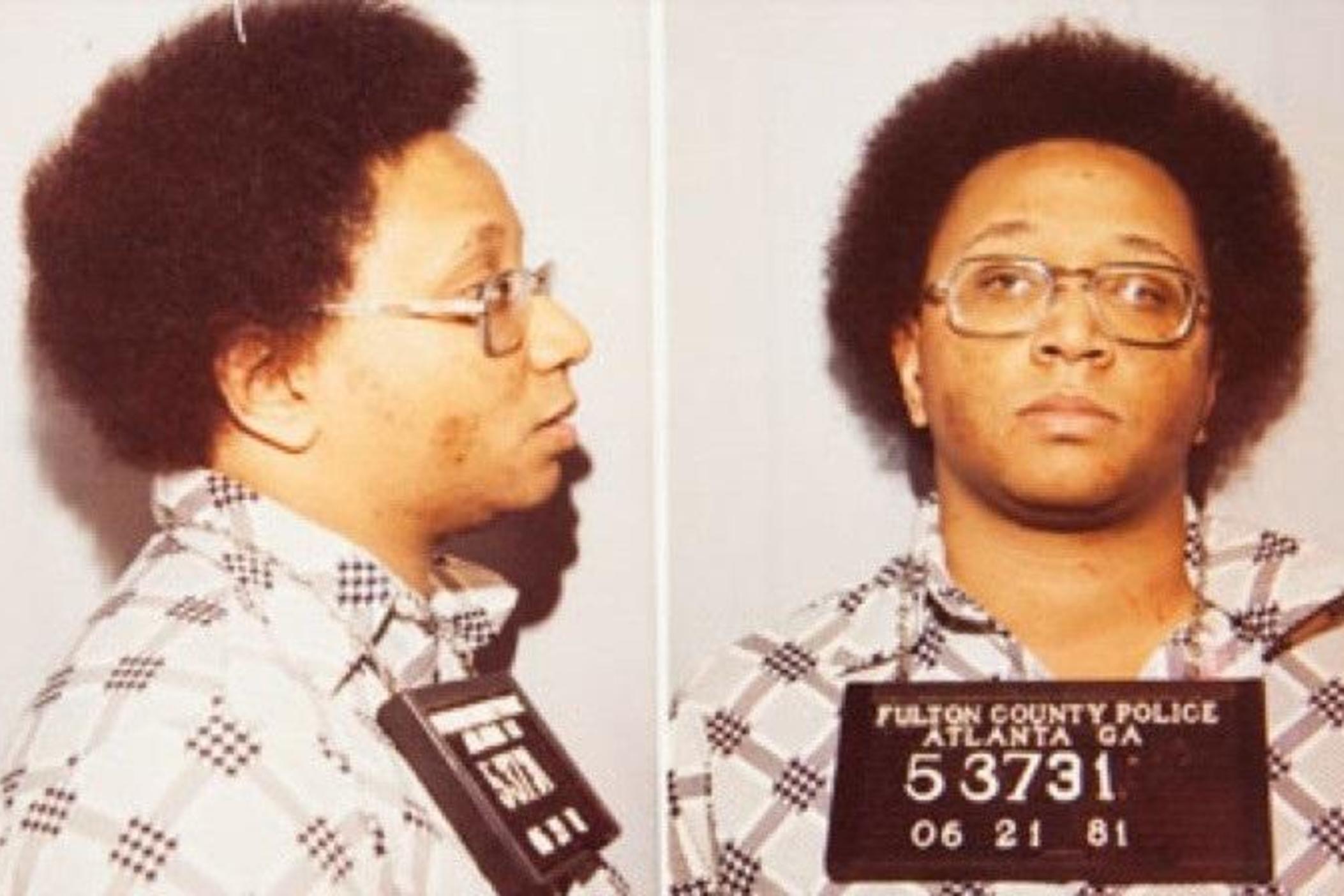
The photographer was 23 years old.
He worked freelance, taking pictures and promoting music in Atlanta.
The city around him was in panic.
Between 1979 and 1981, at least 28 Black children, teenagers, and young adults were murdered or disappeared.
The first bodies were found in summer 1979.
The disappearances continued into 1981.
The investigation was called the Atlanta Child Murders task force.
It involved local police, the FBI, and the Georgia Bureau of Investigation.
In May 1981, the body of a 27-year-old man was pulled from the Chattahoochee River.
Police soon focused on a suspect.
That suspect was the photographer.
How did a young man with a camera become the focus of this?
What connected him to bodies pulled from a river?
What made the task force turn its attention to him?
The record does not establish that he knew any of the victims.
It does not establish that he had any connection to them before the investigation.
It establishes only that he was a young man in Atlanta while the city was terrified.
And that police came to focus on him.
The weight of a city in terror is not a small thing.
It is a thing that makes people look for answers.
It is a thing that makes them look at a man and ask if he is the one.
THE FIBERS
The fibers came from a bedroom and a car.
FBI fiber analysts testified that carpet and hair fibers from Williams's home and vehicle matched fibers found on the victims.
The case file records their testimony as the key evidence at trial.
Police compared those fibers extensively, pulling threads from bodies and running them against the young photographer's world.
Witnesses also testified to seeing a car matching his description near abduction sites.
The investigation was one of the largest in U.S. history.
A task force of local and federal agencies worked the cases, a coordinated push through the city's terror.
The prosecution argued that Williams killed the two men he was tried for.
They argued he was responsible for many of the other deaths too, though he was only tried for two.
No specific weapon was widely reported.
The prosecution relied on fiber evidence and witness testimony rather than a weapon.
That is what the record shows.
Fibers can place a person in a room.
Fibers can place a car near a curb.
Fibers can tie a thread from a rug to a body pulled from a river.
But fibers alone cannot say who put the body there.
They cannot say when the thread was shed.

They cannot say why.
The defense argued the fiber evidence was circumstantial.
They argued Williams was a scapegoat.
The precision of the matching was the prosecution's claim.
The meaning of that precision was the fight.
It is a fight about whether a thread is a fact.
It is a fight about whether a thread is a story.
It is a fight about whether a story can carry a conviction.
THE TRIAL
The prosecution called its fiber analysts first.
They testified about carpet fibers, hair fibers, and the threads pulled from the accused man’s home and car.
They said those fibers matched fibers found on the two victims.
The defense said the matches were circumstantial.
The defense said the accused man was a scapegoat.
The jury heard about a car matching his description near abduction sites.
It heard about a young freelance photographer who worked nights and drove a police-style vehicle.
The trial lasted several weeks in Fulton County Superior Court.
The accused man was charged with two counts of murder.
Only two counts.
The jury deliberated for about 11 hours.
On February 27, 1982, they returned a guilty verdict on both counts.
The judge sentenced him to two consecutive life terms in prison.
The verdict covered the two murders charged.
It did not establish guilt for the other 26 cases.
That is not what the jury decided.
That is what police and prosecutors later asserted.
The accused man has maintained his innocence.
He has filed multiple appeals.
All of them have been denied.
He remains in prison in Georgia.
The question the record leaves open is whether the right man was convicted for the right crimes.
The fibers tied him to two deaths.
The story tied him to 28.
The verdict tied him to two.
THE OTHER CASES
The verdict named two victims.
The story named twenty-eight.
The Atlanta Police Department closed many of the other cases in 1982, attributing them to Williams in an administrative decision.
That closure was not a jury finding.
It is not established by the record that Williams committed the other twenty-six murders.
He was never charged with them.
The prosecution argued at trial that Williams was responsible for many of the other deaths, but he was only tried for two.
The defense argued that the fiber evidence was circumstantial.
The defense argued that Williams was a scapegoat.
The investigation drew criticism for its handling of the cases.
There were allegations of racial bias.
There was pressure to solve the cases quickly.
The families of the victims have continued to seek answers.
Some have questioned whether Williams was responsible for all the deaths.
Camille Bell, a victim's mother and public advocate, has continued to press for the victims' memories and for further investigation.
The record shows a conviction for two murders.
The record shows a police department closing files.
The record does not show a jury deciding twenty-eight.
That would require evidence.
That would require charges.
That would require a trial that never happened.
AND THE STORY STILL ISN'T OVER
Wayne Williams remains in prison in Georgia, serving two consecutive life sentences.
He has filed appeal after appeal, the case file shows.
He has asked for new trials.
He has asked for DNA testing.
Courts have denied the requests, the case file shows.
In 2019, Atlanta Mayor Keisha Lance Bottoms ordered a new review of the cases, according to the case file.
In 2021, the city announced that DNA evidence would be re-tested in some of the cases, the case file states.
The results of that re-testing are not in the record.
No new charges have been filed.
The cases remain officially closed.
Camille Bell, whose son was among the victims, has not stopped.
She has continued to advocate for the victims' memories.
She has continued to push for further investigation.
Other family members have joined her.
They ask what happened to their children.
They ask who else might have been involved.
They ask why the record stays closed.
That would require evidence.
That would require the re-testing results to be made public.
That would require charges.
That would require a trial.
The cases are closed.
The families are not.
Advertisement
You may also like
Two shotguns bought days before the Menendez parents were killed — what the brothers' psychologist heard next
Days before August 20, 1989, Lyle and Erik Menendez bought two 12-gauge shotguns. The same weapons were used to kill their parents, Jose and…
The Milwaukee apartment where a skull sat beside Polaroids of the dead
The handcuff was loose. That is what the man told the officers, anyway, when he flagged them down on the night of July 22,…
The $1 million extortion letter that named a killer — and the man who wrote it
Seven people in the Chicago area died in late September and early October 1982. They had taken Extra-Strength Tylenol capsules laced with potassium cyanide.…
The cult leader who sent his followers to a house on Cielo Drive — and the word left in blood
The door at 10050 Cielo Drive held a word written in blood. Five people were dead inside the Benedict Canyon house on the morning…
Hae Min Lee's brother still waits as her convicted killer walks free
He has waited twenty-five years. The wait did not end in September 2022, when Adnan Syed walked out of prison. Young Lee, Hae Min…
Why a Green Beret's pajama fibers under his wife's body could not be explained
The pajama fibers were found under Colette MacDonald's body. They matched the pajama top Jeffrey MacDonald was wearing that night. MacDonald said he had…