The bite mark on Lisa Levy that tied Ted Bundy to the Chi Omega murders
She was on the ground below.
On the body of the second victim, investigators found something the blunt instrument had not made: a bite mark.
Not a wound from the wooden club. An impression, curved and human, pressed into her skin.
The mark became the centerpiece of a murder trial.
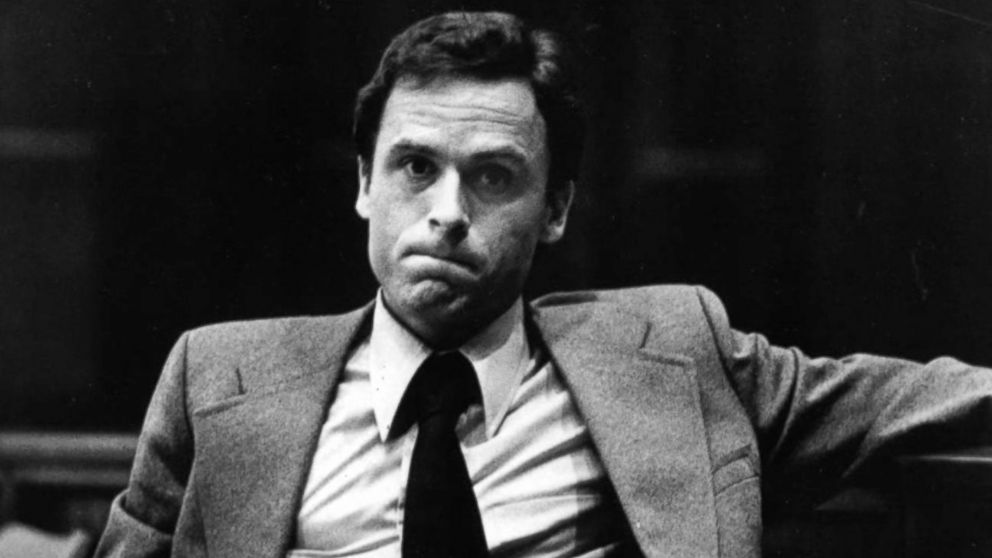
A forensic odontologist, Dr. Richard Souviron, testified that the marks on the victim’s body matched the teeth of the man in the courtroom, Ted Bundy.
He compared the alignment, the spacing, the distinctive edge of each tooth.
He said it was a match.
This was one of the first major uses of bite mark evidence in a U.S. murder trial.
The defense argued the bite mark evidence was unreliable.
They questioned the science. They questioned the interpretation. They questioned whether a bite mark could really tie one man to a crime.
The exact nature of the bite mark—whether it was a clear imprint or a partial—is not detailed in the record.
How could an impression in skin convict a man?
How could a dentist’s eye outweigh a defendant’s life?
How could a curve of teeth become a signature?
That would require evidence. And the evidence was presented, tooth by tooth, in a Miami courtroom in 1979.
THE NIGHT OF JANUARY 15, 1978
The attack began in the early morning hours of January 15, 1978.
Two Florida State University students were murdered inside the Chi Omega sorority house in Tallahassee.
A third woman in the same house survived.
The weapon was a wooden club or similar blunt object, though reports vary on the exact weapon.
The crimes were discovered when a sorority sister found the victims.
Later that night, Bundy attacked another woman, Cheryl Thomas, in her off-campus apartment.
The exact sequence of events inside the sorority house is not fully detailed in the record.
It is a scene of randomness.
It is a scene of brutality.
One house, three women, two dead.
One apartment across town, another woman attacked.
The night did not end with the sorority house.
It ended with a second location, a second set of injuries, a second survivor who would later testify.
The record holds the facts of that night.
It holds the weapon, the victims, the survivors.
It does not hold a precise chronology of what happened room by room.
That would require evidence no one could fully provide.
The investigators arrived and collected what they could.
The bite mark was on one victim's body.
The blunt object left its own marks elsewhere.
The night of January 15, 1978, was over.
Its consequences were not.
THE ARREST AND THE CONNECTION
The arrest came from a traffic stop in Pensacola, Florida, on February 15, 1978.
He was pulled over for driving a stolen vehicle.
That was the charge.
Bundy was not initially a suspect in the Florida case.
He was a man with a stolen car, and that was all.
His name surfaced elsewhere first.
Investigators in Colorado and Utah had their own cases against him.
When Florida authorities heard that name, they connected it to Tallahassee.
The lead detective in the Tallahassee investigation was Sergeant Don Patchen of the Tallahassee Police Department.
Patchen had the bodies, the bite mark, the blunt object.
He had two murdered students and a survivor’s testimony.
He needed a suspect.
The record does not state the specific evidence that first linked Bundy to the Florida murders.
That link is not established in the source material.
What is known is the path he took to get there.

Bundy had been arrested in Utah and Colorado for other attacks.
He had escaped from custody twice.
Twice.
A routine traffic stop ended that run.
It was a small thing — a stolen vehicle, a badge, a moment.
It unraveled a larger web.
Not because the officer knew who he was.
But because the name was already out there, waiting to be matched.
THE TRIAL IN MIAMI
The trial opened in Miami in 1979.
The case had been moved from Tallahassee, where the publicity was too thick to allow a fair hearing.
Bundy faced two counts of first-degree murder for the two Chi Omega victims.
He also faced three counts of attempted murder and two counts of burglary.
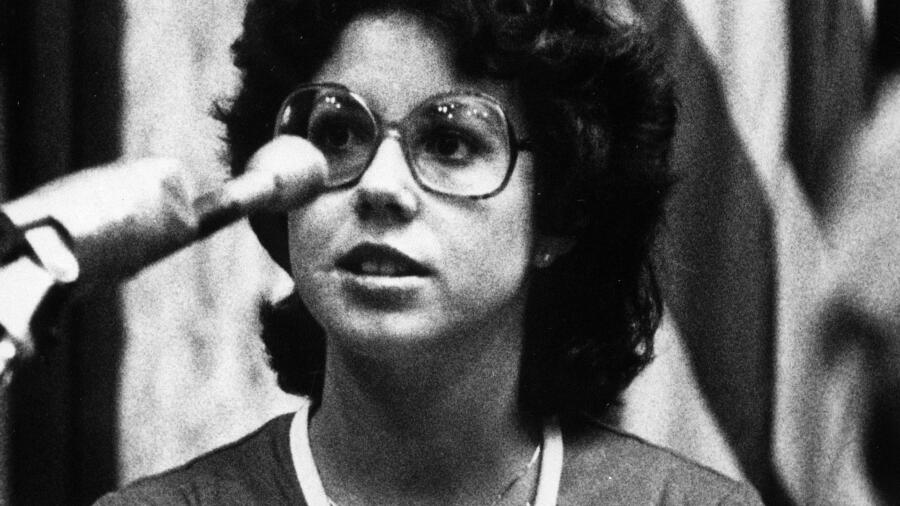
The prosecution put the survivor of the sorority attack on the stand.
She described the attack.
The off-campus victim testified too, describing her own attack that same night.
Then came Elizabeth Kloepfer, Bundy’s former girlfriend.
She testified about his behavior.
She testified about admissions she said he had made to her.
The exact content of those admissions is not detailed in the record.
What she said was enough for the jury to hear.
Bundy did not sit silently.
He acted as his own co-counsel during parts of the trial.
He cross-examined witnesses.
He stood in a Miami courtroom and questioned the people who said he had tried to kill them.
The prosecution argued the bite mark tied him to the scene.
The defence argued the bite mark was unreliable.

The jury heard both.
They deliberated.
They found him guilty on all counts.
The judge sentenced him to death.
It was a conviction built on testimony and teeth marks.
It was a conviction that would be questioned for decades.
AND THE STORY STILL ISN'T OVER
The jury found Bundy guilty on all counts.
Judge Cowart sentenced him to death on July 31, 1979.
The trial in Miami was over, but the story was not.
Bundy later stood trial in Orlando for the murder of a 12-year-old girl.
He was convicted and sentenced to death in 1980.
He was also convicted in Utah for aggravated kidnapping.
He was convicted in Colorado for murder, though that conviction was overturned.
Bundy's appeals continued for years.
They stretched from the courtroom into the decade, one filing after another.
Was the bite mark enough?
Was the testimony of the forensic odontologist enough?
Was any of it enough to undo a death sentence?
The appeals failed.
He was executed in the electric chair at Florida State Prison in Starke, Florida, on January 24, 1989.
Before his execution, he confessed to numerous murders across several states.
The exact number of victims is not established.
It remains uncertain, even now.
The bite mark evidence that helped convict him has since been criticized by some forensic experts.
Its reliability has been questioned in later years.
It was a documented match presented at trial, not a theory.
It is also a technique that science has since re-examined.
The case is closed.
The questions about the evidence remain open.
Advertisement
You may also like
A freelance photographer's fibers that tied him to 28 Atlanta child murders
The photographer was 23 years old. He worked freelance, taking pictures and promoting music in Atlanta. The city around him was in panic. Between…
The 1:00 a.m. knock that emptied a museum of $500 million in art
It was a knock that sounded routine. Shortly after 1:00 a.m. on March 18, 1990, two men in fake Boston police uniforms knocked on…
The left-handed clue in a 1954 murder that pointed at one man — and no one else
She was on the ground below the bedroom window, and the house was quiet. On July 4, 1954, Marilyn Sheppard was found bludgeoned to…
The road near Gibsland where Barrow stopped and 100 rounds followed
The road was dirt and gravel, a rural stretch near Gibsland, Louisiana. On May 23, 1934, a stolen Ford V-8 sedan stopped on it.…
The tape recording a 10-year-old victim made that a jury heard in a Manchester courtroom
The trunk sat in a house that police searched on 6 October 1965. Inside it were photographs and a tape recording. The recording captured…
The Gulf War veteran and the teen who terrorized D.C. — what drove them?
The truck driver pulled into the rest stop near Myersville, Maryland, and saw the white Chevrolet Caprice. He called it in. On October 24,…