Manson jury deliberated nine days — one witness told all from the driver's seat
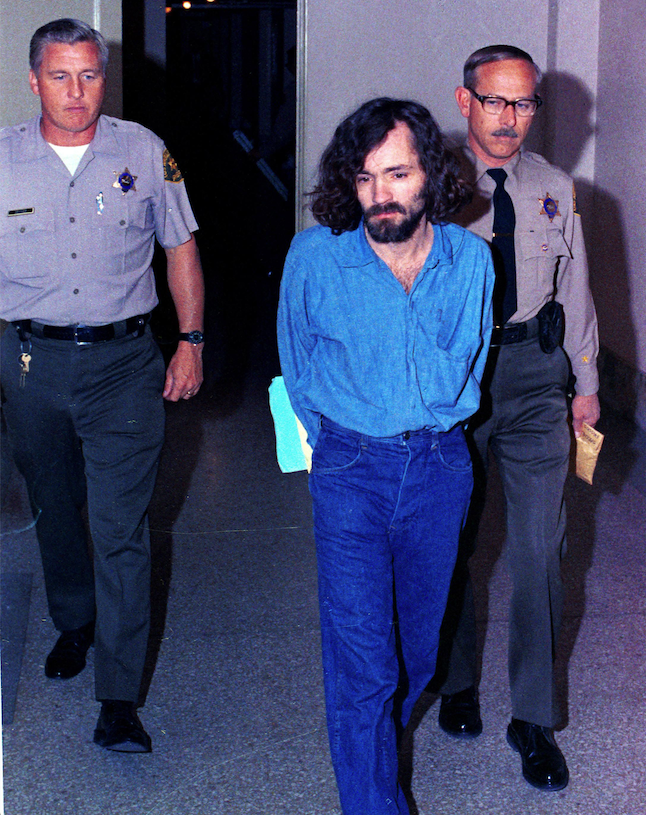
She drove to Cielo Drive. She drove away from it.
Linda Kasabian drove the car to both crime scenes on the nights of August 9 and 10, 1969, according to the case file. She drove the car away from both scenes as well.
She was granted immunity. She became the prosecution's key witness.
Her testimony described Manson's instructions. It described the events of both nights, according to the trial record. She was present for the killings at Cielo Drive. She was present for the killings in Los Feliz.
The jury deliberated for over nine days. On January 25, 1971, they convicted all five defendants.
One witness carried the case. That is what the record shows.
A theory circulating online may question her account. That theory is not part of the documented record. The documented record is her granted-immunity testimony, given under oath, in open court.
Why would a woman who drove the killers trust the state's promise? Why would she testify against the man she followed? Why would the jury believe her over the accused?
Because she was there. Because she had nothing to lose but the truth.
She was granted immunity, so her words came with a price attached. The price was that she had to tell it all, and she did, from the driver's seat.
That is the testimony the jury weighed. That is the testimony that convicted them.
THE NIGHTS OF AUGUST 9 AND 10
The first night was August 9, 1969, at 10050 Cielo Drive in Benedict Canyon.
Five people were murdered there: Sharon Tate, eight and a half months pregnant; coffee heiress Abigail Folger; celebrity hairstylist Jay Sebring; and two others.
The word "PIG" was written in blood on the front door.
The next night, August 10, Leno and Rosemary LaBianca were murdered in their Los Feliz home.
"HEALTER SKELTER" — a misspelling of "Helter Skelter" — and other phrases were carved or written in blood.
:max_bytes(150000):strip_icc():focal(1083x409:1085x411)/sharon-tate-1967-tout-080825-6f698357c86347d6b03be79a2ebaeee0.jpg)
The killers drove to and from both scenes in a car.
Linda Kasabian was behind the wheel.
The Tate murders were committed by Tex Watson, Susan Atkins, Patricia Krenwinkel, and Kasabian herself.
The LaBianca murders were committed by Watson, Atkins, Krenwinkel, and Leslie Van Houten.
Charles Manson was present at the LaBianca scene but did not enter the house.
He was not present at the Tate murders.
The exact sequence of events inside the houses is not detailed in the record.
What is documented is the travel: the car, the driver, the two addresses.
What is documented is the blood, the words, the bodies found the following mornings.
Kasabian was there for both nights.
That is what she told the jury, from the driver's seat.
THE TRIAL AND THE TESTIMONY
The trial began in June 1970 before a judge.
Prosecutor Vincent Bugliosi argued that Manson had orchestrated the murders to trigger "Helter Skelter."
The defense for Manson argued he was not present at the Tate murders and had not ordered them.
The judge's name is not in the record.
The defense attorney for Manson is not named in the record.
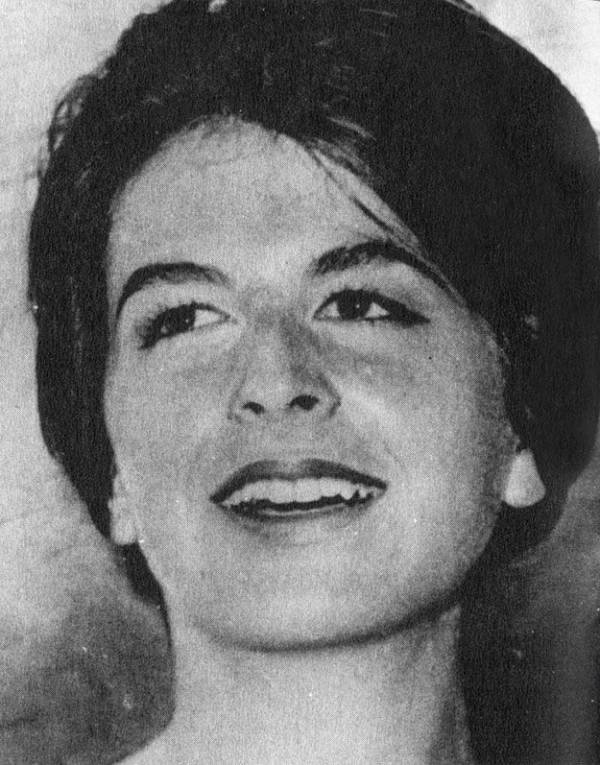
Linda Kasabian's testimony was central.
She described Manson's instructions and the events of both nights.
She told the jury what she saw from the driver's seat.
She was there for the first night.
She was there for the second night.
She had been granted immunity.
She was the prosecution's key witness.
The defense tried to portray the murders as drug-fueled chaos.
Not because the evidence pointed that way.
But because the alternative was a conspiracy led by Manson.
The jury heard her account of Manson's instructions.
They heard her account of the drive to Cielo Drive.
They heard her account of the drive to the LaBianca home.
What did she say happened at each house?
What did she say Manson told the others?
What did she say she saw in the rearview mirror?
That would require the transcript.

What is documented is her testimony.
The jury deliberated for over nine days.
On January 25, 1971, they convicted all five defendants.
The conviction rested on her word.
It rested on what she told them from the driver's seat.
It rested on nothing else in the record.
TWO STORIES, ONE RECORD
The prosecution told one story.
That story was Charles Manson, the mastermind, sending his followers out to kill for a purpose.
That purpose, prosecutor Vincent Bugliosi argued, was "Helter Skelter," a plan to incite a race war.
The defense told a different story.
That story was drug-fueled chaos, a series of violent acts without a grand design.
The defense also argued Manson was not present at the Tate murders and had not ordered them.
Two stories, one record.
The jury deliberated for over nine days.
Nine days reflects the contest between these two interpretations.
Nine days suggests the record did not make the choice easy.

The record, as documented, includes physical evidence: fingerprints, blood typing, and the murder weapons.
It includes the testimony of Linda Kasabian, granted immunity, describing Manson's instructions and the events of both nights.
It includes the testimony of a jailhouse informant and a former associate of the group.
What the record does not include is a confession of intent.
The truth of Manson's intent is not established beyond the prosecution's argument.
Was it a plan?
Was it chaos?
Was it something in between?
The record, as it stands, does not answer that question.
The jury answered it with a conviction.
That was their interpretation of the record.
It was one story, chosen over another.
AND THE STORY STILL ISN'T OVER
Charles Manson died in prison on November 19, 2017, at age 83.
Susan Atkins died in prison on September 24, 2009.
Linda Kasabian, who testified for the prosecution, died in 2020.
Tex Watson, Patricia Krenwinkel, and Leslie Van Houten remain in prison serving life sentences.

Van Houten was granted parole in 2023 after multiple denials, though her release was still subject to review.
The final outcome of that review is not in the record.
The case has been the subject of numerous books, documentaries, and films.
Vincent Bugliosi's book "Helter Skelter," co-authored with Curt Gentry, became a bestseller.
The trial's verdict stood.
The appeals were denied.
The sentences were commuted when California abolished the death penalty in 1972.
What remains is the record: a jury's nine days of deliberation, a witness's granted immunity, a prosecutor's theory chosen over a defense's.
Not because the story ended.
But because the people who lived it are gone, one by one.
The convictions stand.
The motive remains argued.
The parole hearings continue.
What is viral is not what is documented.
What is documented is what Kasabian said from the driver's seat.
That was the record.
It still is.
Advertisement
You may also like
A freelance photographer's fibers that tied him to 28 Atlanta child murders
The photographer was 23 years old. He worked freelance, taking pictures and promoting music in Atlanta. The city around him was in panic. Between…
The 1:00 a.m. knock that emptied a museum of $500 million in art
It was a knock that sounded routine. Shortly after 1:00 a.m. on March 18, 1990, two men in fake Boston police uniforms knocked on…
The left-handed clue in a 1954 murder that pointed at one man — and no one else
She was on the ground below the bedroom window, and the house was quiet. On July 4, 1954, Marilyn Sheppard was found bludgeoned to…
The road near Gibsland where Barrow stopped and 100 rounds followed
The road was dirt and gravel, a rural stretch near Gibsland, Louisiana. On May 23, 1934, a stolen Ford V-8 sedan stopped on it.…
The tape recording a 10-year-old victim made that a jury heard in a Manchester courtroom
The trunk sat in a house that police searched on 6 October 1965. Inside it were photographs and a tape recording. The recording captured…
The Gulf War veteran and the teen who terrorized D.C. — what drove them?
The truck driver pulled into the rest stop near Myersville, Maryland, and saw the white Chevrolet Caprice. He called it in. On October 24,…