The ransom money that led detectives to a carpenter's door — but what did the jury hear?
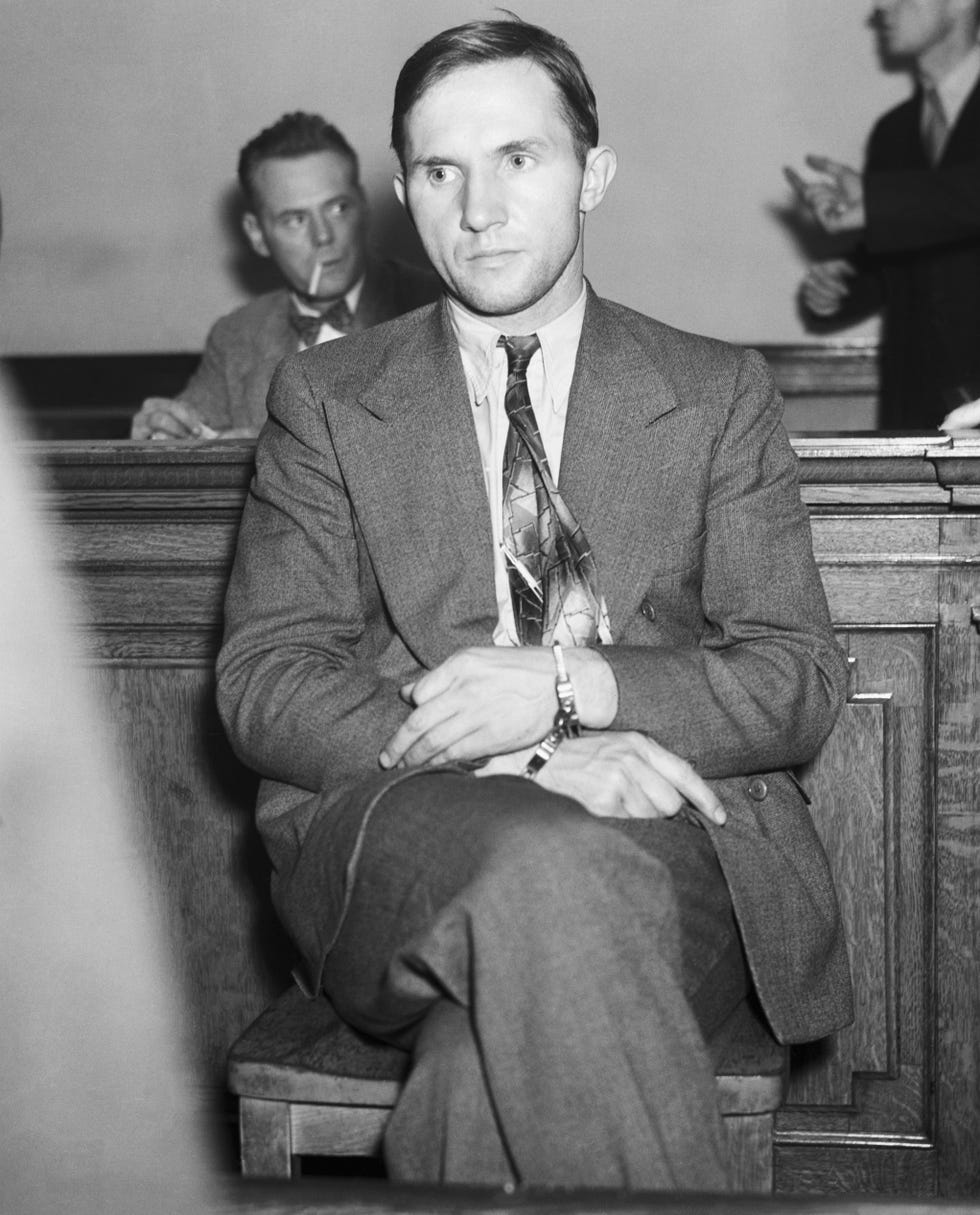
The gold certificate was a twenty-dollar bill.
In September 1934, it surfaced at a gas station in New York City.
The attendant, Walter Lyle, took it for payment and wrote down the license plate of the car that offered it.
That plate led to a carpenter named Bruno Richard Hauptmann.
He was arrested.
The bill was one of the $50,000 in gold certificates paid as ransom on April 2, 1932.
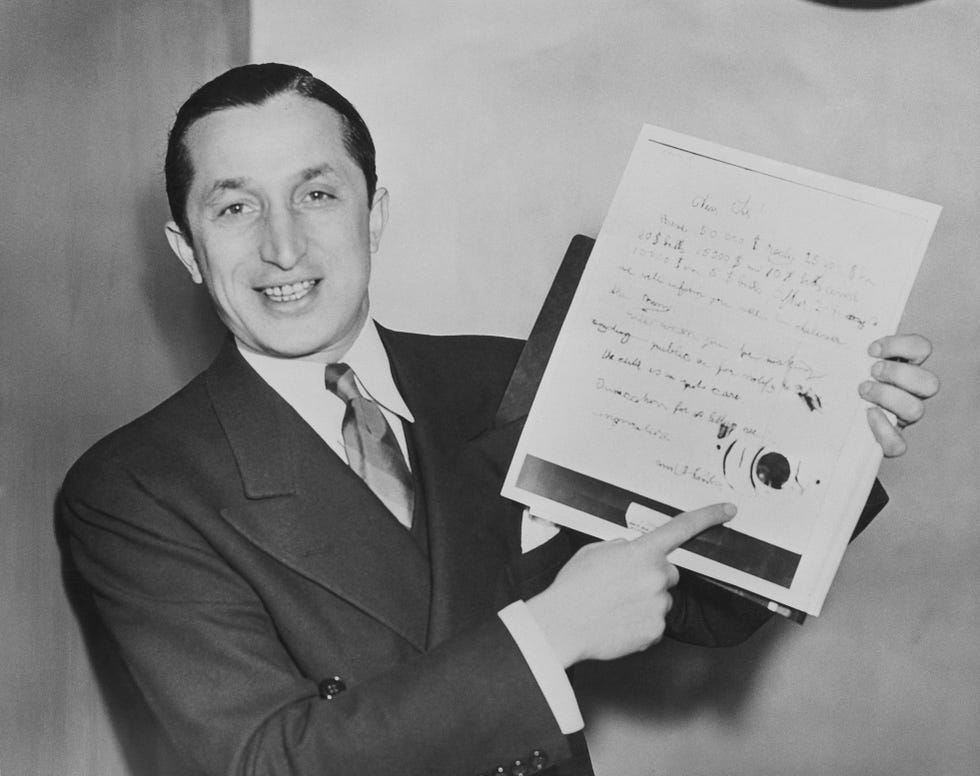
The man who handed that money over was John F. Condon, a retired schoolteacher acting as intermediary.
Condon had negotiated through newspaper columns, following the kidnapper's coded instructions.
He delivered the cash in a wooden box.
The certificate's journey from that box to a gas station cash drawer is the concrete trail that ended at a carpenter's door.
It is also a trail with gaps.
The exact chain of custody of that gold certificate between April 1932 and September 1934 is not in the record.
No one has documented where the bill sat, whose hands passed it, how it moved across two and a half years.
The record shows the payment.
The record shows the gas station.
The record shows the license plate.
What sits between those points is unestablished.
That would require evidence.
The trial that followed would hinge on more than this paper trail.
The jury would hear about handwriting, about wood, about a voice in the dark.
But this is where it began: a single bill, a gas station attendant, a plate number.
A carpenter's door.
What else did the jury hear beyond this trace?
THE NURSERY AND THE LADDER
March 1, 1932.
Charles Lindbergh Jr., twenty months old, was taken from his crib in the family's home near Hopewell, New Jersey.
A ransom note demanding $50,000 was left on the windowsill.
The family's nurse discovered the child missing.
But the investigation was delayed — by confusion, by the family's desire to protect the child, by the hope that a quiet payment would bring him home.
The ransom was paid on April 2.
The child was not returned.
On May 12, 1932, a truck driver named William Allen found the body in woods about four and a half miles from the house.
The cause of death was a blow to the head.
The exact manner of that blow — a fall, an impact, something else — is not definitively established in the record.

What the record does establish is the ladder.
A homemade wooden ladder was used in the kidnapping.
It was found near the house, broken in sections, its wood unremarkable and ordinary.
At trial, the prosecution said wood from Hauptmann's attic matched that ladder.
Wood grain. Tool marks. The fit of a rail.
The defense said the match was coincidence, that the evidence was circumstantial.
The jury would have to weigh the wood.
A carpenter's door had already opened once.
Now the ladder sat in the courtroom, and the question was whether it could close the case.
THE RANSOM AND THE ARREST
The ransom was paid on April 2, 1932.
John F. Condon, a retired schoolteacher, delivered $50,000 in gold certificates.
The negotiations had been conducted through newspaper columns, and Condon acted as the intermediary.
The child’s body was found on May 12, 1932.
A truck driver, William Allen, found it in woods about four and a half miles from the Lindbergh home.
The cause of death was a blow to the head, likely from a fall or impact.
The money, though, did not disappear.

In September 1934, a gold certificate from the ransom was traced to a gas station in New York City.
The attendant, Walter Lyle, noted the license plate of the car.
That plate led to Bruno Richard Hauptmann, a German-born carpenter.
He was arrested and charged with first-degree murder.
The FBI had become involved because the crime crossed state lines.
The money was the key.
It moved from the ransom payment, to the gas station, to a man with a license plate.
The exact route of the ransom money between the gas station and Hauptmann's possession is not detailed in the record.
That link is not established in the documented case.
What the record shows is the trace: the certificate, the plate, the arrest.
The ladder would come later, into the courtroom.
The wood would be measured, examined, argued over.
But the arrest came first, and it came through the cash.
THE TRIAL: TWO STORIES
The trial began on January 2, 1935, in Flemington, New Jersey, before a judge of the Court of Oyer and Terminer.
The courtroom was a circus before the first witness spoke.
Reporters packed the benches. Celebrities came to watch. The case record describes the scene as a media frenzy.
The prosecution, led by Attorney General David T. Wilentz, built a web.
Handwriting analysis linked Hauptmann to the ransom notes, the prosecution argued.
Wood from his attic matched the ladder, they said.
John F. Condon, the retired schoolteacher who delivered the $50,000, testified that Hauptmann was the man who took the money.
Each piece pointed to the same door.
The defense, led by Edward J. Reilly, answered with a single word: circumstantial.
Reilly argued that Hauptmann was innocent.
He argued that the evidence connected but did not prove.
He argued that the state had built a story, not a fact.
The defense tried to discredit the witnesses. It tried to shake the wood, the handwriting, the identification.
But the trial record shows no convincing alternative was offered.
The defense's specific theory of who committed the crime is not in the record.
That remains unestablished.
Two stories stood before the jury.
One was a ladder of evidence, each rung examined in open court.
The other was a claim of gaps, without a replacement.
The judge presided. The jury listened. The wood sat in the courtroom, measured and argued over.

It is a case of testimony and timber.
It is also a case of what a jury chose to believe.
AND THE STORY STILL ISN'T OVER
The jury returned on February 13, 1935.
Guilty of first-degree murder.
The judge sentenced Hauptmann to death.
Appeals were rejected. The case record shows the conviction stood.
On April 3, 1936, Hauptmann was executed in the electric chair at the New Jersey State Prison.
He maintained his innocence to the end, according to the case record.
The verdict rested on testimony and wood. On handwriting and a ladder. On what the jury chose to believe.
Did the trial prove the case beyond doubt?
Did the defense's arguments deserve more weight?
Did the jury hear everything it should have?
The record does not answer those questions. It only shows the verdict.
Some later writers and researchers have questioned the evidence. They have pointed to gaps and inconsistencies. They have argued the prosecution's case was circumstantial.
No official re-investigation has overturned the conviction. The case record establishes that.
Whether any new evidence has emerged since the execution is not in the record. It is simply not established.
The kidnapping itself changed the law. The Federal Kidnapping Act, often called the "Lindbergh Law," made kidnapping a federal offense. The case record states this plainly.
So the story remains open in public memory. It is a case of testimony and timber. It is also a case of what a jury chose to believe.
Hauptmann is gone. The questions are not.
Advertisement
You may also like

The phone call that put Adnan Syed at the park — and the witness who kept changing his story
She left school on January 13, 1999, and never came home. Hae Min Lee was 18, a senior at Woodlawn High School in Baltimore…
A freelance photographer's fibers that tied him to 28 Atlanta child murders
The photographer was 23 years old. He worked freelance, taking pictures and promoting music in Atlanta. The city around him was in panic. Between…

The 1:00 a.m. knock that emptied a museum of $500 million in art
It was a knock that sounded routine. Shortly after 1:00 a.m. on March 18, 1990, two men in fake Boston police uniforms knocked on…
The left-handed clue in a 1954 murder that pointed at one man — and no one else
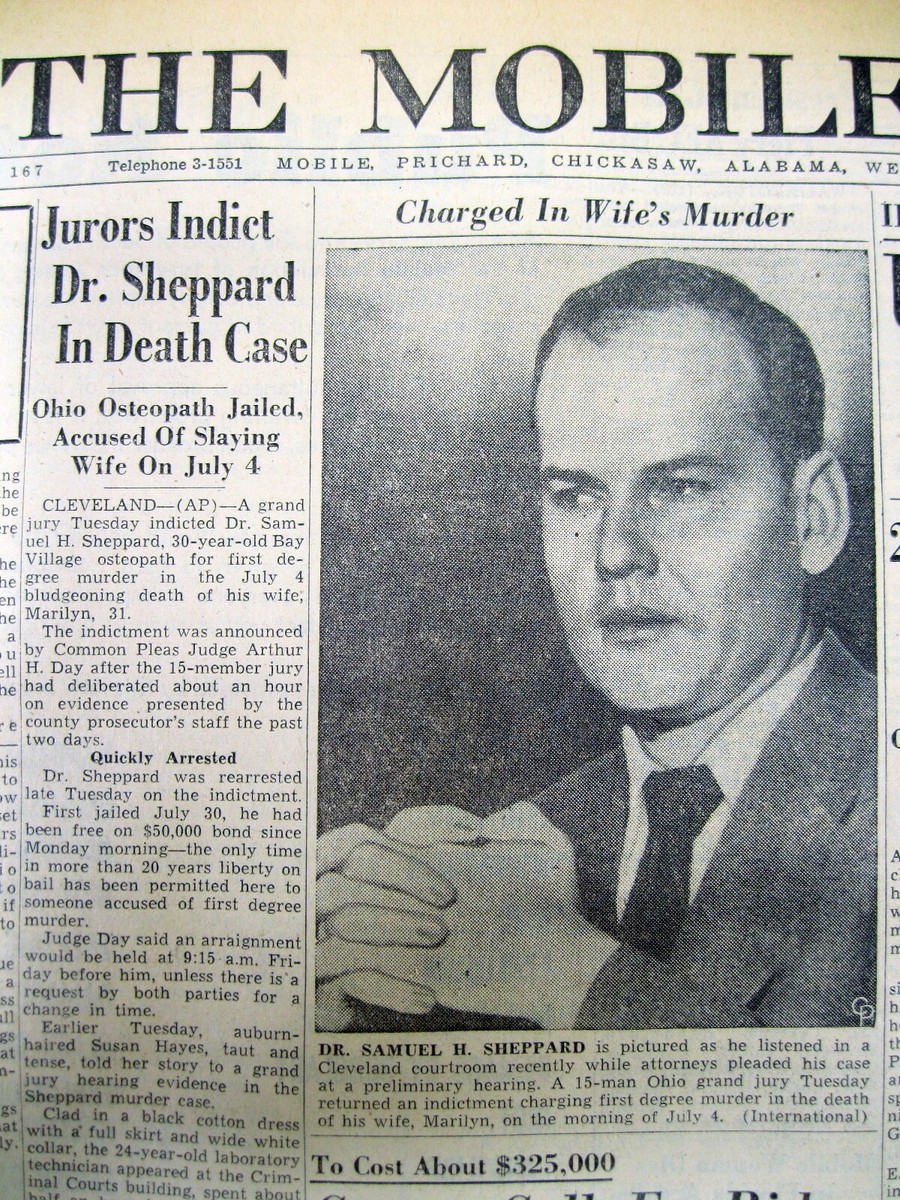
She was on the ground below the bedroom window, and the house was quiet. On July 4, 1954, Marilyn Sheppard was found bludgeoned to…
The road near Gibsland where Barrow stopped and 100 rounds followed
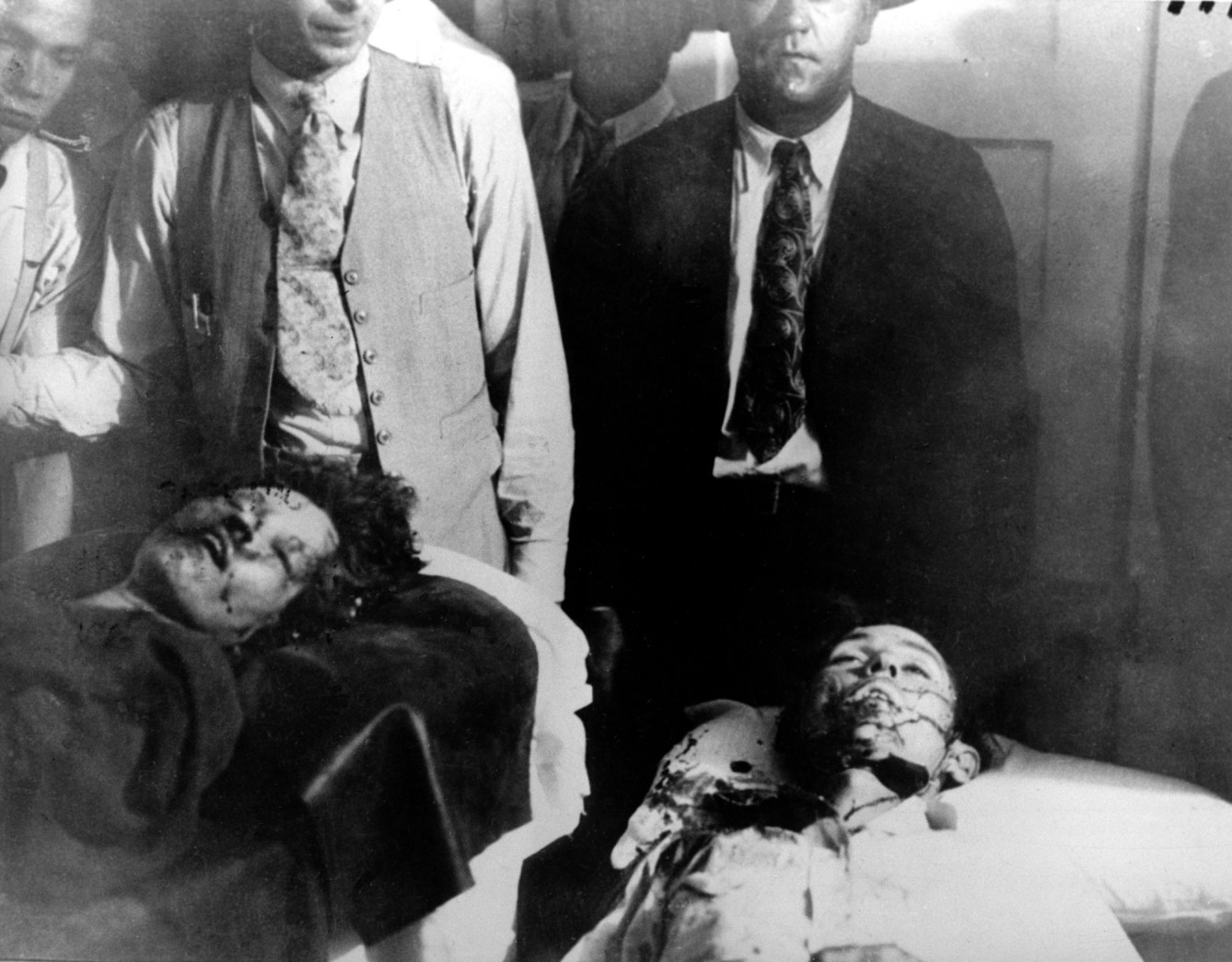
The road was dirt and gravel, a rural stretch near Gibsland, Louisiana. On May 23, 1934, a stolen Ford V-8 sedan stopped on it.…

The tape recording a 10-year-old victim made that a jury heard in a Manchester courtroom
The trunk sat in a house that police searched on 6 October 1965. Inside it were photographs and a tape recording. The recording captured…