The phone call that put Adnan Syed at the park — and the witness who kept changing his story
She left school on January 13, 1999, and never came home.
Hae Min Lee was 18, a senior at Woodlawn High School in Baltimore County, Maryland.
Her body was found on February 9, 1999, in Leakin Park, buried in a shallow grave.
The cause of death was manual strangulation.
The exact time of death is not established; the medical examiner could not determine it.
The case went unsolved for weeks.
Then police focused on Adnan Syed, Lee's ex-boyfriend and classmate.
The evidence against him was not a weapon. It was not a fingerprint. It was not a confession.
It was a phone call.
A call from Syed's cell phone to his friend Nisha at 7:09 p.m. on the day Lee disappeared.
The prosecution said the call placed Syed with Jay Wilds, a classmate who later testified against him, at a time consistent with the murder timeline.
That was the weight of it. One call, one timestamp, one version of where Syed was.
The defense later challenged the call's reliability.
No physical evidence linked Syed to the crime scene.
No blood. No hair. No fibers.
Just a phone record and a story.
The call was key. The story kept changing.
THE WITNESS WHO CHANGED HIS STORY
Jay Wilds was a classmate.
He testified against Adnan Syed.
He said Syed showed him Hae Min Lee's body.
He said Syed enlisted his help burying it.
That story did not stay the same.

Wilds's account changed multiple times during police interviews.
The specific inconsistencies are not detailed in the source.
What is in the record is the fact of the changes.
The defence argued Wilds was not credible.
The defence suggested he was the actual killer.
At minimum, the defence said, he was unreliable.
The prosecution leaned on him.
They leaned on the cell phone records too.
The case went unsolved for weeks.
Then police focused on Syed.
A call from Syed's phone to a friend named Nisha mattered.
The prosecution said that call put him with Wilds at the right time.
The defence said the call could not be trusted.
The medical examiner could not fix an exact time of death.
That left the timeline to the witness.
It left the timeline to the witness whose story moved.
The trial ran in Baltimore County Circuit Court in 2000.
It lasted several weeks.
The prosecution argued jealousy.
The defence argued the witness was the killer.
Wilds said Syed showed him the body.
He said Syed enlisted his help.
He said it more than once, differently each time.
How much weight should such testimony carry?
How much weight does a story carry when it shifts?
That question sat with the jury.
It was never resolved in the record.
Not by the calls. Not by the witness.
TWO STORIES, ONE TRIAL
Two stories went to the jury in Baltimore County Circuit Court in 2000.
The prosecution argued that Syed killed Lee in a jealous rage after she ended their relationship.
The defense argued that Syed was innocent and that Wilds was the actual killer or at least an unreliable witness.
The trial lasted several weeks.
The jury heard Wilds testify that Syed showed him the body and enlisted his help burying it.
The jury heard the defense challenge Wilds's account, which had changed multiple times during police interviews.
The jury heard the cell phone records, and the defense's argument that those records were unreliable.
Two narratives. One body. One verdict.
The jury found Syed guilty of first-degree murder.
He was sentenced to life in prison plus 30 years.
The conviction was upheld on direct appeal.
What the jury discussed in the deliberation room is not in the record.
No transcript of their reasoning exists.
No note from a juror explains which story won.
Only the verdict remains.
The prosecution's story was clean: a rejected boyfriend, a rage, a call that placed him at the park.
The defense's story was messier: a witness who kept changing his story, a witness who might have done it himself.
Which one did the jury believe?
That would require evidence.
The record shows the verdict, not the path to it.
The stakes were life plus 30 years.
The stakes were a young woman's death.
The stories were irreconcilable.
The jury chose one.
WHAT THE RECORD DOES AND DOESN'T SHOW
The cell phone records placed Syed in the Leakin Park area around the time of the murder, according to the prosecution.
That is how the state told it in 2000.
The defense argued that the cell phone evidence was unreliable.
Not because the phone was somewhere else. Because the records showed when calls were made, not who made them.
The prosecution said a call to a friend named Nisha put Syed with Jay Wilds at a time consistent with the murder timeline.
The defense challenged that call's reliability.
The jury heard both stories and chose the state's version.
For more than two decades, that version held.
Then, in 2022, a judge granted a motion to vacate the conviction.
The ruling cited unreliable cell phone evidence and the failure to disclose evidence about a potential alternative suspect.
The state later dropped all charges in 2022.
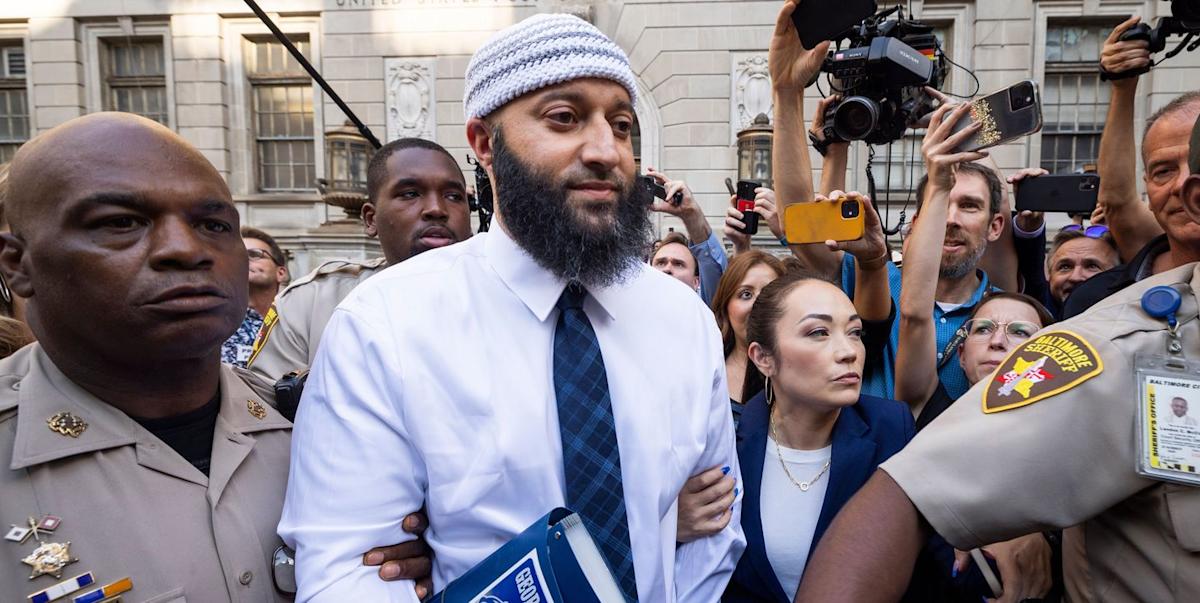
Syed walked out of prison.
The viral claim that a single call placed him at the park? That is a theory.
The record does not establish it.
The record establishes that the call's meaning was disputed at trial, that the key witness changed his story, and that a judge later found the phone evidence unreliable.
The identity of the potential alternative suspect is not named in the source.
No name. No charge. No one else has ever been charged in Lee's murder.
The case remains open in public debate, closed in court.
The gap between the story and the record is wide.
AND THE STORY STILL ISN'T OVER
He was released in September 2022, after the charges were vacated.
The state dropped the case.
In 2023, the Maryland Appellate Court upheld the decision to vacate the conviction, though the victim's family had appealed.
Her brother Young Lee spoke publicly at the hearings.
He described the distress.
Syed has maintained his innocence throughout.
He has said it from the beginning.
The case remains a subject of ongoing public debate.
Not because the record is settled. Because it is not.
No future legal steps are specified in the source.
No hearing is scheduled in the record.
No motion is pending that the source names.
That would require evidence.
The gap between the story and the record remains wide.
A conviction was vacated.
A man was freed.
A family still grieves.
The case is closed in court, and open everywhere else.
Advertisement
You may also like
The 2015 missing-person call that led to a stabbing, a hidden illness, and two murder charges
The call came in on June 14, 2015. Deputies from the Greene County Sheriff's Office in Missouri were sent to a residence in Springfield…
Two shotguns bought days before the Menendez parents were killed — what the brothers' psychologist heard next
Days before August 20, 1989, Lyle and Erik Menendez bought two 12-gauge shotguns. The same weapons were used to kill their parents, Jose and…
The Milwaukee apartment where a skull sat beside Polaroids of the dead
The handcuff was loose. That is what the man told the officers, anyway, when he flagged them down on the night of July 22,…
The $1 million extortion letter that named a killer — and the man who wrote it
Seven people in the Chicago area died in late September and early October 1982. They had taken Extra-Strength Tylenol capsules laced with potassium cyanide.…
The cult leader who sent his followers to a house on Cielo Drive — and the word left in blood
The door at 10050 Cielo Drive held a word written in blood. Five people were dead inside the Benedict Canyon house on the morning…
Hae Min Lee's brother still waits as her convicted killer walks free
He has waited twenty-five years. The wait did not end in September 2022, when Adnan Syed walked out of prison. Young Lee, Hae Min…