The smiley-face letter that made a sister call police on her own brother
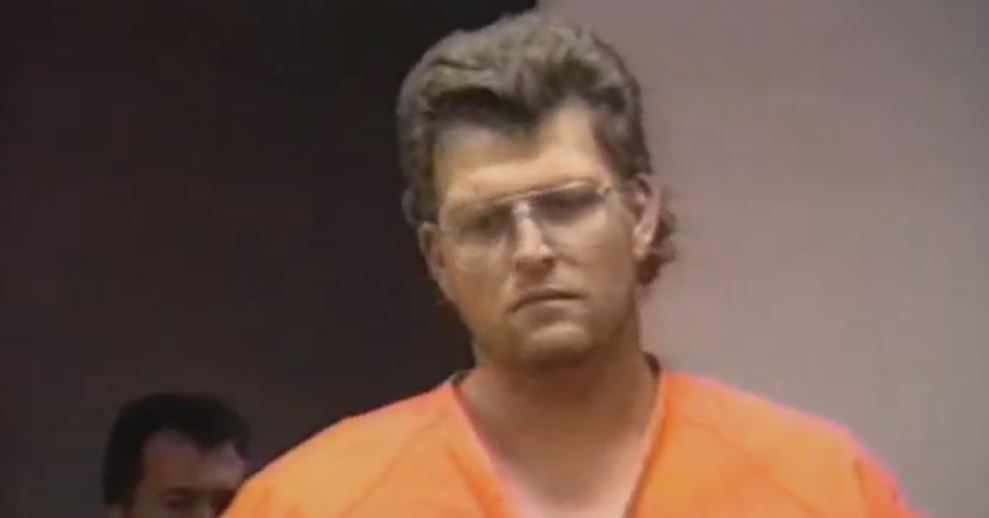
The letter arrived at the Oregonian with a claim of responsibility for a murder and a mocking of police.
It was signed with a smiley face.
The sender would repeat that signature.
The letter was a taunt, not a confession to authorities directly.
It was sent to a newspaper, not to a detective or a courthouse.
The smiley face became the public symbol of the case.
Its origin is the letter, not a court exhibit.
The letter's existence is documented.
Its exact wording is not in the record.
Only that it claimed responsibility and mocked police.
What kind of person signs a murder confession with a smiley face?
What kind of person mocks the police who are hunting them?
What kind of person repeats that signature, again and again?
The record does not answer that.
The record only shows the letter, the claim, the mockery, the face.
The sister who saw it would recognize something else.
She had seen similar notes before, written to family members.
She would make the call.
But that comes later.
For now, there is only the letter.
A piece of mail.
A signature drawn in a circle.
A claim of murder, sent to a newspaper, signed with a happy face.
THE BODY AND THE STALLED CASE
The body was found in March 1995, near a rest stop in Oregon.
The victim's name is not in the record; the source only says "the body of a woman."
She was a woman encountered along the killer's trucking routes, often in bars or roadside areas.
The investigation stalled.
Detective Jim Hays of the Multnomah County Sheriff's Office led the Oregon case, according to the source.
He had a body, a location, and little else.
Then a piece of mail arrived at the Oregonian.
The letter claimed responsibility for the murder.
It mocked the police.
It was signed with a smiley face.
The taunt was the break.
A stalled case suddenly had a direction, but it came from a killer who wanted to be heard.
The letter was not a confession to authorities directly; it was a boast sent to a newspaper.
It was a signature drawn in a circle, repeated, and it made the case public before it made it solvable.
The detective had a name to chase now.
That would require evidence, and evidence would take time.
THE SISTER'S PHONE CALL
The sister lived in Oregon.
She read the letter in the newspaper, the one with the smiley face drawn in a circle.
She recognized the handwriting.
She had seen similar notes he had written to family members over the years.
The loops, the slant, the way he pressed down on certain letters.
She made the call.
She contacted authorities, and that call gave the detectives a name to bring in for an interview.
When police interviewed him, he did not deny it.
He confessed.
He confessed not only to the murder in Oregon but to several others.
He provided specific details about each victim and crime scene.
Details only the killer would know.
He described the locations, the circumstances, the moments that had never been made public.
His statements corroborated the evidence on their own.
Forensic evidence, including DNA testing, later confirmed his involvement in multiple cases across states including Oregon, California, Washington, and Wyoming.
The sister's name is not in the record.
She is referred to only by role.
The record establishes what she did, not who she is.
She made the call that moved the case from a taunt to a confession.
That is what the record shows.
It does not show what it cost her to make it.
THE TRIAL AND THE SENTENCE
He was charged with first-degree murder in Oregon for the death of the woman found near the rest stop.
He pleaded guilty in 1995.
The trial did not test whether he did it. It tested what should happen to him.
The prosecutor presented the confessions and the corroborating details.
He offered the specific facts only the killer would know. He offered the letter, the smiley face, the route.
The defense argued that the killer was mentally ill.
Not that he was innocent. That he was sick.
That argument did not prevent the court from imposing a sentence.
The judge sentenced him to life in prison without the possibility of parole for the Oregon murder.
He later pleaded guilty to additional murders in other states.
Those sentences were consecutive. Life followed life followed life.
He was never given the death penalty.
He cooperated with authorities. In some jurisdictions, that cooperation was exchanged for avoiding capital punishment.
The record shows the prosecutor's evidence and the defense's argument.
What the record does not show is the specific testimony at trial. Only that the confessions and corroborating details were presented, and that mental illness was argued.
So the mental illness defense remains a question mark.
Was it a strategy? Was it a belief? Was it a diagnosis?
That would require evidence the record does not contain.
The sentence stands. The question does not.
He is serving multiple life sentences without the possibility of parole.
Justice was done. Unease was left behind.
AND THE STORY STILL ISN'T OVER
He is serving multiple life sentences without the possibility of parole.
He is held at a maximum-security prison in Oregon.
The record is closed. The man is not.
Over the years, he has continued to correspond with journalists and true-crime authors.
Sometimes he provides additional information about unsolved cases.
He has been the subject of documentaries and books.
No new convictions have resulted from his later statements. That is what the record establishes.
The sister who recognized his handwriting has spoken publicly about her decision.
She turned him in because she recognized the writing on the letter.
She has said she did what she had to do.
The families of his victims have largely remained private.
Some have spoken about the impact of his crimes.
They have not sought the spotlight. They have not needed to.
The killer still talks. The courts do not.
He was never given the death penalty, as he cooperated with authorities in exchange for avoiding capital punishment in some jurisdictions.
He pleaded guilty in Oregon in 1995.
The trial proceeded to the sentencing phase.
The prosecutor presented evidence of his confessions and the corroborating details he provided.
The defense argued that he was mentally ill.
That did not prevent the court from imposing a sentence.
The judge sentenced him to life in prison without the possibility of parole for the Oregon murder.
He later pleaded guilty to additional murders in other states, receiving consecutive life sentences.
The sentence stands. The question does not.
He still writes letters. He still draws the smiley face.
The sister's choice echoes. The record does not move.
Advertisement
You may also like
The ransom money that led detectives to a carpenter's door — but what did the jury hear?
The gold certificate was a twenty-dollar bill. In September 1934, it surfaced at a gas station in New York City. The attendant, Walter Lyle,…
Manson jury deliberated nine days — one witness told all from the driver's seat
She drove to Cielo Drive. She drove away from it. Linda Kasabian drove the car to both crime scenes on the nights of August…
The alibi that hung on a 14-foot boat and one cold morning
The 14-foot aluminum boat sat low in the water at the Berkeley Marina. It was December 24, 2002, and the morning was cold. Scott…
The $10 million note and the call that cracked the D.C. sniper case
The phone rang, and the priest answered. Father Michael Smargiassi was a priest in Montgomery County. Police had asked him to relay a message.…
The math professor in a Montana cabin who mailed bombs for 17 years — what made him do it?
The cabin sat on a half-acre of scrub and pine outside Lincoln, Montana, population roughly one thousand. Inside, a former mathematics professor lived alone,…
The polygraph failure that unraveled Watts's shifting alibi for missing family
The friend called police on August 13, 2018. Shanann Watts, 34, and her two daughters, 4-year-old Bella and 3-year-old Celeste, were reported missing from…