The polygraph failure that unraveled Watts's shifting alibi for missing family
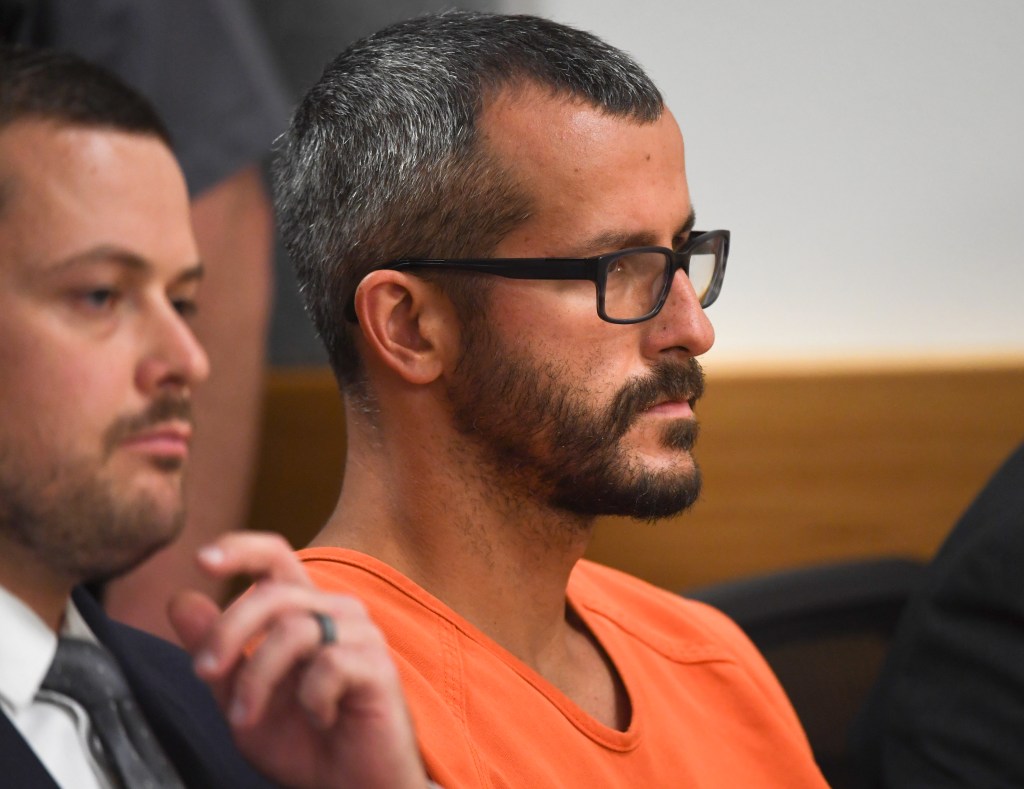
The friend called police on August 13, 2018.
Shanann Watts, 34, and her two daughters, 4-year-old Bella and 3-year-old Celeste, were reported missing from their home in Frederick, Colorado.
Officers entered the Watts home and found Shanann’s purse and phone.
No sign of her. No sign of the girls.
Christopher Watts, 33, said Shanann had taken the children to a friend’s house.
The purse and the phone were still there.
No note. No goodbye.
Just a purse and a phone left behind on an ordinary Monday morning.
The exact contents of the purse or the phone are not in the record.
What was in them, what was not, what the screen showed — none of that is documented.
The friend’s report triggered the investigation.
The purse and the phone were found in the home.
Christopher Watts said they had left.
They had not left.
The house was quiet. The car was there. The doors were unlocked.
Where did they go?
That would require evidence.
The purse sat where she left it. The phone sat beside it.
Four people lived in that house. Two of them were accounted for.
One was talking. Three were missing.
THE SHIFTING STORY
He told the lead detective Shanann had taken the girls to a friend’s house.
He told him other versions.
The exact sequence of those shifting stories is not fully detailed in the record.
The lead detective noted inconsistencies.
He noted a lack of emotion.
Watts failed a polygraph test.
What makes a man break under a machine but not under questioning?
That would require evidence.
On August 15, 2018, Watts led investigators to the oilfield site owned by Anadarko Petroleum, where he worked.
Shanann’s body was in a shallow grave.
The girls’ bodies were found in oil tanks nearby.
Watts was arrested that same day.
The story was falling apart in front of them.
Not because of the machine. Because of what the machine prompted.
The record shows the failure. It does not show the moment of confession.
What did he say when he led them there?
What did he say when they opened the tanks?
The record does not say.
Watts was in custody.

The shifting was over.
THE PLEA HEARING
The trial judge read the charges in a Weld County courtroom.
Three counts of first-degree murder.
Three counts of tampering with a deceased human body.
One count of unlawful termination of a pregnancy, relating to Shanann's pregnancy.
Watts stood before the judge on November 6, 2018.
He pleaded guilty to all charges.
He pleaded guilty to the murder of his unborn son, Nico.
In exchange, the prosecution agreed not to seek the death penalty.
The medical examiner testified at the plea hearing.
Shanann was strangled.
The girls were smothered.
The courtroom heard the causes of death laid out in sequence.
The judge sentenced Watts to life in prison without the possibility of parole.
Life for Shanann.
Life for Bella.
Life for Celeste.
Additional consecutive sentences followed for the other charges.
The judge ordered restitution.
Watts was immediately transferred to a Colorado Department of Corrections facility.
The plea made a trial unnecessary.
The plea made the verdict a formality.
The plea made the sentence the only question left.
That question was answered in a single hearing.
No jury was needed.
No witness list was read.
The shifting story ended not with a verdict, but with an admission.
The record holds the plea.
The record holds the testimony.
The record holds the sentence.
What the record does not hold is a trial transcript.
That would require a trial.
THE TWO STORIES
The prosecution’s case rested on a simple line: Watts was the sole perpetrator, and the affair with Nichol Kessinger was the motive.
That motive was discussed in coverage, but the record does not establish it as the definitive cause.
The defence did not contest the guilty plea.
Watts later claimed the murders were not premeditated.
That claim is his own statement, not a fact in the documented record.
Both sides agreed on the facts of the guilty plea and the evidence.

They agreed on the bodies, the confession, the plea.
They agreed on the sentence.
What they did not agree on was why.
Was it the affair?
Was it something else?
Was it nothing at all?
The exact motive is not established.
That would require evidence the record does not contain.
The plea hearing was the trial.
There was no jury, no cross-examination, no verdict beyond the one Watts himself entered.
The judge accepted the plea and imposed the sentence.
The prosecution called it a case of premeditated murder.
The defence, through Watts’s later statements, called it something less.
Neither version is a finding of fact.
The record holds the sentence.
What the record does not hold is a trial transcript.
That would require a trial.
AND THE STORY STILL ISN'T OVER
He is serving life without parole at a Colorado prison.
He has given interviews from behind the walls, including to a documentary filmmaker.
In those interviews, he has offered varying accounts of the murders.
One version. Another version. A third version.
None of them are in the record.
The record holds the plea, the sentence, the medical examiner's findings.
What the record does not hold is a settled explanation of why.
Shanann's family, the Rzuceks, have spoken publicly about their grief.
They have advocated for awareness of domestic violence.
The Watts family home in Frederick was sold.
The case has been the subject of numerous documentaries and true-crime coverage.
No journalist has been named as uncovering new evidence in the case itself.
No new evidence has emerged in the record.
No development is pending.
The sentence is life without parole.
That is the next concrete step: none.
The unanswered questions remain unanswered.
That would require evidence.
The story still isn't over, not because the case is open.
But because the telling of it continues.
The interviews continue.
The coverage continues.
The grief continues.
The record, however, is closed.
Advertisement
You may also like
His 1964 arrest for posing as a cop, then a confession that changed everything
The year is 1964. Albert DeSalvo is arrested for a series of sexual assaults. The case file says he posed as a police officer…
The ransom note demanding $118,000 that matched John Ramsey's bonus
The 911 call came at 5:52 a.m. on December 26, 1996. Patsy Ramsey told the dispatcher her 6-year-old daughter was missing. A ransom note…
The trunk stain that sent Casey Anthony to trial for Caylee's death
The car was a Pontiac, and the trunk smelled before anyone opened it. In July 2008, after Caylee Marie Anthony was reported missing, a…
The two-phase attack that began at a streetlight and ended in a hallway
The light at 82-70 Austin Street in Kew Gardens, Queens, marks the spot. Not a hallway. Not a doorway. The open street, under the…
The 911 call at 12:10 a.m. — and the glove that would not fit the timeline
The dog came back first. It was past midnight on June 13, 1994, in the Brentwood neighborhood of Los Angeles. A neighbor named Sukru…
Cell phone data put Chase Merritt near the grave site — then QuickBooks opened after the family vanished
The motorcyclist stopped because something in the sand caught his eye. It was February 2013, and he was riding near Victorville, California, in the…