The 911 call at 12:10 a.m. — and the glove that would not fit the timeline
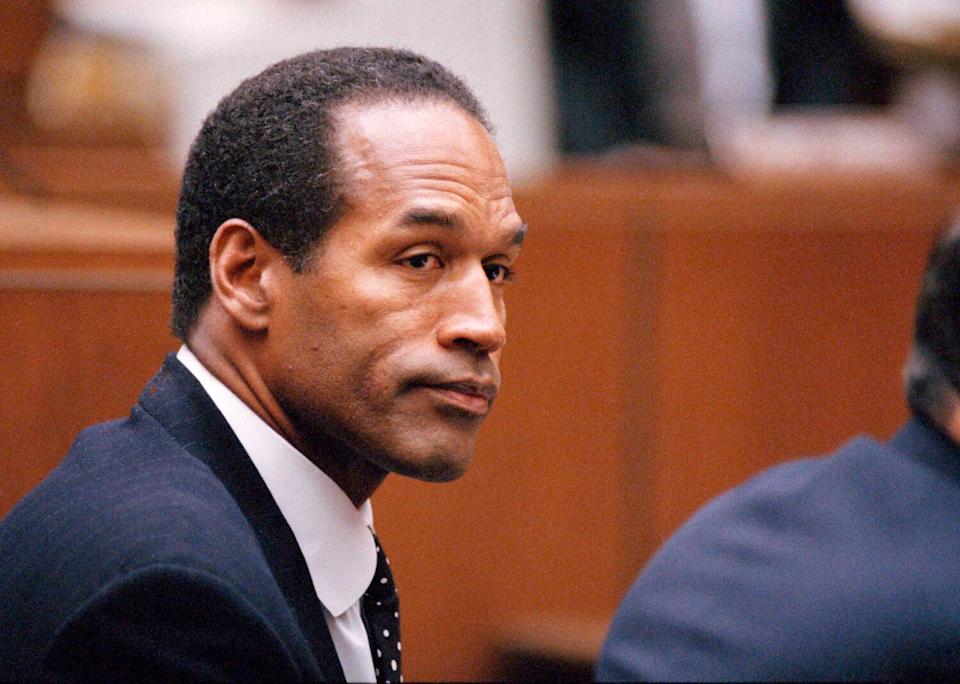
The dog came back first.
It was past midnight on June 13, 1994, in the Brentwood neighborhood of Los Angeles.
A neighbor named Sukru Boztepe was walking his dog when he saw a dog with blood on its paws.
He followed the animal.
Boztepe alerted a nearby resident, who called 911 at approximately 12:10 a.m.
Police arrived shortly after.
The victims were Nicole Brown Simpson and Ronald Goldman, found dead outside her condominium at 875 South Bundy Drive.
Nicole Brown Simpson had been stabbed multiple times in the head and neck.
Ronald Goldman had been stabbed numerous times in the torso and neck.
Both were pronounced dead at the scene.
The exact time of the murders is not established by the source.
The call came at 12:10 a.m.
The bodies were already cold, according to the record.
What happened in the hours before that call?
Who was there?
Who left?
That would require evidence.
At 12:10 a.m., the night was still.

A dog with blood on its paws broke the stillness.
It was a Brentwood night, quiet and ordinary, until it was not.
The dog did not call 911.
The dog could not say what it had seen.
Boztepe saw the blood and made the call that set everything in motion.
The night was June 12, 1994.
The call was June 13, 1994, at 12:10 a.m.
Between those two dates, two people were dead.
The record does not establish when they died.
It establishes only when someone called.
THE NIGHT BEFORE
The night of June 12, 1994, Nicole Brown Simpson and Ronald Goldman were found dead outside her condominium on South Bundy Drive.
Ronald Goldman was a waiter at a nearby restaurant.
He had gone to return eyeglasses that Nicole's mother had left there.
Police arrived at the scene shortly after the 911 call.
Detectives Mark Fuhrman and Philip Vannatter went to O.J. Simpson's estate on Rockingham Avenue.
They found a white Ford Bronco parked outside with what appeared to be blood on the door.
Fuhrman climbed over a fence.

He found a bloody glove on the property.
Simpson was not home.
He had flown to Chicago that night.
The record does not establish the exact time Simpson left for Chicago.
It does not establish the precise sequence of police actions after the call.
What is established: two people dead, a Bronco with blood on the door, a glove on the ground.
What is established: the accused was not there when the detectives arrived.
He was on a plane.
The unanswered question hangs over the scene: why that flight, that night.
That would require evidence.
The detectives had the glove, the blood, the empty house.
They had a timeline that started with a dog and a call at 12:10 a.m.
They did not have the man who lived there.
TWO GLOVES, ONE TIMELINE
The second glove was found at the crime scene, matching the one Fuhrman said he found on the Rockingham estate.
Blood samples were taken from Simpson and compared to the blood at the scene and in the Bronco.
DNA testing linked Simpson's blood to the crime scene.
DNA testing found the victims' blood in the Bronco and on the glove.
:max_bytes(150000):strip_icc():focal(749x0:751x2)/PEOPLE_MAG_BROWN_SISTERS_nicole-tout-1067c705ba0c4ab7a7e648e3ffd95be0.jpg)
The prosecution argued the DNA was a chain of physical proof.
The defense argued the blood was contaminated.
The defense argued Fuhrman was a racist who planted the glove.
Fuhrman denied using racial slurs.
Tapes later surfaced of Fuhrman using the word "nigger" repeatedly.
The tapes damaged the prosecution's case.
The defense also argued Simpson could not have committed the murders in the time frame alleged.
That time frame was disputed.
The source does not detail the exact minutes the defense claimed.
It notes the dispute without quantifying it.
So the question stood: could the timeline really hold?
Two gloves, one matching the other, sat on opposite sides of Brentwood.
One at a murder scene.
One on the property of the man accused of the murders.
The DNA said the blood was his.
The defense said the blood was moved.
Not because the science failed.
But because the collector was accused of lying.

The jury would have to weigh the glove that did not fit against the blood that would not leave.
Fuhrman's denial broke on tape.
The timeline remained a matter of argument, not measurement.
The record does not establish how long the defense said the murders took.
It only establishes that they said it could not be done.
THE TRIAL AND THE GLOVE
He was charged with two counts of first-degree murder on June 17, 1994.
He did not surrender that day.
He fled in a white Ford Bronco driven by his friend Al Cowlings, and the slow-speed chase was televised live nationwide.
He surrendered.
The trial began on January 24, 1995.
It lasted over eight months.
The prosecution presented DNA evidence.
The defense focused on police misconduct.
The defense focused on the glove.
In court, Simpson struggled to put on the gloves.
A defense attorney argued, "If it doesn't fit, you must acquit."
The glove was a demonstration, not a measurement.
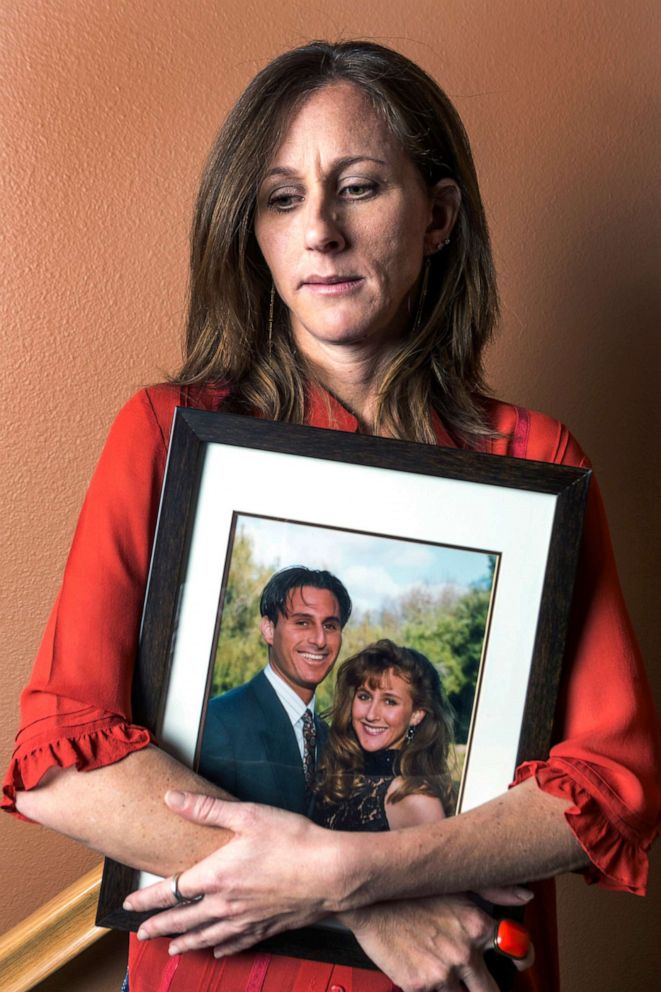
The timeline remained a matter of argument, not measurement.
The record does not establish how long the defense said the murders took.
It only establishes that they said it could not be done.
The jury acquitted Simpson of both murders on October 3, 1995.
It is not established how long the jury deliberated.
It is not established precisely what the jury weighed beyond the public record.
The verdict was met with widespread public reaction.
Polls showed a stark racial divide in opinions on his guilt.
It is a fact that the divide existed.
It is not a fact that the divide explained the verdict.
That would require evidence.
AND THE STORY STILL ISN'T OVER
The criminal trial ended with an acquittal. The story did not.
After the verdict, the families of Nicole Brown Simpson and Ronald Goldman filed a civil lawsuit. In 1997, a civil jury found Simpson liable for wrongful death and battery. The jury ordered him to pay $33.5 million in damages.
Simpson later moved to Florida. There, his pension and other assets were largely protected from seizure. The judgment remained.
In 2007, Simpson was arrested in Las Vegas. He was charged with armed robbery and kidnapping after attempting to retrieve sports memorabilia he claimed was his. He was convicted in 2008 and sentenced to 9 to 33 years in prison. He was granted parole in 2017 and released.
Simpson died on April 10, 2024, of cancer at age 76. The Goldman family continued to pursue the unpaid civil judgment. The source does not state whether that judgment was ever paid in full.
The questions from that night remain unresolved. A civil judgment did not answer them. A prison term did not answer them. A death did not answer them.
That would require evidence.
Advertisement
You may also like
The fishing trip that put Scott Peterson at the center of a missing-pregnant-wife mystery
He said he went fishing alone that morning, off the Berkeley Marina. December 24, 2002. The same day his wife, Laci Peterson, eight months…
The red-light drive-by that ended Notorious B.I.G., and the car that vanished
12:45 a.m., March 9, 1997. A dark sedan pulls alongside a black SUV at a red light on Wilshire Boulevard in Los Angeles. The…
A notebook found beside Brian Laundrie's remains — what it said about Gabby Petito
The notebook was found beside Brian Laundrie’s remains in the Carlton Reserve in Florida, on October 20, 2021. A backpack lay nearby. The FBI…
Kitty Genovese's family says the '38 witnesses' claim stole her memory
A single number has been attached to Kitty Genovese's name for decades. Thirty-eight. The number appears in textbooks. It appears in documentaries. It is…
The MGM Grand altercation that preceded Tupac's shooting — what police believed
The black BMW sedan turned onto the Las Vegas Strip, and Tupac Shakur was in the passenger seat. Marion "Suge" Knight, the CEO of…
The neighbor's camera that caught Shanann Watts' truck — and the timeline that broke the case
The neighbor's camera was pointed at the driveway, not the street. It caught a blue Ford truck pulling into the Watts home in the…