Cell phone data put Chase Merritt near the grave site — then QuickBooks opened after the family vanished
The motorcyclist stopped because something in the sand caught his eye.
It was February 2013, and he was riding near Victorville, California, in the Mojave Desert.
What he found was human remains, buried in shallow graves.
Three years earlier, in February 2010, the McStay family had vanished from their home in Fallbrook, California.
Joseph McStay, his wife Summer, and their two young sons were gone.
Their dog was found in the backyard.
Their vehicles were still in the driveway.
Detectives found no signs of forced entry, no signs of struggle.
The case had gone cold.
For three years, the question hung over the family's empty house: what happened?
The desert discovery answered part of it.
The bodies were later identified as Joseph, Summer, and their two sons.
They had been buried in the dirt off a remote road, miles from anywhere.
The shallow graves were not a burial.
They were a disposal.
Who left them there?
That is the question the record does not yet answer.
The identity of the killer was not established at the scene.
It would take another year before anyone was charged.
But the graves did one thing: they turned a missing persons case into a murder investigation.
The desert gave back what the family's home could not.
THE DISAPPEARANCE
They left the house in February 2010, and the house looked like they might come back.
The dog was in the backyard.
The vehicles were still in the driveway.
Inside, the detectives found no signs of a struggle and no signs of forced entry.
Nothing was taken, nothing was overturned, nothing was broken.
The case began as a missing persons case.

That is what the record shows: a family that stepped out and did not return.
The investigation ran for weeks, then months, then years.
Neighbors were questioned.
Relatives were interviewed.
The home was searched and searched again.
What happened inside the home is not in the record.
It is not established, and it has never been established.
The family’s dog waited in the yard.
The cars sat where they had been parked.
For three years, the case went cold, and the house stood as a question no one could answer.
A whole family can vanish without a trace.
The home gave nothing back — not a clue, not a struggle, not a sign.
Only the desert, three years later, would speak.
THE BUSINESS ASSOCIATE
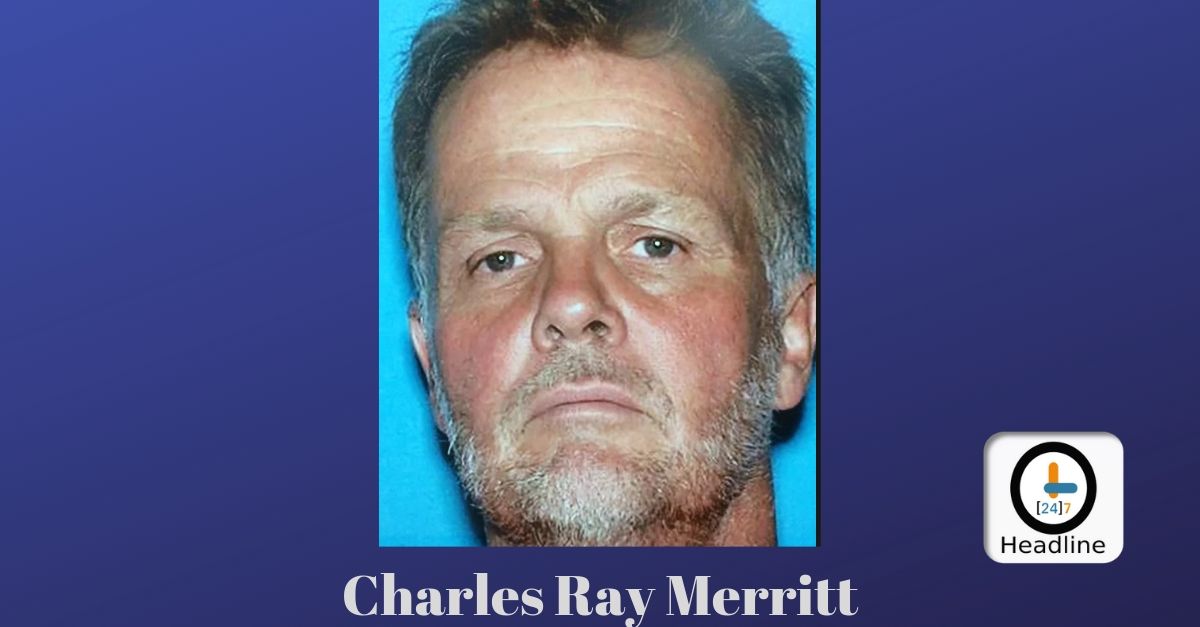
The investigation turned to Joseph McStay's business dealings.
Chase Merritt had been a subcontractor for McStay's water-feature business.
Cell phone data placed Merritt's phone near the burial site around the time of the disappearances.
That data would become the backbone of the prosecution's case.
Detectives also found that Merritt had used Joseph's QuickBooks accounting software after the family vanished.
The exact time and duration of that QuickBooks login are not specified in the source.
It is a documented fact of the investigation, nothing more.
Merritt had also made calls to Joseph's phone after the family was believed to be dead.
Calls to a dead man's number.
The defence argued that the cell phone data was unreliable and that the prosecution's timeline was flawed.
They called expert witnesses to challenge what the towers supposedly showed.
The prosecution called witnesses who said Merritt acted suspiciously after the family disappeared.
What did suspicious look like?
What did a subcontractor owe his boss?

The motive was never definitively established in court.
The financial dispute was argued, not proven.
The phone was near the grave. The software was opened. The calls were made.
That was the documented trail.
The desert had already given up its answer to where.
The trial would have to answer why.
THE TRIAL
The trial began in January 2019.
The prosecution argued that Merritt killed the family over a financial dispute.
The motive was not definitively established in court.
The prosecutor laid out the documented trail.
Cell phone tower data placed Merritt's phone near the burial site around the time of the disappearances.
Detectives had found that Merritt used Joseph McStay's QuickBooks accounting software after the family vanished.
He had also made calls to Joseph's phone after the family was believed to be dead.
Witnesses testified that Merritt had acted suspiciously after the family disappeared.
The defense contended that the evidence was circumstantial.
The defense argued that Merritt was innocent.
Expert witnesses called by the defense challenged the reliability of the cell phone data.
Was the tower data precise enough to place a phone at a grave?
Was the timeline flawed?
Was a login to accounting software proof of anything but access?
That would require evidence the defense said the prosecution did not have.
In June 2019, the jury found Merritt guilty of four counts of first-degree murder.
The verdict was a weight of circumstance.
The documented trail had been enough.
AND THE STORY STILL ISN'T OVER
In August 2019, the judge sentenced Merritt to life in prison without the possibility of parole.
The sentence followed the jury's verdict, but the record did not close.

Merritt has maintained his innocence and has filed appeals.
His appeals have been unsuccessful as of the most recent reporting.
The conviction stands.
What remains unresolved is the rest of the story.
The murder weapon was never recovered.
The medical examiner testified that the cause of death was blunt force trauma.
That testimony established how the family died.
It did not establish what was used, or who held it.
The prosecution argued a financial dispute drove the killings.
That argument was made in court.
It was not proven in court.
The motive remains unknown.
No other suspects have been charged.
The documented trail — the cell phone data, the QuickBooks login, the calls to a dead man's phone — was enough for a jury.
It was enough for a sentence of life without parole.
It was not enough to answer every question.
Why that login, on that date?
Why those calls, to a phone that never answered?
Why the desert, and why those shallow graves?
Those questions require evidence.
The record does not provide it.
Merritt's appeals have failed, according to the most recent reporting.
The case is closed in the legal sense.
It is not closed in the factual sense.
The weapon is gone.
The motive is unproven.
The family's relatives have spoken publicly about the verdict and the loss.
Their words are documented.
The full truth of what happened in February 2010 is not.
The sentence is final.
The story is not.
Advertisement
You may also like
Why a Green Beret's pajama fibers under his wife's body could not be explained
The pajama fibers were found under Colette MacDonald's body. They matched the pajama top Jeffrey MacDonald was wearing that night. MacDonald said he had…
The cotton gin fan tied to Emmett Till's neck that a jury still could not explain
It came up on a rope, out of the Tallahatchie River, on August 31, 1955. A cotton gin fan, tied to a 14-year-old's neck…
The kennel video that placed a father at the scene of a family's murder
The kennel video was not made for the public. It was footage from a dog kennel at Moselle, the family's hunting estate near Islandton,…
The 90-minute deliberation that followed a 13-day trial in the Borden case
The morning of August 4, 1892, in Fall River, Massachusetts, was warm and still. Inside the house at 92 Second Street, the bodies were…
The phone call that put Adnan Syed at the park — and the witness who kept changing his story
She left school on January 13, 1999, and never came home. Hae Min Lee was 18, a senior at Woodlawn High School in Baltimore…
A freelance photographer's fibers that tied him to 28 Atlanta child murders
The photographer was 23 years old. He worked freelance, taking pictures and promoting music in Atlanta. The city around him was in panic. Between…