His 1964 arrest for posing as a cop, then a confession that changed everything
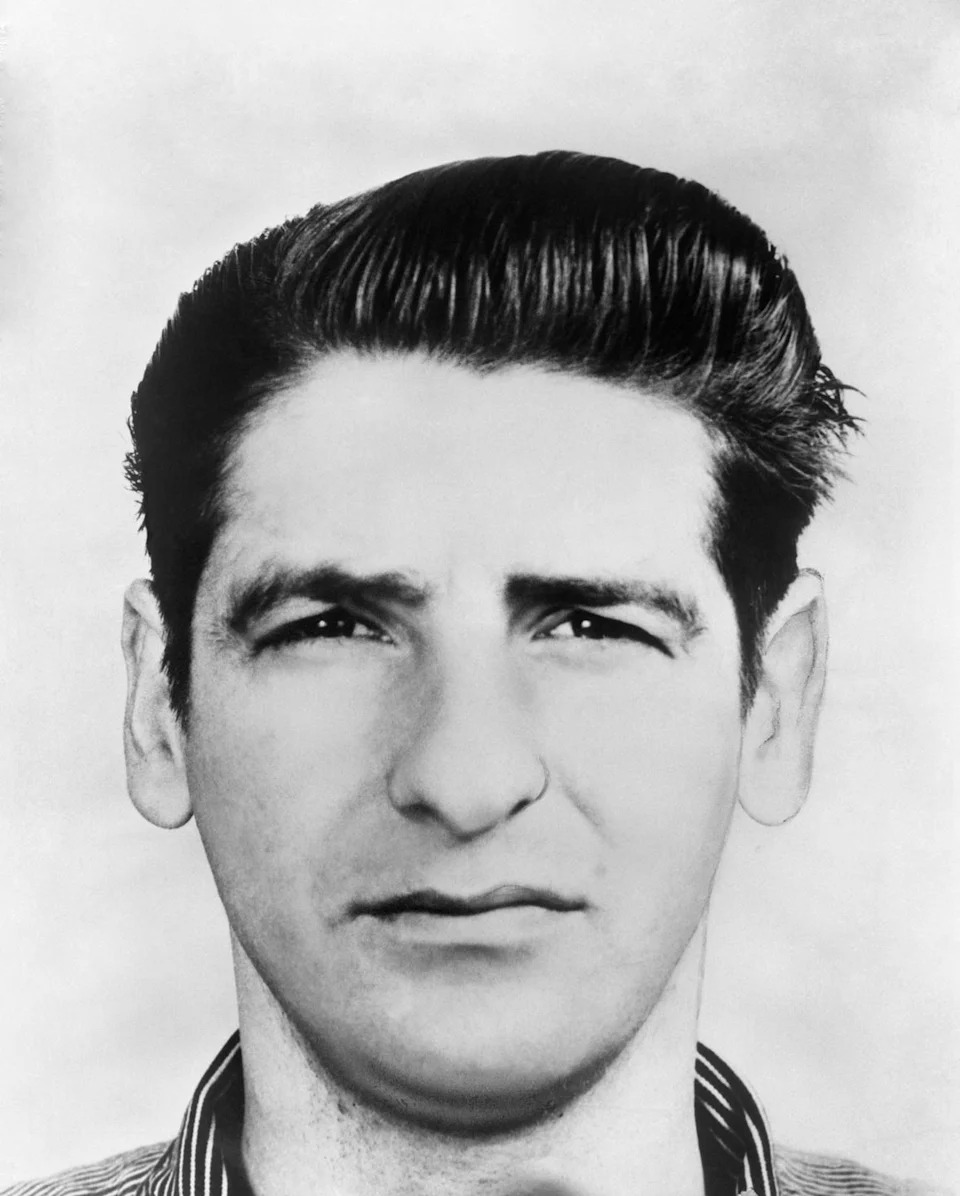
The year is 1964.
Albert DeSalvo is arrested for a series of sexual assaults.
The case file says he posed as a police officer or a photographer to approach the women.
He is a married father of two from Malden, Massachusetts.
The investigation record shows he was committed to Bridgewater State Hospital for psychiatric evaluation.
It was not the first time.
The case file lists a long criminal record: burglary, breaking and entering, sexual offenses.
In 1961, he had been arrested for posing as a photographer to assault women.
He is a man with a history of wearing uniforms and false titles.
He is a man with a wife and children at home.
The record does not establish whether the 1964 arrest was connected to the stranglings.
That connection is not established.
Not because it is impossible.
But because the record does not say it.
What the record does say is that he was in a psychiatric hospital.
What the record does say is that he would soon make a claim that changed everything.
The claim would come later.
The claim would come from inside that hospital.
But the arrest came first.
The arrest is where the story starts.
THE CONFESSION
The confession came in 1965, from inside Bridgewater State Hospital.
DeSalvo was there, committed for psychiatric evaluation after his arrest the year before.
His family had retained F. Lee Bailey, the attorney, and it was to Bailey that DeSalvo first confessed to the stranglings, according to the investigation record.
Bailey then arranged for DeSalvo to give a detailed confession to John S. Bottomly, the assistant attorney general leading the Strangler Bureau.
DeSalvo talked, and he gave specifics.
He provided details about several crime scenes that were not publicly known, the investigation record states.
Those details lent credibility to his confession.
Thirteen women were killed between June 1962 and January 1964.
They were strangled, often with their own clothing or stockings, and many were sexually assaulted.
The victims lived alone in apartments across Boston and its suburbs.
The case terrified the region.
Was this the work of one man?
Was DeSalvo that man?
Did a single confession close thirteen cases?
That would require evidence.
Whether all thirteen deaths were the work of one person is not officially established.
Authorities never officially linked all of them to a single perpetrator.
DeSalvo gave his account, and Bottomly listened.
But the confession was never tested in court.
The case was never brought to trial.
THE TWO STORIES
The prosecution had a story.
DeSalvo's confession included details about several crime scenes that were not publicly known, the investigation record shows.
Those details suggested firsthand knowledge.
They suggested a man who had been there, who had seen what happened.
The defence had a story too.
No forensic evidence connected DeSalvo to the murders, according to the investigation record.
Some investigators doubted his claims.
They doubted the man who talked so freely about things he should not have known.
So which story was true?
Which one held?
Which one could be tested?
Neither.
The confession was never tested in court.
The case was never brought to trial, the case outcome records.
DeSalvo was instead tried in 1967 on unrelated charges of armed robbery and sexual assault, the trial record shows.
He was convicted on those charges.
The stranglings went untried.
Whether DeSalvo's confession was truthful is not established by the record.
It is a compelling story.
It is also unproven.
The details were specific, and the details were uncorroborated.
The record holds the confession, and the record holds the doubt.
It does not hold a verdict.
The tension sits there, between the story told and the proof missing.
That would require evidence.
THE ORDINARY MAN
The case file describes him as a married father of two living in Malden, Massachusetts.
A house in the suburbs. A wife. Two children.
His wife, Irmgard DeSalvo, testified at his later trial.
His mother, Charlotte DeSalvo, also spoke publicly.
What either of them said is not in the record.
What they knew, what they believed, what they saw at home — the record does not say.
Not because it is hidden. Because it was never written down.
DeSalvo was serving time for armed robberies and sexual assaults when he confessed.
Not for the murders. For the other crimes.
The ones he was convicted of.
So the man who told prosecutors he was the Boston Strangler was already a convicted criminal.
A burglar. A man who broke in. A man who posed as a photographer.
He was at Bridgewater State Hospital, committed for psychiatric evaluation, when the confession came.
The family man in Malden. The inmate in Bridgewater.
The confession that changed everything.
The trial that never came.
It is a strange hinge: the ordinary details are the ones the record holds onto.
Married. Father of two. Malden.
The address is there. The family roles are there.
What his wife saw in him, what his mother raised, what his children knew — that would require evidence.
None was offered.
He was convicted on the robberies and the assaults, sentenced to life, and the strangler question went with him.
But before the prison, before the stabbing, before the DNA that would come decades later, there was the man at home.
The record gives him a street, a wife, a mother.
It does not give him an explanation.
AND THE STORY STILL ISN'T OVER
DeSalvo was convicted on the unrelated charges of armed robbery and sexual assault in 1967.
He was sentenced to life in prison and sent to Walpole State Prison.
There, in 1973, he was stabbed to death.
The murder of DeSalvo was never solved.
The case did not end at his grave.
In 2013, authorities announced that DNA evidence linked DeSalvo to the murder of Mary Sullivan, the last victim attributed to the Strangler.
The match was made from a blanket found at the crime scene and a sample from DeSalvo's exhumed remains.
That link covered one death.
It did not resolve the question of the other twelve.
Whether DeSalvo was responsible for those deaths is not resolved.
Some investigators and authors have continued to dispute his role in all thirteen.
The confession was never tested in court.
The case was never brought to trial.
No forensic evidence tied him to the murders then.
The DNA arrived four decades after his death, and still the record does not close.
It gives a match on a blanket.
It gives a man exhumed and tested.
It does not give a verdict.
The public mind keeps the case open, the way it keeps a door half-shut.
Advertisement
You may also like
The cotton gin fan tied to Emmett Till's neck that a jury still could not explain
It came up on a rope, out of the Tallahatchie River, on August 31, 1955. A cotton gin fan, tied to a 14-year-old's neck…
The kennel video that placed a father at the scene of a family's murder
The kennel video was not made for the public. It was footage from a dog kennel at Moselle, the family's hunting estate near Islandton,…
The 90-minute deliberation that followed a 13-day trial in the Borden case
The morning of August 4, 1892, in Fall River, Massachusetts, was warm and still. Inside the house at 92 Second Street, the bodies were…
The phone call that put Adnan Syed at the park — and the witness who kept changing his story
She left school on January 13, 1999, and never came home. Hae Min Lee was 18, a senior at Woodlawn High School in Baltimore…
A freelance photographer's fibers that tied him to 28 Atlanta child murders
The photographer was 23 years old. He worked freelance, taking pictures and promoting music in Atlanta. The city around him was in panic. Between…
The 1:00 a.m. knock that emptied a museum of $500 million in art
It was a knock that sounded routine. Shortly after 1:00 a.m. on March 18, 1990, two men in fake Boston police uniforms knocked on…