The 13-day trial that hinged on a dress burned in a stove — and a timeline no one could explain
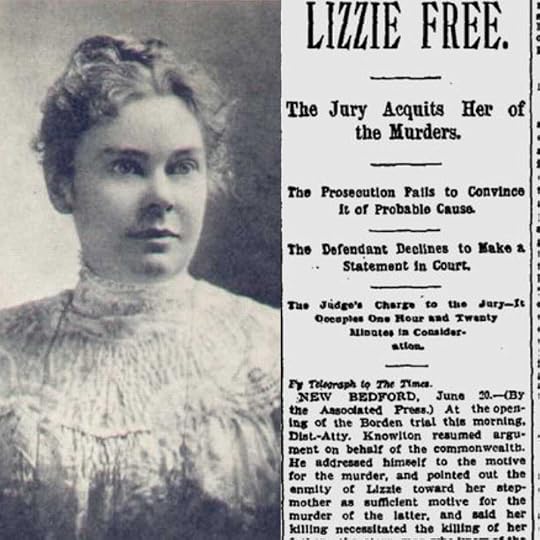
The dress was burned in a stove on the third day after the bodies were found at 92 Second Street.
The prosecution called it evidence.
The defense called it paint-stained cloth.
Lizzie Borden burned the dress, according to testimony at her trial, and the stove fire was hot enough to destroy what it held.
The dress was never produced in court.
No blood-stained clothing was ever found, per the record, and the charred remains were described only by the people who said they saw them.
Whether the dress had blood or paint on it was never established by the record.
That is not a gap in the storytelling.
That is the gap the whole case turned on.
The trial lasted thirteen days in June 1893 at the New Bedford courthouse, before a judge of the Massachusetts Superior Court.
Bridget Sullivan, the maid, testified about the household routine and Lizzie's movements that morning.
The medical examiner testified about the wounds.
The prosecution argued motive and opportunity.
The defense argued the timeline made both murders impossible without detection.
The jury deliberated for just over an hour.
The verdict is not the point of this opening.
The point is a single, unresolved object: a dress that could mean everything or nothing.
It was burned, and it was gone, and everyone in that courtroom knew the difference mattered.
THE MORNING OF AUGUST 4, 1892
August 4, 1892, a Thursday, in Fall River, Massachusetts.
Andrew Jackson Borden was found on a couch in the sitting room of 92 Second Street.
His face was nearly split by an axe blow.
Upstairs, in a guest room, his second wife Abby Durfee Borden lay struck multiple times.
The bodies were discovered by the maid, Bridget Sullivan, and a neighbor, Dr. Bowen.
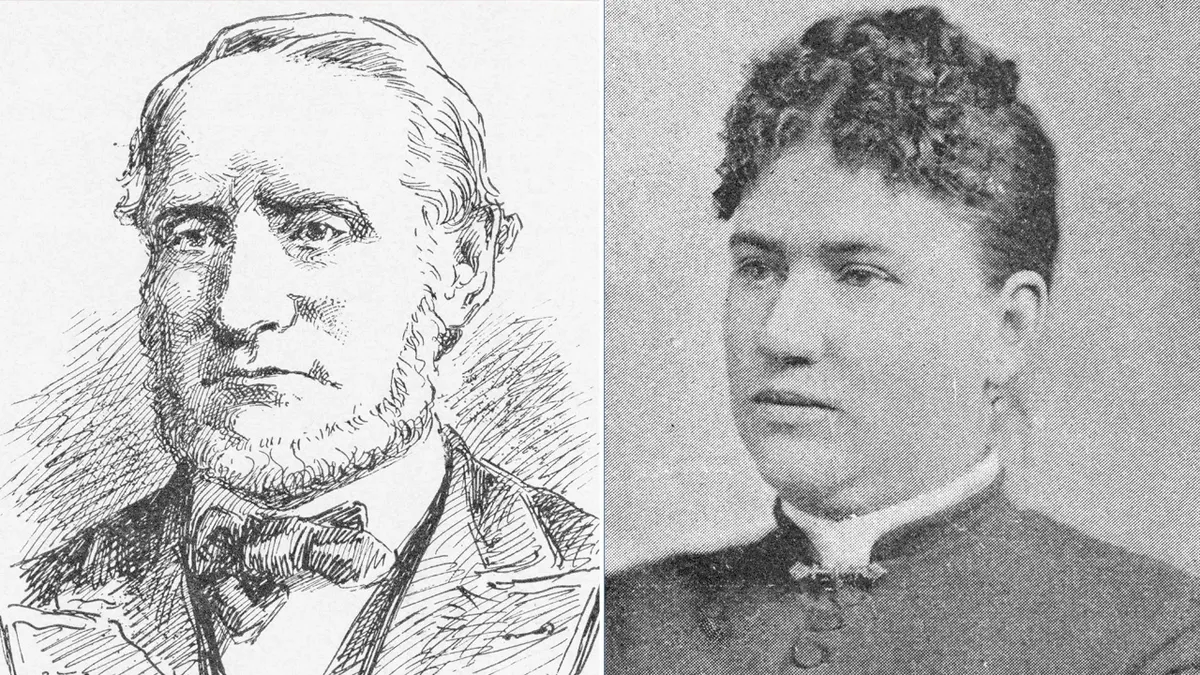
They came after Lizzie Borden, Andrew’s younger daughter, reported finding her father’s body.
The murders occurred between approximately 9:00 and 11:00 a.m., according to the source.
That is a two-hour window.
A quiet house, a maid at work, a father and stepmother killed with an axe.
Police arrived within minutes of the discovery, the source states.
No murder weapon was conclusively identified.
A handleless hatchet was found in the cellar.
It was examined.
It was not definitively linked to the murders.
The exact sequence of the murders is not established.
The identity of the killer is not established.
What is established is the timing, and the timing already feels impossible.
Two people, two floors, one weapon, no blood-stained clothing found on anyone.
Bridget Sullivan testified about the household routine and Lizzie’s movements that morning.
She described the morning as ordinary.
Then it was not.
The window between nine and eleven was short, and no one could explain how it held.
THE PROSECUTION'S CASE
The district attorney for Bristol County opened with motive.
Resentment of a stepmother, he argued, and fear of being cut out of a father's will.
The prosecution built its case on contradictions, not on a weapon.
Days before the murders, Lizzie had tried to buy prussic acid, a poison.
The purchase was refused.
Its connection to the murders was never proven.

Bridget Sullivan took the stand and described the household routine.
She described the movements Lizzie made that morning.
The window was short, and the prosecutor asked how it could hold.
The medical examiner testified that the wounds were consistent with an axe.
No axe was ever conclusively linked to the crime.
A handleless hatchet sat in the cellar, examined and set aside.
Then came the dress.
Testimony placed Lizzie at the stove, burning a dress shortly after the murders.
The defense would call it paint-stained, not blood-stained.
The dress was never produced in court.
The prosecution pressed on her behavior, her statements, her silences.
They wanted the jury to see a woman who had planned, then covered, then lied.
But the strongest words were never heard.
Lizzie's inquest testimony, confused and evasive, was ruled inadmissible.
She had not been warned of her right against self-incrimination.
So the jury heard the shape of the case without its hollow core.
The weight was circumstantial.
It was also cracked.
THE DEFENSE'S TIMELINE
The defense, led by a former governor of Massachusetts, built its case on what was not there.
No blood-stained clothing was found.
The timeline made it difficult for Lizzie to have committed both murders without detection.
The defense argued the burned dress was merely stained with paint, not blood.
That was the gap no one could close.

Suspicion also fell briefly on an unidentified man seen near the house.
No other suspect was ever charged.
The identity of that man is not established.
Whether he had any role is not established.
The trial judge was an associate justice of the Massachusetts Superior Court.
The jury heard the defense argue the impossibility of it all.
They heard the prosecution argue the motive.
They heard Bridget Sullivan describe the morning.
They heard about the dress in the stove.
They heard about the hatchet without a handle.
They heard about the prussic acid that was refused.
What they did not hear was the inquest testimony, ruled inadmissible because Lizzie had not been warned of her right against self-incrimination.
So the jury was left with two readings of the same facts.
One saw guilt in a woman who burned a dress.
The other saw a timeline that did not fit.
It is a gap. It is also a defense.
The jury deliberated for just over an hour.
They returned a verdict of not guilty on both counts.
Not because the dress was proven to be paint.
But because the prosecution could not prove it was blood.
The case had a hollow core, and the defense pointed straight at it.
That would require evidence.
AND THE STORY STILL ISN'T OVER
She was acquitted, and she walked out of the New Bedford courthouse a free woman.

Lizzie Borden returned to Fall River, and with her sister Emma, she moved into a new home on French Street.
They called it Maplecroft.
She lived there until her death on June 1, 1927, at age 66.
Emma died later that same year.
The house at 92 Second Street still stands.
It operates as a museum and a bed-and-breakfast.
Guests sleep in the rooms where the bodies were found.
The case has never been officially reopened.
No one else was ever charged with the murders.
The handleless hatchet found in the cellar was examined.
It was not definitively linked to the murders.
Not because the police stopped looking.
But because the evidence never closed the gap.
Who killed Andrew and Abby Borden remains officially unestablished.
The verdict was not guilty.
The questions were never answered.
The dress burned in the stove was never produced in court.
No blood-stained clothing was ever found.
The timeline no one could explain was left unexplained.
The jury deliberated for just over an hour.
Thirteen days of testimony, and an hour of deliberation.
That is how the trial ended.
That is how the story remains.
The case is closed.
It is also unsolved.
Advertisement
You may also like

The bite mark on Lisa Levy that tied Ted Bundy to the Chi Omega murders
She was on the ground below. On the body of the second victim, investigators found something the blunt instrument had not made: a bite…
The ransom money that led detectives to a carpenter's door — but what did the jury hear?
The gold certificate was a twenty-dollar bill. In September 1934, it surfaced at a gas station in New York City. The attendant, Walter Lyle,…
Manson jury deliberated nine days — one witness told all from the driver's seat
She drove to Cielo Drive. She drove away from it. Linda Kasabian drove the car to both crime scenes on the nights of August…

The alibi that hung on a 14-foot boat and one cold morning
The 14-foot aluminum boat sat low in the water at the Berkeley Marina. It was December 24, 2002, and the morning was cold. Scott…
The $10 million note and the call that cracked the D.C. sniper case
The phone rang, and the priest answered. Father Michael Smargiassi was a priest in Montgomery County. Police had asked him to relay a message.…

The math professor in a Montana cabin who mailed bombs for 17 years — what made him do it?
The cabin sat on a half-acre of scrub and pine outside Lincoln, Montana, population roughly one thousand. Inside, a former mathematics professor lived alone,…