The 1939 tip that put a suspect behind bars — but the murder charge never came
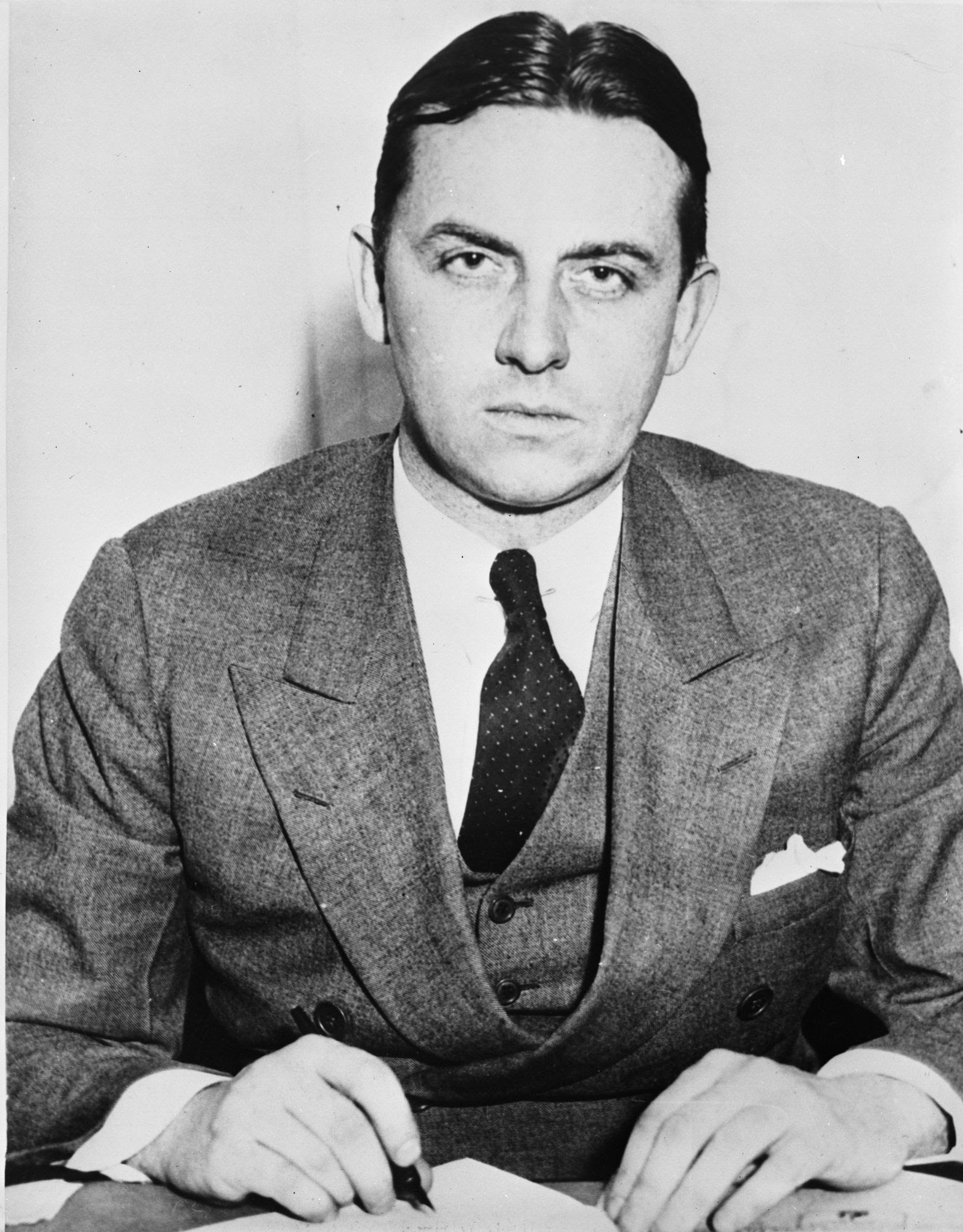
1939. A tip.
A tip put a former bartender and carnival worker behind bars in Cleveland, Ohio.
He was the most prominent suspect in the Torso Murderer case.
He was never charged with the murders.
He was held on a vagrancy charge instead.
The case behind that hold ran from 1934 to 1938.
At least twelve murders were attributed to a single killer.
Victims were typically transients and marginalized individuals.
They were often decapitated and dismembered.
Body parts turned up in locations like Kingsbury Run, a ravine and shantytown.
Eliot Ness led the investigation.
He was Cleveland's Safety Director then.
No one was ever convicted of the murders.
The identity of the tipster?
Not in the record.
The exact content of the tip?
Not in the record, either.
What the record does show is an arrest.
A hold.
A death in custody.
A vagrancy charge, not a murder charge.
That is what the record shows.
It is not a conviction.
It is not even an accusation in court.
How does a tip put a man behind bars for a string of murders — and yet no murder charge ever comes?
That would require evidence.
The evidence is not here.
THE BODIES AND THE CORONER
Between 1934 and 1938, at least twelve murders in and around Cleveland were attributed to the "Cleveland Torso Murderer."
The exact number of victims is not established in the record.
Neither are the identities of most of them.
Victims were often decapitated and dismembered, with body parts discovered in various locations, including Kingsbury Run.
Kingsbury Run was a ravine and a shantytown.
The coroner, Arthur J. Pearce, performed autopsies on the dismembered bodies.
He concluded the killer had anatomical knowledge.
That suggested a skilled hand.
The lead investigator was Eliot Ness, already famous for his work in Chicago.
Ness served as Cleveland's Safety Director.
He organized raids on the Kingsbury Run shantytown.
He burned it down.
The aim was to displace the transient population and disrupt the killer's hunting ground.
It was a blunt instrument against a precise one.
Despite the extensive investigation, no physical evidence linked any suspect definitively to the murders.
The bodies were examined.
The cuts were studied.
The ravine was cleared.
And still, no link.
The record holds the coroner's conclusion and the raids.
It does not hold a name attached to the knife.
THE ARREST AND THE VAGRANCY HOLD
The tip came in 1939.
It named a former bartender and carnival worker, a man who drifted through the same shantytowns as the victims.
Police arrested him.
They did not charge him with murder.
They held him on a vagrancy charge, the kind of charge that keeps a man off the street, not one that answers for twelve bodies.
The Cuyahoga County Prosecutor's Office was involved.
No trial for the murders ever took place.
No one was ever charged with the killings.
No one was ever convicted.
The suspect died in custody.
The report said a heart attack.
Some suspected foul play.
The circumstances of that death are not fully established.
The heart attack ruling is reported.
The questions have persisted.
So the record holds an arrest, a hold, a death.
It does not hold a murder charge.
It does not hold a trial.
It does not hold a verdict.
The case remains officially unsolved.
A man was behind bars.
A man died there.
And the knife never got a name in a courtroom.
THE TWO INTERPRETATIONS
One reading: the man in the cell was the killer, and the vagrancy charge was the only legal thread they could pull.
Not because the evidence was thin. But because a murder charge needs proof, and the proof was not there.
Another reading: the suspect was never formally accused of the murders, and no physical evidence linked him definitively to the killings.
The coroner concluded the killer had anatomical knowledge, a skilled hand at work.
A skilled hand implies training. It implies a doctor, a butcher, a surgeon.
That pointed toward another person of interest, a physician questioned multiple times.
Questioned, but never arrested. Never charged.
The gap between suspicion and charge is where the case lived.
Eliot Ness, the lead investigator, later called it his greatest failure.
He said that after he had left Cleveland, after the shantytown was burned down, after the suspect died in custody.
The case was never officially solved.
No trial for the murders ever occurred, so what the prosecution or defence might have argued is not in the record.
That is not established. That is simply absent.
Was the vagrancy charge a holding cell for a man they could not prove against?
Or was it just a vagrancy charge, and the suspicion never rose higher?
The record offers two interpretations.
It settles neither.
AND THE STORY STILL ISN'T OVER
He would not be the last to hold that hope.
Eliot Ness left Cleveland in 1942, carrying the case with him.
In his memoirs, he wrote about the Torso Murders and the frustration of failing to solve them.
He called it his greatest failure as Safety Director.
The most prominent suspect died in custody in 1939.
That death was ruled a heart attack.
Questions have persisted ever since.
The physician who was questioned multiple times died in 1963.
He was never charged with anything.
No one was ever charged with or convicted of any of the killings.
No trial ever occurred.
There was no key testimony, no defence, no prosecution, no judge.
The record offers no verdict.
The identity of the killer is not established by the record.
Modern researchers and authors have continued to speculate.
They have named suspects, offered theories, built cases on paper.
None of it has closed the file.
The Cleveland Torso Murders remain an open, unsolved case.
That is the plain fact of it.
Every theory since 1939 has been a story told about the silence.
The silence itself has never been broken.
Advertisement
You may also like
The ransom money that led detectives to a carpenter's door — but what did the jury hear?
The gold certificate was a twenty-dollar bill. In September 1934, it surfaced at a gas station in New York City. The attendant, Walter Lyle,…
Manson jury deliberated nine days — one witness told all from the driver's seat
She drove to Cielo Drive. She drove away from it. Linda Kasabian drove the car to both crime scenes on the nights of August…
The alibi that hung on a 14-foot boat and one cold morning
The 14-foot aluminum boat sat low in the water at the Berkeley Marina. It was December 24, 2002, and the morning was cold. Scott…
The $10 million note and the call that cracked the D.C. sniper case
The phone rang, and the priest answered. Father Michael Smargiassi was a priest in Montgomery County. Police had asked him to relay a message.…
The math professor in a Montana cabin who mailed bombs for 17 years — what made him do it?
The cabin sat on a half-acre of scrub and pine outside Lincoln, Montana, population roughly one thousand. Inside, a former mathematics professor lived alone,…
The polygraph failure that unraveled Watts's shifting alibi for missing family
The friend called police on August 13, 2018. Shanann Watts, 34, and her two daughters, 4-year-old Bella and 3-year-old Celeste, were reported missing from…