The 2019 memoir that placed Keffe D in the Cadillac — now a Nevada judge must decide
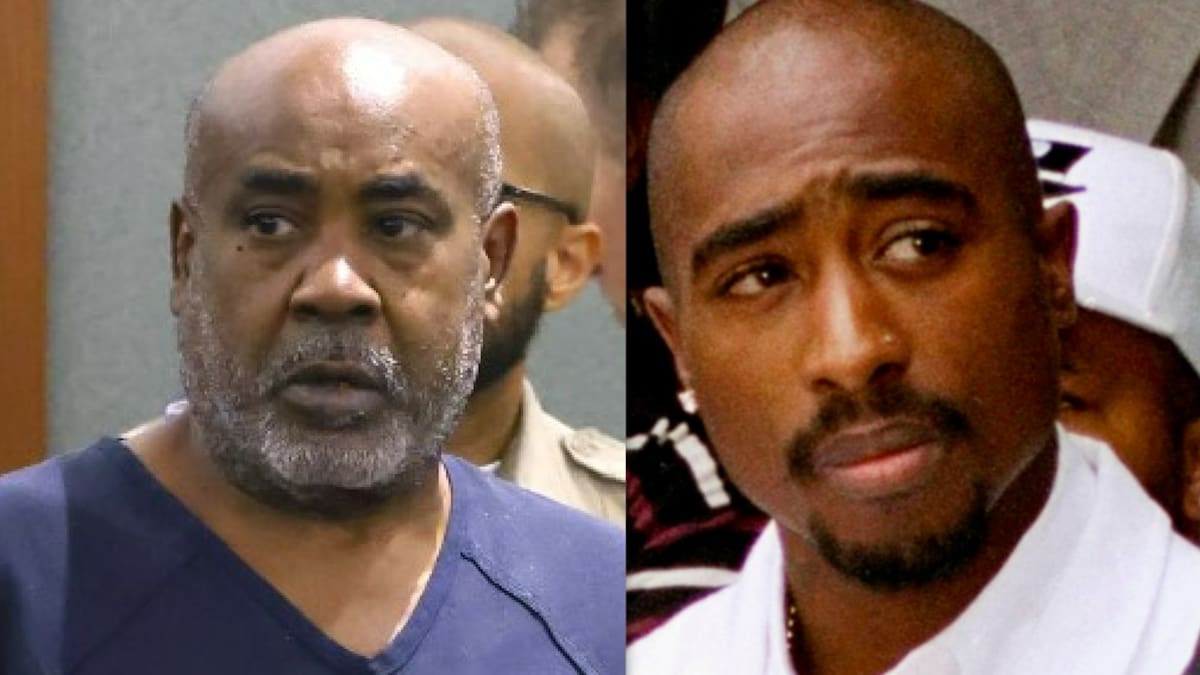
The white Cadillac appears in print before it appears in court.
In 2019, Duane "Keffe D" Davis published a memoir describing himself inside that car — the Cadillac from which shots were fired at Tupac Shakur's BMW on September 7, 1996.
That book is now a central piece of the murder case against Davis, the only person ever charged in the shooting.
A theory circulating online treats the memoir as a confession.
It is not that simple.
The record shows it is one of several statements Davis made over the years, not a court-established fact.
Its legal weight is not yet determined.
It is evidence.
It is not a verdict.
Davis was arrested on September 29, 2023, after Las Vegas police executed a search warrant at his home in Henderson, Nevada.
He was charged with murder with use of a deadly weapon.
He pleaded not guilty.
What does a book change?
What does a book prove?
What does a book admit?
That would require a judge, a jury, and a trial that has not yet happened.
The memoir describes a man in a car.
The case asks what that man did.
Between the page and the verdict sits a defense, a prosecution, and decades of unanswered questions.
SEPTEMBER 7, 1996 — THE DRIVE-BY
On September 7, 1996, Tupac Shakur was shot multiple times in a drive-by shooting while riding in a BMW sedan on the Las Vegas Strip.
Shakur was in a convoy of vehicles after attending a Mike Tyson boxing match at the MGM Grand hotel.
Witnesses reported seeing a white Cadillac pull up alongside Shakur's BMW and open fire.
Shakur was hit four times, including twice in the chest.
He was taken to University Medical Center in Las Vegas.
Marion "Suge" Knight, the co-founder of Death Row Records, was driving the BMW.
Knight was wounded in the shooting.
The shooting was reported to Las Vegas Metropolitan Police Department officers who were providing security for the boxing event.
Those officers were already there.
That is the detail the record holds: police were stationed for the fight, and the gunfire came anyway.
The white Cadillac was described by witnesses.
The specific firearm was never recovered. That is what the record states, and what it leaves open.
Shakur's vehicle was part of a convoy.
The convoy moved down the Strip after the match.
A white Cadillac pulled alongside.
Gunfire erupted.

Shakur was hit four times.
Twice in the chest.
Knight was wounded but kept driving.
The officers assigned to the boxing event took the report.
They were close enough to be the first to hear it.
Not because the night was quiet. Because the night was scheduled.
The fight ended. The Strip was crowded. The convoy rolled.
Then the shots.
The record does not say who fired.
It says a white Cadillac pulled up, and gunfire erupted.
Shakur was taken to University Medical Center.
He was alive when he arrived.
That is where the timeline pauses: a hospital room, four wounds, a city waiting.
SEPTEMBER 13, 1996 — DEATH AND DECADES OF SILENCE
Tupac Shakur died on September 13, 1996, at age 25.
He was alive when he arrived at University Medical Center. He was not alive six days later.
The investigation stalled for years. No arrests were made.
Why the case went cold for so long is not detailed in the record. The record shows a gap, not an explanation.
In 2009, Duane "Keffe D" Davis was granted immunity in a federal grand jury investigation into the case.
That immunity would become the hinge of a legal argument decades later. Prosecutors later argued that the 2009 immunity did not cover the state murder charge.
In 2018, Davis gave a televised interview in which he discussed his knowledge of the shooting.
He spoke about the Cadillac. He spoke about the night.
Shakur's mother, Afeni Shakur, spoke publicly about her son's death. She established the Tupac Amaru Shakur Foundation. She died in 2016.
Twenty years between the death and the interview. Twenty-seven years between the death and any charge.
Davis was the only person ever charged in the shooting. He was arrested in 2023.
The weight of that gap sits on the case now. A memoir, an interview, a grant of immunity — all of it older than the charge itself.
The record does not say why the case sat still. It says only that it did.
THE IMMUNITY DEFENSE
The case against Davis rests on his own words, prosecutors said.
They called him the "shot caller" who orchestrated the shooting.
They did not allege he fired the weapon himself.
The record does not place the gun in his hand.
It places him in the Cadillac, by his own account.
That account came in a 2019 memoir, years before the arrest.
It came again in a 2018 televised interview.
The state built its charge on statements Davis made while he was not a defendant.

Then, on February 4, 2025, his attorney filed a motion to dismiss.
The argument: a 2009 federal immunity agreement protected Davis from prosecution.
The agreement came from a federal grand jury investigation into the case.
The state argued it did not cover the murder charge.
On February 7, 2025, a Nevada judge denied the motion.
Davis pleaded not guilty to one count of murder with use of a deadly weapon.
The trial was scheduled to begin in March 2025.
It was subsequently postponed.
Whether the immunity agreement covers the state charge is unresolved.
The judge denied dismissal, but the issue may be revisited.
That is not established in the record.
It is a legal argument, tested once, denied once.
The defence argued the agreement was a shield.
The state argued it was a narrow document.
Both readings are in the record.
Only one has been ruled on.
AND THE STORY STILL ISN'T OVER
Davis remained in custody at the Clark County Detention Center as of early 2025.
The trial has not yet gone to court.
A new date has not been set in the record.
That is the next concrete step: the rescheduling of the trial date.
Marion "Suge" Knight is serving a prison sentence in California on an unrelated manslaughter conviction.
The case against Davis is the first and only criminal charge ever filed in connection with Shakur's murder.
It is the only one.
It is also unfinished.
The motion to dismiss was denied on February 7, 2025.
The trial was postponed after that.
What comes next is a date, and the date is not in the record.
Not because the case is closed.
Because the calendar has not been filled.
A man waits in custody.
A charge remains pending.
A verdict is not written.
The record holds what happened: the shooting, the death, the decades, the arrest, the plea, the denial.
What it does not hold is the day of trial.
That would require a new order.
Until then, the story stops at a jail cell and a blank line on a docket.
Advertisement
You may also like
The Manson follower whose parole grants kept getting reversed — until 2023
She was granted parole, and then it was taken back. Leslie Van Houten was granted parole multiple times, according to the record. Those grants…
The Green Beret doctor who told MPs hippies killed his family — one blood word that didn't fit
The call came in on February 17, 1970, to a home off base at Fort Bragg, North Carolina. Military police found the bodies inside.…
The BTK Killer's floppy disk that led police to a church computer, and the trail it left behind
The letter arrived in 2004, on the thirtieth anniversary of the first murders. It claimed to be from BTK. A Wichita newspaper received it,…
The anonymous tip that steered police toward Adnan Syed — and the questions it left unanswered
The call came after Hae Min Lee's family reported her missing. Her car was found weeks later in a Baltimore neighborhood, and the case…
The notebook confession that ended the Gabby Petito case — and what the FBI never released
A notebook was found near Brian Laundrie's remains in the Carlton Reserve in Florida on October 20, 2021. The FBI announced on January 21,…
The parolee who led police to Polly Klaas—and the sentence he still waits for
The pillowcases came from the house. On the night of October 1, 1993, 12-year-old Polly Klaas was having a slumber party with two friends…