The BTK Killer's floppy disk that led police to a church computer, and the trail it left behind
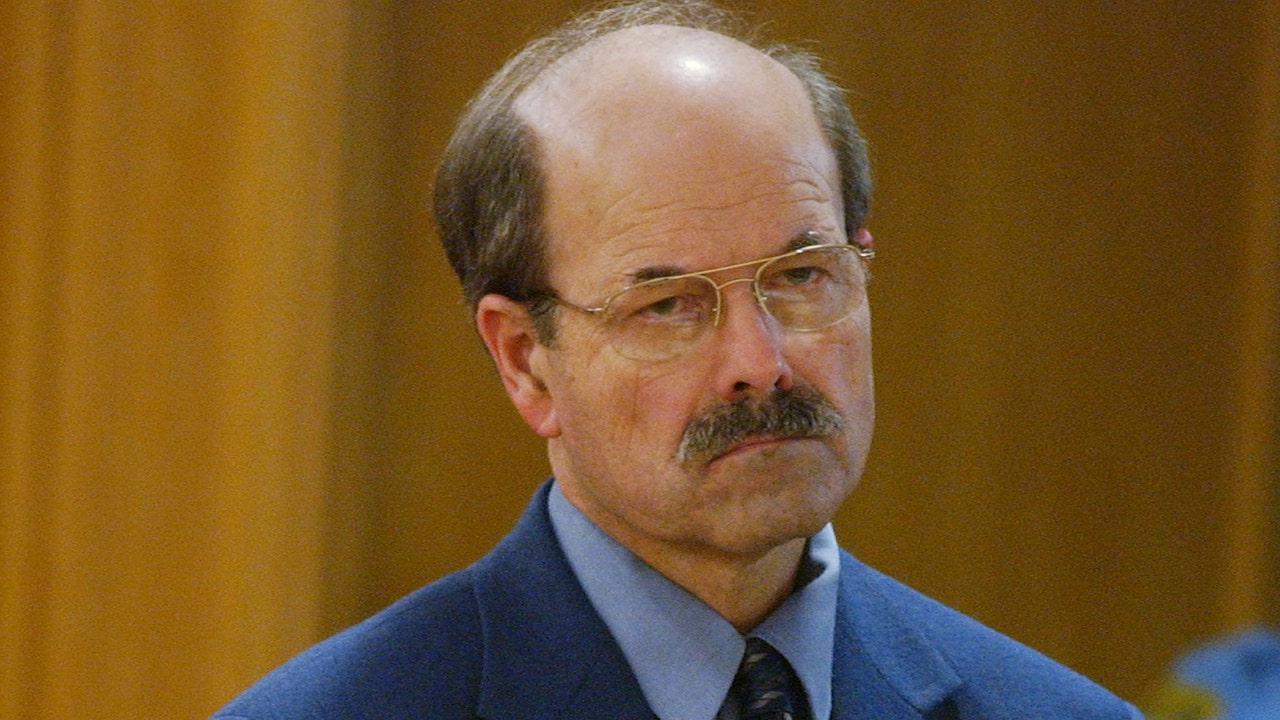
The letter arrived in 2004, on the thirtieth anniversary of the first murders.
It claimed to be from BTK.
A Wichita newspaper received it, and police answered in public.
They placed a newspaper advertisement, asking the sender if it was safe to communicate via floppy disk.
The sender responded.
He sent a floppy disk.
Forensic analysis of the disk's metadata revealed it had been used by a computer at a church where Rader served as president.
The disk also contained deleted files that pointed to Rader.
The exact contents of those deleted files are not specified in the record.
That is all the record establishes: a letter, an ad, a disk, a church computer.
And a president of that church, whose name was on the metadata.
He was a married father of two, a Cub Scout leader, a compliance officer.
He was also, prosecutors said, the man who had called himself BTK.
The disk was a mundane object.
It was evidence.
It ended a decades-long hunt.
What else was on it?
What did the deleted files say?
What made them point to Rader?
That would require evidence.
THE KILLINGS
Between 1974 and 1991, Dennis Rader murdered ten people in and around Wichita, Kansas.
He later dubbed the series "BTK" for "Bind, Torture, Kill."
His victims were shot, strangled, or suffocated, often after being bound.
The first murders occurred in January 1974, when Rader killed a man, his wife, and two of their children in their home.
The exact dates of the other murders are not in the record.
The final confirmed murder occurred in January 1991.
The case went cold for decades.
Rader sent taunting letters to police and media throughout the 1970s and 1980s, claiming responsibility and providing details only the killer would know.
The letters were a taunt.
They were also a trail.
They kept the case alive when there were few leads.
The weight of the toll is in the count: ten people.
The frustration is in the span: seventeen years.
One family lost four members in a single night.
Others lost one each, scattered across years.
The record lists the first and last dates, but not the rest.
It is a timeline with gaps.
It is also a record of patience, on both sides.
THE ARREST
The arrest came on February 25, 2005.
The lead detective was a Wichita police officer who had worked the case for years.
He was present when Dennis Rader was taken into custody.
The specific circumstances of the arrest are not detailed in the record.
What is documented is the charge: ten counts of first-degree murder.
Rader was also a married father of two, a Cub Scout leader, and a church council president in Park City, Kansas.
He worked as a compliance officer for a local government agency.
DNA evidence from crime scenes was later matched to Rader.
The match came after the floppy disk had already pointed police to the church computer.
The disk led to the church.
The church led to the president.
The president was Rader.
The record does not establish how the arrest unfolded, only that it happened.
It is a timeline with a date.
It is also a timeline with a life attached to it.
THE PLEA
June 2005.
Rader stood before the Sedgwick County district court judge and pleaded guilty to all ten counts of first-degree murder.
The prosecution had sought the death penalty.
The plea agreement stipulated something else: ten consecutive life sentences, with a minimum of 175 years before parole eligibility.
The trial judge accepted the plea.
He imposed the sentence as agreed.
Rader waived his right to appeal as part of that same agreement.
No appeal would follow.
No successful appeal could follow.
The reasons the plea agreement was accepted over the death penalty are not in the record.
That question remains open.
That question would require evidence.
His wife, Paula Rader, and their two adult children were publicly identified during the case.
They did not speak at trial.
They sat, or they did not sit, and the record does not say.
The plea made the trial a formality.
The plea made the outcome a number.
Ten consecutive life sentences.
A minimum of 175 years.
Parole eligibility in 2180.
The judge accepted it.
The judge imposed it.
The courtroom moved on.
The case moved on.
The record holds the date, the counts, and the sentence.
It holds the waiver of appeal.
It does not hold the reasoning behind the deal.
That is a fact.
It is also a gap.
AND THE STORY STILL ISN'T OVER
Rader is serving ten consecutive life sentences at El Dorado Correctional Facility in Kansas.
His earliest possible parole date is 2180.
That is not a date anyone alive will see.
He has filed no successful appeals.
He waived his right to appeal as part of the plea agreement.
That waiver was part of the deal that took the death penalty off the table.
It is a bargain.
It is also a closed door.
In 2005, shortly after his arrest, his wife Paula Rader filed for divorce.
The divorce was granted.
She has since remarried.
She has largely stayed out of public view.
Rader's two adult children have also remained private.
Their current whereabouts or activities are not in the record.
That is a fact.
It is also a gap no interview has filled.
Rader has given occasional interviews from prison, including to a forensic psychiatrist.
He has been the subject of numerous books and documentaries.
He has not been granted parole.
He is not eligible for it.
He remains in custody, now in his late seventies.
The disk that led to him sits in the evidence file.
The church computer that named him is part of the documented record.
The viral story of the disk is only part of that record.
What the record also holds is a plea, a waiver, and a sentence that runs past the century.
What it does not hold is parole.
What it does not hold is an appeal.
What it does not hold is a public account from the two adult children.
That would require evidence.
None is in the record.
Advertisement
You may also like
The 8:44 p.m. video that broke Alex Murdaugh's alibi — and the appeal that may decide his fate
The video is dark, grainy, and just over a minute long. It was recorded at 8:44 p.m. on June 7, 2021, from Paul Murdaugh's…
The $5,800 in ransom cash a boy found on a riverbank in 1980
The bills came apart in his hands. A boy named Brian Ingram was walking along the Columbia River near Vancouver, Washington, in 1980 when…
The .35 caliber Marlin rifle that ended six lives — and the confession that followed
The rifle was a .35 caliber Marlin. Police recovered it from the house at 112 Ocean Avenue in Amityville, New York. All six victims…
The cell tower records that placed Adnan Syed near Leakin Park — and the alibi witness never disclosed
She was 18, a senior at Woodlawn High School in Baltimore County, Maryland. Her name was Hae Min Lee. On January 13, 1999, she…

The 21-year-old pilot's logbook, and the instrument rating he never had
The cornfield near Clear Lake, Iowa, held its secret until morning. On February 3, 1959, a small Beechcraft Bonanza had gone down shortly after…
The Manson follower whose parole grants kept getting reversed — until 2023
She was granted parole, and then it was taken back. Leslie Van Houten was granted parole multiple times, according to the record. Those grants…