The $5,800 in ransom cash a boy found on a riverbank in 1980
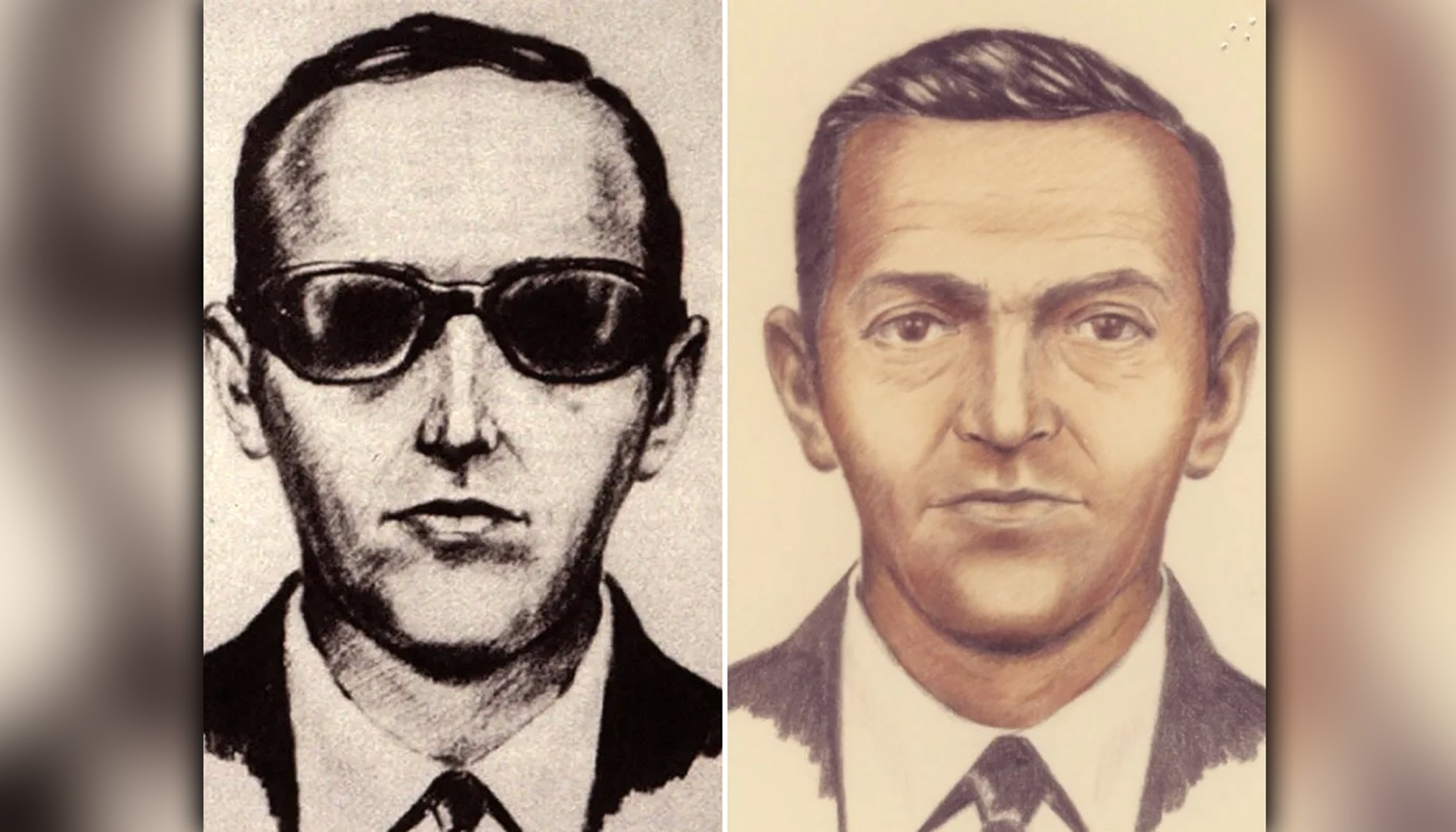
The bills came apart in his hands.
A boy named Brian Ingram was walking along the Columbia River near Vancouver, Washington, in 1980 when he found them. They were twenty-dollar bills, decaying in a bundle, $5,800 in cash. The serial numbers matched the recorded serial numbers of the $200,000 ransom paid to the man called D.B. Cooper on November 24, 1971.
The money had been thrown from a hijacked plane.
The find confirmed Cooper had survived the jump, according to the FBI. It confirmed the money had landed, somewhere, in the water. What it did not confirm was anything else.
The exact location of the find is not detailed in the record. The circumstances around it are not detailed either. Only that it was along the Columbia River near Vancouver, Washington.
The serial numbers proved the bills were real. They proved the ransom had been paid and carried and dropped. They proved the man who took the money got out of the plane alive. But they did not prove where he went. They did not prove who he was. They did not prove what happened to the rest of the $194,200.
That money was never recovered.
The boy had found a fact. The fact raised a question. How did $5,800 end up on a riverbank, and what does that prove about a man who jumped into the night in 1971?
The record answers the first question with serial numbers. The second question it leaves open. That would require evidence.
THE HIJACKING
The man bought his ticket at the Northwest Orient Airlines counter in Portland, Oregon.
One-way, Portland to Seattle.
November 24, 1971, the day before Thanksgiving.
He gave his name as Dan Cooper.
Shortly after takeoff, he passed a note to a flight attendant.
The note said he had a bomb in his briefcase.
The demands were precise: $200,000 in cash, four parachutes, and a fuel truck waiting on the tarmac in Seattle.
The plane landed in Seattle.
The passengers walked off.
The ransom and the parachutes were delivered.
Then Cooper told the crew to head for Mexico City, flying low.
Somewhere between Seattle and Reno, Nevada, he opened the rear stairway.
The record places the jump as likely over southwestern Washington or northwestern Oregon.
Likely — the exact spot is not established.
He dropped into the night.
He was never seen again.
Not that day.
Not ever.
THE EVIDENCE AND THE SEARCH
The FBI immediately launched an extensive manhunt.
The hijacker had left his tie and clip-on tie clasp on the plane.
The tie yielded no usable fingerprints.
No prints, no DNA, nothing to name him.
The parachute he used was a military-style reserve chute.
Investigators determined he likely had some parachuting knowledge, but not expert training.
He knew enough to jump. Not enough to be a professional.

The $200,000 in ransom bills had their serial numbers recorded.
The FBI distributed lists of those numbers to banks and businesses across the country.
Every twenty-dollar bill became a trail marker.
Most of it never surfaced.
The FBI examined numerous suspects over the years.
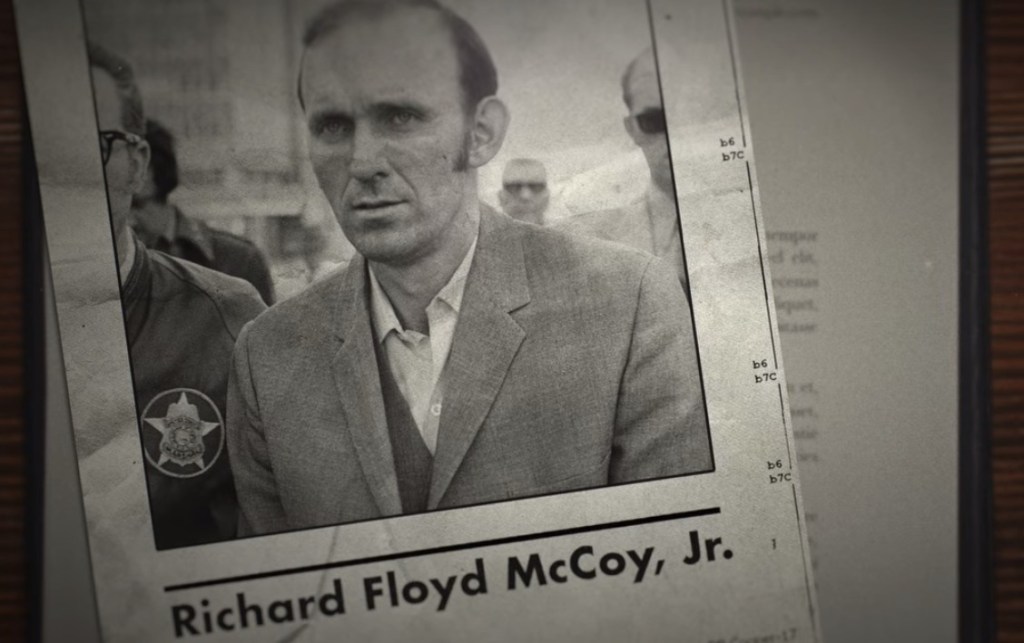
One was Richard Floyd McCoy Jr., who committed a similar hijacking in 1972.
McCoy was ruled out as Cooper.
Not because the evidence cleared him. Because nothing tied him to the flight.
No suspect was ever confirmed as Cooper.
That is not established. It never was.
The investigation ran for 45 years.
Special Agent Ralph Himmelsbach led the early years, chasing reports and rumors.
He was never seen again.
Not that day.
Not ever.
In 2016, the FBI announced it was suspending active investigation.
Lack of new evidence, the agency said.
The case file remained open.
The tie stayed preserved. The serial numbers stayed listed. The questions stayed unanswered.
It is a case built on what was left behind.
A tie. A chute. A list of numbers.
It is also a case built on what was never found.
THEORIES AND THE RECORD
Several suspects have been proposed by amateur investigators and authors.
One is a man named Duane Weber, who reportedly confessed on his deathbed.
Another is Kenneth Christiansen, a former Northwest Orient employee.
The FBI never confirmed either man as Cooper.
Those are reported claims, not facts established by the record.
The record establishes a hijacking, a ransom, a jump, and a partial find on a riverbank.
It does not establish a name.
No one was ever charged with the hijacking.
There was no trial.
The FBI examined numerous suspects over the years, including a man who committed a similar hijacking in 1972, but he was ruled out as Cooper.
The FBI's decision to suspend the investigation did not close the case.
It continues to attract public fascination and amateur investigation.
The case remains the only unsolved hijacking in American aviation history.
A deathbed confession is a story told by someone else.
A former employee's résumé is a coincidence of employment.
Neither is proof.
The case is built on what was left behind.
A tie.
A chute.
A list of numbers.
It is also built on what was never found.
A body.
A name.
A conclusion.
That would require evidence.
The FBI suspended active pursuit in 2016, citing the passage of time and lack of new leads.
The agency maintained the case remained open.
The statute of limitations for the hijacking itself expired.
The FBI noted that other charges could theoretically still apply.
The remaining ransom money was never recovered.
The hijacker's identity remains unknown.
AND THE STORY STILL ISN'T OVER
In July 2016, the FBI formally suspended its active investigation, citing the passage of time and a lack of new leads.
The case file remains open.
The statute of limitations for the hijacking itself expired long ago, though the FBI noted that other charges could theoretically still apply.
No one was ever charged.
No trial was ever held.
The boy who found the cash on the riverbank in 1980 later sold a portion of the bills at auction.
The remaining ransom money was never recovered.
The FBI's evidence, including the tie the hijacker left behind, has been preserved.
The tie yielded no usable fingerprints.
It sits in storage, waiting for a comparison that has not come.
The family of the hijacker, if he had one, has never come forward publicly.
Whether he had a family is not established.
His identity remains unknown.
The case remains the only unsolved hijacking in American aviation history.
It is closed, in the sense that the FBI is no longer actively pursuing it.
It is not solved.
The door remains ajar.
That would require evidence.
Advertisement
You may also like
The tear gas canisters the FBI denied using — until 2000
On April 19, 1993, the FBI launched a tear gas assault on the Mount Carmel Center compound near Waco, Texas. A fire broke out…

The 31-day gap that left a grandmother's missing-person report unanswered
June 16, 2008. That was the last time the family said they saw Caylee Anthony, a two-year-old girl, in Orlando, Florida. July 15, 2008.…
The German carpenter who fled to America and built the ladder that sealed a baby's fate
He was a carpenter. Bruno Richard Hauptmann built things for a living, or so the prosecution said, and the thing he built, they said,…
The crawl space at 8213 West Summerdale Avenue and the remains that ended a contractor's clown act
The crawl space ran beneath 8213 West Summerdale Avenue, a low, dark place under a contractor's house in Norwood Park Township, Illinois. Between 1972…
The 8:44 p.m. video that broke Alex Murdaugh's alibi — and the appeal that may decide his fate
The video is dark, grainy, and just over a minute long. It was recorded at 8:44 p.m. on June 7, 2021, from Paul Murdaugh's…
The .35 caliber Marlin rifle that ended six lives — and the confession that followed
The rifle was a .35 caliber Marlin. Police recovered it from the house at 112 Ocean Avenue in Amityville, New York. All six victims…