The crawl space at 8213 West Summerdale Avenue and the remains that ended a contractor's clown act
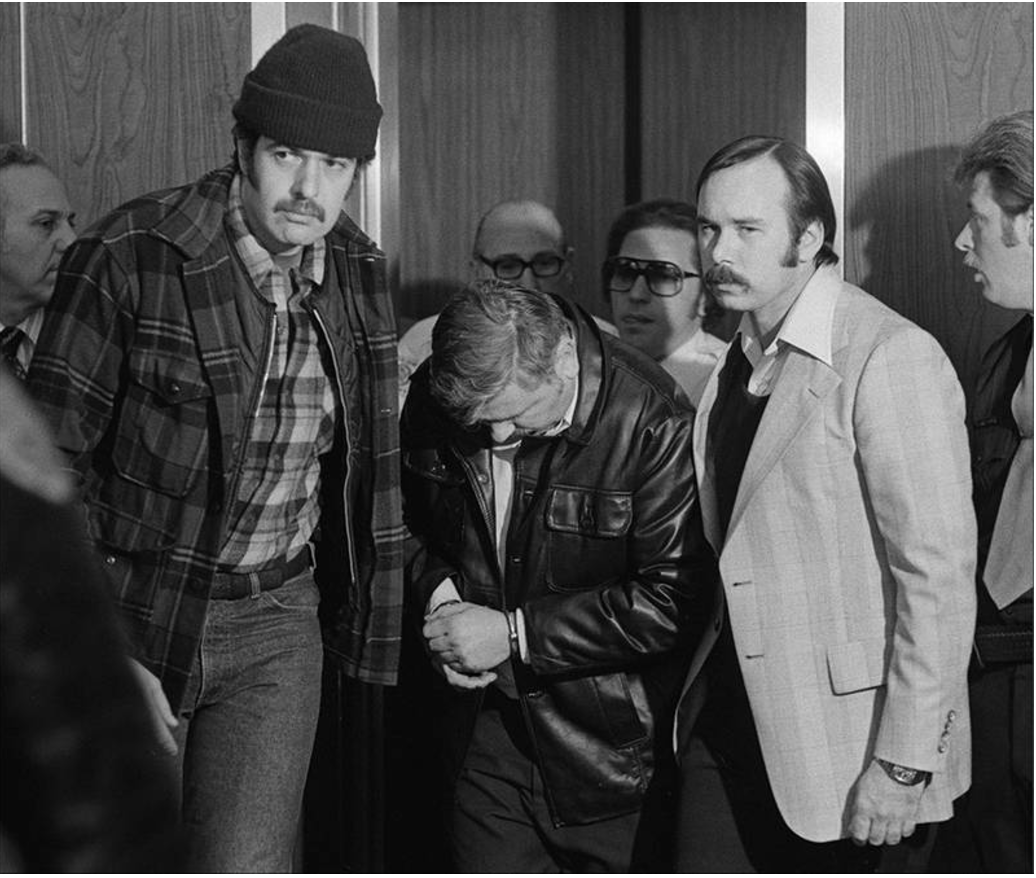
The crawl space ran beneath 8213 West Summerdale Avenue, a low, dark place under a contractor's house in Norwood Park Township, Illinois.
Between 1972 and 1978, John Wayne Gacy, a building contractor and part-time clown performer, murdered at least 33 young men and boys.
Most of the victims were buried in that crawl space.
The exact number of victims is not definitively established beyond the 33 he was convicted of.
The case broke in December 1978, when police investigating the disappearance of 15-year-old Robert Piest obtained a search warrant for Gacy's home.
During the initial search, officers found a foul odor.
They found suspicious rings.
They found a receipt linking Gacy to Piest.
A subsequent search of the crawl space uncovered decomposed remains.
The smell was the first thing that did not belong.
The receipt was the second.
The rings were the third.
The remains were the fourth, and the last thing the crawl space would give up easily.
How long had they been down there?
How many were there?
What else was buried in the dark?
That would require evidence.
The evidence came in the form of bones, and it came in the form of Gacy's own confession.
THE ERRAND
Robert Piest told his mother he was going to meet a contractor about a job.
He did not come home.
The exact nature of that job is not in the record.
What is in the record is the errand itself, and the name he gave before he left.
Police traced the contractor to John Wayne Gacy.
The lead detective obtained a search warrant for Gacy's home at 8213 West Summerdale Avenue.
Officers found a foul odor, suspicious rings, and a receipt linking Gacy to Piest.
A subsequent search of the crawl space uncovered decomposed remains.
Gacy's wife at the time, Carole Hoff, was questioned.
She was not charged.
Gacy confessed to 33 murders.
He provided detailed accounts of each killing.
He led police to the four victims recovered from the Des Plaines River.
A routine errand became the end of the investigation.
It became the beginning of the trial.
Investigators later faced criticism for failing to connect earlier missing-person reports to Gacy.

That included a 1975 investigation into the disappearance of a young employee, John Butkovich.
His remains were later found in the crawl space.
None of that changes what the record shows.
The errand was fatal.
The search warrant was served.
The confession was given.
THE TRIAL
The indictment came down on 33 counts of first-degree murder.
The trial began in February 1980, before a judge in Cook County.
Prosecutors presented the forensic evidence.
They presented the confession.
The defense argued Gacy was legally insane.
They claimed dissociative identity disorder.
The jury heard the claim.
The jury weighed the claim.
The jury rejected the insanity defense.
They convicted Gacy on all 33 counts.
He was sentenced to death.
The specific names of the prosecutors are not in the record.
The names of the defense attorneys are not in the record.
The name of the judge is not in the record.
What is in the record is the verdict.
What is in the record is the sentence.
What is in the record is the confession that preceded both.
The courtroom battle over sanity was decided.
It was decided against the defense.
It was decided with the weight of the crawl space behind it.
The trial was a contest of minds.
It was also a contest of remains.
The jury saw what was dug up.
They heard how it got there.
They chose to believe the prosecution's version of events.
That would require evidence.
The evidence was presented.
The verdict was returned.

The sentence was death.
Appeals followed.
They were denied.
The story moved from the courtroom to the prison.
But the verdict stood.
THE HOUSE AND THE REMAINS
The house at 8213 West Summerdale Avenue was demolished in 1979.
The property was later sold; a new home was built on the site.
The crawl space is gone. The remains were not all gone.
Some victims' remains were never identified.
In 2011, Cook County authorities exhumed remains to attempt DNA identification, and several were subsequently identified.
That was decades after the trial. The record does not say how many were never named.
Gacy's personal effects, including paintings, were auctioned in later years.
The paintings sold. The crawl space did not.
No co-defendants were charged; Gacy acted alone. That is what the record establishes.
Theories about accomplices or hidden victims are not established by the record. They remain theories.
It is a closed case. It is also an open grave, in part.
The new home sits where the crawl space was. Someone lives there now.
The unidentified dead have no address. They have a case number and a year.
What happened to the house is documented. What happened to every victim is not.
That would require evidence. The record does not provide it.
AND THE STORY STILL ISN'T OVER
On May 10, 1994, Gacy was executed by lethal injection at Stateville Correctional Center in Joliet, Illinois.
The sentence was carried out after multiple appeals. The final petition was rejected by the U.S. Supreme Court.
Elizabeth Piest, Robert Piest's mother, testified at trial. She has spoken publicly over the years.
Other families have spoken too. Some names are known. Some are not.
The identities of all victims are not fully established.
That is the plain fact of the record. DNA efforts continue, but they cannot name everyone.
In 2011, Cook County authorities exhumed remains to attempt DNA identification. Several were subsequently identified. The rest remain what they were.
The house at 8213 West Summerdale Avenue was demolished in 1979. The property was later sold. A new home now stands on the site.
It is a quiet street. It is also a grave that was never fully emptied.
The case is closed legally. The human story is not.
Gacy acted alone; no co-defendants were charged. That is what the record says.
What the record does not say is everything. It does not say who every victim was. It does not say what their families lost beyond the day they lost them.
That would require evidence. The record does not provide it.
So the story ends where it began: with remains, with a case number, with a year. And with mothers who testified, and mothers who never got to.
Advertisement
You may also like
The crabapple tree letters that still shadow a 1922 double murder,
The letters were not hidden. They lay in the open, scattered near the bodies beneath the crabapple tree. On the night of September 14,…
The LAPD detective who believed rogue officers killed Biggie — and the family who fought for decades
He was a detective, and he believed other police officers killed Biggie. Russell Poole led the early LAPD inquiry into the shooting on Wilshire…
The tear gas canisters the FBI denied using — until 2000
On April 19, 1993, the FBI launched a tear gas assault on the Mount Carmel Center compound near Waco, Texas. A fire broke out…

The 31-day gap that left a grandmother's missing-person report unanswered
June 16, 2008. That was the last time the family said they saw Caylee Anthony, a two-year-old girl, in Orlando, Florida. July 15, 2008.…
The German carpenter who fled to America and built the ladder that sealed a baby's fate
He was a carpenter. Bruno Richard Hauptmann built things for a living, or so the prosecution said, and the thing he built, they said,…
The 8:44 p.m. video that broke Alex Murdaugh's alibi — and the appeal that may decide his fate
The video is dark, grainy, and just over a minute long. It was recorded at 8:44 p.m. on June 7, 2021, from Paul Murdaugh's…