The tear gas canisters the FBI denied using — until 2000
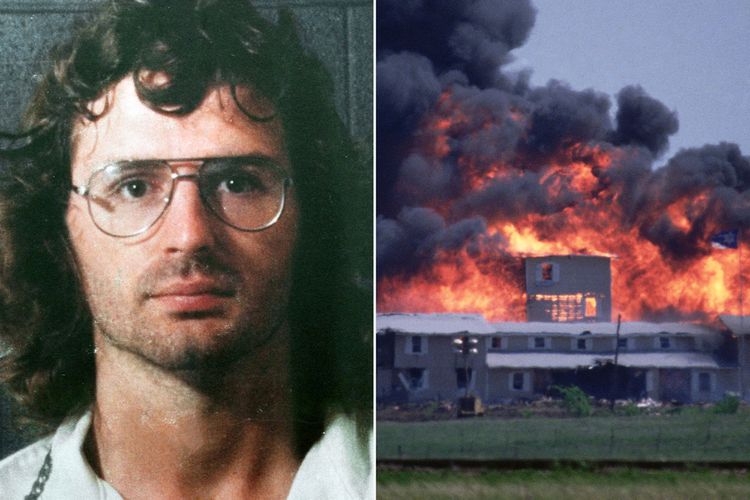
On April 19, 1993, the FBI launched a tear gas assault on the Mount Carmel Center compound near Waco, Texas.
A fire broke out during the assault, killing 76 people inside.
More than 20 of the dead were children. David Koresh was among them.
For years, the FBI denied using pyrotechnic tear gas canisters during that assault.
Pyrotechnic canisters are devices that can start fires.
In 2000, the FBI acknowledged it had used them.
The acknowledgment contradicted earlier denials.
Seven years of denials, then a correction.
The official government position was that the fire was deliberately set by the Davidians.
Critics have disputed this.
What else was denied, and why did it take so long?
The record does not establish the exact cause of the fire.
The source states it was started by unknown means.
Not because the FBI said so.
Not because critics said so.
Because the record says so.
That would require evidence.
FEBRUARY 28 — THE RAID
The raid began on February 28, 1993.
Agents from the Bureau of Alcohol, Tobacco, and Firearms attempted to execute search and arrest warrants at the Mount Carmel Center ranch near Waco, Texas.
The raid was intended to investigate illegal weapons possession, including the conversion of semi-automatic rifles to fully automatic.
Undercover agent Robert Rodriguez had infiltrated the compound.
He reported that David Koresh knew of the raid.
His warning was not heeded.
A gun battle erupted.
Four ATF agents were dead.
Six Branch Davidians were dead.
What exactly happened inside the compound during that gun battle is not fully established; the record does not provide a detailed sequence of events.
The FBI took over after the initial gunfight.
A 51-day standoff began, involving negotiators and a Hostage Rescue Team.
Rodriguez had been inside.
He had told them what he knew.
He had told them Koresh knew.
The question hangs over everything that followed: what if the warning had been taken seriously?
That would require evidence of a different outcome.
The standoff would last until April 19.
APRIL 19 — THE FIRE
On April 19, 1993, the FBI launched a tear gas assault on the compound.
A fire broke out.
Seventy-six people died inside, including more than 20 children and David Koresh himself.
The official government position was that the fire was deliberately set by the Davidians.
Critics have disputed this.
The exact origin of the fire is not established.
The source states only that it was "started by unknown means."
After the fire, the FBI and ATF conducted evidence collection.
The destruction of the compound limited forensic work.
It is a loss measured in bodies.
It is also a loss measured in what could not be examined.
Ash does not testify.
Scorched metal does not answer questions.
The building collapsed inward, and with it went any clean answer about how the flames began.
In 1999, the Justice Department released a report critical of the FBI's use of tear gas and its handling of the standoff.
The report did not settle the fire's cause.
It could not.
The compound was gone.
The forensic record was incomplete.
The question of who lit the first flame remains open.
The government said the Davidians did it.
The survivors and their advocates said the assault did it.
That would require evidence.
The evidence was consumed.
THE TRIAL AND THE CIVIL VERDICT
The trial began in 1994 in San Antonio, before a U.S. District Judge.
Eleven surviving Branch Davidians were in the dock.
They stood charged with conspiracy to murder federal officers, murder, and weapons charges.
The jury acquitted all eleven of the most serious charges.
Not one conviction for murder.
Not one conviction for conspiracy to murder.
The acquittals landed on the most serious counts, and the lesser ones carried the weight.
Five defendants were convicted of voluntary manslaughter and weapons charges.
One of those five was later acquitted on appeal.
The others received sentences ranging from 5 to 40 years.
The legal whiplash did not stop at the criminal courthouse.
In 2000, a federal jury heard a civil suit brought by survivors and relatives of the dead.
That jury rejected the government's claim that the Davidians started the fire.
It also rejected the plaintiffs' claims of excessive force.
The jury found the government negligent.
It awarded $675,000 in damages.
The government's central story about the fire had been refused in a courtroom.
The plaintiffs' own story about the assault had been refused too.
The judge's name is not in the record for this article.
The source names him, but news coverage does not verify it, so he is referred to by role only.
The criminal verdicts stood.
The civil verdict stood.
The convictions were served.
The sentences ran their course, and the survivors walked out of prison, one in 2007, others in 2008.
The record holds both juries' answers, and they do not agree with each other.
AND THE STORY STILL ISN'T OVER
The convictions were served, and the sentences ran their course.
The survivors walked out of prison, one in 2007, others in 2008.
Ruth Riddle was released in 2007.
Brad Branch was released in 2008.
Clive Doyle, acquitted at trial, became a public speaker and wrote about his experiences.
He died in 2022.
The Mount Carmel site remains a memorial.
A small group of former Davidians still lives nearby.
The record holds both juries' answers, and they do not agree with each other.
In 1999, the Justice Department released a report critical of the FBI's use of tear gas and its handling of the standoff.
In 2000, the FBI acknowledged it had used pyrotechnic tear gas canisters during the assault.
That acknowledgment contradicted earlier denials.
It came seven years after the fire.
The acknowledgment is in the record.
It is not a theory.
Whether any further legal action or official review is pending is not in the record.
The source does not mention a specific next hearing or motion.
The case continues to be cited in debates over federal law enforcement powers.
The memorial stands.
The former Davidians live nearby.
The story is not closed.
Advertisement
You may also like
The phone call that could have caught the Zodiac — and the officer who let him walk
It was a phone call that could have ended it. After the July 4, 1969 attack at Blue Rock Springs Park, the killer called…
Why a handleless hatchet in the cellar never settled the Lizzie Borden case
The handleless hatchet sits in the cellar of 92 Second Street, Fall River, in every retelling of the case. It was found there after…
The boat confession that still echoes from Boston to death row
The boat sat in a Watertown backyard, covered and still, while the manhunt for Dzhokhar Tsarnaev moved through the streets around it. After the…
The bullet that linked a bank-robbing cop to Biggie's murder
A 9mm pistol sits at the center of the story, widely reported in connection with the murder of Christopher Wallace. The gun is the…
The crabapple tree letters that still shadow a 1922 double murder,
The letters were not hidden. They lay in the open, scattered near the bodies beneath the crabapple tree. On the night of September 14,…
The LAPD detective who believed rogue officers killed Biggie — and the family who fought for decades
He was a detective, and he believed other police officers killed Biggie. Russell Poole led the early LAPD inquiry into the shooting on Wilshire…