The boat confession that still echoes from Boston to death row
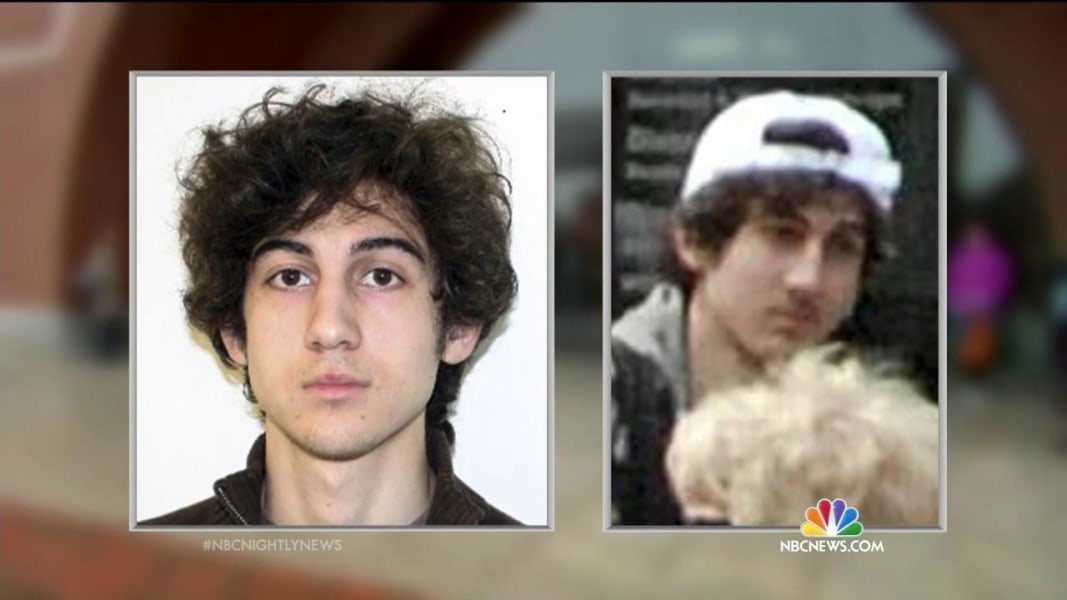
The boat sat in a Watertown backyard, covered and still, while the manhunt for Dzhokhar Tsarnaev moved through the streets around it.
After the shootout, he was found hiding inside it.
On the boat's interior, he had written a confession.
That much is documented.
That much is in the record.
What the confession says is not.
The exact contents are not specified in the source material.
No transcript of the writing is quoted.
No photograph of the words is described.
The record establishes that he wrote something, and that he was found.
It does not establish what he meant by it.
Why write a confession in the dark of a boat?
Why leave it on the wood instead of saying it aloud?
Why write it at all, if capture was already certain?
That would require evidence the source does not provide.
The boat itself drew public attention.
It became an object of focus, a physical remnant of the final hours before the capture.
But the source does not describe any online theories about it.
It does not mention what viewers of the image thought, or claimed, or guessed.
The boat is a fact with a hole in it.
The confession is a fact with a hole in it.
He was found there, and he had written something, and the words themselves are not given.
It is a concrete detail.
It is also an unresolved one.
The water in the boat was cold.
The man inside was the last suspect still alive.
She was on the ground below.
THE BOMBS AND THE MANHUNT
April 15, 2013, was a Monday in Boston.
Two pressure-cooker bombs exploded near the finish line of the Boston Marathon on Boylston Street.
The bombs were placed in backpacks and detonated remotely.
They killed three people and injured more than 260 others.
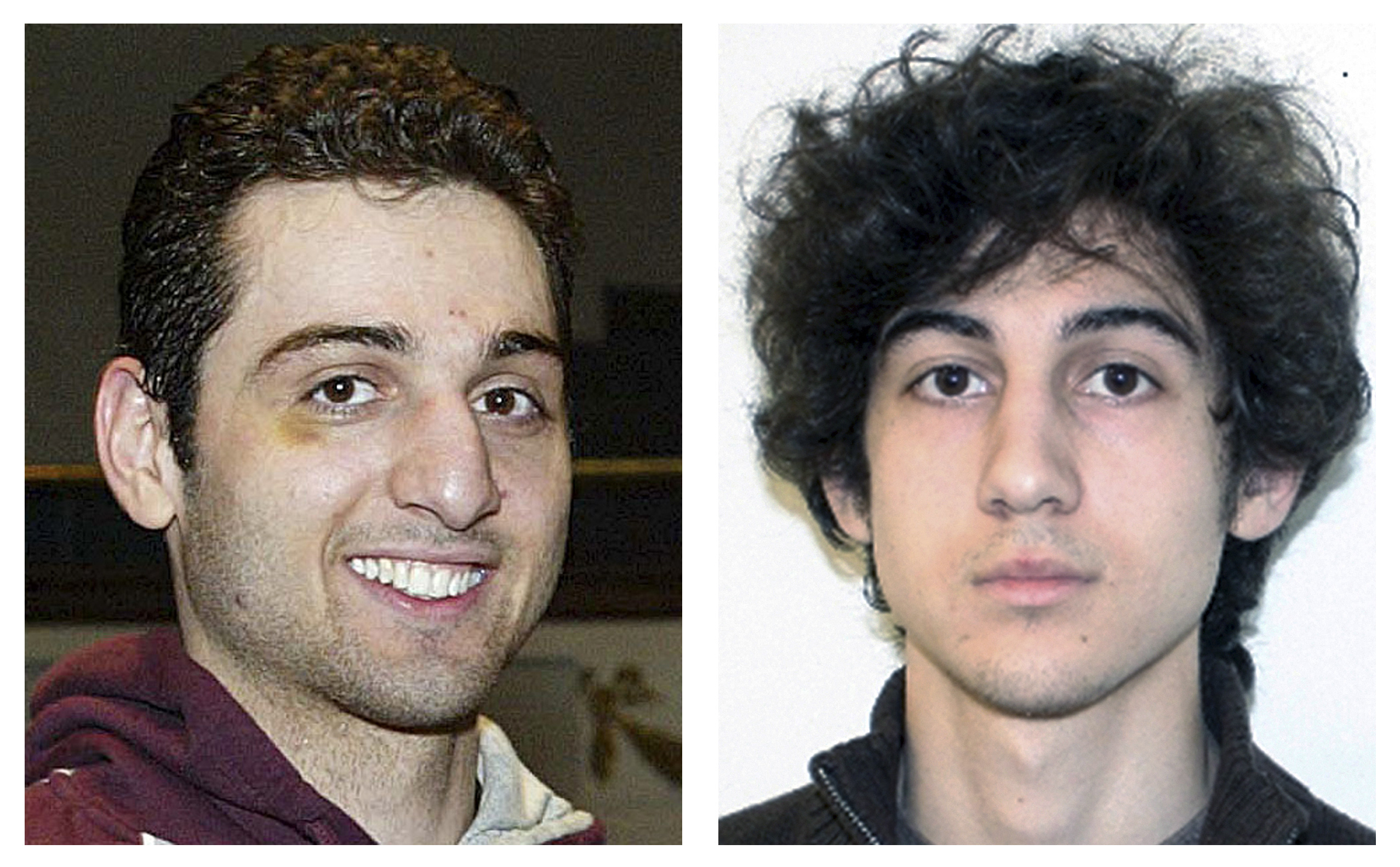
Three days later, the suspects killed an MIT police officer and carjacked a vehicle.
A shootout followed in Watertown, Massachusetts.
One suspect was killed.
The other was captured later that evening.
The FBI identified the suspects through surveillance footage from a department store and a nearby restaurant.
The images showed two men carrying backpacks near the blast sites.
Key evidence included fragments of a pressure cooker, a circuit board, and a piece of a backpack traced to a specific manufacturer.
The suspects' identities were confirmed through fingerprints and DNA.
The investigation was led by the FBI's Boston field office, with assistance from Boston police and state police.
The names of the forensic experts are not in the record.
That is not established.
What is established is the sequence.
Three people died at the finish line.
An officer died in the manhunt.
One suspect died in Watertown.
The other was found in a boat.
The escalation was rapid.
It was also documented.
THE TRIAL AND THE SENTENCE
The trial began with the weight of thirty federal counts.

Conspiracy. Use of a weapon of mass destruction. Seventeen counts related to the deaths.
The prosecution laid out the case; the defense argued Dzhokhar Tsarnaev was influenced by his older brother.
In April 2015, the jury found him guilty on all thirty counts.
The same jury sentenced him to death.
The trial judge formally imposed that sentence in June 2015.
It was a verdict. It was not the end.
In 2020, a federal appeals court overturned the death sentence, citing insufficient jury screening.
The convictions stood. The sentence did not.
The case went back and forth — a legal process measured in years, not moments.
In 2022, the U.S. Supreme Court reinstated the death sentence.
The case returned to lower courts for further appeal.
Each step was argued. Each step was documented.
The trial judge's name is not in the record; he is known only by his role.
The defense attorney, Judy Clarke, led the fight against the sentence.
The prosecution, led by U.S. Attorney Carmen Ortiz, pressed for it.
The appeals continue as of 2024.
Dzhokhar Tsarnaev remains on federal death row at U.S. Penitentiary, Florence, in Colorado.
He has not been executed.
The sentence stands, but the path is not closed.
What remains is the process — slow, contested, and still moving.
THE FAMILY'S VOICE
Martin Richard was 8 years old when the bombs went off near the finish line.
He was one of three people killed that day at the marathon.
His parents, Bill and Denise Richard, testified at trial.
The specific content of their testimony is not in the record.
What they said from the stand is not established.

They have spoken publicly since, though.
They spoke about forgiveness.
They spoke about their opposition to the death penalty.
The sentence stands anyway.
The Martin W. Richard Charitable Foundation exists now, promoting peace and inclusion.
It is named for an 8-year-old boy.
It is a fact that remains.
The other victims' families have largely remained private.
Krystle Campbell's family has stayed out of the public conversation.
Lingzi Lu's family has stayed out of it too.
Their grief is not a public record.
That is their choice.
The suspects' uncle, Ruslan Tsarni, did not stay quiet.
He publicly urged his nephews to surrender.
He was the voice of a family that had become infamous.
It is A. It is also B.
The Richards testified, and the sentence stands.
The foundation works, and the sentence stands.
The appeals move, and the sentence stands.
What does the family do with that?
They keep the foundation running.
They keep speaking about peace.
They do not control the outcome.
That would require evidence.
AND THE STORY STILL ISN'T OVER
He remains on federal death row at U.S. Penitentiary, Florence, in Colorado.
That is where things stand as of 2024.
His appeals are ongoing.
He has not been executed.
The appeal process moves through the lower courts, and the outcome of those appeals is not known.
It is a case that keeps returning.
In 2020, a federal appeals court overturned the death sentence, citing insufficient jury screening.
It upheld the convictions.
In 2022, the U.S. Supreme Court reinstated the death sentence.
The case came back to the lower courts for further appeal.
That is the next concrete step: the ongoing appeal process.
Not because the record is closed.
But because the record keeps being argued.
The confession scrawled inside the boat remains a documented fact.
Its full meaning is still being litigated.
His older brother is buried in an undisclosed location.
His body was claimed by his family.
No marker, no ceremony, no public grave.
The marathon itself continues.
It runs every April, now with enhanced security measures.
The finish line is still on Boylston Street.
The families of those killed have largely remained private.
Martin Richard's parents have spoken publicly about forgiveness and their opposition to the death penalty.
The sentence stands.
They do not control the outcome.
That would require evidence.
The echoes continue.
Advertisement
You may also like
The 7:09 PM call that placed Adnan Syed near Leakin Park — and what the defense said about it
The call came in at 7:09 PM on January 13, 1999. It was placed to Jay Wilds's home. That was the night Hae Min…
The 1995 Oklahoma bombing that left 168 dead — and one man's sentence still stands
The Ryder truck was gone. The axle was not. On April 19, 1995, a rented truck packed with ammonium nitrate and fuel oil exploded…
The severed head found by two fishermen that changed an abduction case forever
The head surfaced in a drainage canal along the Florida Turnpike near Vero Beach, about 120 miles north of Hollywood. Two fishermen found it…
The 1987 witness sighting that didn't stop the Green River Killer
A witness reported seeing Gary Ridgway with a victim. The year was 1987. The report was made to police working the Green River Killer…
The taunting smiley-face letters that led to a serial killer's downfall
The letters arrived unsigned, except for one thing. A circle. Two dots. A curved line. A smiley face, drawn in pen at the bottom…
The empty frames left on display after thieves took Vermeer and Rembrandt
The empty frames still hang in the Isabella Stewart Gardner Museum in Boston. Where Vermeer's *The Concert* once hung, there is an empty rectangle…