The severed head found by two fishermen that changed an abduction case forever
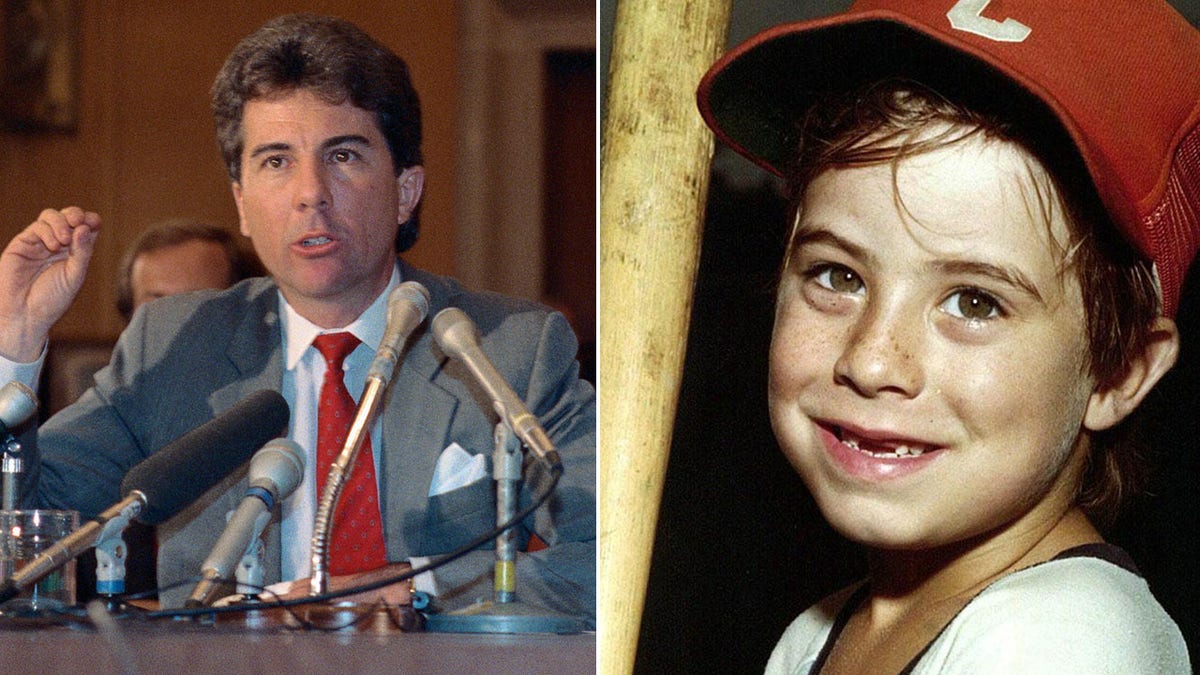
The head surfaced in a drainage canal along the Florida Turnpike near Vero Beach, about 120 miles north of Hollywood.
Two fishermen found it on August 10, 1981.
It was not immediately connected to the missing boy.
The head was placed in a bucket of formaldehyde, destroying potential evidence.
The medical examiner initially estimated the head had been in the water for two to three weeks.
That figure was later revised.
On August 11, 1981, dental records identified the head as six-year-old Adam Walsh.
The rest of his body was never found.
How long had the head been in the water?
How did it come to rest in that canal?
Why was it not linked to the boy sooner?
Those questions are not established in the record.
The exact time of death is not established.
How the head came to be in the canal is not established.
The head was a fact.
The bucket of formaldehyde was a fact.
The fishermen's find changed an abduction case forever, though no one knew it yet.
THE DISAPPEARANCE
On July 27, 1981, six-year-old Adam Walsh was with his mother, Revé Walsh, at the Sears department store in the Hollywood Mall, Hollywood, Florida.
Revé left Adam briefly in the toy department watching other children play video games.
When she returned, he was gone.
The Hollywood Police Department initially treated the case as a missing child, not an abduction.
The AMBER Alert system did not exist then.
There was no instant bulletin. No regional broadcast. No coordinated search.
Sears was not immediately secured.
The store's security videotape was reportedly not preserved.
What was recorded, if anything was recorded, has never been established.
Witnesses reported seeing a boy matching Adam's description being led away by an older man.
That lead was not aggressively pursued.
The identity of the older man is not established.
Not because the witnesses were disbelieved. Because the lead was not aggressively pursued.
The hours after a child disappears are the hours that matter most.
Those hours passed inside a department store that was not locked down.
Those hours passed while a videotape that might have shown something was not preserved.
Those hours passed while a reported sighting of a boy and an older man went unpursued.
The case was treated as a missing child.
It was not yet an abduction.
No one knew the head would surface two weeks later in a drainage canal along the Florida Turnpike, about 120 miles north.
That came later.
For now, a six-year-old was gone from a toy department, and the record of what happened next is a series of missed steps.
THE CONFESSION AND THE DOUBT
In 1983, Ottis Toole was already in prison in Florida, serving multiple life sentences for other murders.
From that cell, the convicted serial killer confessed to killing Adam Walsh.
The Hollywood Police Department did not believe him.
The lead detective did not believe him, partly because Toole gave inconsistent details and had a history of false confessions.
Toole recanted.
Then he re-confessed.
Then he recanted again, and re-confessed again, multiple times.
Each confession came with details that shifted.
Each retraction came with a plausible reason to doubt.
The record does not establish which version of the story was true, only that the police chose not to act on any of them.
Toole remained in prison, where he died of heart failure on September 15, 1996.
He was never charged with Adam Walsh's murder.
He was never tried.
After his death, the Hollywood Police Department, under Chief Rick Stone, officially closed the case.
They named Toole as the perpetrator, based on new evidence.
That evidence included a statement from Toole's niece and a car matching the description Toole had given.
The exact nature of that new evidence is not detailed in the record.
The car's description is not detailed in the record either.
What the record does show is a killer in custody, confessing, and a police department that turned away.
Not because the evidence cleared him.
But because the confession did not fit.
The case was closed in December 1996, with Toole named as the sole perpetrator.
No charges were ever filed.
He was already dead.
TWO INTERPRETATIONS
The December 1996 announcement was precise: Ottis Toole was the sole perpetrator.
The Hollywood Police Department cited physical evidence and witness statements.
Toole was never charged.
He was never tried.
He had died in prison three months earlier, of heart failure, while serving life sentences for other murders.
The case was closed with a named killer and no courtroom.
Toole's own history made the closure uneasy.
He had a documented pattern of false confessions.
:max_bytes(150000):strip_icc():focal(999x0:1001x2)/john-walsh-kids-adam-4724f94175504a3bb0cc17dff22fced9.jpg)
He gave inconsistent details when he first confessed in 1983.
The lead detective did not believe him, partly for those inconsistencies.
Toole recanted, then re-confessed, then recanted again.
The record does not fully detail the physical evidence or the witness statements that finally convinced the department.
That lack of detail is part of what lingers.
Toole reportedly claimed he used a machete.
That was never confirmed.
In 2008, the Hollywood Police Department released a statement confirming Toole as the killer.
John Walsh said he accepted the finding.
The case stayed closed.
A named killer, an official closure, and questions the file does not answer.
What exactly was the physical evidence?
What did the witnesses say?
That would require a trial.
There was none.
AND THE STORY STILL ISN'T OVER
The case is closed.
No further legal proceedings have occurred, because there was no one left to charge.
Ottis Toole died in prison on September 15, 1996, of heart failure.
In December 1996, the Hollywood Police Department announced he was the sole perpetrator, based on physical evidence and witness statements.
The full extent of that physical evidence and those witness statements is not publicly detailed.
That is not established in the record.
What remains is a severed head, the only physical trace of Adam Walsh ever found.
His body was never recovered.
The head was found by two fishermen in a drainage canal along the Florida Turnpike.
It was placed in a bucket of formaldehyde, which destroyed some potential evidence.
The store was not secured. The security videotape was not preserved. The remains were mishandled.
Those mistakes stand as a cautionary tale, not a mystery to be solved.
John Walsh continued to advocate.
In 1984, he and Revé Walsh co-founded the National Center for Missing and Exploited Children.
The case is widely credited with helping to create the AMBER Alert system.
It is a legacy built from a loss.
It is also a system that exists because a boy disappeared from a department store and the response came too late.
The fishermen found the head on August 10, 1981.
It was not connected to Adam for several days.
That delay matters.
It always will.
Advertisement
You may also like
The 1996 Tupac shooting: one hotel tape police never fully reviewed
The MGM Grand altercation was captured on hotel surveillance video. About thirty minutes before the shooting, the tape was rolling. Las Vegas Metropolitan Police…
A tarot card left at a D.C. sniper crime scene read 'Call me God' — what it led to
The card was a tarot card. On its back, in handwriting, was the message: "Call me God." It was left at one of the…
The DNA match that ended 20 years of silence in a Seattle serial killer case
A truck painter from Auburn, Washington, gave a saliva sample in 1987. He was not arrested that day. He was not charged that day.…
The bloody gloves that never matched — and the verdict that split a nation
It began with a glove on Bundy Drive. On June 12, 1994, Nicole Brown Simpson and Ronald Goldman were found stabbed to death outside…
The fishing trip Scott Peterson said he took — and the boat bought weeks before
On December 24, 2002, Scott Peterson told police he had been fishing alone at the Berkeley Marina that morning. It was a small claim,…

The 7:09 PM call that placed Adnan Syed near Leakin Park — and what the defense said about it
The call came in at 7:09 PM on January 13, 1999. It was placed to Jay Wilds's home. That was the night Hae Min…