The taunting smiley-face letters that led to a serial killer's downfall
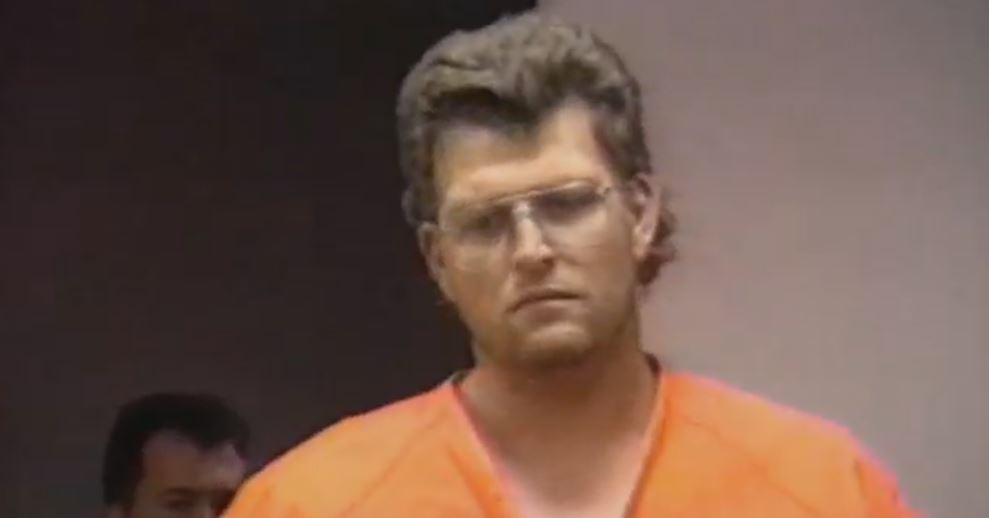
The letters arrived unsigned, except for one thing.
A circle. Two dots. A curved line.
A smiley face, drawn in pen at the bottom of the page.
Keith Hunter Jesperson was a long-haul truck driver, and he sent these anonymous letters and postcards to police and media outlets.
The letters taunted authorities.
They claimed responsibility for murders.
The smiley face became his signature, a documented pattern of taunting that investigators would come to recognize.
His crimes spanned Oregon, Washington, California, Wyoming, and Florida.
The first confirmed killing was Taunja Bennett, 23, in January 1990 near Portland, Oregon.
She was strangled and dumped along a highway.
The case summary says "at least eight" victims.
That number is not established.
Some confessions remain unconfirmed.
How does a cheerful doodle become the mark of a serial killer?
How does a truck driver's taunt turn into the evidence that undoes him?
How does a smiley face lead to a downfall?
That would require the letters to be more than ink.
It would require a sister who recognized the handwriting.
It would require a confession with details only the killer would know.
THE FIRST KILLING
January 1990. Taunja Bennett, 23, was strangled and dumped along a highway near Portland, Oregon.
The investigation stalled.
A man and his girlfriend came forward and falsely confessed to the killing. The man was convicted and imprisoned for it.
The false confession was a significant mistake in the case. It sent the investigation down a wrong path for years. It let the actual killer keep driving.
Jesperson was a long-haul truck driver. His rig carried him across state lines, through Oregon, Washington, California, Wyoming, and Florida. He moved through those states the way other men moved through shifts.
The lead investigator was a detective with the Multnomah County Sheriff's Office. He had a body with no reliable suspect. He had a confession that fit too neatly. He had a case that seemed closed.
It was not closed.
The man in prison was innocent. The woman who confessed with him was never charged. The record does not establish her name in the news coverage of the case, so she is referred to here only by her role. The man is referred to only by his role as well.
What the record does establish is this: Bennett was dead, a man was imprisoned, and the real killer was somewhere on the highway. Not because the detective was careless. Because the confession was convincing.
It would take five years for the letters to arrive. It would take a sister to read the handwriting. It would take a confession with details only the killer would know.
Until then, the case sat stalled. The wrong man sat in prison. The truck kept moving.
THE LETTER THAT BROKE IT
It was 1995 when the letter reached the Oregonian.
Jesperson wrote to the newspaper and confessed to the murder of Taunja Bennett.
He included details only the killer would know.
The letter was signed with his taunting smiley face.
His sister read the letter.
She recognized the handwriting.
She alerted authorities.
His ex-girlfriend also came forward with information.
The case that had stalled for five years began to move.
The wrong man was still in prison.
The real killer had put his name on the page.
He was arrested in March 1995 in Washington state after a separate assault.
He subsequently confessed to multiple murders.
The sister who turned him in is referred to by role only.
Her name is not widely reported in the record.
What is documented is the handwriting.
What is documented is the letter.
What is documented is the confession.
What remains unconfirmed is the total number of victims.
The record establishes that the smiley-face letters were a deliberate taunt.
It does not establish every name he gave.
Some confessions came later.
Some confessions were recanted.
The letter broke the case open.
It did not close it.
THE CONFESSION AND THE TRIAL
He pleaded guilty in 1995.
The charge was first-degree murder in Oregon for the death of Taunja Bennett. The sentence was life in prison without the possibility of parole.
He did not stop there. He later pleaded guilty to murders in other states — Washington, Wyoming, California — and received additional life sentences. He was never given the death penalty.
The prosecution's case rested on his confessions. Those confessions were corroborated by physical evidence and by details only the killer would know. He also led investigators to the remains of other victims.
The defence did not contest the charges. There was no fight over guilt; the plea was the point. The legal wound was elsewhere.
A man had already been convicted of Bennett's murder. He had been imprisoned for it. Jesperson's confession was verified, and the man was exonerated and released in 1995.
So the trial answered one question and exposed another. How does a false confession happen? How does an innocent man sit in prison for years? How does a true confession finally pull him out?
That would require evidence. The record shows the confession was verified, and it shows the man walked free. The exact details of the plea negotiations are not in the record.
Jesperson is serving his life sentences at Oregon State Penitentiary in Salem. He has been there since 1995. He is not eligible for parole, and he has no pending appeals.
Some confessions were recanted. The total number of victims remains unconfirmed. The man who was exonerated is no longer in prison — that part is documented.
AND THE STORY STILL ISN'T OVER
He is still there, in Salem, at Oregon State Penitentiary.
Jesperson has been locked up since 1995, serving multiple life sentences without parole.
He has no pending appeals, and he is not eligible for release.
The door is closed on the legal case, even if the story keeps moving.
He has given interviews over the years.
He has cooperated with true-crime authors and documentarians, speaking about what he did and how he did it.
But he has also recanted some of those confessions.
The total number of victims remains unconfirmed.
That is not a gap in the reporting; it is a fact of the record, a direct result of his shifting statements.
His family has largely stayed out of the public eye.
The sister who recognized his handwriting and helped convict him has not become a fixture of the true-crime circuit.
She did what the record shows she did, and then she went quiet.
The families of the victims have not gone quiet.
They have spoken publicly about their loss, about the years it took to get here, about what justice did and did not give them.
They carry the weight the file folder cannot.
The case is studied in criminal justice circles for the false confession and the taunting letters.
It is taught as a cautionary tale about how an investigation can go wrong and how a signature can give a killer away.
But for the families, it is not a lesson.
It is a life sentence of its own.
Jesperson remains one of the most documented serial killers of the 1990s.
The letters, the handwriting, the confession, the conviction — all of that is verified.
What is not verified is the full count.
He has said more, and he has taken it back.
The record holds what it holds.
The rest is a question without an answer, and that would require evidence.
Advertisement
You may also like
The 1996 Tupac shooting: one hotel tape police never fully reviewed
The MGM Grand altercation was captured on hotel surveillance video. About thirty minutes before the shooting, the tape was rolling. Las Vegas Metropolitan Police…
A tarot card left at a D.C. sniper crime scene read 'Call me God' — what it led to
The card was a tarot card. On its back, in handwriting, was the message: "Call me God." It was left at one of the…
The DNA match that ended 20 years of silence in a Seattle serial killer case
A truck painter from Auburn, Washington, gave a saliva sample in 1987. He was not arrested that day. He was not charged that day.…
The bloody gloves that never matched — and the verdict that split a nation
It began with a glove on Bundy Drive. On June 12, 1994, Nicole Brown Simpson and Ronald Goldman were found stabbed to death outside…
The fishing trip Scott Peterson said he took — and the boat bought weeks before
On December 24, 2002, Scott Peterson told police he had been fishing alone at the Berkeley Marina that morning. It was a small claim,…
The 7:09 PM call that placed Adnan Syed near Leakin Park — and what the defense said about it
The call came in at 7:09 PM on January 13, 1999. It was placed to Jay Wilds's home. That was the night Hae Min…