The phone call that could have caught the Zodiac — and the officer who let him walk
It was a phone call that could have ended it.
After the July 4, 1969 attack at Blue Rock Springs Park, the killer called the Vallejo Police Department to confess.
The call was not traced.
That is a fact from the investigation record.
The content of that call is not in the record.
The exact reason it wasn't traced is also not in the record.
What the record does show is a man who wanted to be heard.
He had already claimed responsibility in letters to newspapers, coining the name "Zodiac."
The letters were taunts.
The call was a confession.
Had it been traced, the case might have broken.
It wasn't.
A confession call, untraced.
A killer, listening to his own voice on the line.
A police department, taking notes, perhaps.
What would a trace have shown?
What address?
What name?
What voice matching a suspect?
That would require evidence.
The record offers none.
Months later, in October 1969, a taxi driver was shot in San Francisco's Presidio Heights.
A San Francisco police officer saw a man matching the killer's description near the crime scene shortly after the shooting.
The officer did not stop him.
A man who fit the description.
An officer who saw him.
A moment that passed.
Not because the officer was careless.
But because the description had not yet been broadcast.
The man walked.
The call went untraced.
The officer let him walk.
Two moments.
Two doorways.
Both left open.
THE FIRST SHOTS
December 20, 1968.
A secluded road in Benicia, California.
Two people were shot there, and both died.
The source records this as the first confirmed attack.
A .22-caliber pistol was used, per the weapon list.
The case landed with the Benicia police.
Seventeen days later, on July 4, 1969, two more people were shot at Blue Rock Springs Park in Vallejo.
One died. One survived.
That case landed with the Vallejo police.
Two departments.
Two separate files.
No one initially connected them.
The source describes this as a documented jurisdictional failure.
It is a drift, not a decision.
Each department saw its own crime scene, its own victims, its own questions.
Neither saw the pattern forming.
The exact date the departments first connected the cases is not in the record.
That date is simply absent.
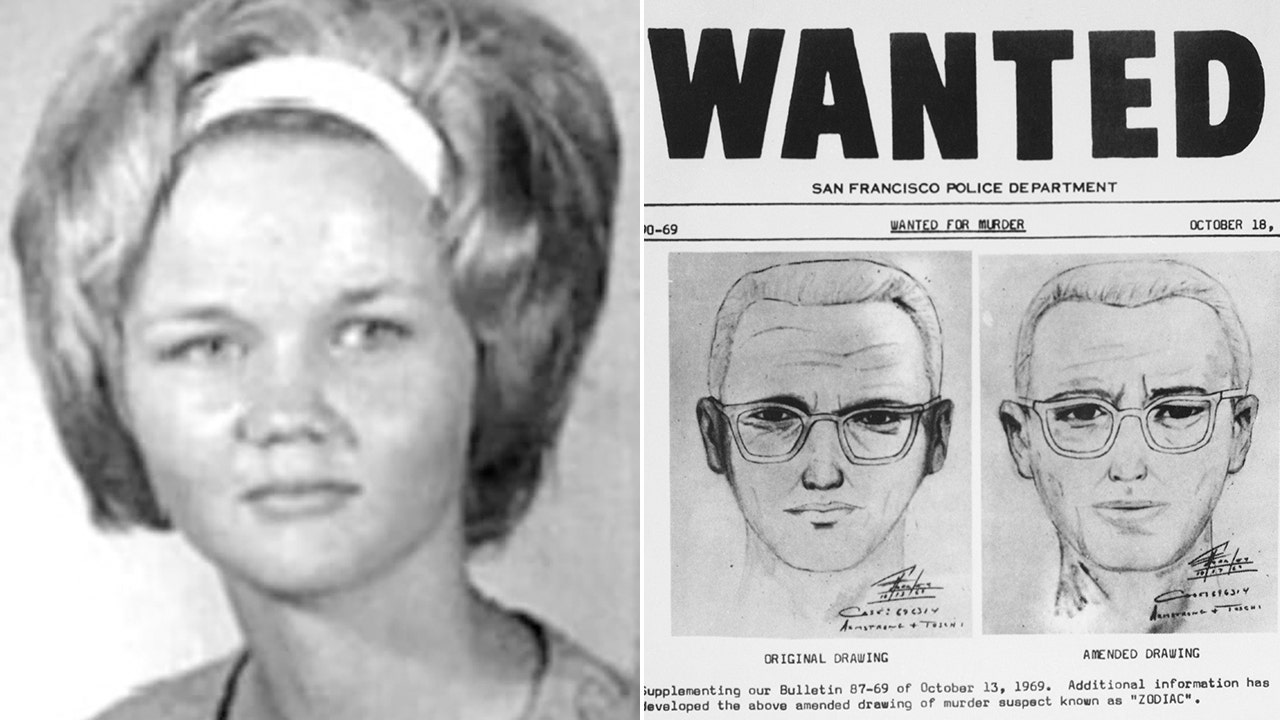
What is in the record are the letters.
The killer wrote to the San Francisco Chronicle, the San Francisco Examiner, and the Vallejo Times-Herald.
He took credit for the murders.
He coined the name "Zodiac."
The name gave the case a shape.
The letters gave the case a voice.
But the voice came after the drift.
By the time the name existed, the first two victims were already buried, and the two departments were still working apart.
Not because they refused to share.
Because no one had asked them to.
The pattern was there.
It waited.
THE LAKE BERRYESSA DOOR
The door was on a Volkswagen Karmann Ghia, parked at a gravel pull-off above the lake.
On September 27, 1969, two victims were stabbed at Lake Berryessa; one died, one survived.
The knife was the weapon, per the weapon list.
The killer wrote on the car door before he left.
Dates.
Dates of his attacks.
The exact wording on the car door is not in the record.
What is documented is that he marked the door at all — a signature left in the open, in daylight, on a Sunday afternoon.
The Napa County Sheriff's Department did not immediately link the case to the Vallejo murders.
That link was the point.
Not because the writing was cryptic.
Because it was a list.
A list of crimes committed across two counties, and the man who wrote it was still walking.
The survivor of that attack later spoke publicly about the experience.
He described the encounter, the costume, the knife.
He described the man who stood over them and said what he said.
He lived.
That is the other fact of the day.
One victim died at the lake.
One victim survived to tell it.
The sheriff's deputies took the door.
They recorded the date.
They did not call Vallejo.
The pattern was there.
It waited.
THE STINE MURDER AND THE OFFICER
October 11, 1969.
A taxi driver was shot in San Francisco's Presidio Heights.
It was the last confirmed murder, per the source.
A .38-caliber pistol was used, per the weapon list.
The killer walked away from the scene.
A San Francisco police officer saw a man matching the killer's description near the crime scene shortly after the murder.
He did not stop him.

That is the documented mistake.
The officer's name is not in the record.
Why he didn't stop the man is not in the record.
Those two things are not established.
What is established is the sighting.
What is established is the walk.
What is established is the moment that passed.
The killer sent a piece of the victim's bloody shirt to the San Francisco Chronicle.
It was proof of his claim, from the source's account of the letters.
The shirt arrived after the murder.
The proof arrived after the walk.
The officer was there.
The killer was there.
The distance between them was a street, maybe less.
That would require evidence to know.
No one has ever said.
The pattern was there.
It was the same pattern.
A call not traced.
A door not linked.
A man not stopped.
It waited.
AND THE STORY STILL ISN'T OVER
No one was ever charged.
There was no trial.
The case remains officially unsolved, per the source.
Arthur Leigh Allen, a Vallejo schoolteacher, was publicly named a suspect.
He was never charged.
DNA evidence in 2002 cleared him, after his death.
That is in the record.
In 2021, a team of independent investigators claimed to have identified the killer as Gary Francis Poste.
Law enforcement did not confirm this.
The claim was widely disputed.
That is also in the record.
The Vallejo Police Department and the FBI have continued to review the case.
No definitive suspect has ever been identified.
The surviving victims have spoken publicly about their experiences.
They have described the attacks, the aftermath, the waiting.
The files remain open.
The ciphers sit in archives, partially solved.
The letters are preserved.
A door not linked.
A man not stopped.
An untraced call.
Whether any new lead will emerge is not in the record.
It is not established.
It is not resolved.
The case is open.
The next step is uncertain.
That is where it stands.
Advertisement
You may also like
The 7:09 PM call that placed Adnan Syed near Leakin Park — and what the defense said about it
The call came in at 7:09 PM on January 13, 1999. It was placed to Jay Wilds's home. That was the night Hae Min…
The 1995 Oklahoma bombing that left 168 dead — and one man's sentence still stands
The Ryder truck was gone. The axle was not. On April 19, 1995, a rented truck packed with ammonium nitrate and fuel oil exploded…
The severed head found by two fishermen that changed an abduction case forever
The head surfaced in a drainage canal along the Florida Turnpike near Vero Beach, about 120 miles north of Hollywood. Two fishermen found it…
The 1987 witness sighting that didn't stop the Green River Killer
A witness reported seeing Gary Ridgway with a victim. The year was 1987. The report was made to police working the Green River Killer…
The taunting smiley-face letters that led to a serial killer's downfall
The letters arrived unsigned, except for one thing. A circle. Two dots. A curved line. A smiley face, drawn in pen at the bottom…
The empty frames left on display after thieves took Vermeer and Rembrandt
The empty frames still hang in the Isabella Stewart Gardner Museum in Boston. Where Vermeer's *The Concert* once hung, there is an empty rectangle…