The 31-day gap that left a grandmother's missing-person report unanswered
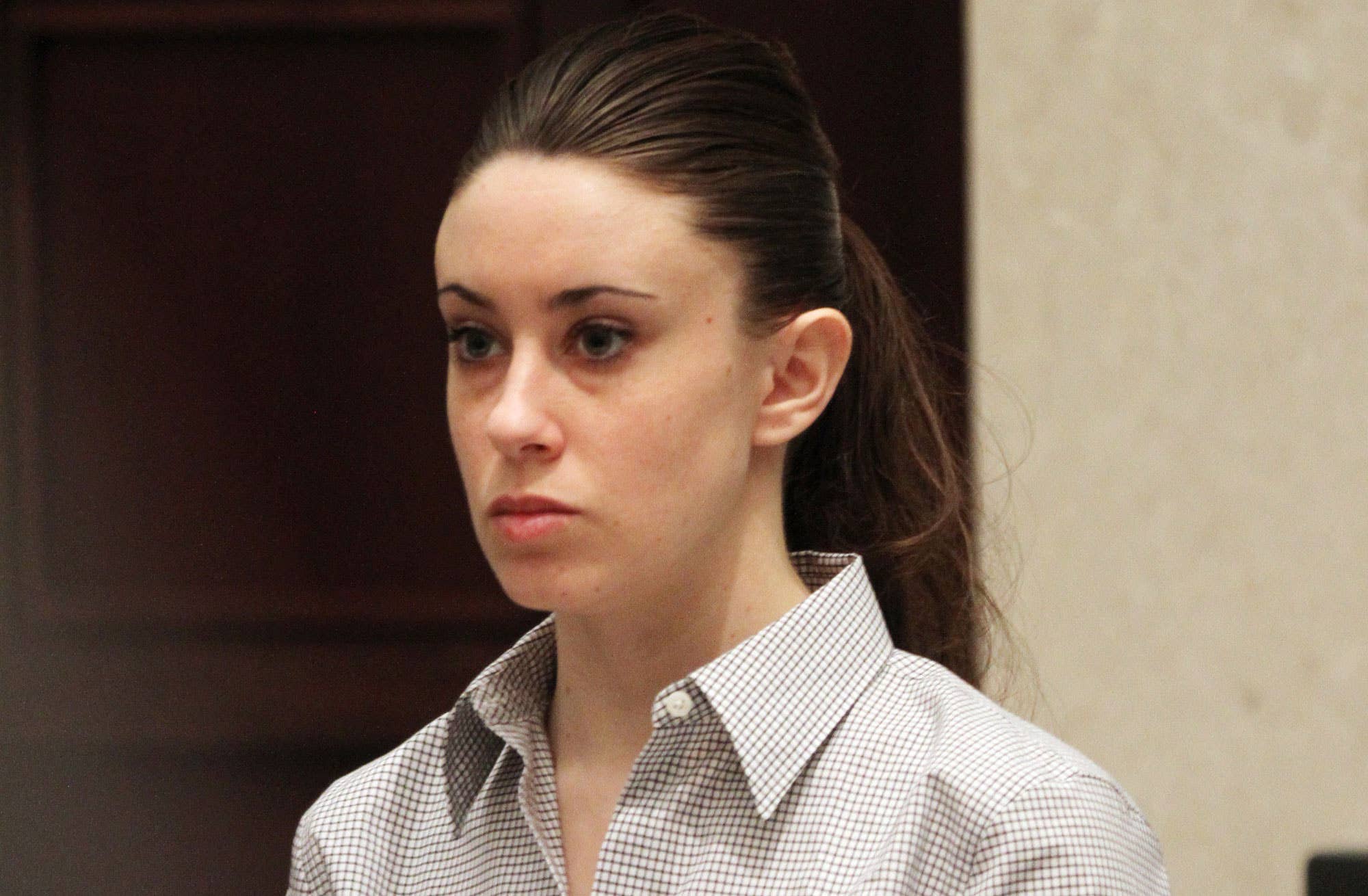
June 16, 2008.
That was the last time the family said they saw Caylee Anthony, a two-year-old girl, in Orlando, Florida.
July 15, 2008.
That was the day her grandmother, Cindy Anthony, reported her missing.
Thirty-one days sat between those two dates.
Thirty-one days in which no one called the authorities to say a child was gone.
Thirty-one days of silence before the grandmother's report came through.
What filled those days?
What did the family see, or not see, in that month?
Why did the report take so long to come?
That would require evidence.
The record does not establish what happened during the 31-day gap.
Online theories speculate about it, spinning possibilities from the silence.
Those theories are claims, not facts.
The documented fact is the delay itself.
A grandmother waited 31 days to report a two-year-old missing.
That is what the record shows, and that is where the story begins.
THE REPORT AND THE FALSE STORY
Cindy Anthony walked into an Orlando police station on July 15, 2008, and reported her two-year-old granddaughter missing.
That was 31 days after anyone in the family said they last saw Caylee.
Casey Anthony, the child's mother, was there to give her own account.
She told investigators her daughter had been kidnapped by a babysitter.
The babysitter had a name: Zenaida Fernandez-Gonzalez.
Investigators looked for Zenaida Fernandez-Gonzalez.
They could not find her.
They determined she did not exist.
Casey Anthony gave investigators multiple false statements during the investigation.

The record does not detail the exact nature of those statements beyond the nonexistent babysitter.
That is not established.
What is documented is what detectives found while the missing-person story unravelled.
Casey Anthony had spent June 2008 partying.
She had a tattoo reading "Bella Vita" applied in early July.
Beautiful life.
The mother of a missing child was wearing a tattoo that said beautiful life.
The dissonance was growing.
The grandmother's report opened the case.
The mother's story filled it with holes.
THE CAR AND THE REMAINS
The car Casey Anthony drove smelled of decomposition.
Forensic testing detected chloroform in the trunk.
A stain in that trunk was later matched to Caylee's DNA.
On December 11, 2008, a utility worker found skeletal remains in a wooded area near the Anthony family home.
The remains were in a laundry bag and a child's blanket, both from the Anthony home.
Duct tape was found near the skull.
The remains were identified as Caylee Anthony in January 2009.
The medical examiner ruled the death a homicide.
The cause of death could not be determined.
That is what the record says: homicide, undetermined cause.
The duct tape's role was disputed.
No weapon was identified.
The prosecution argued the tape suggested suffocation.
The defense argued it had been there for another reason.
What the tape did, what the chloroform did, what killed a two-year-old — the record does not establish any of it.
The evidence was physical, but the story around it was not.

Investigators had a car, a stain, a bag, a blanket, and tape.
They had a timeline that began with a grandmother's 31-day wait.
They did not have a cause of death.
That gap — between what was found and what could be proven — would sit at the center of the trial to come.
TWO STORIES, ONE JURY
The prosecution told a story of a mother who wanted her freedom.
The timeline was theirs: the 31-day gap, the trunk stain, the chloroform.
The defense told another story entirely.
Caylee had drowned in the family pool, they argued, by accident.
The body, they said, was disposed of by George Anthony, the maternal grandfather.
Two stories, one jury, and a single question hanging over both: which one did the evidence truly support?
The prosecution's case leaned on the forensic work.
The trunk stain matched Caylee's DNA, they said.
The chloroform analyses pointed to something worse.
But those analyses were heavily contested.
The reliability of the chloroform and air sample tests was fought over in court.
The record does not establish that they were sound.
The trial began in May 2011.
It lasted six weeks.
Witnesses came and went.
The medical examiner testified that the death was a homicide, but the cause could not be determined.
That uncertainty cut through both narratives.
On July 5, 2011, the jury returned.
Casey Anthony was acquitted of first-degree murder.
Acquitted of aggravated child abuse.
Acquitted of aggravated manslaughter.
She was convicted of four counts of providing false information to law enforcement.

Not because the jury believed the defense's story.
Not because they rejected the prosecution's timeline.
The jury's reasoning is not in the record.
What remains is the verdict itself.
AND THE STORY STILL ISN'T OVER
The sentence was four years.
Credit for time served.
Casey Anthony walked out of jail on July 17, 2011, having already served nearly three years.
She was free.
The state filed no appeals, and the conviction on the false information counts stood.
She has since lived in Florida, largely out of the public eye.
Occasionally, she has surfaced in media interviews and court filings tied to bankruptcy and defamation cases.
She has maintained her innocence regarding Caylee's death.
Cindy and George Anthony remained in the Orlando area.
The couple filed for divorce in 2015.
They later reconciled.
George Anthony has spoken publicly about the case, including in a 2017 documentary.
No one else has ever been charged in Caylee's death.
The record does not establish any pending hearings or motions.
No future legal steps are documented.
What comes next is not in the record.
The verdict was the end of one story.
The public debate is the other.
It is a case that remains one of the most controversial in American legal history.
It is also a case with no further charges.
The family's path is fractured.
The acquittal stands.
The release stands.
The unanswered question stands.
Advertisement
You may also like
The phone call that could have caught the Zodiac — and the officer who let him walk
It was a phone call that could have ended it. After the July 4, 1969 attack at Blue Rock Springs Park, the killer called…
Why a handleless hatchet in the cellar never settled the Lizzie Borden case
The handleless hatchet sits in the cellar of 92 Second Street, Fall River, in every retelling of the case. It was found there after…
The boat confession that still echoes from Boston to death row
The boat sat in a Watertown backyard, covered and still, while the manhunt for Dzhokhar Tsarnaev moved through the streets around it. After the…
The bullet that linked a bank-robbing cop to Biggie's murder
A 9mm pistol sits at the center of the story, widely reported in connection with the murder of Christopher Wallace. The gun is the…
The crabapple tree letters that still shadow a 1922 double murder,
The letters were not hidden. They lay in the open, scattered near the bodies beneath the crabapple tree. On the night of September 14,…
The LAPD detective who believed rogue officers killed Biggie — and the family who fought for decades
He was a detective, and he believed other police officers killed Biggie. Russell Poole led the early LAPD inquiry into the shooting on Wilshire…