The .35 caliber Marlin rifle that ended six lives — and the confession that followed
The rifle was a .35 caliber Marlin.
Police recovered it from the house at 112 Ocean Avenue in Amityville, New York.
All six victims were shot with that rifle while sleeping in their beds.
The parents. The four children. One weapon.
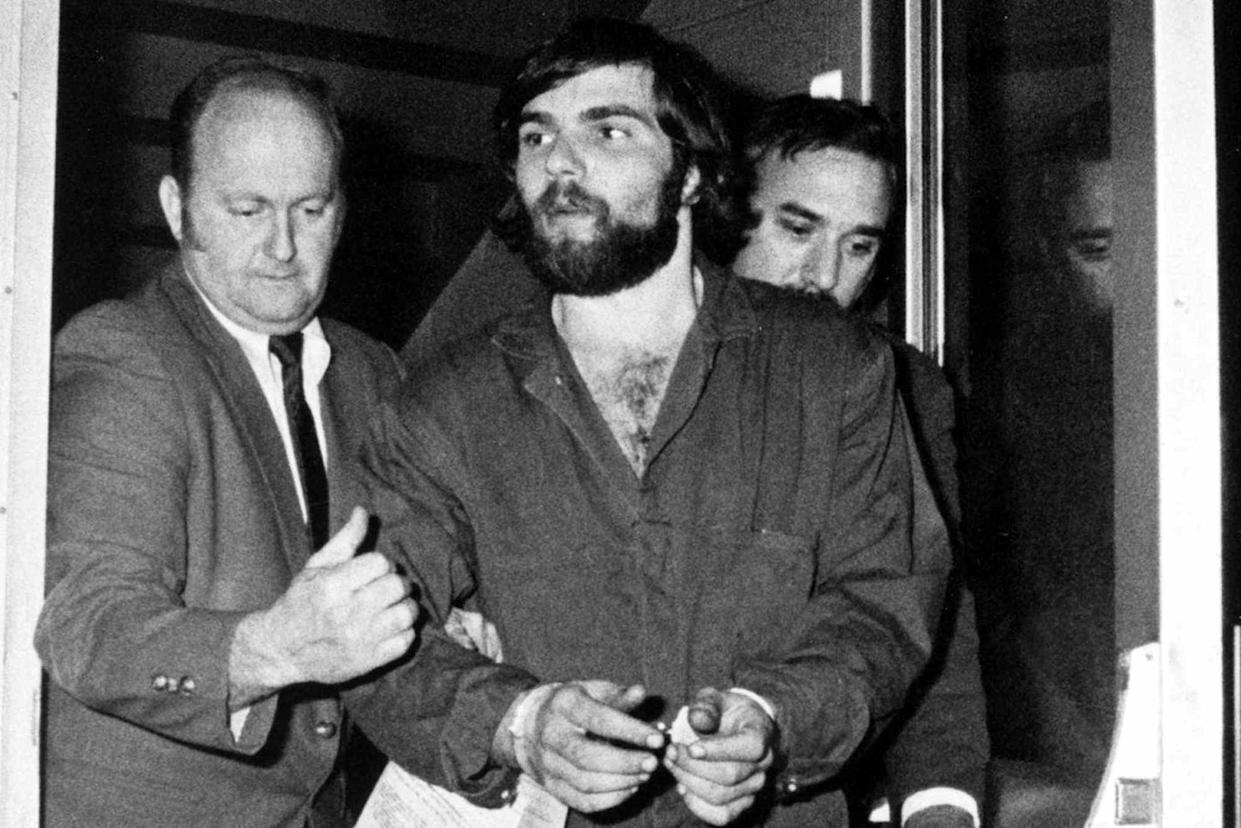
The sole surviving family member, 23-year-old Ronald "Butch" DeFeo Jr., was taken into custody.
He was the eldest son. He was the one who called for help.
He later confessed.
He led police to the rifle.
One object, passed from hand to hand, ending six lives in a single night.
Not because it was extraordinary. Because it was ordinary.
A hunting rifle, the kind kept in closets and gun racks across the country.
It is a fact of the record that the rifle was recovered. It is a fact that DeFeo Jr. confessed and led police to it.
What the record does not establish is the exact position of the rifle when it was found.
Where it lay. Whether it was hidden. Whether it was in plain sight.
That detail is not in the record.
What remains is the confession and the weapon.
Six bodies upstairs. One rifle recovered. One man in custody.
How does one person do this?
How does a son lift a rifle against his own family?
How does he keep firing?
That would require evidence.
NOVEMBER 13, 1974
The bar was on Ocean Avenue, a few blocks from the house.
Butch DeFeo Jr. walked in and said his family had been shot.
Police were called to 112 Ocean Avenue on November 13, 1974.
Inside the large Dutch Colonial home, officers found the bodies of six members of the DeFeo family.
The victims were the parents and four of their five children.
All had been shot with a .35 caliber Marlin rifle while sleeping in their beds.
The exact time of the 911 call is not in the record.
Officers initially treated DeFeo Jr. as a witness.
He was the sole surviving family member, the eldest son, 23 years old.
But the witness did not stay a witness for long.
He soon confessed.
First he claimed self-defense, alleging his father was abusive.
Then he admitted he had committed the murders alone.
His confession was detailed.
He led police to the rifle.
The weapon was recovered from the house.
Six bodies upstairs, one survivor downstairs, and a story that kept changing.
The officers had a suspect before the morning was over.
They had a confession before the day was done.
What they did not have yet was a motive that held.
The prosecution would say the murders were planned.
The defense would say DeFeo was insane, driven by a personality disorder and drugs.
That would come later.
On November 13, 1974, the record holds only the call, the bodies, and the turn from witness to suspect.
THE CONFESSION
He first said he had fired in self-defense, claiming his father was abusive.
Then he said he had done it alone.
The confession was detailed, and he led police to the rifle.
The record holds both statements. It does not hold a third version.
There were conflicting accounts about whether he acted with someone else.
No accomplice was ever charged.
Whether an accomplice existed is not established by the record. That would require evidence, and the evidence presented at trial named one shooter.
He was the one who walked into the bar and said his family had been shot. He was the one taken from witness to suspect. He was the one who gave the detailed account of the killings.
The self-defense claim did not survive the night. The admission of acting alone did.
What remains is the rifle, the confession, and the question of why he changed his story.
The defense would later say he was insane, driven by a personality disorder and drugs. The prosecution would say the confession was the truth of a planned murder.

Neither version settled the accomplice question. The record simply leaves it open.
THE TRIAL
The trial lasted through the autumn of 1975 in Suffolk County Court.
DeFeo Jr. was charged with six counts of second-degree murder.
His defense, led by attorney William Weber, argued not guilty by reason of insanity.
The defense cited a personality disorder and years of drug and alcohol use.
The prosecution, led by Assistant District Attorney Gerard Sullivan, presented the confession.
Sullivan argued the murders were planned, not the act of a man who had lost his mind.
The jury heard the confession and the psychiatric claims.
The specific evidence presented at trial beyond the confession is not detailed in the record.
What the record does show is the verdict.
The jury rejected the insanity defense and found DeFeo guilty on all six counts.
Judge Thomas M. Stark sentenced him to six concurrent terms of 25 years to life in prison.
The sentence meant one term ran alongside the others, not after them.
Appeals were filed.
Appeals were rejected.
The conviction was upheld.
The case was closed as a matter of law.
DeFeo Jr. was the only person convicted.
No accomplice was ever charged.
The paranormal claims that would later define the house's fame were never part of the criminal case.
The haunting was a story told after the verdict.
The conviction stood on the confession and the rifle.
DeFeo Jr. has remained in prison since that day.
He has been denied parole multiple times.
Most recently, in 2021, the parole board again rejected his application.
He remains incarcerated at a New York state prison.
The family's surviving relatives have largely stayed out of the public eye.
The house at 112 Ocean Avenue was sold and renovated.

Its address was changed to 108 Ocean Avenue to discourage tourists.
The theory of an accomplice remains a theory.
The record does not establish it.
The record establishes a confession, a rifle, and six concurrent terms of 25 years to life.
That was the finality of it.
AND THE STORY STILL ISN'T OVER
The parole board denied him again in 2021.
It was the latest in a series of denials, each one returning him to the same cell block in a New York state prison.
He has remained there since the conviction, six concurrent terms of 25 years to life running out in the same place.
The legal case is closed.
It has been closed for decades, through appeals and rejections, through every attempt to reopen what the jury settled.
The house at 112 Ocean Avenue was sold and renovated.
Its address was changed to 108 Ocean Avenue to discourage tourists.
The tourists came anyway, drawn by a story the trial never heard.
The paranormal claims were investigated by Ed and Lorraine Warren.
They became the basis for a book and a film franchise, a haunting that outlived the murders in the public imagination.
The defense attorney later claimed he and the Warrens had fabricated the haunting story.
He said it himself, after the trial, after the book, after the films.
No supernatural evidence was ever presented in court.
The record does not establish the haunting.
It never did.
It establishes a confession, a rifle, and a conviction.
That was the finality of it.
The family's surviving relatives have largely stayed out of the public eye.
The house stands at a different number.
The man convicted remains incarcerated.
The story continues anyway, not in the courtroom but in the culture, in the book, in the films, in every retelling that adds what the record does not contain.
That would require evidence.
The case is closed.
The case is also not over.
Advertisement
You may also like
The tear gas canisters the FBI denied using — until 2000
On April 19, 1993, the FBI launched a tear gas assault on the Mount Carmel Center compound near Waco, Texas. A fire broke out…
The 31-day gap that left a grandmother's missing-person report unanswered
June 16, 2008. That was the last time the family said they saw Caylee Anthony, a two-year-old girl, in Orlando, Florida. July 15, 2008.…
The German carpenter who fled to America and built the ladder that sealed a baby's fate
He was a carpenter. Bruno Richard Hauptmann built things for a living, or so the prosecution said, and the thing he built, they said,…
The crawl space at 8213 West Summerdale Avenue and the remains that ended a contractor's clown act
The crawl space ran beneath 8213 West Summerdale Avenue, a low, dark place under a contractor's house in Norwood Park Township, Illinois. Between 1972…
The 8:44 p.m. video that broke Alex Murdaugh's alibi — and the appeal that may decide his fate
The video is dark, grainy, and just over a minute long. It was recorded at 8:44 p.m. on June 7, 2021, from Paul Murdaugh's…
The $5,800 in ransom cash a boy found on a riverbank in 1980
The bills came apart in his hands. A boy named Brian Ingram was walking along the Columbia River near Vancouver, Washington, in 1980 when…