The cell tower records that placed Adnan Syed near Leakin Park — and the alibi witness never disclosed
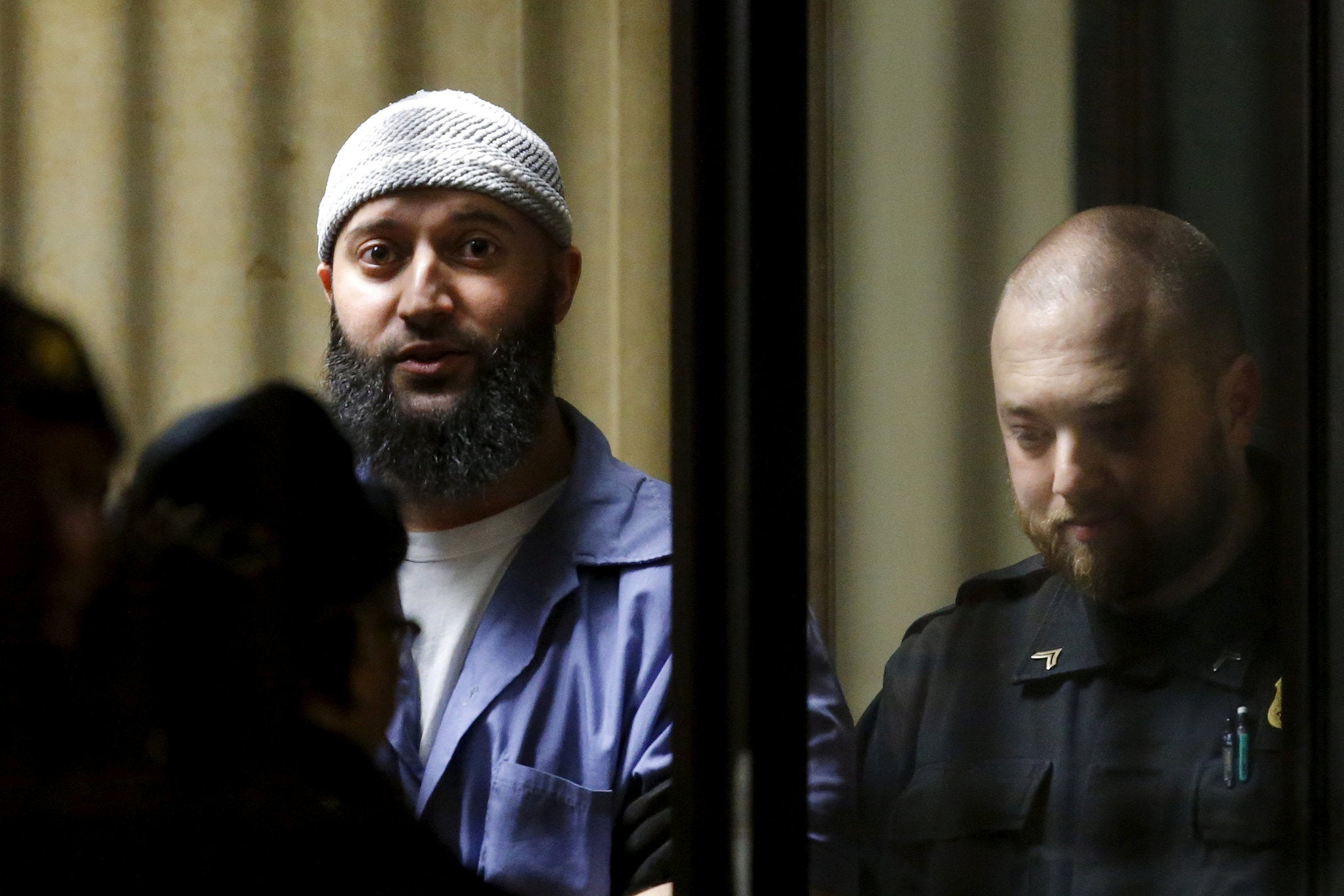
She was 18, a senior at Woodlawn High School in Baltimore County, Maryland.
Her name was Hae Min Lee.
On January 13, 1999, she left school that afternoon and was never seen alive again.
The exact circumstances of her disappearance are not established in the record.
What is known is the date, the place, and the ordinary fact of a school day ending.
Her body was discovered on February 9, 1999, in Leakin Park in Baltimore.
She had been strangled.
That is where the documented account begins and ends for a time.
For years, the case sat in files, a conviction and a sentence, a family left with grief.
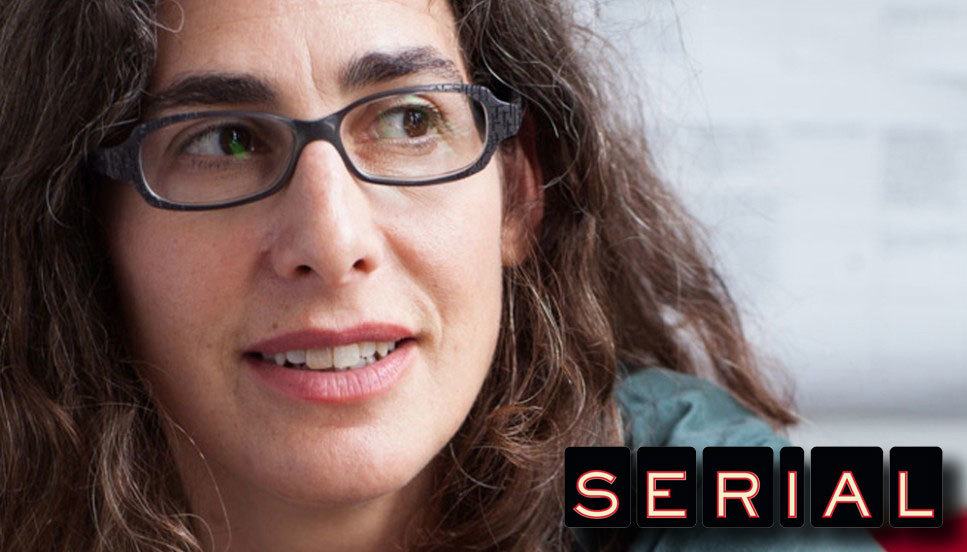
Then, in 2014, a podcast called *Serial* examined the evidence.
It asked questions about the fairness of the trial.
It raised the case to international attention.
Listeners heard the names, the dates, the cell tower records, the testimonies.
What they heard was a story, not a verdict.
The record still holds what the record holds: a disappearance, a body, a conviction.
And a case that, decades later, would not stay closed.
THE ARREST AND TRIAL
The anonymous tip came first.
Police focused on Syed after receiving it, according to the trial record.
The identity of that tipster is not in the record.
It is a fact of the investigation. It is also a hole in it.
Syed was tried in 2000.
The prosecution's case relied heavily on the testimony of Jay Wilds.
Wilds claimed Syed showed him Lee's body and asked for help burying it.
Wilds's account changed over time, the defense argued.
The medical examiner testified that Lee died by strangulation.
No physical evidence linked Syed to the crime.

That is what the record shows: testimony, circumstance, and a body.
The jury convicted him of first-degree murder, kidnapping, robbery, and false imprisonment.
He was sentenced to life in prison plus 30 years.
Not because of a confession. Not because of DNA.
Because a witness said so, and because the cell tower records placed him near Leakin Park.
The defense argued those records were unreliable.
The weight of the conviction rested on what a man said, not on what science proved.
That would require evidence.
The conviction was upheld on direct appeal.
Syed went to prison for a crime he said he did not commit.
The case went quiet, then loud, then quiet again.
Decades later, it would not stay closed.
THE CELL TOWER RECORDS
The cell tower records were the prosecution's most precise piece of technology.
They showed a phone ping near Leakin Park around the time the state said Hae Min Lee's body was buried there.
The records placed Adnan Syed's phone in the vicinity. The records placed him there at the critical hour. The records did not place him at the grave itself.
The defense argued the cell tower evidence was unreliable.
A phone ping is not a person. A phone ping is not a location beyond a broad sector. A phone ping does not place a hand on a shovel.
The defense pointed out that the towers covered wide areas and that incoming calls could register even when the phone was not in active use.
Jay Wilds, the key prosecution witness, said Syed showed him the body and asked for help burying it.
His account changed over time.
He told police different versions of where and when things happened. He told police different versions of what he saw. He told police different versions of what he did.
The prosecution built its timeline on Wilds's shifting story and the tower pings.
No physical evidence linked Syed to the crime.
No DNA. No fingerprints. No fibers from the trunk of the car. Nothing that placed him at the burial site.
The medical examiner testified that Hae Min Lee died by strangulation. That was established. Who strangled her was not.
The exact reliability of the cell tower data is not established. The defense's challenge is documented. The record does not resolve it.
That would require evidence the trial never produced.
THE UNDISCLOSED WITNESS
The record is slow to give up its secrets.
In 2016, post-conviction proceedings revealed that the state had failed to disclose evidence favorable to the defense.
Evidence that included a potential alibi witness.
The identity of that witness is not named in the source.
That is not established.
The post-conviction judge granted relief that year, based on ineffective assistance of counsel.
Syed's trial attorney, Cristina Gutierrez, had not raised the evidence the state had withheld.
The state appealed.
The decision was reversed.
The case went back.
It stayed that way for years.
Then, in 2022, a Baltimore City Circuit Court judge vacated the conviction.
Prosecutors acknowledged that DNA evidence excluded Syed.
Prosecutors acknowledged that the state had failed to disclose evidence.
Not because the cell tower data was proven wrong. Not because Jay Wilds's account was proven false.
Because the state admitted it had held something back.
The state later moved to dismiss all charges.
Syed was released.
He is free.
What the trial never produced was produced now: an admission that the record was incomplete.
The alibi witness remains unnamed.
That would require evidence the proceedings did not put forward.
The slow grinding had done its work.
AND THE STORY STILL ISN'T OVER
Adnan Syed is free.
As of 2023, he walks outside the walls that held him for more than two decades.
The charges against him were dismissed in 2022.
The Lee family appealed that dismissal.
The outcome of that appeal is not in the record.
It remains pending, unresolved, a thread still moving through the courts.
Syed has maintained his innocence throughout.
He said it at trial.
He said it through the appeals.
He said it when the conviction was vacated and the state moved to dismiss.
Hae Min Lee's mother and brother have spoken publicly about their grief.
They have spoken about their frustration.
They have expressed that they believe justice has not been served.
Their daughter is gone.
Their sister is gone.
The legal process gave them a result they did not accept.
It is freedom for one.
It is grief for others.
It is a case still turning.
*Serial* sparked widespread scrutiny of the original investigation and trial.
Millions listened.
Questions were raised about the fairness of what happened in that Baltimore County courtroom.
The record shows the cell tower records.
The record shows the undisclosed alibi witness.
The record shows a conviction vacated and charges dismissed.
The record does not show how the family's appeal will end.
That would require a decision yet to come.
The slow grinding has not finished its work.
Advertisement
You may also like
The 31-day gap that left a grandmother's missing-person report unanswered
June 16, 2008. That was the last time the family said they saw Caylee Anthony, a two-year-old girl, in Orlando, Florida. July 15, 2008.…
The German carpenter who fled to America and built the ladder that sealed a baby's fate
He was a carpenter. Bruno Richard Hauptmann built things for a living, or so the prosecution said, and the thing he built, they said,…
The crawl space at 8213 West Summerdale Avenue and the remains that ended a contractor's clown act
The crawl space ran beneath 8213 West Summerdale Avenue, a low, dark place under a contractor's house in Norwood Park Township, Illinois. Between 1972…
The 8:44 p.m. video that broke Alex Murdaugh's alibi — and the appeal that may decide his fate
The video is dark, grainy, and just over a minute long. It was recorded at 8:44 p.m. on June 7, 2021, from Paul Murdaugh's…
The $5,800 in ransom cash a boy found on a riverbank in 1980
The bills came apart in his hands. A boy named Brian Ingram was walking along the Columbia River near Vancouver, Washington, in 1980 when…
The .35 caliber Marlin rifle that ended six lives — and the confession that followed
The rifle was a .35 caliber Marlin. Police recovered it from the house at 112 Ocean Avenue in Amityville, New York. All six victims…