The .22-caliber revolver that tied Manson Family to Tate murders
A .22-caliber revolver.
Small, cheap, easy to hide.
According to the source’s evidence list, that revolver was used in the Tate killings.
It is named in the record as a key piece of evidence.
It is one of the objects that linked the defendants to the scene.
The source names the weapon.
The source does not describe how it was found.
The source does not describe how it was traced.
How the revolver was recovered is not established in the source.
Its exact role in the investigation is not detailed either.
What remains is the object itself.
A small-caliber gun at the center of a case that would hold the country’s attention for years.
Did it sit in an evidence locker for months before anyone connected it?
Was it found near the scene, or miles away?
Was it wiped clean, or did it still hold a print?
That would require evidence.
The record before us lists the weapon and stops.
It is a fact in a list of facts.
It is also a door that stays closed.
THE NIGHT OF AUGUST 8–9
The night of August 8–9, 1969, the Family drove up to 10050 Cielo Drive in Benedict Canyon.
Sharon Tate, eight months pregnant, was killed there.
Four others were killed with her at the residence that night.
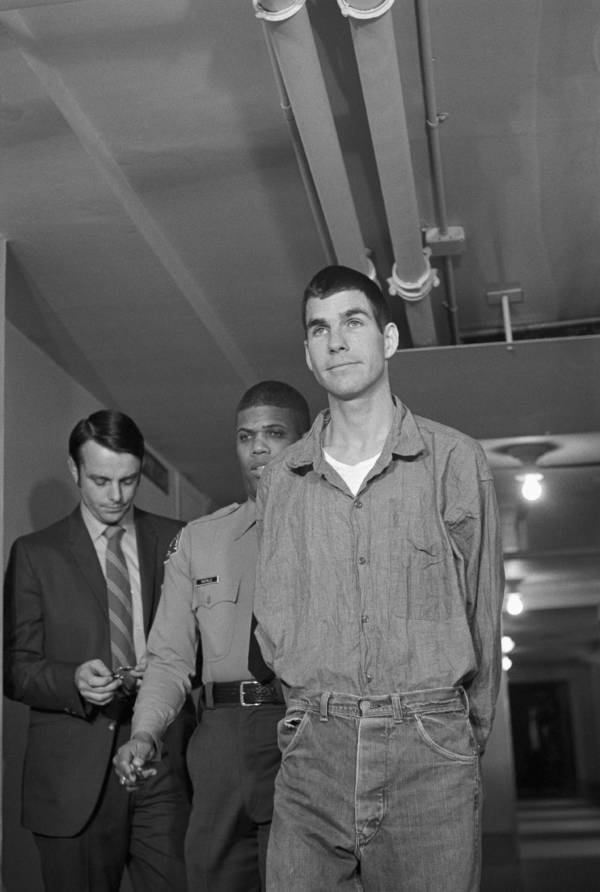
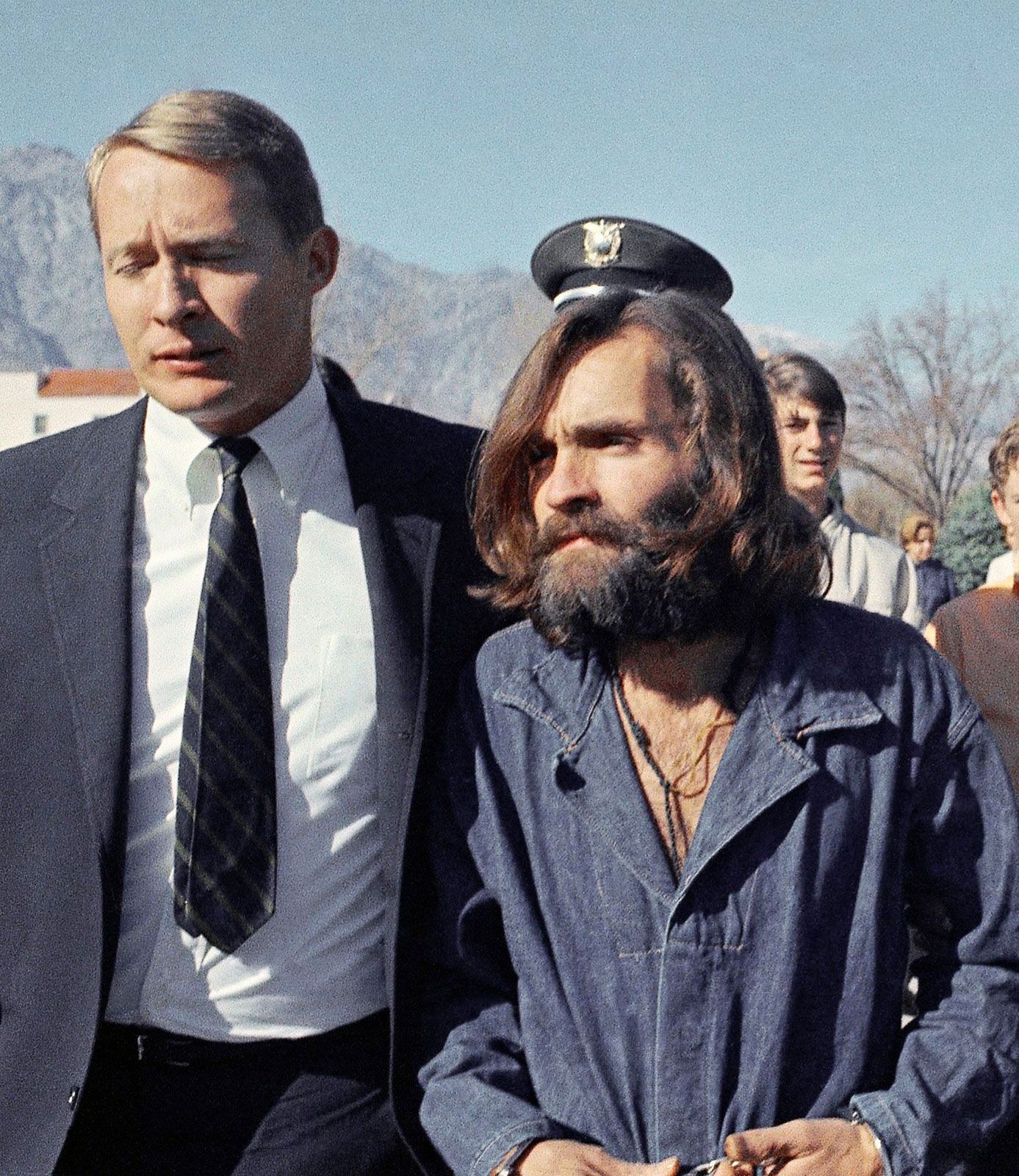
The source names the direct perpetrators: Tex Watson, Susan Atkins, Patricia Krenwinkel, and Linda Kasabian, who drove the car.
Charles Manson was the leader.
He was not present at the murders.
The following night, August 9–10, Leno and Rosemary LaBianca were murdered in their Los Feliz home.
The crimes were discovered the next morning by the Tate household’s housekeeper.
She found the bodies at the Cielo Drive residence.
The scope of the violence is the record.
Five dead at one house.
Two more at the next.
Seven people in two nights.
What happened inside those houses is not detailed in the source.
The sequence is not established.
The record lists the victims, the perpetrators, the dates, and the address.
It does not walk through the rooms.
It does not describe the moments.
That would require evidence the source does not supply.
What is established is the reach of the attack.
It was a car ride between two homes.
It was a leader who stayed away.
It was a driver who later testified for the prosecution.
The horror sits in the bare facts.
The housekeeper opened a door.
She was on the ground below.
THE STALLED INVESTIGATION
The investigation stalled first.
Police treated the Tate murders as a drug-related crime.
They did not connect the two murder scenes until later.
That was one of the early missteps the record notes.
The key evidence existed: a .22-caliber revolver, a knife, clothing, rope.
The revolver was used in the Tate killings, according to the record.
But how that revolver was linked to the case is not established.
The source names the weapon.
It does not describe how it was found or traced.
That detail sits outside the record.
Months passed, and the case sat still.
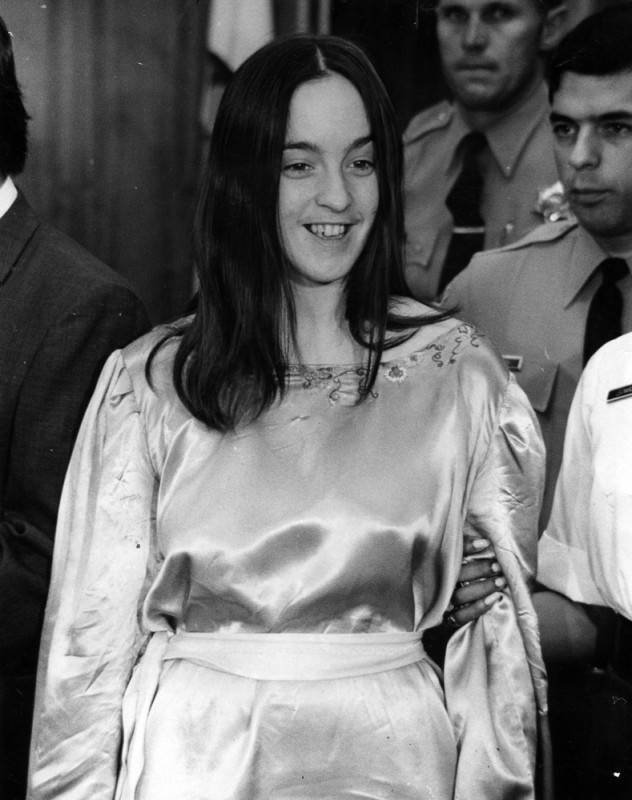
Then Susan Atkins, in custody on unrelated charges, began talking.
She told her cellmate, Virginia Graham, about the murders.
Graham relayed the information to authorities.
Arrests followed in October 1969.
The breakthrough did not come from the physical evidence.
It came from a jailhouse confession.
The record does not say how Graham's information reached investigators.
It does not say what role the revolver played in that moment.
What remains is the sequence: a stalled case, a cellmate's account, arrests.
What remains is the question of the weapon's path.
Was the revolver found before Atkins spoke?
Was it found after?
The record does not say.
Frustration sits in the missteps.
Relief sits in the confession.
The .22-caliber revolver was key evidence.
Its chain of custody is not fully established in the source.
That is the gap.
That is what the record leaves open.
THE TRIAL AND THE EVIDENCE
The trial began in June 1970 and lasted over nine months.
Manson, Atkins, Krenwinkel, and Van Houten were charged with first-degree murder and conspiracy.
Linda Kasabian was granted immunity and testified for the prosecution.
She provided a detailed account of the events, including Manson’s role in orchestrating the crimes.
The prosecution, led by Vincent Bugliosi, argued Manson had orchestrated the murders to incite a race war he called "Helter Skelter."
The defense argued Manson had no direct involvement.
The killings, they said, were the acts of the individual defendants.
The revolver was key evidence in the Tate killings.
It is also evidence whose specific forensic links to the defendants are not elaborated in the source.
That is what the record does not establish.
What the record does establish is the testimony.
Kasabian’s testimony placed Manson at the center.
Barbara Hoyt, a Family member, testified about an attempt to silence her.
Fingerprints and bloodstains tied the defendants to the scenes.
:max_bytes(150000):strip_icc()/Leslie-Van-Houten-030525-fd2591b965064cc0b888c70d473a57c6.jpg)
The prosecution presented the weapons, the clothing, the rope.
The defense presented a man who was not there.
Not because the evidence was clean.
But because the interpretations collided.
Was Manson the orchestrator?
Were the others the actors?
Did the revolver prove the connection?
The record gives a verdict, not a resolution.
In January 1971, all four defendants were found guilty on all counts.
They were sentenced to death.
The sentences were commuted to life in 1972 when California abolished the death penalty.
Tex Watson was tried separately, convicted, and sentenced to life.
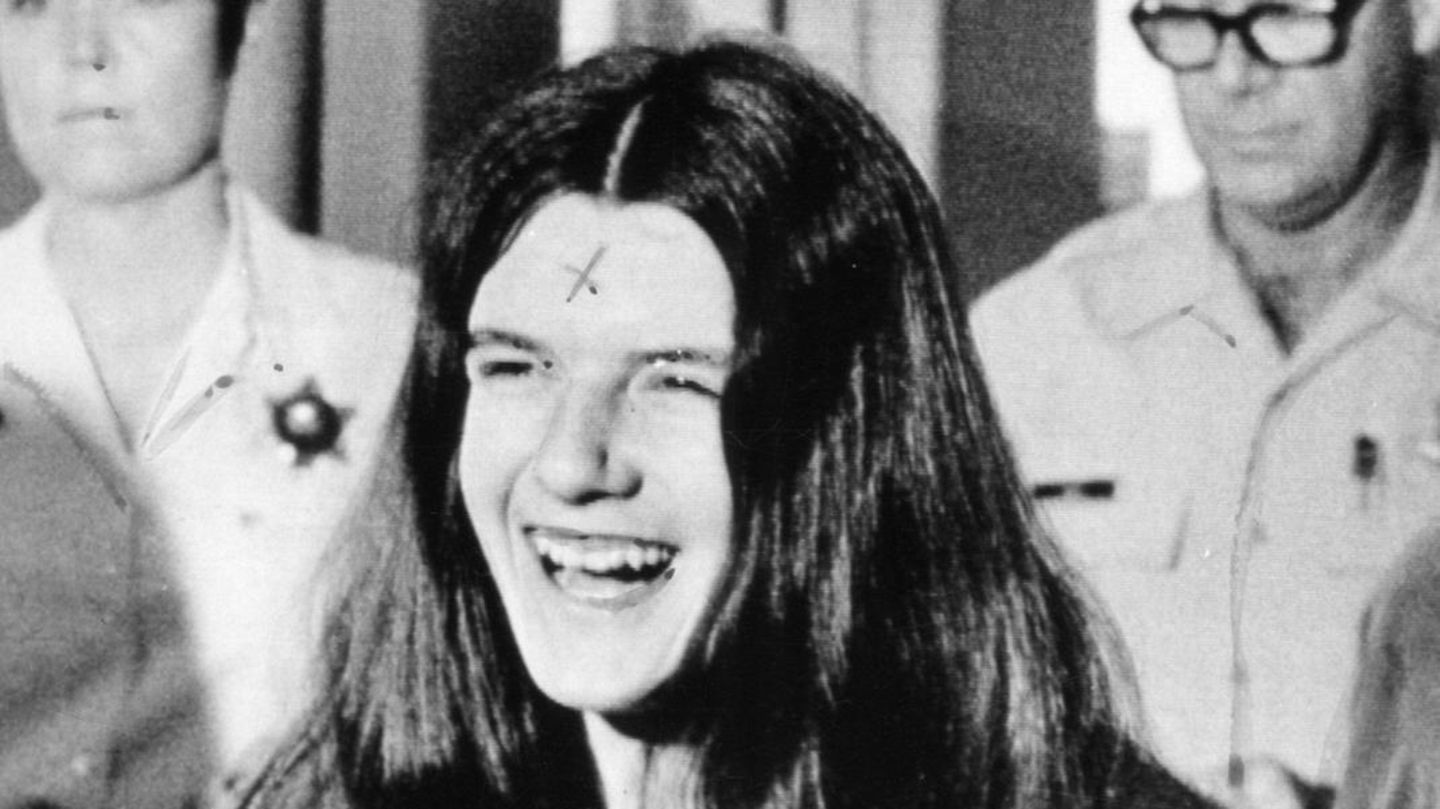
The trial was marked by disruptions from Manson and the female defendants.
They carved an X into their foreheads.
The evidence held.
The interpretations did not.
AND THE STORY STILL ISN'T OVER
Charles Manson died in November 2017 at age 83.
Susan Atkins died in 2009.
Patricia Krenwinkel remains in prison.
Leslie Van Houten remains in prison.
Van Houten was granted parole in 2019, but the decision was later overturned.
Tex Watson remains in prison.

All convicted defendants remain incarcerated or have died in prison.
The sentences were commuted to life in 1972 when California abolished the death penalty.
That law changed the outcome, not the verdict.
No new evidence has altered the convictions.
Not because the record is closed.
Because nothing in the source shows a successful challenge.
The case has been retold in books, films, and documentaries.
The retellings do not change the judgment.
The Tate and LaBianca families continue to advocate for the victims' memory.
Debra Tate, Sharon Tate’s sister, became a public advocate.
The families carry the weight the verdicts did not erase.
A conviction is a finding.
It is not a restoration.
The .22-caliber revolver sits in the evidence chain as it always did.
The knives, the clothing, the rope — each item carried the same weight.
The testimony carried more.
Linda Kasabian spoke.
The jury listened.
The defendants carved X into their foreheads.
The trial ended.
The appeals did not.
Future legal steps are not specified in the source.
No motion, no petition, no hearing is documented here.
That would require evidence.
So the story holds where it has held for decades.
The convicted remain convicted.
The dead remain dead.
The families remain.
Advertisement
You may also like
The 12:55 a.m. takeoff that ended with three rock legends in an Iowa cornfield
It is 12:55 a.m. on February 3, 1959, and a Beechcraft Bonanza lifts off from Mason City Municipal Airport. The plane, tail number N3794N,…
A pair of eyeglasses found by a body that would force two teens to confess
The glasses were horn-rimmed, found near the body of 14-year-old Robert "Bobby" Franks in a culvert close to the Indiana border. They were traced…
The 31-day gap between Caylee Anthony's last sighting and the 911 call that started it all
June 16, 2008, was the last day anyone saw Caylee Anthony alive. She was two years old. Her grandmother, Cindy Anthony, called 911 on…
The 90-second cell phone video that shattered Alex Murdaugh's alibi
Paul Murdaugh’s phone recorded for ninety seconds at the dog kennels on June 7, 2021. The video was played at trial in Colleton County.…
The tie left on the plane that never yielded a fingerprint
The tie sat on the seat of a Northwest Orient Airlines Boeing 727 on November 24, 1971. A man calling himself Dan Cooper had…
The confession that shifted — and the voices a jury refused to hear
He walked into a local bar on November 13, 1974, and told the patrons his family had been shot. Police found six bodies in…