The 23-year-old Atlanta photographer whose car was seen near a bridge the night a body surfaced
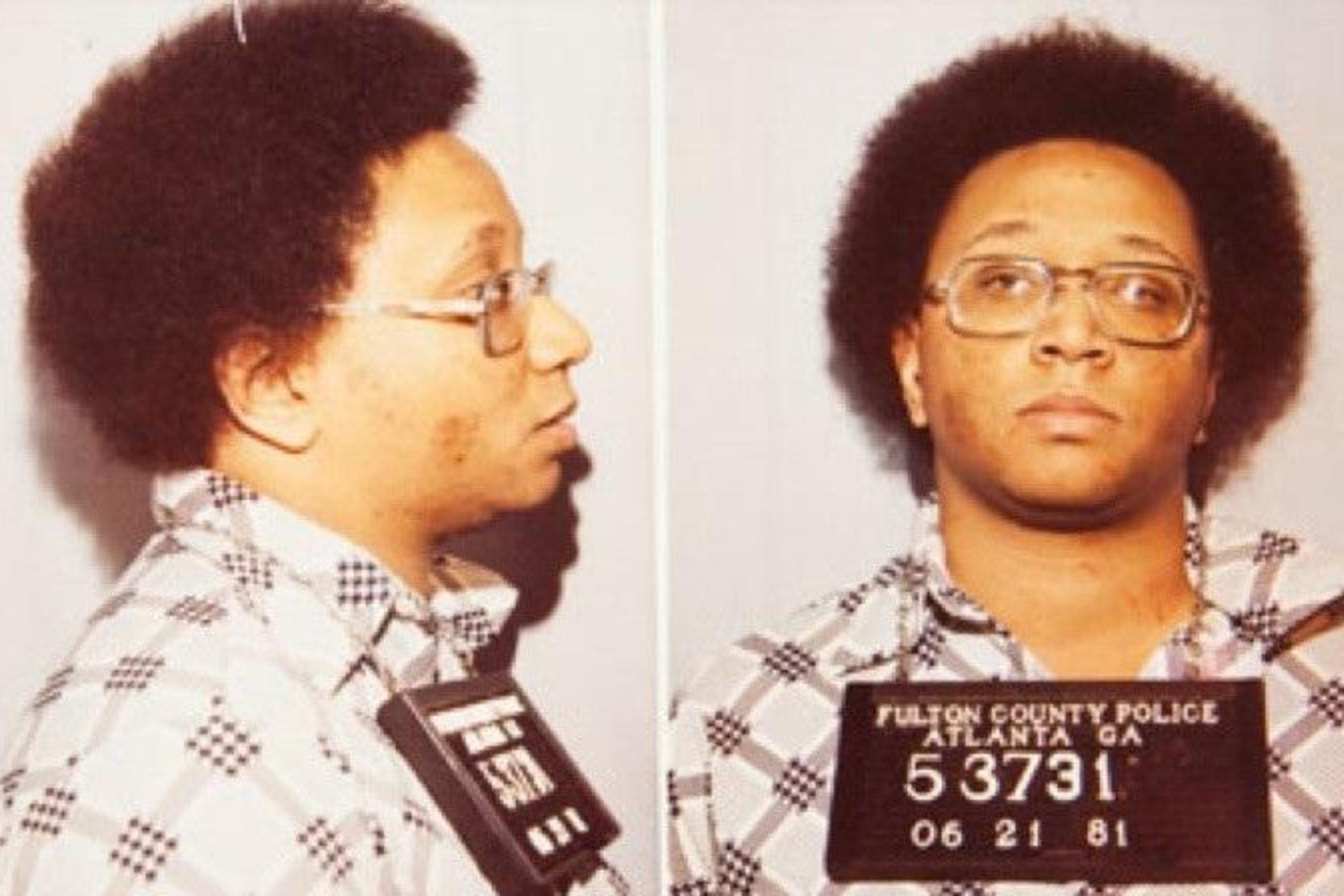
The bridge over the Chattahoochee River was dark on the night of May 22, 1981.
Police were staking it out, watching for movement in the water below.
They heard a splash.
Then they saw a car, driven by a 23-year-old Black freelance photographer and music promoter from Atlanta.
His name was Wayne Williams.
Two days later, the body of a 27-year-old man was found downstream.
That man would later be named as one of two victims in the murder charges against Williams.
The splash was a sound in the dark.
The car was a shape crossing the bridge.
Both are documented observations from the stakeout, recorded by police that night.
Neither is a confession.
Neither is a conviction.
The legal outcome comes later in the record, and this section does not reach it.
What the record establishes is this: police heard a splash, and police saw his car.
It does not establish that the splash was a body being dropped.
It does not establish that Williams caused it.
Those are theories the record leaves open, and the record leaves them open deliberately.
The case known as the Atlanta Child Murders spanned July 1979 to May 1981.
At least 28 Black children, teenagers, and young adults disappeared or were found murdered across the metropolitan area.
The victims ranged in age from 7 to 28.
Most were male.
Bodies were discovered in wooded areas, in rivers, in vacant lots.
The city's Black community lived in fear for nearly two years.
That night on the bridge, the police heard one sound.
A splash.
And then they saw a car.
What did that car have to do with it?
That would require evidence.
The record has the car.
It has the splash.
It does not have the answer.
THE PHOTOGRAPHER'S ATLANTA
Wayne Williams was 23 years old then.
He was a freelance photographer and music promoter in Atlanta, a young Black man moving through a city that was counting its dead.
Between July 1979 and May 1981, at least 28 Black children, teenagers, and young adults disappeared or were found murdered.
The victims ranged in age from 7 to 28.
Most were male.
Their bodies were found in wooded areas, in rivers, in vacant lots across the city.
The city's Black community lived in fear for nearly two years.
The killings continued, and the investigation became one of the largest manhunts in American history.
It did not start as one manhunt.
It started fragmented, with multiple agencies working separately, before a task force was formed in 1980.
The FBI became involved.
The investigation was led by Atlanta Public Safety Commissioner Lee Brown and Police Chief George Napper.
The task force included FBI agents and numerous officers.
That is the documented record: the timeline, the ages, the agencies.
What the record does not establish is what Williams was doing professionally on the night of the bridge stakeout.
It does not establish his movements before that night.
He was a young photographer in a city under siege.
He was also, according to the prosecution's later case, the man whose car was seen near the bridge.
The record has the car.
It has the splash.
It does not have his whereabouts before the stakeout began.
That gap is not filled in the files.
It is a space the trial would try to close with fibers and dog hairs, not with a confession.
For now, the city waited.
The bodies kept surfacing.
A 23-year-old photographer kept working.
THE STAKEOUT AND THE ARREST
The break came on May 22, 1981.
Police staking out a bridge over the Chattahoochee River heard a splash.
They saw a car driven by Williams.
Two days later, the body of a 27-year-old man was found downstream.
That man was later named as one of the two victims in the charges against Williams.
A witness testified to seeing Williams with the 27-year-old victim near a bridge on the night the victim disappeared.
It is not established that the witness's testimony was corroborated by any other evidence.
Williams was arrested on June 21, 1981.
He was charged with two murders: those of a 27-year-old man and a 21-year-old man.
The prosecution's case relied heavily on forensic evidence.
Carpet fibers and dog hairs found on victims matched Williams's home and his 1970 Chevrolet.
FBI analysts testified that the fibers were microscopically indistinguishable from those in his bedroom carpet and his car.
The fibers were examined strand by strand.
They were compared under microscopes.
They were matched to a bedroom and a backseat.
It is not established that the fibers were unique to Williams.
The record states the defense argued the evidence was circumstantial.
A sound in the dark led to a car.
A car led to an arrest.
An arrest led to charges.
The acceleration was sudden, after two years of fear.
The city waited.
Now it had a name, a face, and a 1970 Chevrolet.
TWO STORIES, ONE TRIAL
The prosecution told a story of fibers.
FBI analysts testified that carpet fibers and dog hairs from Williams's home and his 1970 Chevrolet were microscopically indistinguishable from those found on the victims.
District Attorney Lewis Slaton argued that the physical evidence tied Williams to the two men he was charged with killing.
A witness testified to seeing Williams with one of the victims near the bridge on the night he disappeared.
The defense told a different story.
Attorneys Mary Welcome and Tony Axam argued the evidence was circumstantial.
They said Williams was a scapegoat — a young Black man blamed for a city's terror.
Two readings of the same facts.
A web of fibers versus a theory of convenience.
The trial began in January 1982 in Fulton County Superior Court before Judge Clarence Cooper.
It lasted nine weeks.
On February 27, 1982, the jury found Williams guilty of both murders.
He was sentenced to two consecutive life terms in prison.
Williams has maintained his innocence ever since.
He filed multiple appeals; all were unsuccessful.
Police closed many of the other cases, attributing them to Williams.
It is not established that Williams was responsible for those other killings, as he was never tried for them.
That remains a matter of record, not of verdict.
The verdict itself was final.
The city had its answer, even if the story never quite closed.
AND THE STORY STILL ISN'T OVER
Wayne Williams remains in a Georgia state prison.
He has been denied parole multiple times.
He has maintained his innocence since the verdict, and his appeals have all failed.
That is the record.
The families of the victims have kept looking for closure.
Some have said plainly that they doubt Williams was responsible for all the killings.
Camille Bell, whose 9-year-old son was among the victims, became a central public advocate during the investigation.
She pressed authorities when the case was open, and the weight of her questions has not faded.
In 2019, Atlanta officials reopened the case files for DNA testing.
No conclusive results have been announced.
It is not established that the testing has produced any results, conclusive or otherwise.
The record simply states that nothing conclusive has been made public.
The case remains one of the most controversial in American criminal history.
The debate continues over whether Williams acted alone.
It is a documented fact that he was convicted of two murders and sentenced to life.
It is not established that he committed every killing attributed to him.
The city had its answer, even if the story never quite closed.
The verdict itself was final.
The questions were not.
A man is still in prison.
A city is still asking.
A case that refuses to close stays open in the only way a case can — in the minds of the families, in the files that were reopened, in the results that have not come.
That remains a matter of record, not of resolution.
Advertisement
You may also like
The notebook found beside Brian Laundrie that confessed to killing Gabby Petito
A white Ford Transit van, home on wheels, carried two people across the country. Gabby Petito, 22, from Blue Point, New York, and her…
The pajama top fibers that tied a Green Beret doctor to a murder scene he blamed on hippies
The pajama top was never found. It was never recovered from the house, never turned up in the woods, never produced by anyone who…
The cell phone records that put Adnan Syed near Leakin Park — and the alibi witness never called
A classmate later came forward with a name and a date: Asia McClain said she had seen Adnan Syed in the school library around…

The repeat offender with a palm print on a bedpost after Polly Klaas vanished
She was twelve years old, asleep at a slumber party in her mother's home in Petaluma, California. The night was October 1, 1993. Two…

The confession to a psychologist that broke the Menendez brothers' alibi
The 911 call came in at 11:47 p.m. from the mansion on North Elm Drive, and Lyle Menendez was sobbing into the phone. "My…
The drifter who turned a Miami morning into a fashion icon's last walk
The man who walked up the steps of Casa Casuarina that morning had, for years, been inventing himself. Andrew Cunanan was 27 years old,…