The confession to a psychologist that broke the Menendez brothers' alibi
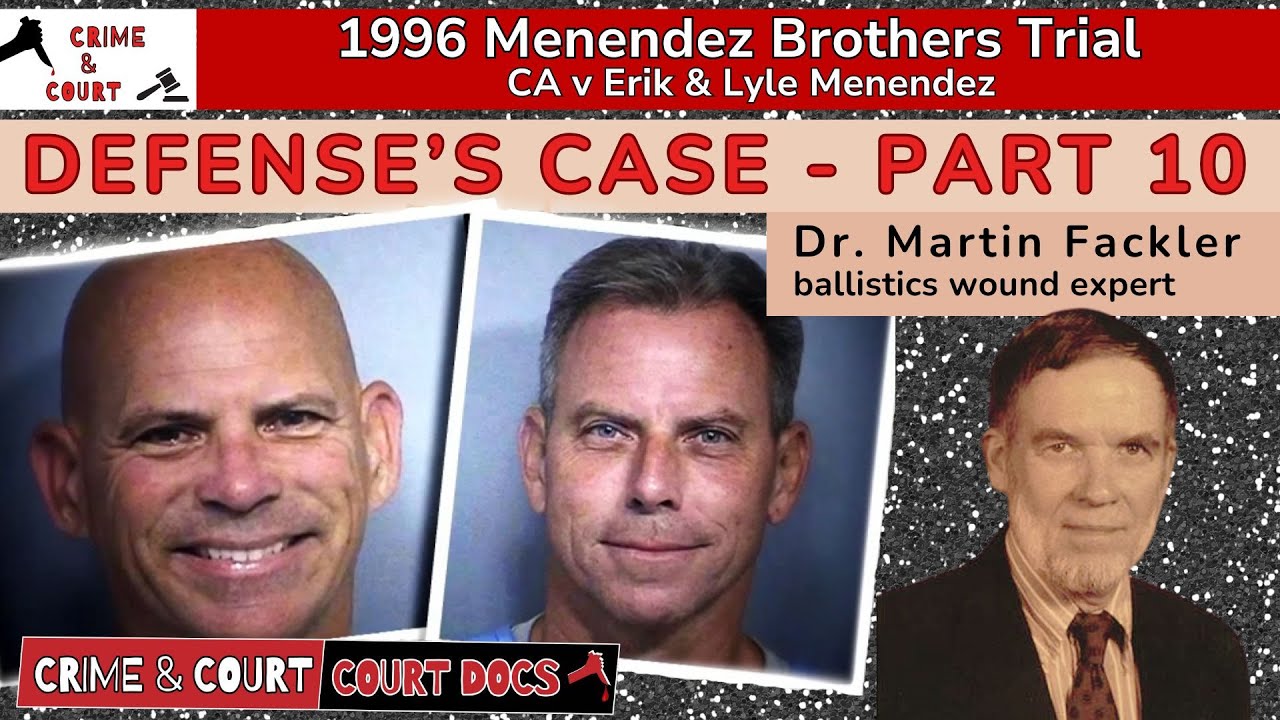
The 911 call came in at 11:47 p.m. from the mansion on North Elm Drive, and Lyle Menendez was sobbing into the phone.
"My mother and my dad are shot," he said.
The operator heard a young man who sounded hysterical, a voice that would later be played and replayed for juries.
When police arrived, they found Jose Menendez in the family room, his body riddled with shotgun blasts.
Kitty Menendez was on the floor near the doorway.
She was on the ground below.
The parents had been shot multiple times with Mossberg 12-gauge shotguns.
Two of those shotguns had been purchased by the brothers days before the killings.
Lyle and Erik told police they had gone out to a movie that evening and returned to find the bodies.
They said it must have been an intruder, maybe a mob hit, given their father's entertainment business.
The brothers said they discovered the scene and called for help.
What the record does not establish is the exact sequence of events inside the house before the shooting.
It does not establish who fired first, or how many times each brother pulled the trigger.
It does not establish what was said in those final minutes.
The brothers drove to a movie theater after the killings, then came home and made the call.
The Beverly Hills Police Department took their story at first.
Detective Leslie Zoeller would lead the investigation, and for months the case would sit unsolved.
The sons were grieving, the detectives thought.
The sons were the victims' own blood.
The shotguns were never found.
THE COVER-UP AND THE SPENDING SPREE
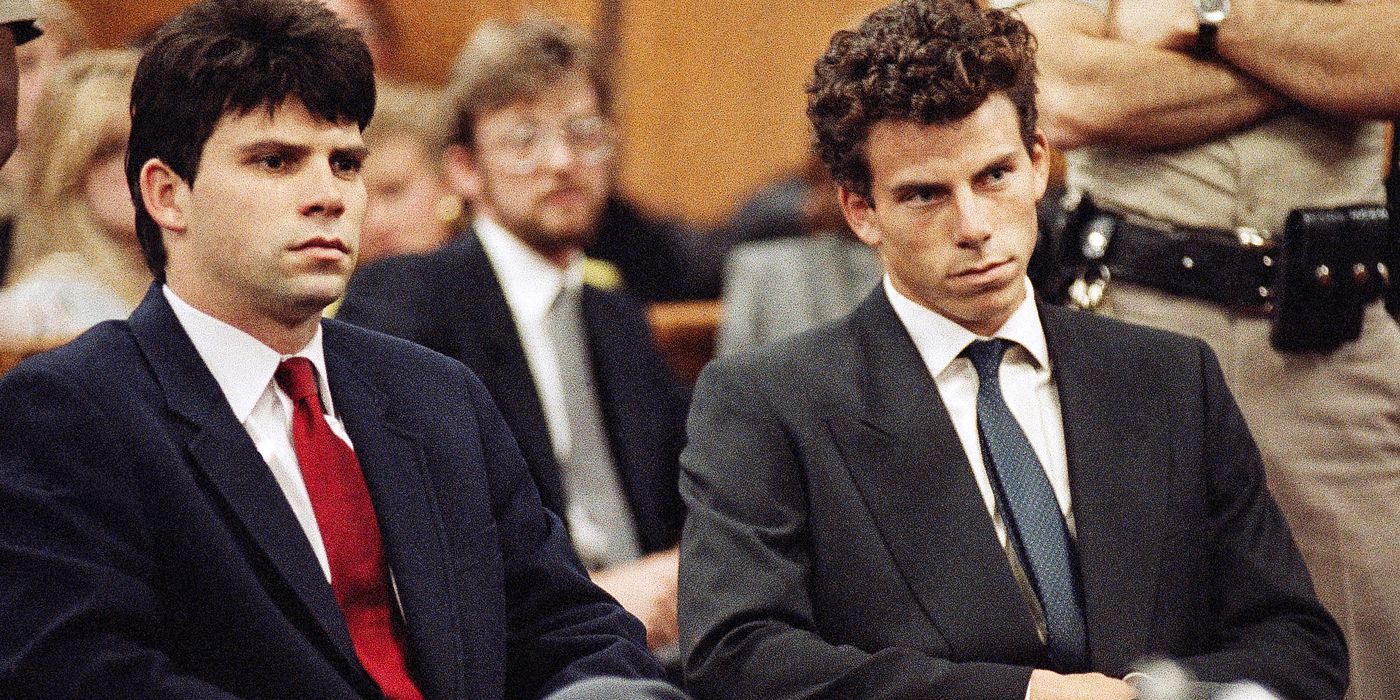
The investigators started with Jose Menendez, not his sons.
Jose ran an entertainment company with a net worth in the millions, and the Beverly Hills Police Department treated the double murder as a possible mob hit or a business-related killing.
Detective Leslie Zoeller led the investigation.
He had two sons who had just lost their parents, and the sons told police they had been at a movie theater.
They came home, they said, and found the bodies.
The detectives thought the sons were grieving.
The sons were the victims' own blood.
What exactly the brothers said in those initial police interviews is not in the record.
The case went unsolved for months, and during those months the brothers did not behave like grieving sons.
They bought a Porsche.
They bought Rolex watches.
They bought a restaurant.
Their cousin Diane Vander Molen later testified about their behavior after the killings.
She saw them spending, she saw them celebrating, she saw them living as if nothing had happened.
Not because the money proved motive. But because the money proved they were not afraid.
A person who just killed his parents might be terrified of being caught.
A person who just killed his parents might lie low.
The brothers spent.
The investigation stayed on Jose's business enemies, on his industry rivals, on anyone who might have wanted him dead.
The shotguns were never found.
The brothers were not arrested in August.

They were not arrested in September.
They were arrested in March 1990, and only because a psychologist's mistress went to the police.
That would come later.
THE CONFESSION TO DR. OZIEL
It was not the ballistics that broke the case, and it was not the spending spree.
It was a conversation in a psychologist's office.
Erik Menendez confessed to his psychologist, Dr. Jerome Oziel.
That confession moved from the therapist's couch to the police station through a third party: Dr. Oziel's mistress, Judalon Smyth.
Dr. Oziel told Smyth what he had heard.
Smyth went to the police.
The arrest came in March 1990, months after the murders.
The alibi collapsed because of a secret told in confidence, then repeated.
The prosecution's case relied heavily on that confession.
It was the hinge.
The exact content of the confession is not detailed in the source material.
What is documented is the chain: Erik spoke, Oziel relayed, Smyth reported.
Not a forensic breakthrough.
Not a witness coming forward.
A mistress who decided to talk.
The brothers had driven to a movie theater that night.
They had returned home and called 911.

They had claimed they discovered the bodies.
Detective Leslie Zoeller's investigation had treated the killings as a possible mob hit.
None of that mattered once Smyth walked into the police station.
She was on the ground below the story everyone had accepted.
The brothers were arrested.
The confession did what the evidence could not.
It gave the investigation a direction.
It gave the prosecutors a weapon.
It gave the defense a target.
The record shows the confession led to the arrest.
The record does not show everything Erik said that day.
That would come out in court, and it would divide two trials.
TWO TRIALS, TWO STORIES
The defense argued the brothers acted in self-defense after years of physical, emotional, and sexual abuse by their father, with their mother allegedly complicit.
The prosecution argued the brothers killed for their parents' $14 million estate.
Two stories, one set of facts, two very different verdicts waiting to be drawn.
The first trial began in July 1993.
It was televised.
It became a media sensation.
The jury deadlocked, with the defense arguing the abuse evidence justified manslaughter.
Not because the jurors believed the brothers were innocent.
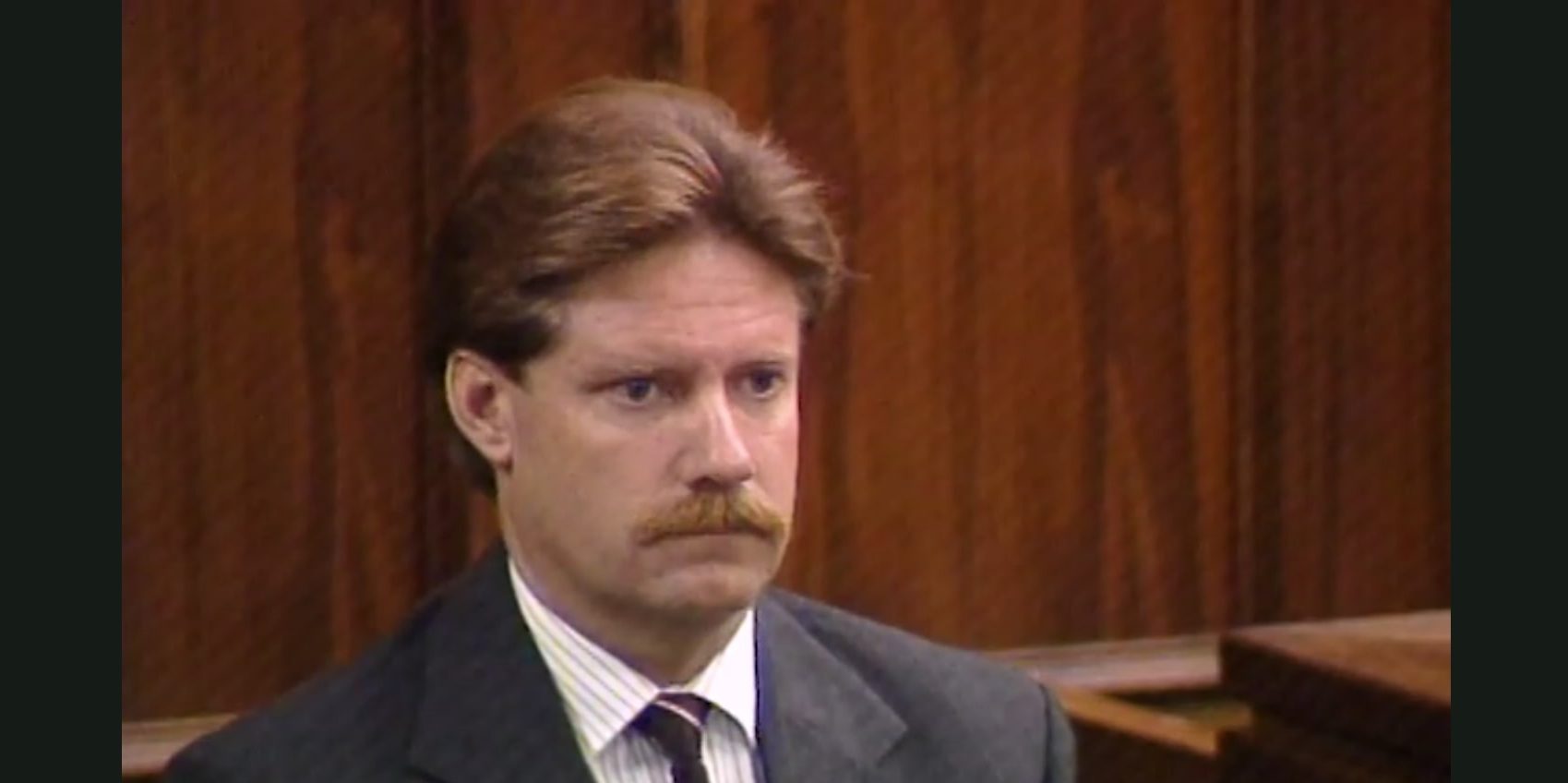
But because they could not agree on what the abuse meant, or whether it even happened.
The truth of the abuse allegations is not established by the record.
They were alleged by the defense.
They were testified to by the brothers' aunt and uncle.
That is what the record shows, and that is all it shows.
The retrial came next.
Judge Stanley Weisberg limited the abuse testimony.
The brothers were convicted of first-degree murder in March 1996.
In July 1996, the jury recommended life in prison without parole rather than death.
Judge Weisberg sentenced both brothers to life without parole in September 1996.
Was the abuse real?
Was it a strategy?
Did the brothers kill out of fear, or out of greed?
That would require evidence the record does not supply.
What the record does supply is a deadlocked jury, a limited retrial, and a life sentence with no parole.
The first trial hung because the two stories could not be reconciled.
The second trial chose one.
It chose the estate.
AND THE STORY STILL ISN'T OVER
The two stories could not be reconciled, and the second trial chose one, but the case itself never closed.
Both brothers remain incarcerated at Richard J. Donovan Correctional Facility in San Diego County, serving life without parole.
:max_bytes(150000):strip_icc():focal(749x0:751x2)/pamela-bozanich-menendez-trial-100724-3-4020c329cace46f0917d36d6ad7e7962.jpg)
They have been denied parole multiple times.
Then, in 2023, new evidence emerged.
A letter allegedly written by Erik Menendez to a cousin described the abuse.
A former member of the boy band Menudo claimed Jose Menendez had sexually abused him.
Neither the letter's authenticity nor the Menudo testimony is established.
They are described as "allegedly" and "claimed," and the record does not resolve them.
That would require evidence.
The claims prompted renewed public interest.
In 2024, the brothers' attorneys filed a petition for resentencing.
As of late 2024, Los Angeles County District Attorney George Gascón announced his office was reviewing the case.
A decision on resentencing was pending.
So the case is not over.
It is a story of two brothers who confessed to a psychologist, and a mistress who went to police.
It is a story of a $14 million estate, and of abuse that was alleged, argued, and partly excluded.
It is a story that ended in a conviction.
It is a story that may not have ended.
The brothers remain at Richard J. Donovan.
The letter sits unverified.
The testimony stands as a claim.
The district attorney reviews.
The past weighs.
The possibility of change remains open.
Not because the record supports it.
But because the record has not closed it.
Advertisement
You may also like
The note that bought a one-way ticket to nowhere: D.B. Cooper’s 1971 demand
The note was folded, passed hand to hand at 8,000 feet. November 24, 1971. A man calling himself Dan Cooper bought a one-way ticket…
The bloody glove found at O.J. Simpson's estate that didn't fit in court — and the 9-month trial it defined
The dog came first. A passerby on Bundy Drive saw it, alone, and followed. The dog led him to the bodies, discovered around midnight…
The glove that wouldn't fit and the 9-month trial that split America
The glove sat on the courtroom table, dark with dried blood, and Simpson took it in his hands. He struggled with it. He pulled,…
The blood word 'PIG' on Sharon Tate's door, and the Helter Skelter clue detectives couldn't crack
The front door at 10050 Cielo Drive held a word written in blood: "PIG." On the night of August 9, 1969, five people were…
The confession that changed: DeFeo's shifting story on the night his family was shot
The bar on Ocean Avenue opened early on a Wednesday morning, or perhaps it had never closed. A young man walked in and told…
The last sounds a mother never heard — and the river kept them
The sound came first. On May 22, 1981, police staking out the Chattahoochee River heard a splash. They stopped a car driven by Wayne…