The glove that wouldn't fit and the 9-month trial that split America
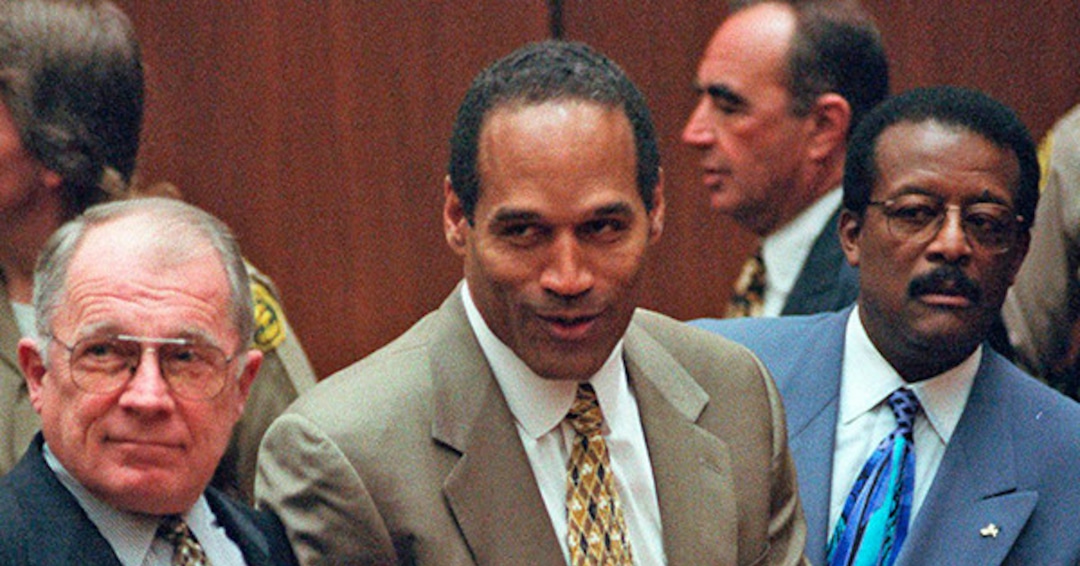
The glove sat on the courtroom table, dark with dried blood, and Simpson took it in his hands.
He struggled with it.
He pulled, he twisted, he pushed his fingers into the leather, and the glove would not go on.
The courtroom watched him fight the thing, and the fight became the moment.
The defense argued the gloves did not fit Simpson's hands.
That was the argument, plain and repeated.
One glove had been found at the crime scene on Bundy Drive.
The other had been found at Simpson's estate, later that same day.
Two gloves, one pair, the prosecution said, and they tied him to the scene.
Simpson stood there, glove half-on, and the jury saw what they saw.
Then came the closing arguments, led by the defense.
"If it doesn't fit, you must acquit."
That phrase repeated through the courtroom like a drumbeat.
It was a defense argument, not a finding.
The glove was one piece of a much larger record, DNA and timelines and testimony.
Did the glove prove he was innocent?
That is not established by the record.
The record shows a struggle, a phrase, a verdict months later.
The record does not show what the glove meant.
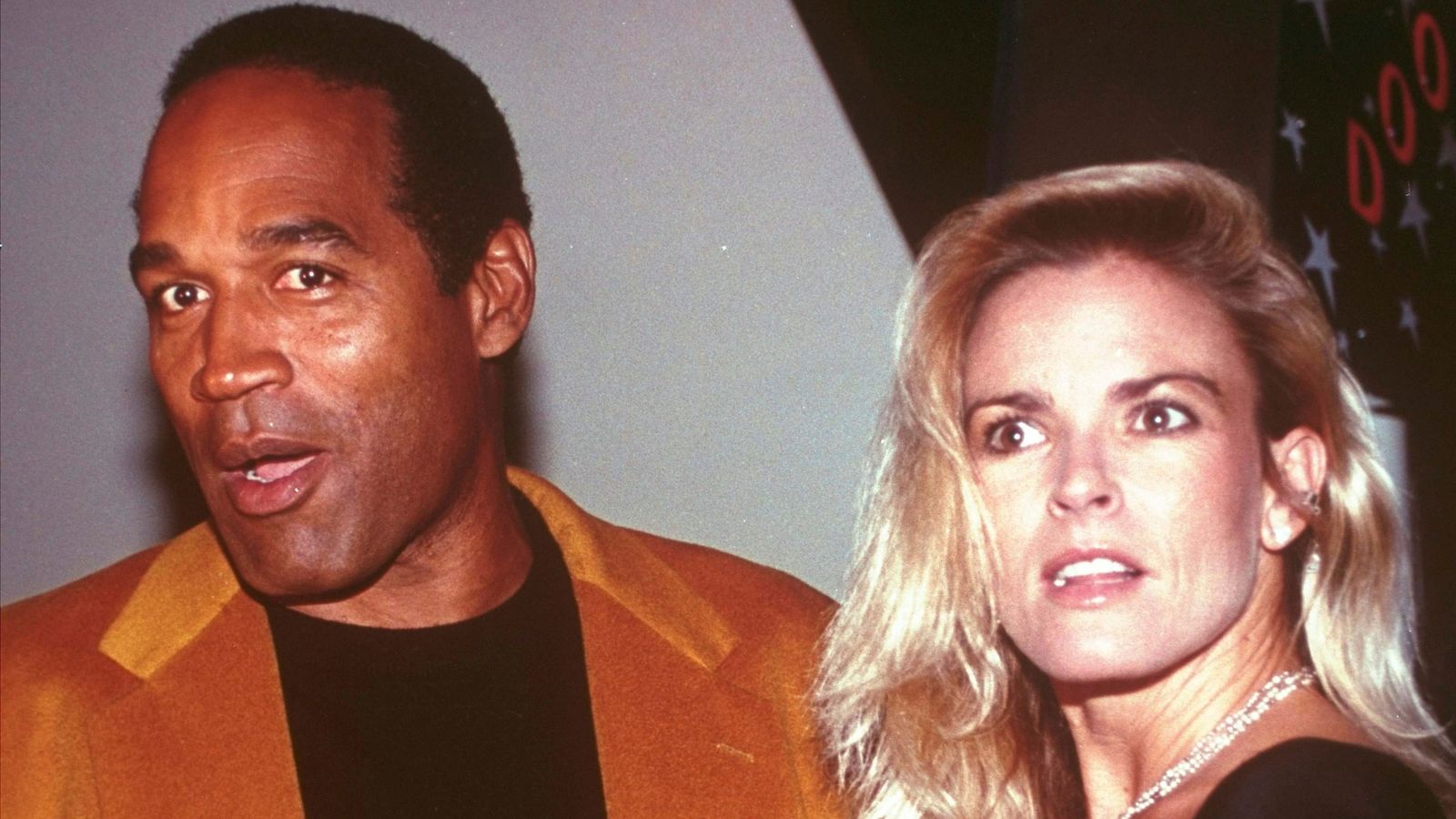
It was a courtroom moment, documented on camera.
It is also a question the trial never answered.
THE NIGHT ON BUNDY DRIVE
The neighbor was walking her dog.
She found Nicole Brown Simpson and Ronald Goldman on the ground outside Nicole's condominium on Bundy Drive.
The time was approximately 12:10 a.m. on June 13, 1994.
The police report places the discovery on the night of June 12.
Both had been killed with a knife, the medical examiner's report stated.
Nicole's throat was cut.
Goldman had been stabbed multiple times.
The exact time of the murders is not established in the source.
What is established is the scene the neighbor found.
Police arrived and found a bloody glove.
They found a knit cap.
They found other items at the crime scene.
Goldman, a waiter, had gone to return eyeglasses Nicole's mother had left at the restaurant, according to witness testimony.
He was still there when the neighbor came by with her dog.
The bodies were outside, in the open, near the condominium.
The horror of the crime was immediate.
The discovery was made in the dark, hours after the attack.
It was a scene that would be photographed, measured, and argued over for years.
The glove lay there, in the evidence log, before it ever reached a courtroom.
It was evidence first.
A symbol later.
THE CHASE AND THE CHARGES
On June 17, 1994, the court record shows Simpson was charged with two counts of first-degree murder.
The charges came five days after the bodies were found on Bundy Drive.
That same day, a white Ford Bronco crept along Los Angeles freeways.
News reports described the low-speed chase, the Bronco driven by Al Cowlings, Simpson in the back.
He surrendered.
The trial began on January 24, 1995.
The court record puts its length at nearly nine months.
Judge Lance Ito presided over a trial televised gavel-to-gavel, according to trial coverage.
The cameras caught every objection, every sidebar, every moment.
The prosecution's case relied on DNA evidence linking Simpson's blood to the crime scene and the gloves.
It also relied on a history of domestic violence.
The exact details of that DNA evidence are not fully specified in the source.
That is not established.
:max_bytes(150000):strip_icc():focal(749x0:751x2)/PEOPLE_MAG_BROWN_SISTERS_nicole-tout-1067c705ba0c4ab7a7e648e3ffd95be0.jpg)
What is established is the weight of the charges: two counts of first-degree murder.
What is established is the chase that preceded them.
What is established is the courtroom that followed, nine months of it, on live television.
The glove lay there, in the evidence log, before it ever reached a courtroom.
It was evidence first.
A symbol later.
But before the symbol, there was the charge.
Before the charge, there was the chase.
And before the chase, there were two bodies on Bundy Drive.
TWO STORIES, ONE SET OF FACTS
The prosecution built its case on DNA.
Blood matching Simpson’s was found at the crime scene and on the gloves, prosecutors said.
They also presented a history of domestic violence against Nicole Brown Simpson.
That history was meant to show a pattern, prosecutors argued.
The defense told a different story.
They said the police investigation was contaminated.
They said evidence was planted, particularly by Detective Mark Fuhrman.
Whether the evidence was actually planted is not established by the record.
Fuhrman was later shown on tape using racial slurs.

Those tapes undermined his credibility as a witness.
The defense leaned on that.
They leaned on the gloves too.
In court, Simpson struggled to put on a bloody glove.
It appeared not to fit his hands.
The defense argued the gloves did not fit.
That courtroom demonstration became famous.
It was a moment, not a proof.
The prosecution’s timeline rested on Allan Park.
Park, the limousine driver, testified that Simpson was not home when he arrived.
That testimony placed Simpson away from the house at a key hour.
The defense disputed the timeline.
They disputed the science.
They disputed the chain of custody.
Two stories, one set of facts.
The facts were the same.
The interpretations were not.
AND THE STORY STILL ISN'T OVER
On October 3, 1995, the jury acquitted Simpson of both counts.

The verdict was met with widespread public reaction, with many Americans divided along racial lines.
The criminal case was over.
The story was not.
In 1997, a civil jury found Simpson liable for wrongful death and battery and ordered him to pay $33.5 million.
The families of Nicole Brown Simpson and Ronald Goldman had their answer.
The record did not.
Simpson was later convicted of armed robbery and kidnapping in 2008, paroled in 2017.
He died of cancer on April 10, 2024, at age 76.
The murder case remains officially unsolved.
No one else was ever charged.
Who actually committed the murders is not established by the record.
Not by the DNA.
Not by the gloves.
Not by the verdict.
That would require evidence.
The families have continued to seek justice and have spoken publicly about the case over the years.
The glove sits in the record.
The question does not.
Two stories, one set of facts.
The facts were the same.
The interpretations were not.
They still are not.
Advertisement
You may also like
The misread clue that derailed the Tate murder probe for months
Five people were found dead at 10050 Cielo Drive in Benedict Canyon on the morning of August 10, 1969. Among them was actress Sharon…
The work truck and the oilfield: how a Colorado husband's story collapsed in three days
The friend called it in on the morning of August 13, 2018, after Shanann Watts missed a doctor’s appointment. She was 34, and her…
The Gulf War veteran who rented a Ryder truck under a false name — then a trooper pulled him over
The Ryder truck was rented from an agency in Junction City, Kansas, under the name "Robert Kling." That name was not his. The rental…
Why Gary Ridgway's 48 life sentences still face a painful, unfinished chapter for victims' families
He sat in a King County courtroom in 2003 and said the words that ended the longest murder investigation in Washington state history. Gary…
The 2020 ruling that spared Scott Peterson from death row
She was twenty-seven and eight months pregnant, and she vanished from her home on Christmas Eve. Her husband reported her missing that evening. He…
The 31 days Casey Anthony never reported her toddler missing
The 911 call came from a house in Orlando, Florida, on July 15, 2008. Cindy Anthony was on the line, and she told the…