The work truck and the oilfield: how a Colorado husband's story collapsed in three days
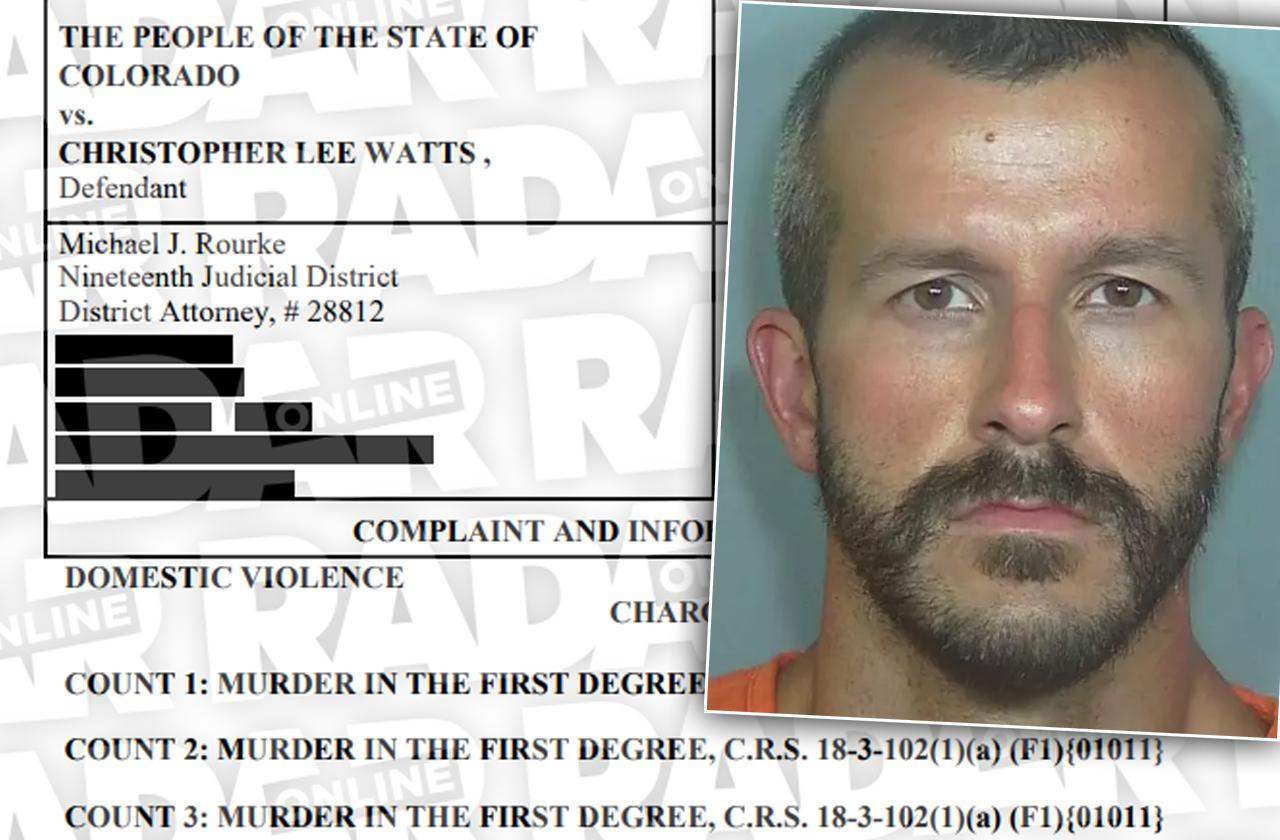
The friend called it in on the morning of August 13, 2018, after Shanann Watts missed a doctor’s appointment.
She was 34, and her daughters, 4-year-old Bella and 3-year-old Celeste, were with her.
A welfare check was conducted at the family home in Frederick, Colorado.
The body-worn camera footage from that check shows Christopher Watts with a flat, unconcerned demeanor.
He was 33, an operator for Anadarko Petroleum.
He told the officers his wife and daughters had left the home under mysterious circumstances.
The work truck in the driveway belonged to him, and it belonged to the company that owned the oilfield site where the bodies would later be found.
He stood there, calm, while his family was missing.
It is not established what Watts was thinking or feeling during that welfare check.
Only his outward demeanor is documented in the footage.
The officers saw a man who did not seem worried.
What did they see that day?
What did they hear?
What did they note in the report?
That would require evidence.
The footage exists.
The truck exists.
The oilfield exists.
The family was missing, and the husband was flat.
THE INCONSISTENT STORY
The initial welfare check was on August 13.
The arrest came on August 15.
Two days.
That is the distance between a man insisting his family vanished and a man in handcuffs.
Police found Christopher Watts's story inconsistent from the start.
Detectives looked at his phone.
They looked at his past.
They found the affair with a coworker, Nichol Kessinger.
Kessinger cooperated with police.
She provided text messages and phone records.
The specific contents of those messages and records are not detailed in the source.
Only that they were provided.
Only that they were used.
Watts failed a polygraph test.
The polygraph does not convict a man.
But it accelerates a case.
The lead detective was from the Frederick Police Department.
His name is not in the record for this article.
The inconsistencies mounted.
The affair was documented.
The test was failed.
The arrest followed.
Two days after the welfare check, Watts was taken into custody.
The story he told on the porch was already crumbling.

What did the phone records show?
What did the polygraph reveal?
What did the detective hear that made him move that fast?
That would require evidence.
The evidence existed, and the police had it.
Watts was arrested.
The investigation had not stopped accelerating.
THE CONFESSION AND THE OILFIELD
He told investigators Shanann had killed the girls.
He said he killed her in a rage.
The story did not hold.
Watts confessed to strangling Shanann and smothering both daughters with a blanket.
The confession was recorded and later released.
The footage shows him reenacting the killings.
He led investigators to the oilfield site owned by his employer, Anadarko Petroleum.
That is where he had disposed of the bodies.
The vehicle used to transport them was his work truck, a Ford pickup.
The medical examiner confirmed Shanann was strangled.
The medical examiner confirmed the girls were smothered.
Shanann was 15 weeks pregnant with a son.
The family later named him Nico.
The exact sequence of events that night is not established beyond Watts's own confession.
The source does not provide an independent timeline.
A work truck and a job site.
A tool of his trade became the hearse.
His employer's land became the grave.
The confession is the only record of the order of what happened.
It is a recorded statement, not an independent account.
The horror is in the details he supplied.
The weight is in the reenactment on video.
How did a Ford pickup and an oilfield become part of this?
How did a blanket end up over two small faces?
How did a husband lead police to his own family's bodies?
That would require evidence beyond the words of the man who did it.
THE PLEA AND THE SENTENCE
On November 6, 2018, Christopher Watts stood before the trial judge of Weld County District Court.
He had initially entered a not-guilty plea.
Then he pleaded guilty to all charges.
The charges were three counts of first-degree murder, two counts of first-degree murder of a child under 12, and one count of unlawful termination of a pregnancy.
The plea deal spared him the death penalty.
The specific terms of that deal beyond that are not detailed in the source.
The judge imposed the sentence.
Life in prison without the possibility of parole for the murders of Shanann and the two daughters.
Plus 48 years for the unlawful termination of pregnancy.

The years would run consecutively.
Watts was also ordered to pay restitution to Shanann's family, the Rzuceks.
What did the plea deal mean for the family?
What did it spare them?
What did it cost them?
That would require evidence beyond the court record.
The record shows the finality.
The record shows the sentence.
The record does not show the family's private negotiations with that outcome.
Watts would serve his life in a Wisconsin prison.
The legal case was closed.
The questions about the plea deal were not.
AND THE STORY STILL ISN'T OVER
The story is still being told.
Watts is incarcerated at the Dodge Correctional Institution in Waupun, Wisconsin, serving multiple life sentences without parole.
He has remained in prison.
He has not been granted any appeals.
Shanann's family, the Rzuceks, have spoken publicly about their grief.
They have advocated for domestic violence awareness.
The family home in Frederick was sold.
The case has been the subject of extensive media coverage.
Documentaries have retold it.
True-crime series have retold it.
The work truck appears in the footage.
The oilfield site appears in the reenactment.
They are the physical anchors of the story.
The record is closed.
No new legal developments are in the record.
The next concrete step is not specified in the source.
The legal case is over.
The public story continues.
It is retold with the same flat demeanor, the same truck, the same oilfield.
It is retold without the confession being new.
It is retold without the timeline changing.
That would require evidence.
The questions about the plea deal were not answered in court.
The questions about the motive were not answered in court.
The questions about what happened in that house remain open.
The record does not establish more.
Watts serves his life in Wisconsin.
The Rzuceks carry their grief publicly.
The house in Frederick belongs to someone else.
The truck sits somewhere, unremarkable.
The oilfield holds its own silence.
The ache is unresolved.
The story is over, and it is not over.
Advertisement
You may also like
The phone call that put Adnan Syed near Leakin Park — and the call records that later unraveled
She was 18, a senior at Woodlawn High School, and she did not come home on January 13, 1999. Hae Min Lee disappeared after…
The unserved 1955 arrest warrant for Carolyn Bryant, found in a courthouse basement, and the family still seeking answers
The warrant was folded, typed, and dated 1955, and it was found in 2018 in a courthouse basement. It named Carolyn Bryant, the woman…
The $50,000 ransom note left on a windowsill that began a 20-month hunt
The nursery window faced the night. A ladder leaned against it, reaching the sill. On the sill, a note. It demanded $50,000. The child…
The 1954 murder trial a judge let the press decide — and the Supreme Court still cites
The 911 call did not exist in 1954. On July 4, 1954, in Bay Village, Ohio, a Cleveland suburb, Marilyn Sheppard, 31, was found…
The 1993 raid on a Texas ranch that left four ATF agents dead — and the fire's origin still disputed
He called himself David Koresh, though he was born Vernon Wayne Howell. He was the self-proclaimed prophet and leader of the Branch Davidians at…
Why Kitty Genovese's killer returned to the street before the fatal blow
She was on the ground below her apartment at 82-70 Austin Street in Kew Gardens, Queens, in the early hours of March 13, 1964.…