Why Gary Ridgway's 48 life sentences still face a painful, unfinished chapter for victims' families
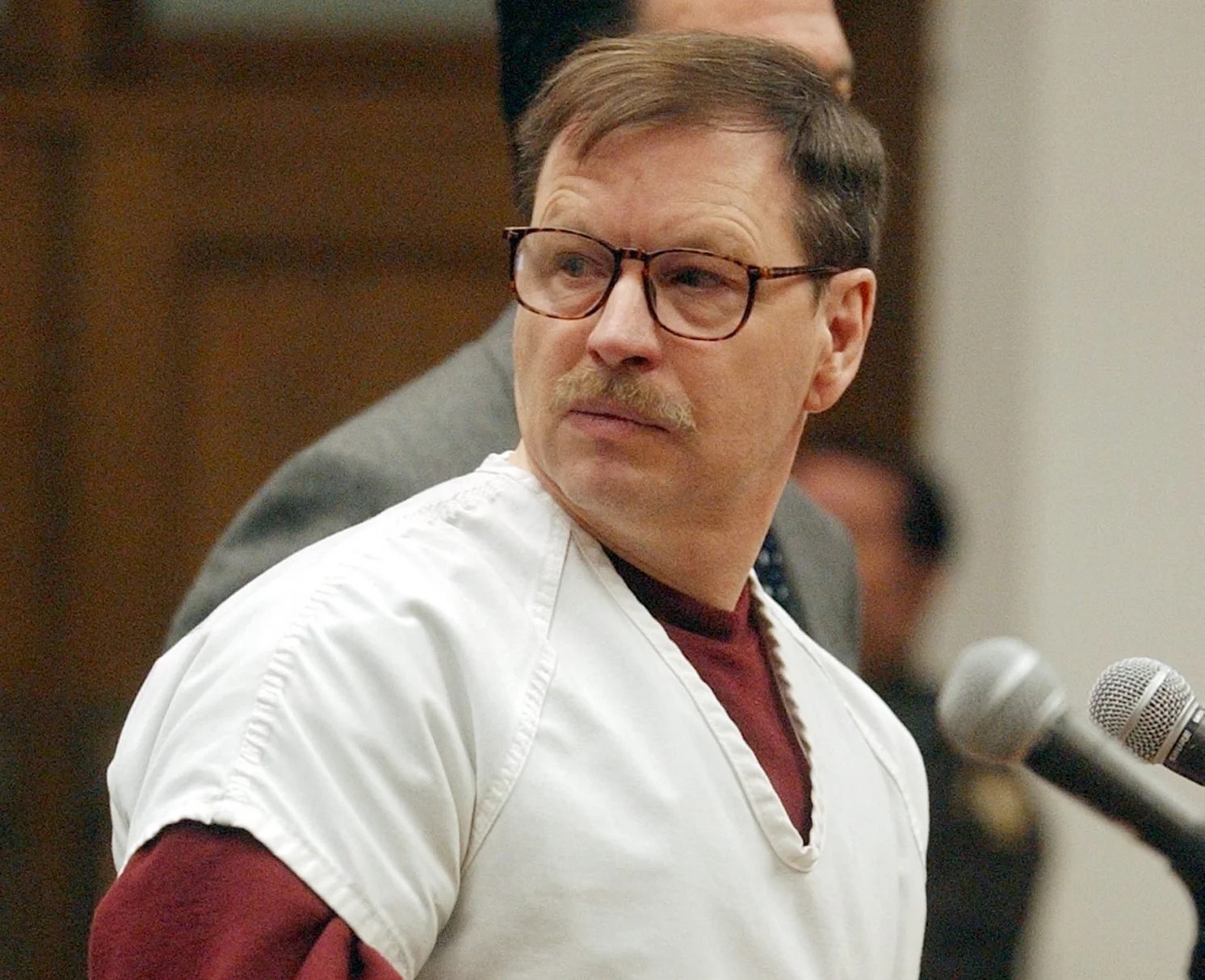
He sat in a King County courtroom in 2003 and said the words that ended the longest murder investigation in Washington state history.
Gary Ridgway pleaded guilty to 48 counts of aggravated first-degree murder.
The plea was accepted by Judge Richard A. Jones.
Jones sentenced Ridgway to 48 consecutive life terms without the possibility of parole.
The deal was simple on paper: life without release, and in exchange, Ridgway agreed to cooperate with investigators in locating victims' remains.
Prosecutors, led by Norm Maleng, argued the plea was necessary to bring closure to families and recover the dead.
Ridgway's defense attorneys, Mark Prothero and Todd Maybrown, negotiated it.
Forty-eight lives traded for cooperation.
That was the bargain.
Was it kept?
The record shows the sentence. The record shows the agreement to help find remains.
What the record does not establish is the specific terms of that cooperation beyond "locating victims' remains."
No detailed schedule. No list of promises. No measure of completion.
The families were promised closure.
The families were promised remains.
The deal was accepted, and Ridgway was led away.
It is a sentence without parole. It is also a promise without a receipt.
THE SENTENCE
The court charged Gary Ridgway with 48 counts of aggravated first-degree murder.
He pleaded guilty to each count in 2003.
Judge Richard A. Jones accepted the plea.
Ridgway was sentenced to 48 consecutive life terms without the possibility of parole.
The sentence was designed to be permanent.
No parole. No release. No end date.
The trial outcome also ordered Ridgway to pay restitution to the victims' families.
The exact amount of that restitution is not specified in the record.
Whether it has been paid is also not established.
Since the sentencing, there have been no successful appeals.
Ridgway remains in prison.
He is incarcerated at the Washington State Penitentiary in Walla Walla.
It is a sentence of finality.
It is also a chapter that does not close.
The families were promised remains in exchange for the plea.
The sentence delivered the life terms.
The remains, according to public statements from some families, have come slowly.
Ridgway is serving his time.
The case, by law enforcement's account, is closed.
Yet the sentence itself carries a condition that outlasts the courtroom.
Forty-eight life terms run consecutively.
They run one after another.
They run without parole.
And still, the story does not end with the sentence.
It ends, if it ends at all, with what Ridgway was supposed to give back.
THE COOPERATION
He cooperated, according to where things stand. He has worked with authorities to identify additional victims and locate remains.
The pace was slow. The completeness was partial.
Some families have spoken publicly about that frustration. They have expressed it in interviews and at vigils, as the record notes. They have advocated for continued investigation into unsolved cases linked to Ridgway.
The case is considered closed by law enforcement. That is the official position. It is also true that some unidentified remains have never been matched to named victims.
Not because the work stopped. But because the work did not finish.
How many remains were recovered? Which cases were resolved? The source does not enumerate those details. That is not established.
What is established is the gap between the promise and the result. The plea deal promised cooperation. The cooperation happened, in some form. The families say it was not enough.
They wait for names. They wait for matches. They wait for the remains to speak.
The remains do not speak. They are silent in the ground, or in the evidence locker, or in the file that has no name attached.
Some families have formed support networks. Some have built memorials. Some hold annual remembrance events at burial sites.
And some still ask the question the case file cannot answer. Who is still out there?
That would require evidence. That would require records. That would require the cooperation to be complete.
The cooperation is what it is. The frustration is what it is. The case is closed, and the ache is not.
THE FAMILIES TODAY
The families still live with what the record calls the aftermath.
Some have formed support networks.
The names of those networks are not given in the source.
Neither are the dates of the remembrance events.
Memorials have been established at burial sites.
Annual remembrance events have been held.
The source does not name them.
It does not name who organizes them.
What the record shows is the ordinary fact of them.
Several families have spoken publicly over the years.
They have advocated for continued investigation into unsolved cases linked to Ridgway.
They have asked for more.
They have asked for answers.
They have asked for remains to be matched.
The case is closed by law enforcement.
Some unidentified remains have never been matched to named victims.
That is what the record says.
It is not a theory.
It is not a resolution.
It is a standing fact.
The legal closure came in 2003 with the plea and the sentence.
The sentence is 48 consecutive life terms without parole.
Ridgway remains in prison.
He has no possibility of release.
There have been no successful appeals.
That is the legal chapter.
The families' chapter is not legal.
It is the burial site.
It is the annual event.
It is the patient work of remembering.
The frustration over the pace of cooperation is a matter of public statements.
The record does not establish how complete that cooperation has been.
It does not establish what remains unidentified.
It does not establish what the families have been told.
What is established is the grief.
It is quiet.
It is ongoing.
It continues in the ordinary moments the case file does not record.
AND THE STORY STILL ISN'T OVER
Ridgway remains inside the Washington State Penitentiary in Walla Walla.
He is serving 48 consecutive life sentences without the possibility of parole.
There have been no successful appeals.
Law enforcement considers the case closed.
It is closed, and it is not closed.
Some unidentified remains have never been matched to named victims.
The record does not say whose remains those are.
It does not say how many there are.
It does not say whether they will ever be matched.
Families continue to advocate for continued investigation into unsolved cases linked to Ridgway.
They have spoken publicly over the years.
They have pushed for more digging, more testing, more answers.
The lead detective, Dave Reichert, later served as King County Sheriff.
He then served as a U.S. Representative.
Norm Maleng, the prosecutor who argued the plea was necessary, died in 2007.
The legal chapter closed with his death and with the sentence.
The human chapter did not.
The families live with the aftermath.
Some have formed support networks.
Memorials stand at burial sites.
Annual remembrance events mark the dates.
The source does not mention any specific pending legal motions.
It does not mention any future hearing dates.
What remains is the ordinary work of waiting.
What remains is the question of the unnamed.
What remains is the quiet insistence that the story is not finished.
That would require evidence.
That would require remains to be matched.
That would require time.
Ridgway has no possibility of release.
The case has no possibility of being undone.
It is over, and it is not over.
Advertisement
You may also like
The phone call that put Adnan Syed near Leakin Park — and the call records that later unraveled
She was 18, a senior at Woodlawn High School, and she did not come home on January 13, 1999. Hae Min Lee disappeared after…
The unserved 1955 arrest warrant for Carolyn Bryant, found in a courthouse basement, and the family still seeking answers
The warrant was folded, typed, and dated 1955, and it was found in 2018 in a courthouse basement. It named Carolyn Bryant, the woman…
The $50,000 ransom note left on a windowsill that began a 20-month hunt
The nursery window faced the night. A ladder leaned against it, reaching the sill. On the sill, a note. It demanded $50,000. The child…
The 1954 murder trial a judge let the press decide — and the Supreme Court still cites
The 911 call did not exist in 1954. On July 4, 1954, in Bay Village, Ohio, a Cleveland suburb, Marilyn Sheppard, 31, was found…
The 1993 raid on a Texas ranch that left four ATF agents dead — and the fire's origin still disputed
He called himself David Koresh, though he was born Vernon Wayne Howell. He was the self-proclaimed prophet and leader of the Branch Davidians at…
Why Kitty Genovese's killer returned to the street before the fatal blow
She was on the ground below her apartment at 82-70 Austin Street in Kew Gardens, Queens, in the early hours of March 13, 1964.…