The Gulf War veteran who rented a Ryder truck under a false name — then a trooper pulled him over
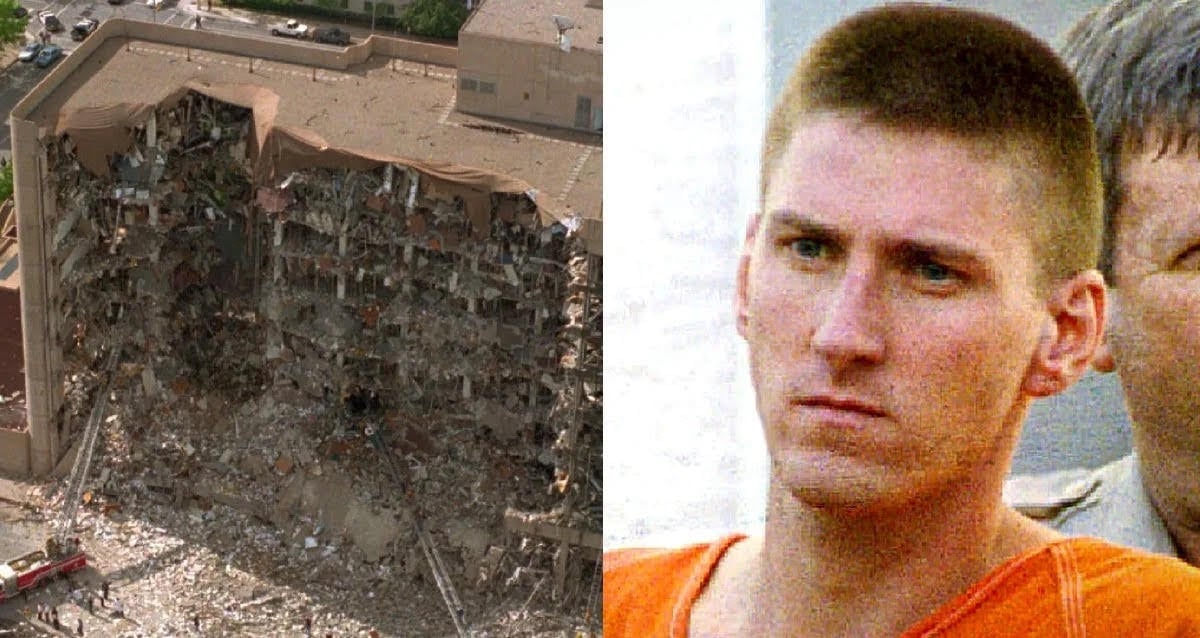
The Ryder truck was rented from an agency in Junction City, Kansas, under the name "Robert Kling."
That name was not his.
The rental form itself is the unresolved detail — a name that wasn't his, a truck that would carry an ammonium nitrate and fuel oil bomb.
The truck's rear axle, found after the explosion, carried a vehicle identification number traced to that same rental agency, according to the investigation.
The man behind the false name was Timothy McVeigh, a 26-year-old Gulf War veteran.
The bomb exploded outside the Alfred P. Murrah Federal Building in Oklahoma City on April 19, 1995.
It killed 168 people, including 19 children in the day care center, according to the case record.
The rental form itself is not described beyond the name — no signature, no date, no clerk's testimony is in the record.
What remains is a small piece of paper with a false name.
A name that set a catastrophe in motion.
Who was this man?
A veteran, the record says.
A man who rented a truck under a name that was not his.
That is what the record shows, and that is where the paper trail begins.
THE GULF WAR VETERAN
He was 26 years old, a Gulf War veteran, according to the case file.
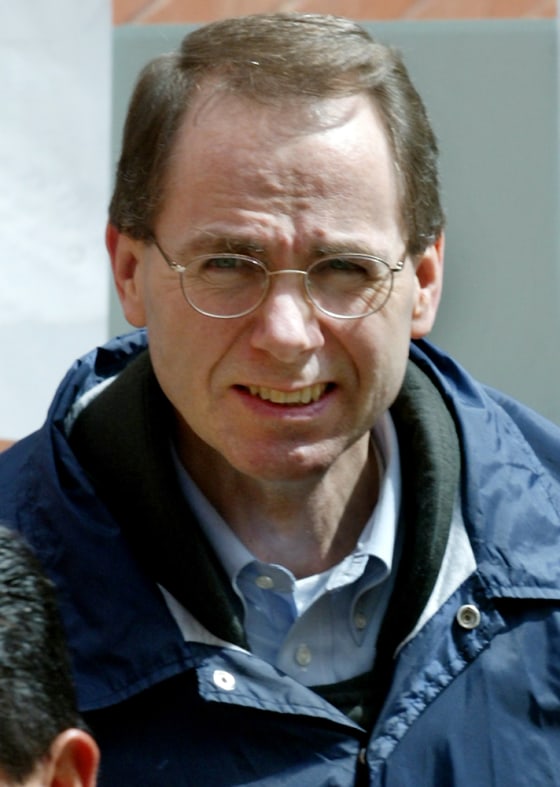
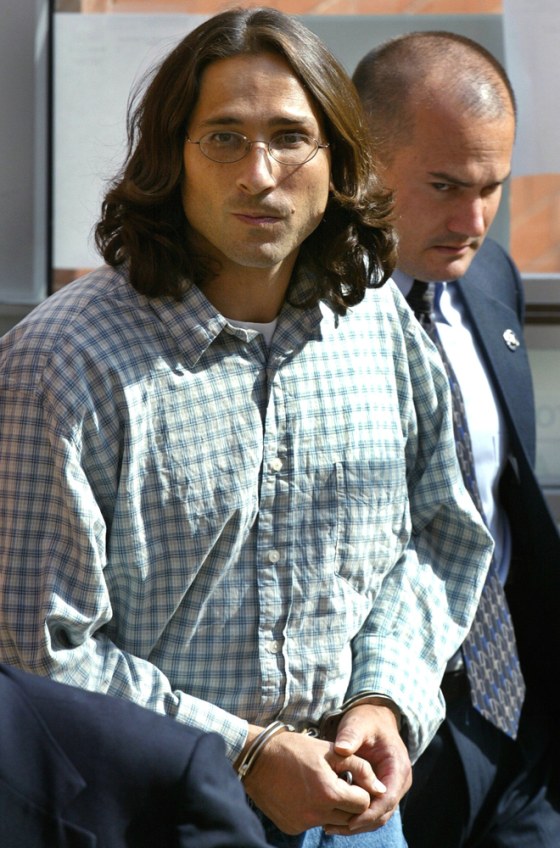
He was an Army acquaintance of Terry Nichols and Michael Fortier, both later charged in connection with the plot.
FBI agents traced his movements before the bombing through motel receipts and witness statements, the investigation showed.
His fingerprints were on a receipt for bomb materials, the investigation found.
His purchase of ammonium nitrate was part of the record, the investigation found.
Michael Fortier, who knew of the plot in advance, later testified about McVeigh's plans, according to trial testimony.
The case built in ordinary steps.
Receipts.
Purchases.
Acquaintances.
A name on a rental form.
The record does not describe McVeigh's specific military service.
The record does not describe his motivations.
The record does not describe any radicalization process.
Those are not in the record.
What the record shows is a paper trail.
A fingerprint.
A purchase.
A testimony from a man who said he knew in advance.
That is how the case against one man was assembled.
THE TRAFFIC STOP
The trooper saw the Mercury Marquis speeding.
He had no reason to know what had happened in Oklahoma City ninety minutes earlier.
The stop was routine.
The driver had no license plate.
A search found a concealed weapon under the seat.
The trooper arrested the man for those two charges: no plate, concealed weapon.
The driver gave his name as Timothy McVeigh.
He was in handcuffs before the FBI had a name for the bombing suspect.
The FBI was still tracing the truck's rear axle back to a Junction City rental agency.
McVeigh sat in a county jail on traffic charges.
The trooper's name is not in the record.
The exact location of the stop, and the exact time, are not specified in the source.
What is documented is the sequence: explosion, stop, arrest, custody.
Then the FBI released a sketch of the suspect.
The trooper saw the sketch.
He recognized the face of the man he had already locked up.
That is the improbable part.
Not a manhunt that caught him.
A traffic stop that happened to be in the right place, at the right time, with the right car.
McVeigh was held on the minor charges while the federal case was assembled.
He was in custody before the investigation knew it was looking for him.
That would require evidence of the stop's timing.
The record does not give it.
THE TWO STORIES
The prosecution told one story.
Fingerprints on a receipt, the purchase of ammonium nitrate, and the testimony of Michael Fortier, who said he knew of the plan in advance.
That evidence tied McVeigh to the plot, according to the investigation.
The defense told another.
McVeigh was a scapegoat, his lawyers argued.
Others were responsible, possibly linked to foreign terrorists.
That was the argument at trial.
The record does not detail the defense's specific evidence for a foreign-terrorist link.
It is presented only as an argument.
The prosecution's physical and testimonial evidence was described as overwhelming, according to the investigation.
The jury agreed.
On June 2, 1997, McVeigh was convicted on all 11 counts of conspiracy and first-degree murder.
Terry Nichols was tried separately.
He was convicted of conspiracy and eight counts of involuntary manslaughter, and sentenced to life without parole.
Two stories, one verdict.
The lone actor was the one the record supported.
The wider plot was not established.
That would require evidence.
AND THE STORY STILL ISN'T OVER
The legal case closed on June 11, 2001.
McVeigh was executed by lethal injection at the federal penitentiary in Terre Haute, Indiana.
The record of the trial, the appeals, the conviction — that record ended there.
Terry Nichols remains in federal prison, serving life without parole.
Michael Fortier was released from prison in 2006 after serving his sentence.

The site of the Murrah building is now the Oklahoma City National Memorial.
A field of 168 empty chairs stands there, one for each victim.
The memorial was dedicated on April 19, 2000, the fifth anniversary of the bombing.
Bud Welch, whose daughter died in the blast, has remained active in memorial and advocacy work.
Other victims' families have done the same.
The chairs do not move.
The families do.
What the record does not establish is any pending legal motion or new investigation.
The source states only the current status of the convicted and the memorial.
Nothing more.
The story is not over because the people who lived it are still here.
It is not over because the questions the record could not answer remain open.
The wider plot was not established in court — that was the defense's argument, and it failed.
That would require evidence.
The field of chairs is the evidence of something else.
It is a count.
It is a place.
It is what remains when the verdict is read and the sentence is carried out.
She was not there; she was one of the 168.
The memorial holds the number.
The families hold the names.
Advertisement
You may also like
The phone call that put Adnan Syed near Leakin Park — and the call records that later unraveled
She was 18, a senior at Woodlawn High School, and she did not come home on January 13, 1999. Hae Min Lee disappeared after…
The unserved 1955 arrest warrant for Carolyn Bryant, found in a courthouse basement, and the family still seeking answers
The warrant was folded, typed, and dated 1955, and it was found in 2018 in a courthouse basement. It named Carolyn Bryant, the woman…
The $50,000 ransom note left on a windowsill that began a 20-month hunt
The nursery window faced the night. A ladder leaned against it, reaching the sill. On the sill, a note. It demanded $50,000. The child…
The 1954 murder trial a judge let the press decide — and the Supreme Court still cites
The 911 call did not exist in 1954. On July 4, 1954, in Bay Village, Ohio, a Cleveland suburb, Marilyn Sheppard, 31, was found…
The 1993 raid on a Texas ranch that left four ATF agents dead — and the fire's origin still disputed
He called himself David Koresh, though he was born Vernon Wayne Howell. He was the self-proclaimed prophet and leader of the Branch Davidians at…
Why Kitty Genovese's killer returned to the street before the fatal blow
She was on the ground below her apartment at 82-70 Austin Street in Kew Gardens, Queens, in the early hours of March 13, 1964.…