The 35,000-word manifesto that made a bomber's brother pick up the phone
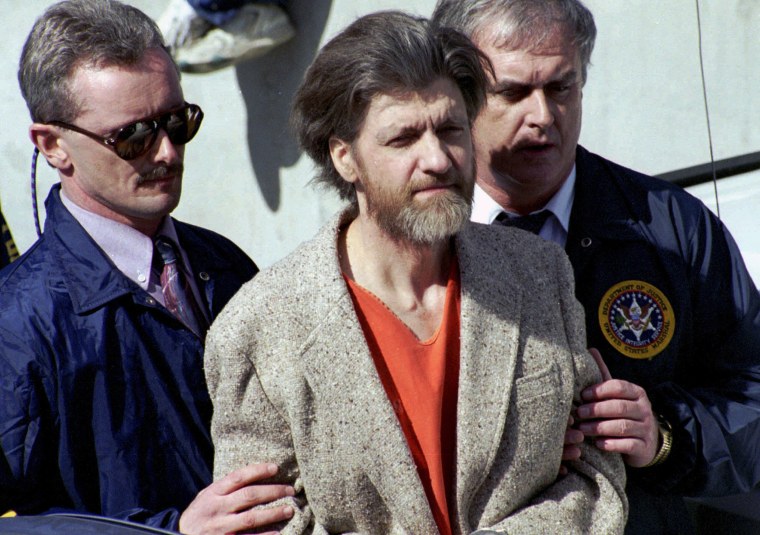
The package arrived in 1995.
A manuscript, 35,000 words, sent to The New York Times and The Washington Post.
The author demanded it be printed.
The letters signed it "FC."
The case file says the initials later stood for "Freedom Club."
The publication was not a newspaper's choice alone.
According to the case file, it happened at the urging of the U.S. Attorney General and the FBI Director.
They wanted the words in print, hoping someone would read them and know.
In September 1995, both papers published the manifesto.
A brother read it.
He recognized the writing style.
According to the investigation summary, David Kaczynski contacted the FBI through an attorney.
What made a brother turn in his own sibling?
What line in the text crossed from theory to certainty?
The exact contents of the manifesto are not detailed in the record.
The specific words that triggered his recognition are not in the record either.
That would require evidence.
It is a documented fact that the manuscript was mailed.
It is a documented fact that the brother made the call.
What the public felt at the time, page by page, is not in the record.
One piece of paper changed everything.
SEVENTEEN YEARS OF BOMBS
It began with a package at Northwestern University in Evanston, Illinois.
That was May 1978.
Between May 1978 and April 1995, a series of 16 mail bombs killed three people and injured 23 others across the United States, according to the case file.
Later bombs struck universities including the University of California, Berkeley, and Yale, as well as an American Airlines flight and a computer store in Utah, per the case file.
The final bombing killed a timber industry lobbyist in Sacramento, California, in April 1995.
The FBI's UNABOM task force spent 17 years investigating.
The name came from the targets: "university and airline bomber."
The task force examined thousands of suspects.
They used forensic analysis of the bombs' components.
Hand-carved wood.
Specific metal parts.
The packages were handmade, mailed through the U.S. Postal Service.
There was no name attached to the hunt.
The investigation was a long frustration.
It is a documented fact that the bombs killed three people.
The names of those three people are not in the record.
The specific dates of each bombing beyond the range are not in the record either.
What is documented is the span: 1978 to 1995.
Seventeen years.
A task force with a name but no suspect.
A public waiting for an answer that would not come.
The evidence was physical: wood, metal, explosives.
The evidence was also a pattern, scattered across universities and flights.
Not because the bomber was invisible.
But because the bomber had no profile yet.
That would require evidence the task force did not have.
THE PHONE CALL
The manifesto ran in September 1995.
David Kaczynski read it.
He recognized the writing.
Not the subject matter. The voice. The phrasing. The particular way the sentences turned.
The investigation summary records that he recognized the style.
What he said on the phone is not in the record.
The date of the call is not in the record.
What is in the record is this: David Kaczynski contacted the FBI through attorney Susan Swanson.
Seventeen years of hunting ended with a brother's call.
The FBI searched the Montana cabin in April 1996.

They found bomb-making materials.
They found journals.
They found a live bomb.
They found enough to arrest Theodore Kaczynski.
The cabin itself was removed from its site and reconstructed for the trial.
Linguistic analysis of the manifesto matched Kaczynski's writing, according to the investigation summary.
The match was documented.
The call was the hinge.
A single phone call ending a 17-year manhunt.
That is what the record shows.
Everything else about that moment — what David said, how he said it, what he felt — is not in the record.
It would require evidence the summary does not provide.
THE CABIN SEARCH AND THE PLEA
He was charged in 1996 with 10 federal counts, including three counts of first-degree murder.
He rejected a plea agreement that would have spared him the death penalty.
He wanted to represent himself.
The trial began in January 1998 in Sacramento.
Then he tried to dismiss his attorneys.
He asked for a new lawyer.
That request led to a competency evaluation.
The specific findings of that evaluation are not in the record.
The judge's name is not in the record either.
In January 1998, the trial stopped.
He pleaded guilty to all charges.
The deal was a life sentence without the possibility of parole.
The death penalty was off the table.
He was sentenced to life in prison plus 30 years.
He was sent to the federal supermax prison in Florence, Colorado.
There was no verdict.
There was no jury deliberation.
There was no closing argument that decided his fate.
The trial that was supposed to answer everything ended with a plea.
It is an anticlimax the record preserves.
A man charged with 10 federal counts stood before a court.
He had spent 17 years evading capture.
He had written a manifesto demanding publication.
He had been found in a Montana cabin.
He pleaded guilty.
The sentence was life.
The case closed without a single verdict from a jury.
That is what the record shows.
Everything else about that courtroom — what he said, how he said it, what he felt — is not in the record.
It would require evidence the summary does not provide.
AND THE STORY STILL ISN'T OVER
The cabin was moved again.
It went to a storage facility. Then it was displayed at the Newseum in Washington, D.C. The museum closed in 2019.
Kaczynski remains incarcerated at the federal supermax prison in Florence, Colorado.
He has filed numerous appeals. All unsuccessful, according to where things stand.
No pending legal motion or hearing date is in the record. That is not established.
His brother David Kaczynski has spoken publicly about the case. He has advocated against the death penalty.
That is a documented fact.
The case remains one of the FBI's most famous investigations. That is where things stand.
The writings continue to be studied. The manifesto is read by scholars. It is read by law enforcement.
Not because the public's reaction at the time is in the record. Because the text itself is.
What people felt when they read it in September 1995 is not documented. What they argued about, what they feared, what they demanded — that would require evidence the summary does not provide.
The record shows the publication. It shows the brother's phone call. It shows the cabin search, the plea, the sentence.
It shows the supermax, the appeals, the museum display.
It does not show a public. Not as a documented fact.
The manifesto remains. The case remains. The questions about how a nation reacted remain open.
They would require evidence the summary does not provide.
Advertisement
You may also like
The parking ticket that led police to the Son of Sam killer's door
The parking ticket was still under the windshield wiper. A witness saw a man standing near his car with it on the night of…
A 2:41 a.m. 911 call, a staircase, and a blow poke: the Durham case that hinges on one tool
The call came at 2:41 a.m. Michael Peterson phoned 911 from his home at 1810 Cedar Street in Durham, North Carolina, and told the…
The discarded DNA sample that made police look twice at an architect
The discarded DNA sample was analyzed in 2022. That analysis pointed investigators toward Rex Heuermann, an architect from Massapequa Park. According to the investigation…
The 31-day gap that police couldn't explain — and the trunk that changed everything
The call came on July 15, 2008. Orlando, Florida, and a grandmother on the phone with 911, reporting a 3-year-old missing. The child was…
The New York Times story that blamed 38 silent witnesses — and the truth that came 52 years later
The number was 38. Thirty-eight respectable, law-abiding citizens in Queens who watched a killer stalk and stab a woman in three separate attacks over…
The 14-foot boat Scott Peterson bought but never told police about
A 14-foot aluminum fishing boat. Scott Peterson bought it shortly before Laci disappeared. He never told police about it. Investigators found the purchase anyway,…