The New York Times story that blamed 38 silent witnesses — and the truth that came 52 years later

The number was 38.
Thirty-eight respectable, law-abiding citizens in Queens who watched a killer stalk and stab a woman in three separate attacks over thirty-five minutes.
That was the story.
On March 27, 1964, a New York Times article reported that 38 witnesses watched the attack on Catherine "Kitty" Genovese from their windows without calling police.
The article landed two weeks after the murder.
It landed with force.
The story sparked national outrage.
It became the defining parable of urban apathy, the textbook example of the "bystander effect," a moral lesson about what happens when good people do nothing.
Newspapers picked it up.
Columnists wrote about it.
Psychologists built theories on it.
The public demanded answers, and the Queens District Attorney's office opened its own inquiry into whether witnesses had failed to act.
That inquiry produced no charges.
The number stayed.
It stayed in textbooks, in lectures, in the national memory of a city that had turned its back.
But the number was not what the record showed.
Subsequent reporting and later investigations have questioned the accuracy of the "38 witnesses" figure.
Some neighbors reported they did not see or understand what was happening.
At least two people did call police during the attack.
In 2016, the Queens District Attorney's office released a report based on a re-examination of the original case file.
The report concluded that the "38 witnesses" narrative was overstated.
The exact number of witnesses who saw or heard the attack is not established by the record.
Not thirty-eight.
Not none.
Something in between, obscured by the power of a story that had already been told.
THE ATTACK ON AUSTIN STREET
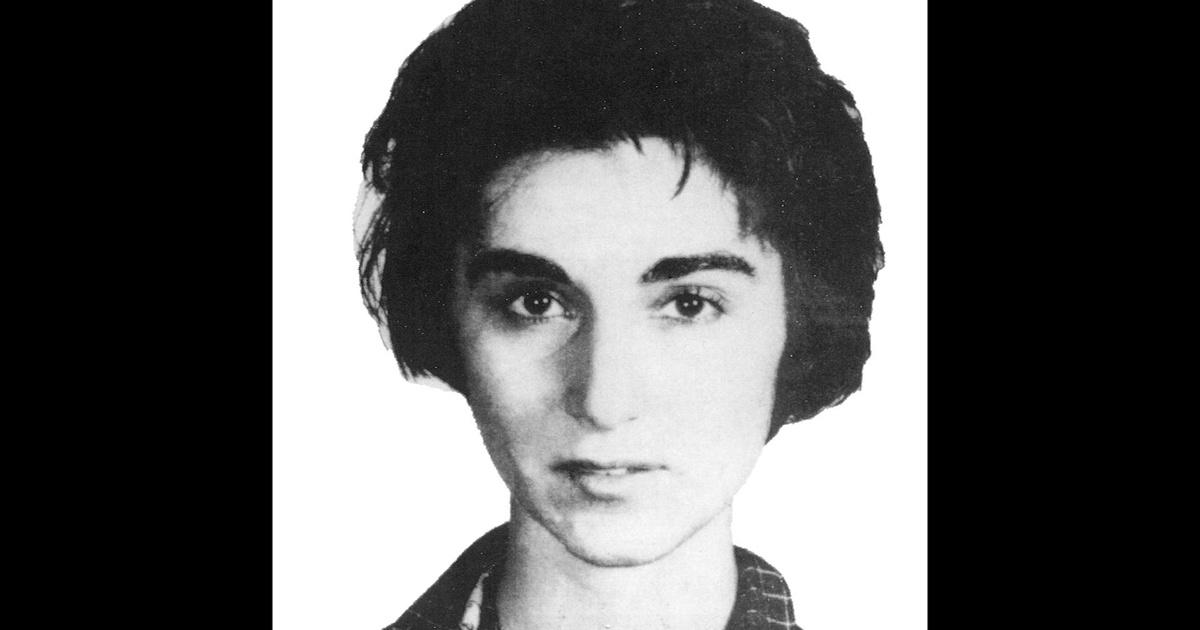
She was 28 years old, a bar manager walking home from Ev's 11th Hour Bar.
The time was early, just past 3 a.m., on March 13, 1964.
She reached her apartment building at 82-70 Austin Street in Kew Gardens, Queens.
The parking lot sat between the street and the building's entrance.
That is where Winston Moseley first stabbed her.
A neighbor shouted from a window.
Moseley fled.
Kitty Genovese was still alive, but she was hurt and she was alone.
She made it toward the building.
Moseley returned.
He found her in the hallway and continued the assault.
He sexually assaulted her and stabbed her fatally.
The attack happened in two phases over approximately thirty minutes.
A neighbor, Sophia Farrar, found Genovese dying in the hallway.
Farrar stayed with her until police and an ambulance arrived.
Genovese died on the way to the hospital.
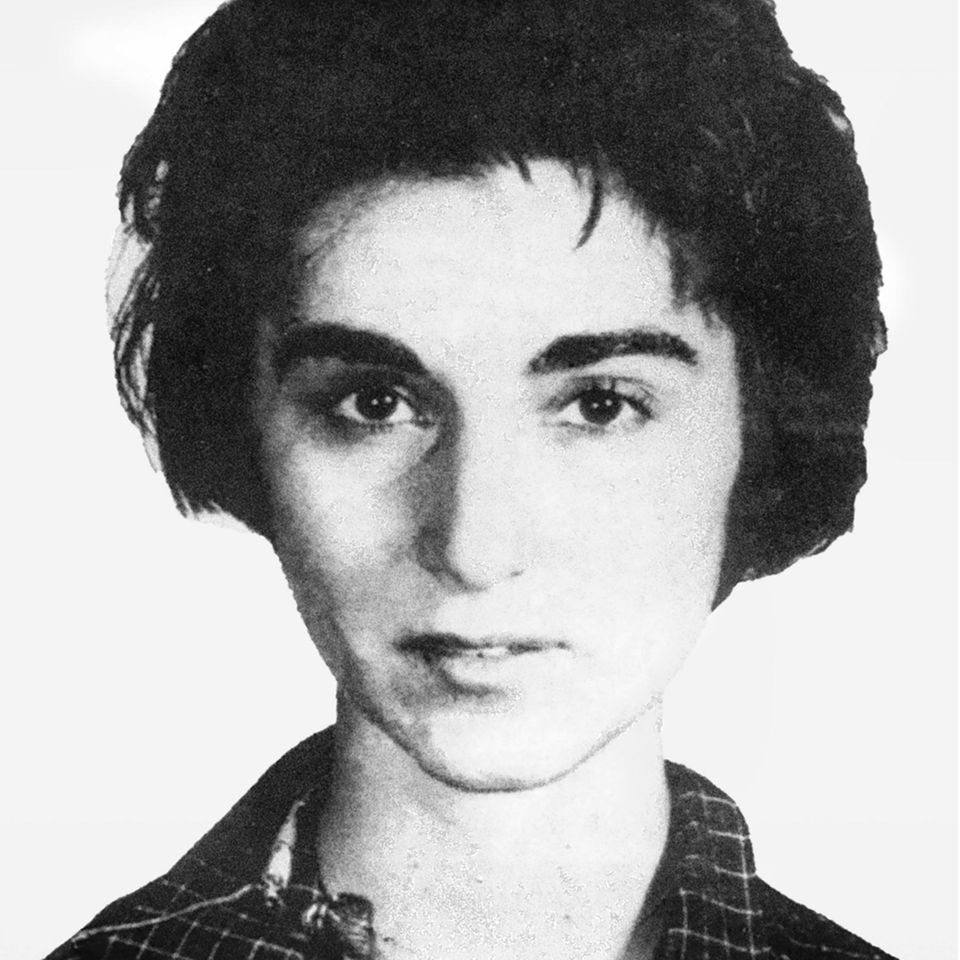
Moseley was arrested on March 19, six days after the murder.
He was already in custody for a separate burglary, a stolen television set.
He confessed to the Genovese murder.
He also confessed to two other killings.
The exact timeline of who saw or heard what during those thirty minutes is not fully established.
Not yet.
That would come later, in a newspaper story that would make the attack famous for reasons other than the attack itself.
THE TIMES ARTICLE AND THE OUTCRY
Two weeks after the murder, the New York Times published its account.
The article reported that 38 witnesses had watched the attack from their windows without calling police.
The source does not specify who wrote the Times article or the exact wording of the original piece.
The number landed like a verdict on the city itself.
The article sparked national outrage and became a defining parable about urban apathy and the "bystander effect."
Newspapers picked it up. Editorials ran with it. Psychologists began citing it as proof of a social sickness.
Not because the crime was unusual. But because the inaction seemed impossible.
The public outcry prompted the Queens District Attorney's office to conduct its own inquiry into whether any witnesses had failed to act.
The investigation was complicated by the public outcry following the Times article.
Prosecutors now had to answer for the city's shame as much as for the murder itself.
They interviewed neighbors. They checked phone records. They looked for the 38.
The inquiry produced no charges.
No witness was prosecuted. No one was held to account for watching.
What the inquiry found, or failed to find, was not the story that spread.
The story had already hardened into parable.
That would require evidence. The outcry had its own momentum.
The Times article had named a number. The number had named a city.
And the city, in the weeks that followed, believed it.
THE TRIAL AND THE TWO STORIES
The trial had two stories running through it.
The first was the legal case against Winston Moseley.
He was indicted for first-degree murder.
His defense argued insanity.
The prosecution presented his confession.
They also presented forensic evidence, including the bloodstained hunting knife recovered at his arrest.
The jury heard the confession.
The jury saw the knife.
The jury rejected the insanity defense.
They convicted Moseley of first-degree murder.
The judge sentenced him to death.
The second story was the one the city had already told itself.
The number of witnesses.
The silence of the street.
The parable of urban apathy.
The legal case did not turn on that number.
The trial was about what Moseley did, not what the neighbors saw.
In 1967, the New York Court of Appeals commuted Moseley's sentence to life imprisonment.
That followed the U.S. Supreme Court's ruling in Furman v. Georgia, which invalidated the death penalty as then applied.
Moseley later filed multiple appeals.
All unsuccessful.
He remained in prison for the rest of his life.
The source does not detail the specific arguments made by the defense or prosecution beyond the insanity plea.
The confession was presented.
The knife was presented.
What the defense argued in full, what the prosecution emphasized beyond those pieces, the record here does not establish.
The public narrative had its own momentum.
It did not need the trial to sustain it.
The trial convicted a man.
The article had convicted a city.
AND THE STORY STILL ISN'T OVER
Moseley died in prison on March 28, 2016, at age 81.
He had spent more than half his life in custody.
The correction came later that same year.
The Queens District Attorney's office released a report based on a re-examination of the original case file.
It concluded that the "38 witnesses" figure was not supported by the evidence.
At least two neighbors had called police during the attack.
That report was released after Moseley's death.
It formally corrected the record.
Not because the public narrative had been vindicated.
Because it had been wrong.
The source does not specify the exact findings of the 2016 report beyond the correction of the witness count.
That is all the record establishes.
The Kew Gardens building where the murder occurred was later demolished.
The site itself is gone.
Mary Ann Zielonko, Genovese's partner, spoke publicly about the case in later years.
She had been the first to identify the body.
Later scholarship, including work by journalist Kevin Cook, further examined the accuracy of the original Times reporting.
The article had convicted a city.
The report could not undo that.
It could only say what the evidence showed.
Two neighbors called.
Thirty-eight did not watch.
The parable had already been taught.
The textbooks had already been printed.
The correction came too late for the public narrative.
But it came.
Advertisement
You may also like
The front-page editorials that demanded Dr. Sam Sheppard’s arrest before his trial began
On July 4, 1954, in Bay Village, Ohio, Marilyn Sheppard, 31, was found bludgeoned to death in the upstairs bedroom of the lakeside home…
The bank card used after the McStay family vanished — and the phone calls that changed everything
The surveillance footage is grainy, the timestamp frozen in the days after the McStay family vanished. A man is at an ATM, inserting a…
The bridge splash and the fiber evidence that turned Atlanta's child murders into one trial
The sound came first. On May 22, 1981, police were staked out on a bridge over the Chattahoochee River. They were there because a…
Adnan Syed's conviction reinstated in 2024 — but he is free on bail
She left Woodlawn High School on January 13, 1999, and did not come home. Hae Min Lee was 18, a senior, and her car…
The tipster who spotted a sleeping car and ended a 22-day sniper rampage
The tipster saw the sketch on the news and recognized the car. It was a blue Chevrolet Caprice, parked and ordinary, the kind of…
Chloroform in a car trunk, a missing toddler, and the duct tape that pointed to Casey Anthony
In July 2008, a forensic analyst tested the trunk of Casey Anthony's Pontiac Sunfire and detected chloroform, a chemical associated with decomposition. Air samples…