The front-page editorials that demanded Dr. Sam Sheppard’s arrest before his trial began
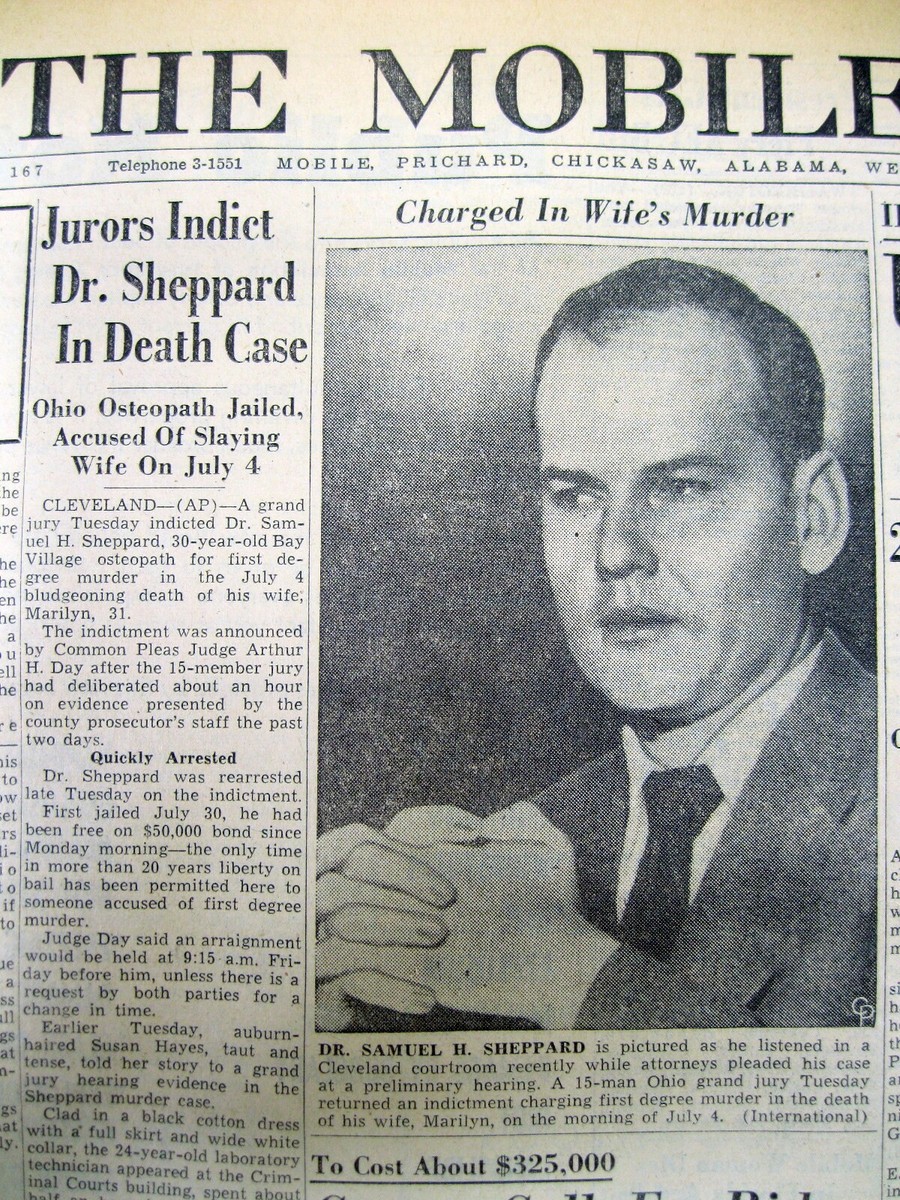
On July 4, 1954, in Bay Village, Ohio, Marilyn Sheppard, 31, was found bludgeoned to death in the upstairs bedroom of the lakeside home she shared with her husband, Dr. Sam Sheppard, a prominent osteopathic physician.
The murder weapon was never found.
The identity of the killer is not established.
Before any arrest, before any charge, before any grand jury, the front page of the Cleveland Press demanded that the husband be taken into custody.
The newspaper ran its demand as an editorial on the front page.
Not a news story. Not a legal analysis. A demand.
The case was already a national sensation. A beautiful wife dead in a lakefront home. A prominent doctor with an explanation. A "bushy-haired" intruder he said he chased.
The Cleveland Press pushed harder than any other outlet.
Its coverage effectively convicted Sheppard in the court of public opinion before trial.
Could a headline demand an arrest?
The paper seemed to think so.
The paper acted as if it had that power.
The public read those front pages, and the public believed.
The record shows Sheppard was only charged after a grand jury indictment in August 1954.
What the front pages did not show was the evidence.
What they showed was a man they said should be locked up.
He was accused. He was not yet charged.
The paper demanded it anyway.
The weapon was never found, and the killer was never named by the record.
That would require evidence.
THE 911 CALL AND THE INTRUDER
He told police he had been asleep on a downstairs couch.
He said he was awakened by his wife's screams.
He said he saw a "bushy-haired" intruder fleeing the house and chased him.
He said he was knocked unconscious.
That is what he told police.
The couple's 7-year-old son, Samuel Reese Sheppard, known as "Chip," was asleep in another bedroom.
He was not harmed.
The murder weapon was never found.
Whether the intruder existed, or whether Sheppard was knocked unconscious, is not established by the record.
Bay Village police, led by Chief Robert Schottke, initially treated the case as a burglary gone wrong.
Suspicion quickly shifted to Sam Sheppard.
The story of the intruder did not hold for long.
The sleeping child gave no account.
The screams were heard by no one else in the house.
That was the problem for the man on the couch.
A burglary gone wrong leaves a scene.
This scene pointed at the husband.
The police changed their focus within the early hours.
Not because the evidence was clean.
But because the story was all he had.
THE CORONER'S TESTIMONY
Dr. Samuel Gerber took the stand and told the jury what he saw in the bedroom.
The coroner testified that the nature of Marilyn’s injuries suggested the killer was left-handed.
Sheppard was left-handed.
Gerber also testified that the attack was too violent to have been committed by an intruder.
The prosecution built its case on that testimony.
Sheppard had killed his wife, prosecutors argued, in a rage over an affair.
The defense told a different story.
An intruder had committed the murder, the defense contended, and Sheppard had been framed.
Two stories, one bedroom, no weapon ever found.
The jury heard the coroner’s words as fact, but the record does not establish that the killer was left-handed.
It does not establish that the attack was too violent for an intruder.
That was testimony, not proof.
Outside the courtroom, the investigation was falling apart.

The crime scene was not properly secured.
Evidence was mishandled.
Police work that should have been meticulous was sloppy, and the criticism was widespread.
The public had already made up its mind, fed by front-page editorials demanding Sheppard’s arrest.
The coroner’s testimony gave them a reason to believe.
A left-handed doctor beating his wife to death in a rage.
A violent stranger who vanished into the night.
Which story was true?
That would require evidence the investigation never secured.
THE TRIAL CIRCUS
The indictment came in August 1954.
First-degree murder, the charge read.
The trial opened in October before Judge Edward J. Blythin.
The prosecution, led by John J. Mahon, built its case on circumstance.
The coroner testified about the nature of the wounds.
Sheppard had admitted to an affair.
That admission became part of the prosecution's story.
The courtroom was not a courtroom that autumn.
It was a circus.
Reporters crowded the aisles.
Photographers jostled for position.
Every gesture, every glance, was recorded.
The judge did not stop it.
The defense argued that the evidence was insufficient.
They argued that the media had poisoned the jury pool.
That argument did not carry the day.
In December 1954, Sheppard was convicted of second-degree murder.
The sentence was life in prison.
Was the conviction just?
That is not established by the record.
It was later overturned.
But in that courtroom, under those lights, with the press watching, the verdict felt inevitable.
The headlines had demanded an arrest.
The trial delivered a conviction.
The story, for now, was closed.
AND THE STORY STILL ISN'T OVER
In 1964, the U.S. Supreme Court agreed to hear the case.
In 1966, the Court ruled that the trial had been fundamentally unfair due to the media circus and the judge’s failure to control it, and ordered a new trial.
At the retrial, Sheppard was acquitted in November 1966, after his defense team—led by F. Lee Bailey—argued that the original investigation had been botched and that the prosecution’s case was built on speculation.
After his acquittal, Sam Sheppard’s life unraveled.
He returned to medicine but struggled with alcoholism and legal troubles.
He died in 1970 at age 46 of liver failure.
His son, Samuel Reese Sheppard, spent decades trying to clear his father’s name further and to prove that the real killer was a window washer named Richard Eberling, who had been a suspect in other crimes.
In 2002, a civil jury found that Sam Sheppard did not murder his wife.
The criminal case was never reopened.
Whether Richard Eberling was the real killer is not established.
The criminal case was never reopened.
That would require evidence.
The headlines had demanded an arrest.
The trial delivered a conviction.
The Supreme Court overturned it.
An acquittal followed.
A life was lost.
A son kept fighting.
The record holds the arc.
It does not hold the answer.
Advertisement
You may also like
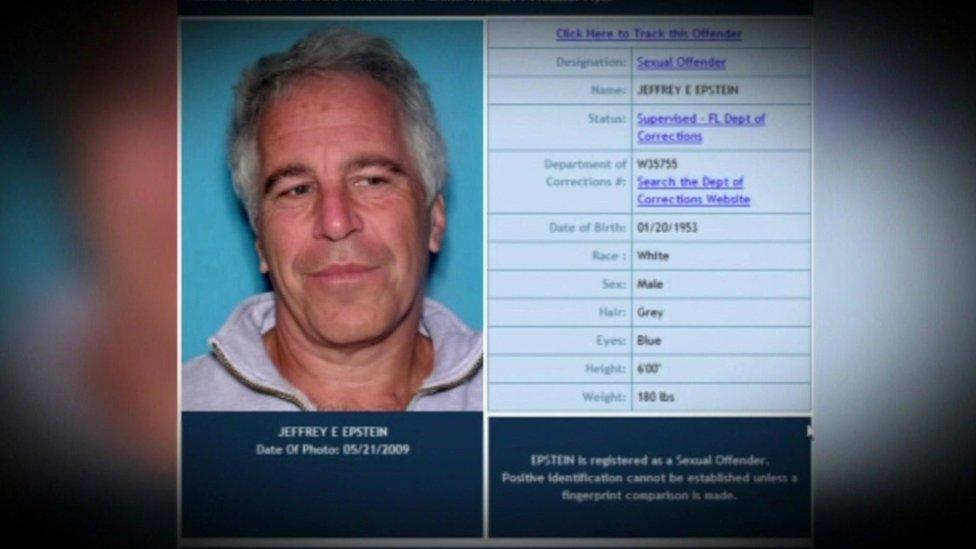
The secret non-prosecution deal that let Epstein avoid federal charges for years
In 2005, a mother in Palm Beach, Florida, walked into a police station and reported that her 14-year-old stepdaughter had been sexually abused by…
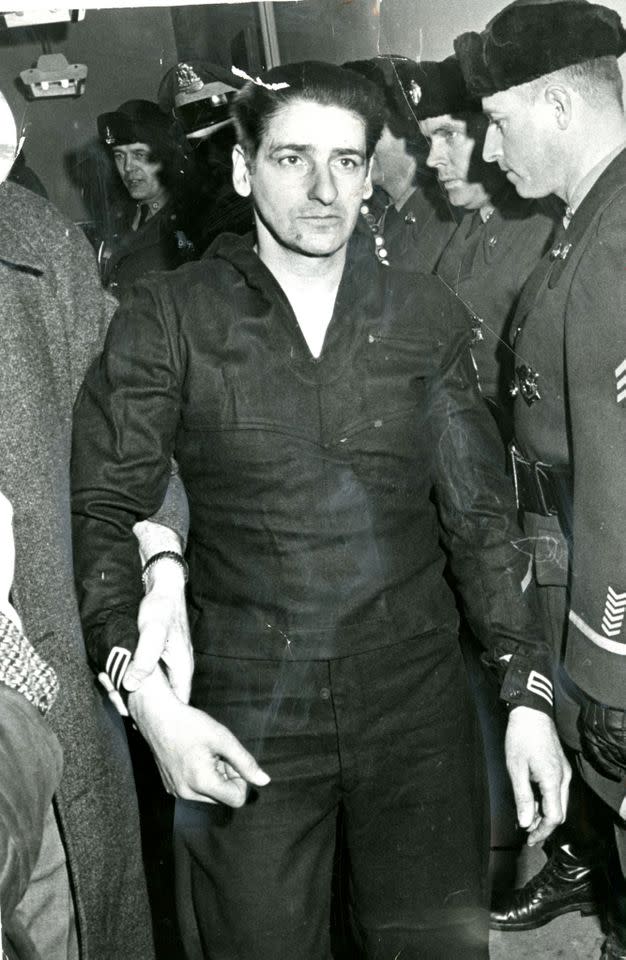
Boston women bought locks and guard dogs as 11 stranglings went unexplained
The locks sold out first. Then the guard dogs. Between June 1962 and January 1964, a series of murders of women in the Boston…
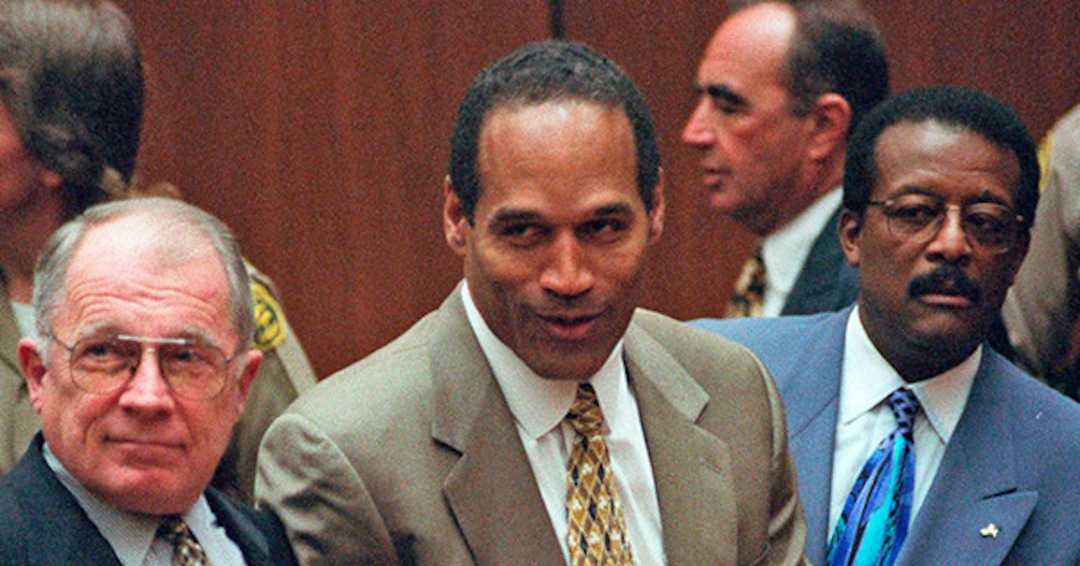
The bloody glove found on O.J. Simpson's estate that didn't fit in court — and the detective who found it
The neighbor walking her dog found the bodies around midnight. Nicole Brown Simpson and Ronald Goldman were on the ground outside her condominium on…

The bloody fingerprint on the door that didn't match — and the evidence the Army lost
The door was still wet with it. February 17, 1970, Fort Bragg, North Carolina. Army Captain Jeffrey MacDonald, a Green Beret physician, called it…
The footprint left at the Clutter farm that investigators could not explain
The footprint was in the farmhouse, pressed into the floor of a house where four people lay bound and shot at close range with…

The bloody glove that didn't fit — and the LAPD evidence mistake that changed the trial
The glove sat on the evidence table, leather and dark, one found at the crime scene, the other on the accused's property. In court,…